


This article was automatically translated from the original Turkish version.
+2 More
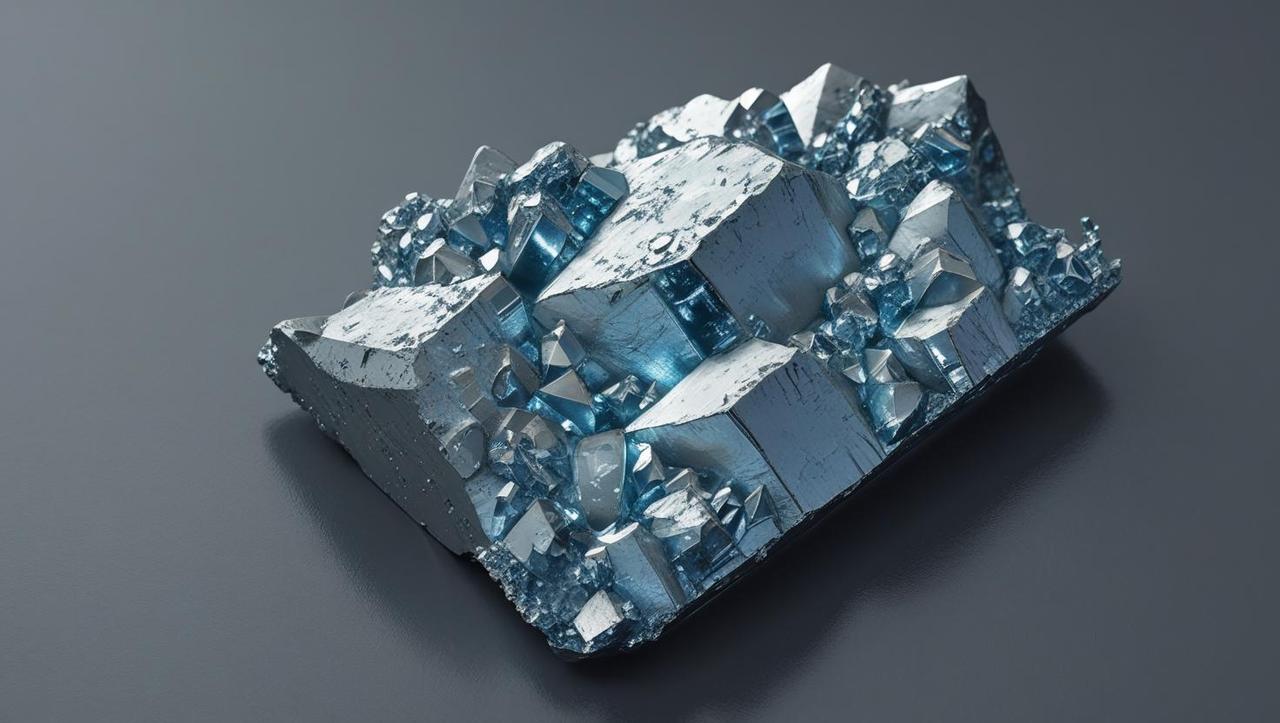
Tantalum
Periodic Table | 6 | ||||||||
|---|---|---|---|---|---|---|---|---|---|
Atomic Number | 73 | ||||||||
Group | 5 (Transition Metal) | ||||||||
Atomic Weight | (180.95) g/mol | ||||||||
Electron Configuration | [Xe] 4f¹⁴5d³6s² | ||||||||
Density | 16.69 g/cm³ | ||||||||
Melting Point | 3017 °C | ||||||||
Boiling Point | 5458 °C | ||||||||
Atomic Radius | ~146 pm | ||||||||
Electronegativity | 1.5 | ||||||||
Electron Affinity | 31 kj/mol | ||||||||
Important Isotopes | ¹⁸⁰ᵐTa (radioactive) ¹⁸¹Ta (stable) | ||||||||
Year of Discovery(ies) | 1802 | ||||||||
Discoverer(s) | Anders Gustaf Ekeberg | ||||||||
Etymology(s) | Tantalus from Greek mythology | ||||||||
Tantalum is a blue-gray, lustrous, hard, and rare transition metal located in the 73rd position of the periodic table. Renowned for its exceptional resistance to corrosion, tantalum was discovered in 1802 by Anders Gustaf Ekeberg. This element derives its name from Tantalus, a figure in Greek mythology, and is primarily used in the production of high-performance capacitors in modern electronic devices.
Tantalum (Ta) is a transition metal situated in the 6th period and group 5 of the periodic table. Its electron configuration is [Xe] 4f¹⁴5d³6s². At room temperature, it exists as a solid. In addition to being very hard, it is also ductile, meaning it can be drawn into thin wires. Its high density and extremely high melting point are its most prominent physical properties.
Tantalum was discovered in 1802 by the Swedish chemist Anders Gustaf Ekeberg. However, due to its strong chemical similarity to niobium, the two elements were long believed to be the same. It was not until 1866 that the Swiss chemist Jean Charles Galissard de Marignac definitively proved they were distinct elements. The first person to isolate pure tantalum was the German chemist Werner von Bolton in 1903.

Tantalum (Generated by Artificial Intelligence.)
The element’s name originates from Tantalus, a king in Greek mythology. According to myth, Tantalus was condemned by the gods to stand forever in a pool of water, which receded whenever he tried to drink. Ekeberg, the element’s discoverer, named it after Tantalus because the metal, when immersed in acid, did not absorb the acid or react with it—mirroring Tantalus’s torment.
Tantalum does not occur naturally in its free state. It is most commonly found in the mineral tantalite ((Fe, Mn)Ta₂O₆), often alongside niobium. Major producing countries include Australia, Brazil, Canada, Rwanda, and the Democratic Republic of the Congo. Tantalum mining is associated with ethical concerns, particularly in regions such as the Congo, where it is classified as a “conflict mineral.”
Tantalum is a dense, ductile, and very hard blue-gray metal. It has an exceptionally high melting point of 3017 °C. Its most notable chemical property is its extreme resistance to corrosion. This resistance is due to a thin, dense, and protective oxide layer that forms on its surface. It is resistant to almost all acids except hydrofluoric acid.
Tantalum has two naturally occurring isotopes. The most abundant is the stable isotope ¹⁸¹Ta, which constitutes nearly all natural tantalum (99.988%). The other is the rare, long-lived radioactive isotope ¹⁸⁰ᵐTa.
Tantalum has no known biological role. It is considered non-toxic to the human body and does not trigger immune responses. This biocompatibility is the primary reason for its safe use in medical implants.
National Center for Biotechnology Information. “Tantalum.” *PubChem Compound Database.* Accessed July 7, 2025. https://pubchem.ncbi.nlm.nih.gov/compound/Tantalum
TÜBİTAK Bilim Genç. "Tantal." Bilim Genç. Accessed July 7, 2025. https://bilimgenc.tubitak.gov.tr/periyodik-tablo/tantal

Tantalum
Periodic Table | 6 | ||||||||
|---|---|---|---|---|---|---|---|---|---|
Atomic Number | 73 | ||||||||
Group | 5 (Transition Metal) | ||||||||
Atomic Weight | (180.95) g/mol | ||||||||
Electron Configuration | [Xe] 4f¹⁴5d³6s² | ||||||||
Density | 16.69 g/cm³ | ||||||||
Melting Point | 3017 °C | ||||||||
Boiling Point | 5458 °C | ||||||||
Atomic Radius | ~146 pm | ||||||||
Electronegativity | 1.5 | ||||||||
Electron Affinity | 31 kj/mol | ||||||||
Important Isotopes | ¹⁸⁰ᵐTa (radioactive) ¹⁸¹Ta (stable) | ||||||||
Year of Discovery(ies) | 1802 | ||||||||
Discoverer(s) | Anders Gustaf Ekeberg | ||||||||
Etymology(s) | Tantalus from Greek mythology | ||||||||
Classification and Basic Properties
Discovery
Etimology
Natural Occurrence
Physical and Chemical Properties
Isotopes
Applications
Biological Role and Precautions