

This article was automatically translated from the original Turkish version.
+2 More

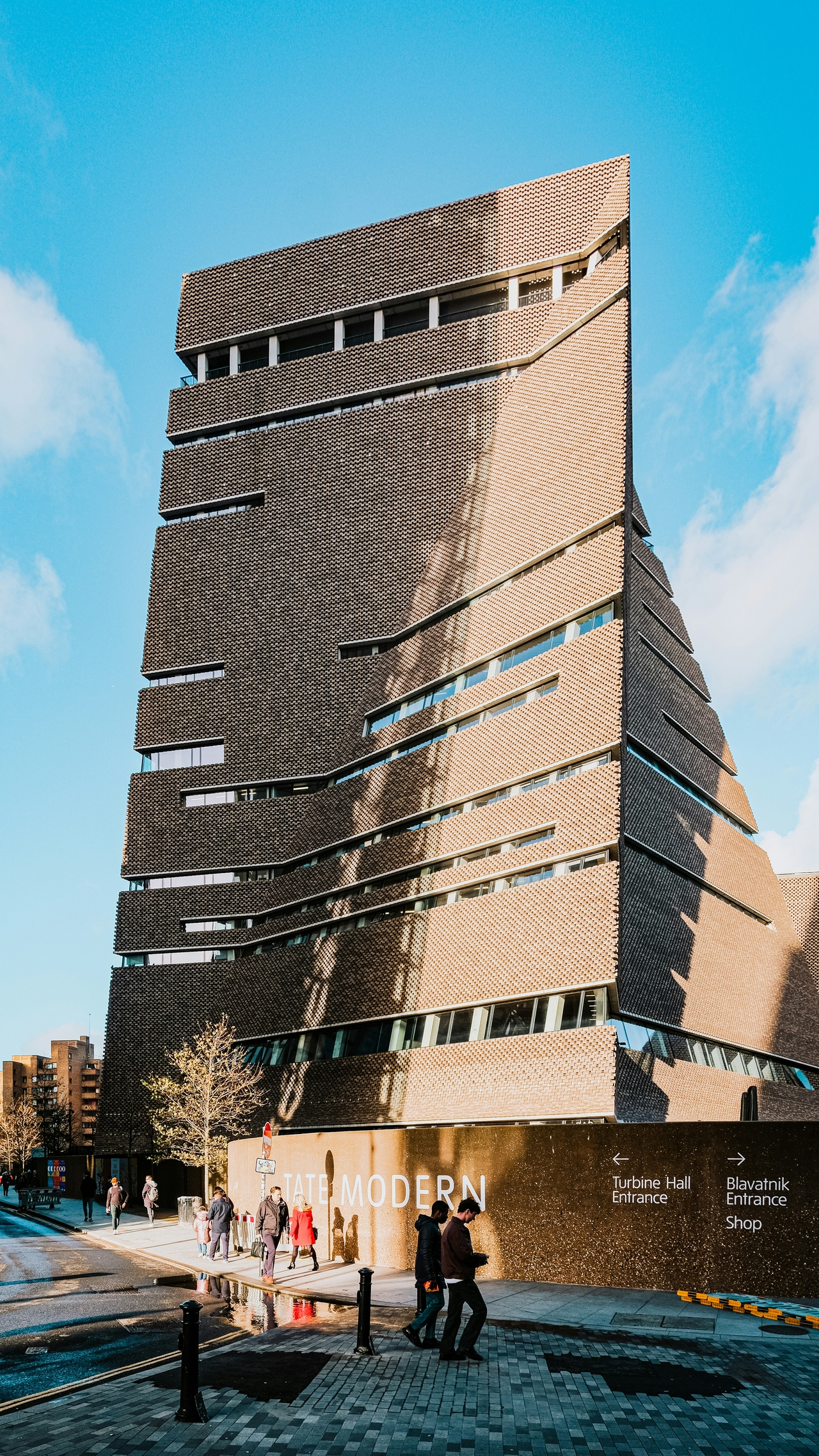
Tate Modern, London (pexels)
Tate Modern, the capital of the United Kingdom, London, is a museum located in the Bankside district dedicated to the exhibition of modern and contemporary art. The institution was created through the transformation of the former Bankside Power Station and operates as a cultural facility developed specifically to display its collection of modern art. The museum offers public access to diverse forms of modern and contemporary art through exhibition spaces that include painting, sculpture, large-scale installations, as well as performance and video art.
The idea of establishing a separate museum to present the Tate’s collection of modern international art in a more comprehensive manner emerged in the early 1990s. At the time, it was recognized that the existing museum spaces were insufficient to accommodate the growing scale of the collection, prompting plans for a new institution dedicated exclusively to modern art.
After evaluating potential sites, it was decided to convert the Bankside Power Station in London into the new museum. This choice was driven by the industrial building’s expansive interior volumes and its prominent urban location. The museum opened to the public in 2000.

Tate Modern in the former Bankside Power Station building (pexels)
An international architectural competition was held to determine the design for converting the Bankside Power Station into a museum. The winning proposal, developed by Swiss architects Jacques Herzog and Pierre de Meuron, aimed not to completely alter the character of the existing industrial structure but to preserve its spatial and structural qualities while adapting them to the new function. During the transformation, the building’s vast interior volumes were reconfigured to serve as spaces for modern art exhibitions, creating multiple distinct exhibition areas within the structure. As a result, the scale and spatial characteristics of industrial architecture became an integral part of the museum’s identity.
The spatial organization of Tate Modern is based on the adaptive reuse of the former Bankside Power Station’s industrial layout. The building originally consisted of key sections including the Boiler House, Turbine Hall, Switch House, and Oil Tank. The transformation was implemented in phases, with the initial focus on adapting the Boiler House and Turbine Hall for museum use.

Turbine Hall at Tate Modern (unsplash)
A central design principle was the preservation of the building’s monumental interior volumes. The Turbine Hall, originally the main production area of the power station, is a vast interior space that has been reimagined as the museum’s central circulation and exhibition zone. Its original sense of openness has been retained, creating a spatial framework capable of accommodating large-scale artworks.
Throughout the transformation, minimal architectural intervention was employed to preserve the existing spatial scale while introducing new exhibition areas. This approach represents an architectural decision that fosters spatial continuity rather than creating sharp contrasts between old and new elements, thereby enhancing the potential of the original structure.
In this context, Tate Modern’s spatial organization provides a multi-layered and flexible interior environment that preserves the industrial building’s expansive volumes while supporting diverse forms of art exhibition. This design enables the museum to accommodate both large-scale artistic productions and a variety of curatorial approaches.
Tate Modern’s collection comprises works spanning various periods and movements in modern and contemporary art. It includes paintings, sculptures, installations, and works from other artistic disciplines. Exhibitions feature pieces by artists such as Pablo Picasso, Yayoi Kusama, and Henri Matisse.
In addition to its permanent collection, the museum presents temporary exhibitions and a range of events that introduce visitors to modern art through diverse thematic frameworks.
Admission to the museum’s permanent collection is free; reservations are recommended for some temporary exhibitions. The museum is typically open from 10:00 to 18:00 on Sunday through Thursday, and from 10:00 to 21:00 on Friday and Saturday.
Tate Modern includes restaurants and bars, a shop, and other public facilities for visitors. It also provides accessibility services and accommodations to ensure equitable access for all visitor groups.


Foundation and Development
Architectural Design and Transformation
Spatial Organization
Collection and Exhibition Program
Visitation and Public Services