
This article was automatically translated from the original Turkish version.
Type | Public Support and Incentive Program | ||||||||
|---|---|---|---|---|---|---|---|---|---|
Executing Institution | Ministry of Industry and Technology of the Republic of Türkiye | ||||||||
Stakeholder Institutions | TÜBİTAK KOSGEB | ||||||||
Primary Objective | Increase value-added production Reduce dependence on imports Enhance global competitiveness | ||||||||
Working Principle | R&D Commercialization Integrated support of production processes | ||||||||
Technology-Focused Industrial Initiative Program (HAMLE) is a special incentive and support program implemented by the Ministry of Industry and Technology of the Republic of Türkiye and its affiliated and related institutions with the aim of increasing value-added production in medium-high and high-technology sectors, reducing external dependency, and strengthening global competitiveness.
Under the coordination of the General Directorate of Strategic Research and Efficiency within the Ministry, the program aims to integrate public support mechanisms provided by the Scientific and Technological Research Council of Türkiye (TÜBİTAK) and the Directorate General for Small and Medium-Sized Enterprises Development and Support (KOSGEB) through a single-window mechanism.
The Technology-Focused Industrial Initiative Program (HAMLE) is an industrial policy instrument coordinated by the Ministry of Industry and Technology of the Republic of Türkiye, designed to increase value-added production in medium-high and high-technology sectors and reduce external dependency in manufacturing industry. The program aims to strengthen Türkiye’s production infrastructure and expand domestic capabilities in sectors such as machinery, chemicals, pharmaceuticals, computer-electronics-optics, electrical equipment, and transportation vehicles, thereby enabling the domestic production of products contributing to the current account deficit.
In this context, the public administration, within the framework of relevant legislation and regulations, integrates the R&D, commercialization, investment, and mass production support mechanisms offered by affiliated institutions such as TÜBİTAK and KOSGEB under a “single window” system to provide an end-to-end integrated structure. The program seeks to increase the share of domestic intermediate goods, acquire new production competencies not yet available domestically, and manage all stages from R&D to market entry through a centralized system.
The vision of the Technology-Focused Industrial Initiative Program is to build a knowledge-based economic structure grounded in scientific advancement, entrepreneurship, and high-value technology production, thereby elevating Türkiye’s position in global industry and technology to the highest levels.
The program’s core mission and strategic objectives are to reduce external dependency in sectors critical to industry and trade, ensure that final products manufactured domestically are produced primarily using local intermediate goods, and enhance domestic production capacity. To this end, the program prioritizes intermediate goods and products whose technology and value-added levels significantly impact the current account deficit. A demand- and supply-driven production capability is designed to match demand with need, enabling the domestic development and production of imported intermediate goods and products.
Furthermore, the program is fundamentally based on acquiring strategic production competencies that are currently limited or absent in Türkiye, thereby laying the groundwork for interdisciplinary industrial breakthroughs. The system promotes a culture of collaboration across and within sectors, creating an environment conducive to the development of new technologies and raising the overall competence standards of the manufacturing ecosystem. Accumulated knowledge and expertise are integrated into Türkiye’s national production technology ecosystem, establishing a sustainable, qualified human resource base and institutional infrastructure capacity.
In line with the implementation of R&D and production planning for future innovative technologies, specific focus areas are identified that will generate economies of scale, have future potential, and offer opportunities for expansion into other sectors and international markets. Technology development roadmaps are created for these designated areas and supported through incentive mechanisms. Necessary technological and competency developments are ensured to build and enhance a qualified workforce capable of competing globally in selected sectors.
The incentives and support provided under the Technology-Focused Industrial Initiative Program are concentrated on sectors with high value-added potential in Türkiye’s manufacturing industry. The priority focus areas defined under the program include machinery, chemicals, pharmaceuticals, computer, electronics and optics, electrical equipment, and transportation vehicles. The primary rationale for prioritizing these sectors is to accelerate Türkiye’s technological transformation, reduce dependency on imported intermediate goods, lower the current account deficit, and enhance capacity for high-value-added production in global markets.
The machinery sector, leading among priority areas, is a sector that provides inputs to numerous other industries, features a high value-added ratio, requires advanced R&D infrastructure, possesses a broad supplier network, creates skilled employment opportunities, and helps reduce the foreign trade deficit.

Technology-Focused Industrial Initiative Program: Priority Sectors and Focus Areas (Anadolu Ajansı)
The chemicals sector, which supplies inputs to the broader industry, transforms raw materials such as petroleum, natural gas, minerals, and metals into over 70,000 different products. The chemicals sector, accounting for approximately 30% of production, ranks among the areas with the highest foreign trade deficit in Türkiye.【1】
The pharmaceutical sector, one of the areas with the highest global R&D expenditures, aims to develop domestic capabilities in drug and medical product manufacturing and expand export opportunities through its high-value product structure, advanced production standards, and capacity.
The computer, electronics, and optics sector encompasses the manufacturing of integrated circuit design, advanced miniaturization technologies, consumer electronics, measurement and testing equipment, electro-medical devices, and optical instruments.
The electrical equipment sector has a broad production capacity covering cables, lighting, industrial components, and electrical appliances for the generation, transmission, distribution, and utilization of electrical energy. This sector directly interacts with numerous surrounding industries including metal, plastic, energy, automotive, and defense.
The transportation vehicles sector includes the manufacturing of motor vehicles, trailers, defense and aerospace products, and other transportation equipment. The sector influences industries such as iron and steel, petrochemicals, software, and defense through its R&D capacity, automotive export competencies, and production technologies.
The support and incentive mechanisms under the Technology-Focused Industrial Initiative Program are based on a public support model that integrates all stages—from idea and R&D to commercialization, investment, and mass production—under a single framework. The program elevates coordination among public institutions to meet investors’ financial, administrative, and technical needs at each stage. Accordingly, tools provided by the Ministry of Industry and Technology, TÜBİTAK, and KOSGEB are made accessible through a single point of entry, taking into account the applicant’s company size (SME or large enterprise), the technological dimension of the investment, and the required support items. The time from idea and intellectual property development through R&D to market launch is significantly shortened, and the bureaucratic burden on investors is minimized.
For projects submitted under the program’s calls, the total project size (combined R&D and investment expenditures) must be at least 40 million TL, with the R&D component alone amounting to at least 5 million TL. For projects focused exclusively on software development, the minimum project size is set at 15 million TL; upon project completion, expenditures must not fall below these minimum thresholds.【2】
The research, development, and prototyping phases of projects are conducted in accordance with the principles of the TÜBİTAK 1511 Research and Development Program to Reduce External Dependency. In the formal application stage, TÜBİTAK R&D forms are completed. During this phase, grants and incentive support are provided for R&D personnel costs, equipment, software, consulting, service procurement, and material purchases to validate the technical feasibility of products. The R&D support period is capped at 24 months; however, if mandatory processes such as prototyping or clinical trials are involved, this period may be extended up to 36 months upon evaluation. Additionally, if a project includes a joint R&D contractor, the Protocol on Sharing Intellectual and Industrial Property Rights must be submitted.
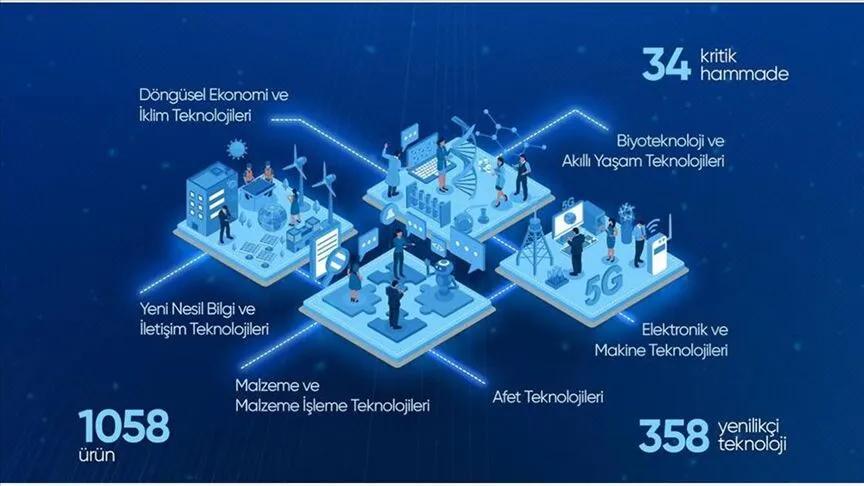
Technology-Focused Industrial Initiative Program (Anadolu Ajansı)
SMEs participating in the project benefit from the KOSGEB Strategic Product Support Program during pre-commercialization preparation phases. Under this framework, SMEs may receive support for personnel costs, independent evaluation report expenses, and testing and certification costs essential for commercialization. The KOSGEB support period is up to 24 months.
Following commercialization, production-related phases of projects are supported through incentive documents prepared by the Ministry of Industry and Technology in accordance with applicable regulations. Depending on the scale and strategic nature of the investment, an Industrial Initiative Program / Strategic Investment Incentive Certificate may be issued under Decision No. 9903 (or No. 2012/3305); alternatively, for high-technology projects, an incentive certificate may be requested under the Project-Based Incentive System outlined in Decision No. 2016/9495.【3】
For SMEs, 75% of R&D expenditures are covered (upper limit: 20 million TL); for large enterprises, 50% are covered (upper limit: 40 million TL). Supported items include:
The application, evaluation, and monitoring processes under the Technology-Focused Industrial Initiative Program are conducted through a multi-stage mechanism built on principles of transparency, competence, and rapid decision-making. Program-related procedures are initiated according to thematic call plans announced by the Ministry of Industry and Technology, and all application steps are managed through an online platform. Domestic capital companies and their representatives submit their preliminary applications via the official Program Portal.
Applicants who successfully complete the preliminary evaluation phase are invited to proceed to the formal application stage. In this stage, investors upload the Project Feasibility Study, Feasibility Data File, and required R&D (TÜBİTAK) or SME (KOSGEB) application forms to the system to complete their formal applications. The Ministry assigns independent consulting firms with expertise in the relevant field to evaluate formal applications. These independent evaluators conduct on-site inspections at the investor’s production facilities and investment site to prepare an Independent Evaluation Report assessing the project’s feasibility and its contribution to the company and the national economy. The service fee for the report is 250,000 TL + VAT for SMEs and 350,000 TL + VAT for large enterprises, payable by the investor. Applications for which payment is not made within seven days of notification are rejected.【5】
For projects that pass the formal application stage under the Technology Initiative Program, an Independent Evaluation Report must be prepared by authorized independent consulting firms appointed by the Ministry. The system operates as follows to ensure impartiality and compliance with standards:
After the report is uploaded to the Program Portal, the consulting fee must be paid by the investor within seven days; otherwise, the project application is rejected. The reimbursement of this fee varies according to the investor’s size:
Consulting firms to be authorized by the Ministry must have legal personality and must employ at least two corporate and two financial evaluation experts (different individuals). Additionally, at least three of the following four criteria must be met:
At the end of each call period, consulting firms are evaluated through surveys involving investors, Ministry experts, and project committee members. Firms falling below the performance threshold established by the Deputy Minister’s approval have their authorization revoked and are ineligible to reapply for two years.
The preliminary evaluation committee reviews applications against regulatory requirements. Applicants are granted a period to rectify deficiencies; non-compliant projects are eliminated. Appeals against negative decisions may be submitted to the General Directorate within 15 days. The committee may grant firms a revision period of 5 to 15 days to amend feasibility documents.
In the decision-making phase, projects that have completed detailed reviews and independent evaluations, along with technical opinions, are presented to the Technology Initiative Program Evaluation Committee. The Committee comprehensively assesses each project’s value-added potential, technological depth, and strategic importance, scoring them using an evaluation form. Projects scoring 70 or above may undergo revision of support types, additional information or documentation requests, or conditions for co-execution with project stakeholders. The Committee issues a final approval decision and determines the customized support and incentive package for each project.
The Program Evaluation Committee assesses and scores submitted projects based on the following key criteria:
During the monitoring phase of approved and implemented projects, adherence to defined targets, timelines, and budgetary allocations is closely tracked through periodic reports and site inspections to ensure successful commercialization and achievement of targeted mass production capacity. If investors are found to have failed to fulfill their investment obligations, except under force majeure or as approved by the Committee, the full or partial amount of support payments made by TÜBİTAK must be repaid within three months. Amounts not paid within three months are collected with late payment interest applied.
Anadolu Ajansı. "Sanayi ve teknolojinin 2025 ajandasında 'topyekün kalkınma' öne çıkıyor." Accessed August 30, 2026.https://www.aa.com.tr/tr/ekonomi/sanayi-ve-teknolojinin-2025-ajandasinda-topyekun-kalkinma-one-cikiyor/3440779.
Anadolu Ajansı. "Teknoloji Odaklı Sanayi Hamlesi Programı'nın yeni çağrısı açıldı." Accessed August 30, 2026.https://www.aa.com.tr/tr/bilim-teknoloji/teknoloji-odakli-sanayi-hamlesi-programinin-yeni-cagrisi-acildi/3298557.
Anadolu Ajansı. "Teknoloji Odaklı Sanayi Hamlesi kapsamında desteklenecek öncelikli ürünler belirlendi." Accessed August 30, 2026.https://www.aa.com.tr/tr/ekonomi/teknoloji-odakli-sanayi-hamlesi-kapsaminda-desteklenecek-oncelikli-urunler-belirlendi/2159014.
Ministry of Industry and Technology of the Republic of Turkey. "Bakan'ın Mesajı." *hamle.gov*. Accessed August 30, 2026.https://www.hamle.gov.tr/Home/BakaninMesaji.
Ministry of Industry and Technology of the Republic of Turkey. "Program Hakkında." *hamle.gov*. Accessed August 30, 2026.https://www.hamle.gov.tr/Home/ProgramHakkinda.
Ministry of Industry and Technology of the Republic of Turkey. "Technology-Focused Industrial Initiative Program Announces Call for Rising Innovative Technologies for 2024." *yatırımadestek.gov*. Accessed August 30, 2026.https://www.yatirimadestek.gov.tr/haber/teknoloji-odakli-sanayi-hamlesi-programi-2024-yili-yukselen-yenilikci-teknolojiler-cagrisi-ilan-edilmistir/109.
Ministry of Industry and Technology of the Republic of Turkey. "Technology-Focused Industrial Initiative Program Summary Information Form." General Directorate of Development Agencies. Accessed August 30, 2026.https://www.yatirimadestek.gov.tr/pdf/assets/upload/dosyalar/ozet_teknoloji_odakli_sanayi_hamlesi_programi.pdf.
Ministry of Industry and Technology of the Republic of Turkey. "Yatırım Haritası." *hamle.gov*. Accessed August 30, 2026.https://yatirimharitasi.hamle.gov.tr/.
Ministry of Industry and Technology of the Republic of Türkiye. "2030 Industry and Technology Strategy." Strategic Research and Efficiency General Directorate. Accessed August 30, 2026.https://www.hamle.gov.tr/Files/dokumanlar/2030SanayiveTeknolojiStratejisi.pdf.
Ministry of Industry and Technology of the Republic of Türkiye. "Bağımsız Danışmanlık." *hamle.gov*. Accessed August 30, 2026.https://www.hamle.gov.tr/Home/BagimsizDanismanlik.
Ministry of Industry and Technology of the Republic of Türkiye. "Destek Kapsamı." *hamle.gov*. Accessed August 30, 2026.https://www.hamle.gov.tr/Home/DestekKapsami.
Ministry of Industry and Technology of the Republic of Türkiye. "Technology Initiative Program: Biotechnology and Sustainable Living Technologies Call and Advanced Materials Technologies and Critical Raw Materials Call Presentation." Strategic Research and Efficiency General Directorate. Accessed August 30, 2026.https://www.hamle.gov.tr/Files/dokumanlar/2026%20%C3%87a%C4%9Fr%C4%B1lar%C4%B1%20Bilgilendirme%20Sunumu.pdf.
T.C. Ministry of Industry and Technology. "Sektörler." *hamle.gov*. Accessed August 30, 2026.https://www.hamle.gov.tr/Home/Sektorler.
T.C. Ministry of Industry and Technology. "Technology Offensive Program General Application Guide." Strategic Research and Efficiency General Directorate, Program Management Directorate, pp. 1–57. Accessed August 30, 2026.https://www.hamle.gov.tr/Files/dokumanlar/GenelBasvuruRehberi2026.pdf.
T.C. Ministry of Industry and Technology. "Yol Haritası." *hamle.gov*. Accessed August 30, 2026.https://www.hamle.gov.tr/Home/YolHaritasi.
T.C. Ministry of Industry and Technology. "Çağrı Planı." hamle.gov. Accessed August 30, 2026.https://www.hamle.gov.tr/Home/CagriPlani.
[1]
T.C. Ministry of Industry and Technology. "Sektörler." *hamle.gov*, Accessed August 30, 2026.
[2]
Ministry of Industry and Technology of the Republic of Türkiye. "Technology Initiative Program: Biotechnology and Sustainable Living Technologies Call and Advanced Materials Technologies and Critical Raw Materials Call Presentation." Strategic Research and Efficiency General Directorate, p. 23. Accessed August 30, 2026.
[3]
T.C. Ministry of Industry and Technology. "Çağrı Planı." *hamle.gov*, Accessed August 30, 2026.
[4]
Ministry of Industry and Technology of the Republic of Türkiye, "Technology Offensive Program: Biotechnology and Sustainable Living Technologies Call and Advanced Materials Technologies and Critical Raw Materials Call Presentation." Strategic Research and Efficiency General Directorate, p. 20.
[5]
T.C. Ministry of Industry and Technology. "Çağrı Planı." hamle.gov.
[6]
T.C. Ministry of Industry and Technology. "Bağımsız Danışmanlık." *hamle.gov*, Accessed August 30, 2026.

Type | Public Support and Incentive Program | ||||||||
|---|---|---|---|---|---|---|---|---|---|
Executing Institution | Ministry of Industry and Technology of the Republic of Türkiye | ||||||||
Stakeholder Institutions | TÜBİTAK KOSGEB | ||||||||
Primary Objective | Increase value-added production Reduce dependence on imports Enhance global competitiveness | ||||||||
Working Principle | R&D Commercialization Integrated support of production processes | ||||||||
No Discussion Added Yet
Start discussion for "Technology-Focused Industrial Initiative (HAMLE)" article
Objective and Scope
Vision and Mission
Priority Sectors and Focus Areas
Support and Incentive Mechanisms
Detailed Support Provided Under the Program
R&D Support (TÜBİTAK - 1511 Support Program)
SME Support (KOSGEB Strategic Product Support Program)
Investment Incentive Comparison Table (Decisions No. 9903 and 9495)
Application, Evaluation, and Monitoring Process
Technology Initiative Program Independent Evaluation System
Reporting and Site Visit Criteria
Consulting Service Fee and Reimbursement Conditions
Authorization Criteria for Independent Consulting Firms
Performance Measurement and Sanctions
Application Process and Re-Authorization Notice
Committee Evaluation Criteria
Technology-Focused Industrial Initiative Program Projects
Motors and Drive Systems
Aerospace and Defense Industry
Vehicles and Transportation Technologies
Industrial Machinery and Manufacturing
Robotics and Automation
Chemicals, Materials, and Mining
Pharmaceuticals, Biotechnology, and Healthcare
Energy and Power Systems
Electronics, Communications, and Semiconductors
Software, Information, and Digital Technologies