badge icon

This article was automatically translated from the original Turkish version.

Article

Tenerife Face

Region
Los Rodeos Airport
Event
Airplane Crash
Total Number of Deaths
583
Total Number of Survivors
61

The Tenerife accident was an aircraft collision that occurred on March 27, 1977, at Los Rodeos Airport on the Canary Islands, when two passenger aircraft collided on the runway. A total of 583 people lost their lives in the accident, with only 61 survivors. The incident demonstrates how a combination of communication failures, human error, and operational constraints can lead to a catastrophe.

Development and Causes of the Accident

On March 27, 1977, a terrorist attack occurred at Gran Canaria International Airport, where a bomb placed in a flower pot detonated. Following the explosion, a second bomb threat was received, prompting the closure of the airport to air traffic. All flights were diverted to Los Rodeos Airport on Tenerife, which had been designated as the alternate airport.


Los Rodeos Airport is a small airport with a single runway and one taxiway. This configuration created significant limitations in handling large volumes of air traffic simultaneously. Additionally, due to its location in the highlands of the Canary Islands, Los Rodeos is frequently enveloped in dense fog. On the day of the accident, weather conditions were extremely adverse, with visibility reduced to nearly zero.


The combination of heavy air traffic and adverse weather conditions severely disrupted operations at Los Rodeos Airport, creating a level of air traffic far beyond its capacity.

Aircraft Involved and Human Factors

The aircraft involved in the accident:

  • KLM Flight 4805: A Boeing 747-206B that had departed from Amsterdam, Netherlands. There were 248 people on board.
  • Pan Am Flight 1736: A Boeing 747-121 that had taken off from Los Angeles and was en route to New York with a stopover. It carried a total of 396 passengers and crew.


When the KLM aircraft stopped for refueling, the Pan Am aircraft was taxiing on the runway. Both aircraft were waiting at different points on the runway for takeoff clearance. However, due to the dense fog, the control tower could not visually determine the positions of the aircraft and could only provide guidance via radio communication.

Main Causes of the Accident

The causes of the accident emerged from a combination of factors:

Miscommunication and Language Issues

  • KLM captain’s mistaken belief that he had received takeoff clearance: The tower had not issued takeoff clearance to the KLM aircraft. However, Captain Jacob Veldhuyzen van Zanten misinterpreted the tower’s instruction “after takeoff, do this” as confirmation that takeoff clearance had been granted.
  • Radio frequency interference: The radio frequencies of the Pan Am and KLM aircraft overlapped, causing both crews to miss critical communications with the tower.

Weather Conditions and Visibility Restrictions

  • Fog reduced visibility on the runway to nearly zero. The two aircraft only became aware of each other at the last moment.
  • The airport had no ground radar. This prevented the control tower from monitoring the positions of aircraft on the runway.

Human Factors and Decision-Making Under Pressure

  • Captain’s rushed behavior: The KLM captain initiated takeoff without clearance due to concerns about exceeding his flight duty time limits.
  • Warnings from co-pilots were ignored: The KLM co-pilots recognized that takeoff clearance had not been granted but failed to challenge the captain due to his authority and hierarchical cockpit culture.

Runway and Facility Deficiencies

  • The small size of Los Rodeos Airport made it incapable of handling such high traffic volumes.
  • Runway lighting and markings were inadequate. The Pan Am crew struggled to identify the correct taxiway.

Accident Sequence and Consequences

Collision

As the KLM aircraft accelerated for takeoff, the Pan Am aircraft was still on the runway. Due to the fog, neither crew could see the other. The KLM aircraft collided with the fuselage of the Pan Am aircraft, triggering a massive explosion.
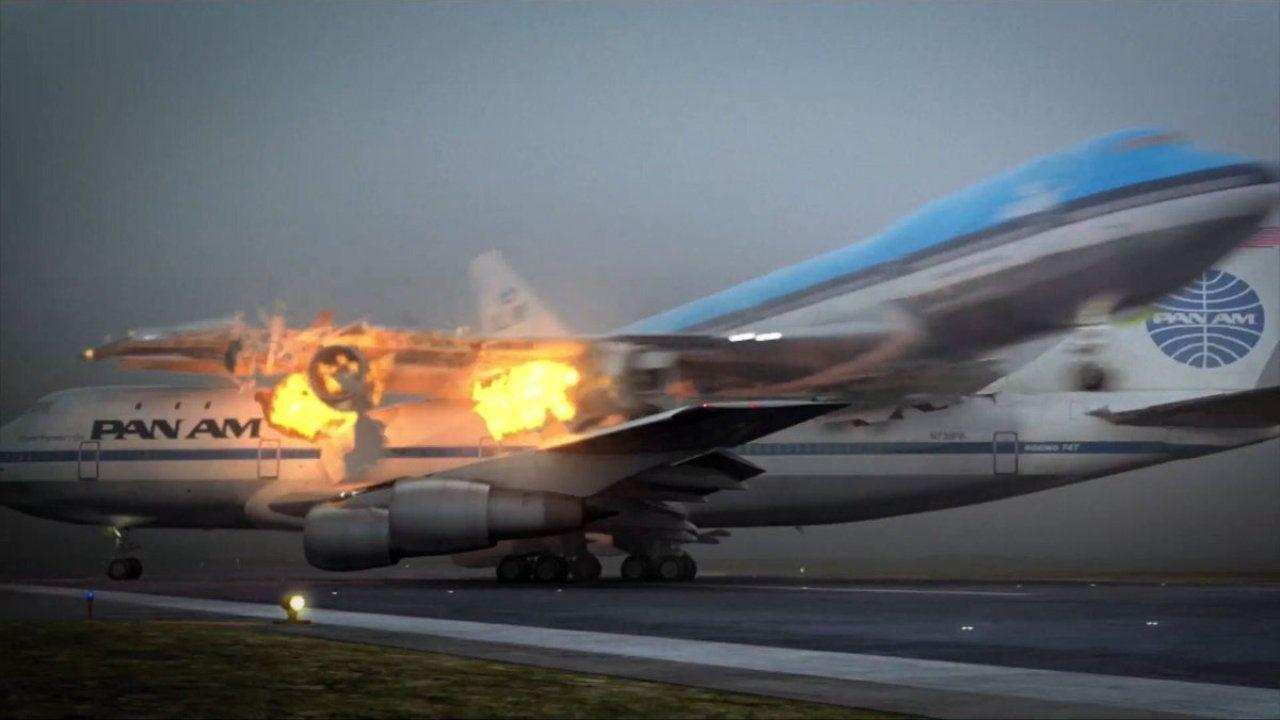

Tenerife Air Disaster Documentary (Mayday: Air Disaster)

Loss of Life

  • KLM Aircraft: All 248 people on board perished.
  • Pan Am Aircraft: 335 people died; only 61 survived.


In total, 583 people lost their lives, making this the deadliest accident in aviation history.

Measures and Changes Implemented After the Accident

The Tenerife accident triggered fundamental changes not only in aviation but also in operational systems reliant on human factors. In the aftermath, numerous new procedures and standards were introduced to enhance aviation safety.

Standardization of Communication Protocols

One of the primary causes of the accident was miscommunication between the flight crew and air traffic control (ATC). This led to a complete overhaul of communication protocols.

Use of Standardized Terminology

  • The word “takeoff” was restricted to use only when actual takeoff clearance had been granted. Previously, it had been used during pre-takeoff preparations, leading to dangerous misunderstandings. This necessitated clearer and more specific terminology.
  • Commands for holding position were made more explicit, and mandatory readbacks were introduced (e.g., “Hold position” or “Line up and wait”).

Two-Way Confirmation

  • Two-way confirmation procedures became mandatory for all communications between ATC and aircraft crews. If there was any uncertainty, the message had to be repeated until confirmed.

Overcoming Language Barriers

  • English was formally established as the international language of aviation. Mandatory language training and certification programs were introduced for both air traffic controllers and flight crews to ensure proficiency in English.

Cockpit Resource Management (CRM) Training

The Tenerife accident revealed how hierarchical cockpit culture could lead to communication breakdowns and catastrophic outcomes. The captain’s authority caused other crew members to suppress their warnings. This necessitated the adoption of a more egalitarian communication structure in aviation.

Effective Crew Communication

  • CRM training was developed to improve communication, decision-making, and problem-solving within flight crews. It fostered a culture in which the captain’s decisions could be questioned and challenged.

Role and Responsibility Allocation

  • Each crew member was trained to clearly understand their role and contribute equally to operational processes.

Simulation Training

  • Training scenarios based on real incidents were introduced to enhance crew crisis management skills. Communication failures and time pressure, as seen in the Tenerife accident, were integrated into training simulations.

Technological Improvements

Deficiencies in airport infrastructure and technological limitations played a role in the accident. As a result, major advancements were made in both airport and aircraft technology.

Ground Radar Systems

  • Los Rodeos Airport had no ground radar at the time of the accident, making it impossible for controllers to track aircraft positions on the runway. After Tenerife, the installation of ground radar became mandatory at airports prone to fog or low visibility conditions.

Advanced Radio Systems

  • New radio protocols were developed to prevent frequency interference and minimize communication disruptions.

Aircraft Internal Technological Enhancements

  • Aircraft were equipped with systems such as the Ground Proximity Warning System (GPWS) and the Traffic Collision Avoidance System (TCAS), which alert the flight crew when the aircraft is approaching another aircraft or ground obstacle in a hazardous manner.


Tenerife Air Disaster Documentary (Mayday: Air Disaster)

Improvement of Airport Infrastructure

The Tenerife accident highlighted the dangers of excessive traffic loads on small, under-equipped airports. Significant upgrades were implemented at many airports worldwide.

Runway and Taxiway Reconfigurations

  • Additional runways and taxiways were constructed at airports like Los Rodeos, which previously had only one runway and limited taxiway access.
  • Runway lighting and signage were improved to enable safe maneuvering even under low-visibility conditions.

Traffic Management

    Enhancement of Pilot and Controller Training

    Situational Awareness Training

    • Pilots began receiving specialized training to operate safely in low-visibility conditions and at unfamiliar airports.

    Air Traffic Controller Training

    • The language proficiency and decision-making abilities of ATC personnel under stress were improved.
    • Comprehensive training was provided on the use of ground radar and other technological equipment.

    Regulatory Changes

    The Tenerife accident prompted aviation regulatory authorities to enforce stricter safety regulations.

    ICAO and FAA Protocols

    • The International Civil Aviation Organization (ICAO) and the U.S. Federal Aviation Administration (FAA) issued comprehensive reports and introduced binding global regulations in response to the accident.

    Review of Flight Time Limitations

    • Rules governing pilot flight duty times were revised to reduce time pressure and prevent fatigue-related errors.

    Author Information

    Avatar
    AuthorSümeyra UzunJanuary 7, 2026 at 6:37 AM

    Tags

    Discussions

    No Discussion Added Yet

    Start discussion for "Tenerife Face" article

    View Discussions

    Contents

    • Development and Causes of the Accident

      • Aircraft Involved and Human Factors

    • Main Causes of the Accident

      • Miscommunication and Language Issues

      • Weather Conditions and Visibility Restrictions

      • Human Factors and Decision-Making Under Pressure

      • Runway and Facility Deficiencies

    • Accident Sequence and Consequences

      • Collision

      • Loss of Life

    • Measures and Changes Implemented After the Accident

      • Standardization of Communication Protocols

        • Use of Standardized Terminology

        • Two-Way Confirmation

        • Overcoming Language Barriers

      • Cockpit Resource Management (CRM) Training

        • Effective Crew Communication

        • Role and Responsibility Allocation

        • Simulation Training

      • Technological Improvements

        • Ground Radar Systems

        • Advanced Radio Systems

        • Aircraft Internal Technological Enhancements

      • Improvement of Airport Infrastructure

        • Runway and Taxiway Reconfigurations

        • Traffic Management

      • Enhancement of Pilot and Controller Training

        • Situational Awareness Training

        • Air Traffic Controller Training

      • Regulatory Changes

        • ICAO and FAA Protocols

        • Review of Flight Time Limitations

    Ask to Küre