

This article was automatically translated from the original Turkish version.
+1 More
Author(s) | Ahmet Mithat Efendi | ||||||||
|---|---|---|---|---|---|---|---|---|---|
Prepared for Publication | Gizem Akyol | ||||||||
Publisher(s) | Dergâh Yayınları | ||||||||
Publication Year | October 2013 | ||||||||
Number of Pages | 94 | ||||||||
Type(s) | Essay / Pedagogy | ||||||||
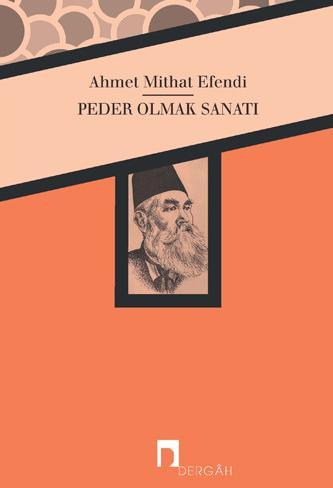
The Art of Being a Father is a pedagogical and social essay written by Ahmet Mithat Efendi (1844–1912), one of the most prolific and pioneering authors of the Tanzimat Era, and prepared for publication by Gizem Akyol, then published by Dergâh Yayınları. The work critically examines the purpose of marriage, the importance of raising good children, and the differences between Western and Ottoman concepts of marriage, particularly aimed at young people. The book, printed in October 2013, consists of 94 pages.
The central aim of The Art of Being a Father, from Ahmet Mithat Efendi’s perspective, is to present marriage not merely as a personal union but as a social responsibility oriented toward the goal of “raising good children.” The author seeks to convey to young people the true purpose of marriage. One of the book’s main topics is the comparison between the Western concept of marriage and the traditional Ottoman family structure. Ahmet Mithat Efendi highlights both the similarities and differences between these two models, encouraging readers to reflect on the strengths and weaknesses of each.
While the book primarily offers advice to fathers and prospective fathers, it also addresses the role of mothers. Emphasizing fundamental principles of pedagogy and the responsibilities of child-rearing, the work underscores the role of the family institution in societal development. In examining the significance of the family structure for both the individual and society within the context of his own era, Ahmet Mithat Efendi also makes references to universal values.
The language and style employed by Ahmet Mithat Efendi in The Art of Being a Father reflect his general didactic approach. Written with the intention of addressing young readers, the text is composed in a simple, fluent, and accessible manner. Rather than engaging in complex philosophical debates, the work prioritizes practical and observation-based insights. The author conveys his knowledge and experience on social issues directly and sincerely to the reader. Although a tone of advice is occasionally detectable, the text as a whole strives to maintain an objective perspective. No promotional or laudatory language is used; the focus remains firmly on the pedagogical and social dimensions of the subject.
Ahmet Mithat Efendi was one of the most prolific authors of the Tanzimat Era and reached the broadest readership of his time. He produced works in diverse fields including the novel, short story, theater, history, and philosophy, adopting the mission of enlightening and informing the public. The Art of Being a Father exemplifies his multidimensionality and his deep engagement with social issues.
The work holds significance as one of the earliest examples in Turkish literature of pedagogical essays. Upon its publication, it contributed to young people’s understanding of marriage and the family institution, while also shedding light on contemporary debates surrounding changing family structures during the process of Westernization. In this regard, it serves as a valuable resource for scholars in sociology, the history of education, and literary studies.
Ahmet Mithat Efendi. *Peder Olmak Sanatı*. Prepared by Gizem Akyol. Istanbul: Dergah Yayınları, 2013. Accessed July 8, 2025. https://www.dergah.com.tr/kitaplar/peder-olmak-sanati.

Author(s) | Ahmet Mithat Efendi | ||||||||
|---|---|---|---|---|---|---|---|---|---|
Prepared for Publication | Gizem Akyol | ||||||||
Publisher(s) | Dergâh Yayınları | ||||||||
Publication Year | October 2013 | ||||||||
Number of Pages | 94 | ||||||||
Type(s) | Essay / Pedagogy | ||||||||
No Discussion Added Yet
Start discussion for "The Art of Being a Father (Book)" article
Content and Thematic Structure
Language and Style
The Author’s Position and the Significance of the Work