

This article was automatically translated from the original Turkish version.
Name(s) | Borley Rectory Case | ||||||||
|---|---|---|---|---|---|---|---|---|---|
Type(s) | Paranormal Event | ||||||||
Location | England Essex Borley | ||||||||
Building Type | Parsonage (rectory) | ||||||||
Construction Year | 1863 | ||||||||
Paranormal Events | wall writings objects thrown into stairwells small objects moving locations keys falling from or disappearing from locks lights moving in front of windows in empty rooms appearance of a black carriage silhouette of a nun in dark clothing rhythmic footsteps in staircases and corridors wall and door knocks Doorbells and servant call bells ringing spontaneously | ||||||||
Lead Researcher | Harry Price | ||||||||
Research Method | use of photography and flash simultaneous internal and external monitoring mercury container for vibration testing chalk marking of positions rope and lead sealing Observer instructions | ||||||||
The Borley Rectory Case refers to a series of paranormal phenomena reported in a house located in the village of Borley, in Essex, England, from the late 19th century through the mid-20th century. The building, constructed in 1863, became known as “England’s most haunted house” due to increasing reports, especially from the 1920s onward. The phenomena included visual and auditory apparitions, claims of objects moving spontaneously, writings appearing on walls, and messages received during various séances.
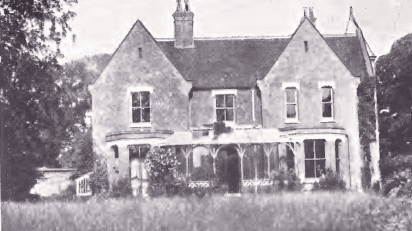
The Borley Rectory House (Harry Price)
Rumors surrounding the Rectory first emerged during the time the Bull family lived there and later spread more widely through the experiences of the Smith and Foyster families.【1】 In the 1930s, the events gained national media attention following investigations by paranormal researcher Harry Price. Interest did not wane despite the fire of 1939 and the building’s demolition in 1944. Price’s published books, planchette sessions, and visual recordings helped establish the case as a central subject in both scientific debate and popular culture.

A Summer Cottage on Nun’s Walk (Harry Price)
The Borley Rectory case presents a layered structure fed by local legends—such as those of the headless nun and the ghostly horse-drawn carriage—on one hand, and by contemporary observational reports on the other.【2】 For this reason, the case is regarded not merely as a ghost story but also as an example worthy of attention for its psychological, folkloric, and social dimensions.
Borley Rectory was a clergy house adjacent to the church and graveyard in the village of Borley. The main building followed 19th-century Victorian stone-and-brick construction traditions; its symmetrical facade, multiple chimneys, wide staircase well connecting the floors, and long corridors defined its character. Inside, rectangular rooms opened onto the corridor; service areas—kitchen, pantry, servants’ rooms—were located along the rear axis, while living and bedroom spaces occupied the front and side wings. Local accounts suggest the presence of basement or attic extensions and traces of earlier religious structures beneath the ground level.
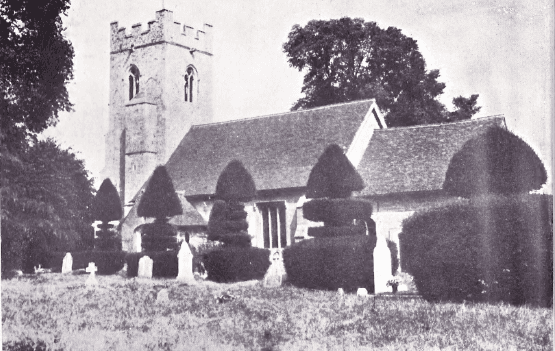
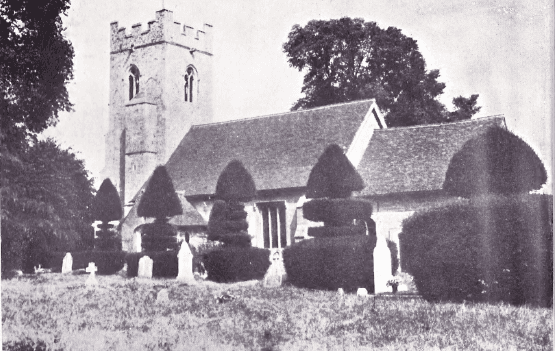
The Borley Rectory Building and the Adjacent Borley Church (Harry Price
【3】
Two focal points stand out in the external space: the path leading to the church and the lawn area facing this path. The path is referred to in local literature as “Nun’s Walk” and is consistently described as a recurring route in visual accounts. The garden contains wooded areas, walled internal pathways, and a curved driveway at the property entrance.
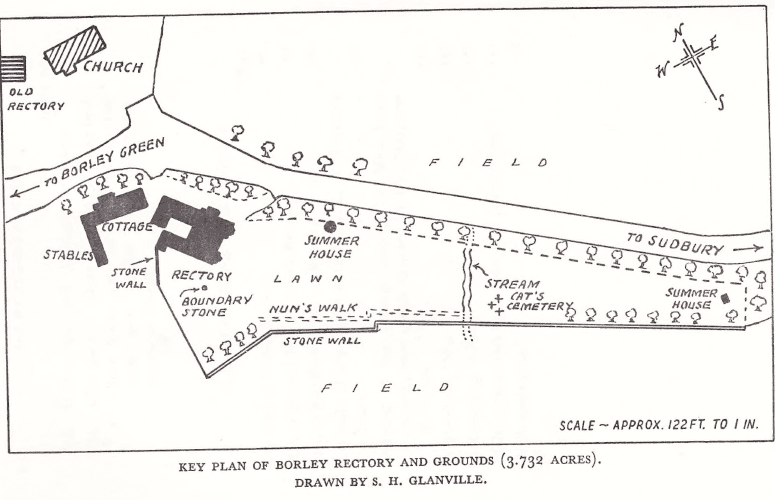
Map of the Borley Rectory and Its Surroundings Where Paranormal Events Occurred (Harry Price
【4】
Harry Price【5】
The connection between structural elements and paranormal narratives centers on three motifs: (i) circulation areas (staircase/corridor)—footsteps, scraping, and ringing sounds; (ii) the garden-church axis—silhouette and shadow observations; (iii) the basement/attic—claims of object displacement and sounds or stone-throwing in storage rooms. These connections are consistently presented with information on location, direction, and distance in most accounts.
The Rectory was built in the early 1860s to serve as the residence for the clergy of Borley Church. Shortly after the first priest’s family moved in, local rumors circulated about “strange sounds,” “light and shadow effects,” and silhouette-like sightings in the garden. These early accounts were not systematically documented; however, they merged with local narratives suggesting the site bore traces of older religious structures, forming a folkloric foundation.
The Smith family, who moved into the building in 1928, soon reported observations such as doorbells ringing spontaneously, repeated knocks on walls and doors, the throwing of small stones or pebbles, and objects changing position. These incidents attracted media attention and led to increased visits and brief investigations from outsiders. This period produced the first systematic examples of note-taking, time-stamped records, and site descriptions.
During the Foyster family’s occupancy, the claims became more varied and intensified. Short writings appearing on walls, persistent sensations of footsteps or dragging, object throwing, and patterns of items disappearing and reappearing were reported. Domestic tensions, relationships with third parties, and visitor traffic introduced contextual factors that rendered some testimonies controversial. While the narratives became more detailed during this phase, controlled conditions and overlapping eyewitness accounts were not consistently achieved for every incident.
Paranormal researcher Harry Price rented the building in 1937 and conducted a long-term field investigation using an independent network of observers. Tools such as observer instruction manuals, standardized incident forms, and spatial mapping were employed systematically; scheduled surveillance was applied to specific areas. During the same period, séances produced textual content—including the “Marie Lairre” narrative—and a background story involving motifs of wells, burials, monasteries, and rituals was documented.【6】 Price’s field notes and popular publications brought the case to national prominence.
The fire of 1939 caused severe damage to the structure; by 1944, the remaining portions had been demolished. Nevertheless, the case remained in public discourse through field notes, observer reports, planchette transcripts, and popular publications. Occasional reports of observations continued to surface on the site and along the surrounding church grounds after the demolition.
During the Smith family’s occupancy beginning in 1928, it was reported that the house’s doorbells rang spontaneously, servant call bells in empty rooms were repeatedly triggered at night, and rhythmic footsteps were heard along the corridor-staircase axis. Knocking sounds typically concentrated on walls and doors, sometimes recurring at specific times in the evening. Despite checking electrical and mechanical connections, the family noted they could not determine the source of the irregular and persistent ringing, observing that the sounds were often amplified by echoes in the entrance halls and stair landings.

Nun’s Walk (The Nun’s Path) - (Harry Price【7】
During the same period and afterward, accounts described small stones and pebbles falling toward the staircase void or rolling down the steps. These events often occurred unexpectedly, and witnesses never identified a visible “thrower” or mechanical mechanism. On some evenings, several consecutive throws followed one another, with stones accumulating at the core of the up-and-down circulation path—the staircase well, the hall, and the junctions of corridors.
The path connecting the garden to the church is prominently referred to in local narratives as “Nun’s Walk.” A series of testimonies describe a dark-clad, veiled female silhouette moving slowly along this route, particularly at twilight and night. Descriptions repeatedly include details such as the figure blurring upon approach, blending into the background among tree shadows, or “dissolving” as the observer drew nearer. The path’s alignment along the garden-church axis reinforces the spatial continuity of the narrative.

Interior Plan of Borley Rectory (Harry Price【8】
Less frequently, sightings of an old-style horse-drawn carriage—often described as a “black phaeton”—were reported briefly in the vicinity of the building. Accounts typically depict two horses and a driver (“coachman”); auditory elements such as wheel or hoof sounds are usually absent or indistinct. The appearance is fleeting, vanishing upon approach, and no consistent route is established for its reappearance.
Light patches, described as either stationary or elliptical in motion, were reported on the windows of upper-floor rooms known to be unoccupied. External observers sometimes claimed to see two distinct light sources simultaneously, while those inside reported seeing only their own lamp; such cross-observer discrepancies frequently appear in the narratives due to differences in internal and external perception. These events were most commonly reported during evening and nighttime hours.

Ground Floor Plan of Borley Rectory (Harry Price【9】
The household reported that keys left on locks at night were found on the floor in the morning; small objects such as chalk soap and candle fragments had been moved; and certain items appeared to have been “thrown” into the stairwell. These events most often occurred during brief intervals when no one was present such as during room changes or when lights were turned off and on. The objects involved were typically small and light, a detail that contributed to skepticism regarding the reliability of the reports due to the possibility of unnoticed manipulation.
During the Foyster family’s occupancy it was reported that short phrases and messages appeared on interior walls, often addressed specifically to the residents particularly the housekeeper. Records indicate that the writing appeared to have been made with chalk and that some instances were erased and reappeared elsewhere on the same day. This narrative strand is among the most controversial aspects of the case because there are few documented instances of third-party witnesses observing the messages as they appeared and the domestic context daily routines visitor traffic and child-adult activity complicates interpretation.

Researcher Lying in the Room Where Double Lights Were Reported and Where Footsteps Were Heard (Harry Price【10】
Among the accounts provided by the Foysters were sensations of being “tugged” or “lightly pushed” at the shoulder near stair and corridor transitions and descriptions of being touched on the back or having clothing tugged while alone in a room. Such close-proximity phenomena typically occurred briefly suddenly and unexpectedly and corroboration by a second witness at the same moment was rarely possible. Nevertheless reports note a tendency for these events to cluster around specific focal points such as corridor corners and the top of the stairs.
Some incidents reported before and after the séances conducted in the autumn of 1937 were linked to specific spatial elements such as the location of the “well” a “tree near the wall” in the garden and references to “burial” or “grave.” Session notes were systematically dated and recurring motifs were recorded during sittings on October 25 28 30–31 and in November December and January including “look at the well in the cellar” “buried near the wall in the garden” and “desire for Mass.”

The “Mysterious Jacket” Said to Have Appeared in Room 6 and the Area Where Abnormal Cold Spots Were Observed (Harry Price【11】
Harry Price【12】
Regular participants included A. J. Cuthbert Roger H. Glanville Mark Kerr-Pearse and Helen Glanville. In some sessions observer and scribe roles were separated and dates times and question–answer sequences were recorded in notebooks. In the initial weeks isolated place names proper names and fragments of dates appeared randomly but from late October onward messages began to cluster around recurring motifs that echoed fixed elements of an old “sin–punishment–burial” chain.

Example from Planchette Communications (Harry Price【13】
The first persistent theme was the emphasis on wells and cellars or underground spaces. Words such as “well” “cellar” and “pit” reappeared on different days often accompanied by actions like “look” “dig” and “under” and sometimes completed with directional phrases such as “by wall” or “near wall.” These sequences reinforced the association of burial or entombment with a tree or boundary element near the garden wall.
The second consistent motif was the request for a Mass. Abbreviations such as “Mass” “Requiem” and “O.S.B.” and other terms referencing Catholic ritual suggested a recurring plea for spiritual peace. Some responses took the form of brief imperatives such as “say Mass” or “need Mass.” The third persistent pattern consisted of interrelated place and date markers: “Bures” interpreted as a reference to a surrounding settlement “Havre/Hâvre” written in a manner evoking the French port city and the date “1667” appeared most frequently together. This triplet gradually constructed the narrative of “a woman of French origin dating to the 17th century.”
In this context the central figure of the planchette texts is “Marie Lairre.” The name appeared in various forms across sessions as “Marie” “M. Lairre” or combined spellings and was sometimes paired with terms such as “nun” or equivalent brief descriptors. The narrative’s framework followed a trajectory aligned with the local legend’s “garden–church” axis and a triad of “forbidden relationship–discovery–punishment”: verbs such as “caught” “taken” and “walled” reinforced associations of capture and entombment while the “well/cellar” thread continuously sustained the image of a body concealed or covered.
Some messages conveyed brief sharp emotions (“cold” “dark” “hurt”) while others adopted a patient instructional tone (“dig near wall” “find under”). The texts lack formal consistency: on some days a simple yes–no rhythm prevailed while on others letters rapidly assembled and scattered producing fragmented syllables and partial words. Incorrect letters were often erased with “no” commands and the same word was sometimes repeated in two or three distinct spellings. This fluctuating pattern appears to reflect both the emotional state of the participants and the physical speed of the planchette movement.

Typewritten Record of the Ouija Board Communications (Harry Price【14】

【15】
BritFlicks. “THE GHOSTS OF BORLEY RECTORY Official Trailer (2021).” YouTube. Accessed October 2, 2025. https://www.youtube.com/watch?v=I_iixDIjPec.
Cambridge University Library. *Papers on BBC cancelled 1956 broadcast The Haunted Rectory, 1956, GBR/0012/MS SPR/6/13/28-36*. Archival object record, Cambridge University Library. Accessed October 2, 2025. https://archivesearch.lib.cam.ac.uk/repositories/2/archival_objects/629378.
Foxearth & District Local History Society. "Borley Rectory Pictures." Foxearth.org.uk. Accessed October 2, 2025. https://www.foxearth.org.uk/BorleyRectoryPictures/Page.html.
Fraser, John. “‘Harry Price.’” *Psi Encyclopedia*. London: The Society for Psychical Research, June 10, 2017. Last updated September 6, 2025. Accessed October 2, 2025. https://psi-encyclopedia.spr.ac.uk/articles/harry-price. PDF: https://psi-encyclopedia.spr.ac.uk/sites/default/files/ebook/article/price_harry-357.pdf.
Price, Harry. *Alleged Haunting of Borley Rectory: The Planchette Scripts*. Transcripts, 1945–1953. File presented to Harry Price by Mr. Glanville. Accessed October 2, 2025. https://drive.google.com/file/d/1jRJL6pzhF2F7aM2TyxhxAEw2RwwoP58V/view.
Price, Harry. *Confessions of a Ghost-Hunter*. London: Putnam, 1936. Digital access: Digital Library of India, Salar Jung Museum, Hyderabad. Internet Archive, added January 17, 2017. Accessed October 2, 2025. https://archive.org/details/in.ernet.dli.2015.218596.
Price, Harry. *Fifty Years of Psychical Research: A Critical Survey*. London, New York, Toronto: Longmans, Green and Co., 1936. Digital access: Digital Library of India, State Central Library, Hyderabad. Internet Archive, added January 16, 2017. Accessed October 2, 2025. https://archive.org/details/in.ernet.dli.2015.172901/page/n7/mode/2up.
Price, Harry. *The Most Haunted House in England: The Story of Borley Rectory*. Internet Archive, July 30, 2016. Accessed October 2, 2025. https://archive.org/details/TheMostHauntedHouseInEnglandTheStoryOfBorleyRectoryByHarryPrice.
University of Maryland, Baltimore County (UMBC) Special Collections. “The Haunting of Borley Rectory.” *Garrett Collection – Hauntings*, UMBC Special Collections. Accessed October 2, 2025. https://library.umbc.edu/specialcollections/garrett/hauntings/borley-rectory/.
Willin, Melvyn. “‘Borley Rectory.’” *Psi Encyclopedia*. London: The Society for Psychical Research, September 18, 2015. Last updated November 13, 2024. Accessed October 2, 2025. https://psi-encyclopedia.spr.ac.uk/articles/borley-rectory. PDF: https://open-data.spr.ac.uk/sites/default/files/ebook/article/borley_rectory-232.pdf.
“Fifty & 100 Years Ago.” *Nature* 440 (2006): 616. https://doi.org/10.1038/440616a. PDF: https://www.nature.com/articles/440616a.pdf.
[1]
Harry Price, The Most Haunted House in England: The Story of Borley Rectory, Internet Archive, 30 July 2016, p. 10.
[2]
Harry Price, The Most Haunted House in England. 2016, p. 10.
[3]
[4]
Harry Price, The Most Haunted House in England. 2016, p. 1.【4】
Adjacent service structures—stable and servants’ quarters—and internal communication lines connected to the bell system (used for summoning servants at the time) contributed to the acoustic perception within the house. This spatial arrangement provided a foundation for the recurring descriptions of auditory phenomena such as footsteps, doorbell rings, and wall knocks, particularly concentrated at specific locations, and for the repeated depictions of corridors, staircases, and transitions between levels.
[5]
Harry Price, The Most Haunted House in England. 2016, p. IV.
[6]
Planchet Session: Refers to communication conducted with entities believed to have taken possession of a house. The conversation is recorded in writing and typically consists of yes-or-no questions.
[7]
Harry Price, The Most Haunted House in England. 2016, p. 10.
[8]
Harry Price, The Most Haunted House in England. 2016, p. 17.
[9]
Harry Price, The Most Haunted House in England. 2016, p. 23.
[10]
Harry Price, The Most Haunted House in England. 2016, p. 64.
[11]
Harry Price, The Most Haunted House in England. 2016, p. 64.【12】
Participants in the séances included A. J. Cuthbert Roger H. Glanville Mark Kerr-Pearse and Helen Glanville. In some sessions responses followed an “yes–no” code. This narrative strand gave rise to the story layer known as “Marie Lairre” which coalesced around keywords such as “Havre/Hâvre” “Bures” “1667” “Requiem” and “O.S.B. (Benedictine).”
Planchette Messages and the “Marie Lairre” Narrative
In the autumn of 1937 following the rental of Borley Rectory séances were conducted in parallel with designated observation days. The brief fragmented and often single-word messages allegedly received during these sessions gradually formed a coherent “backstory.” The mechanism relied on a pencil or pointer guided by two fingers on a table to spell out letters and produce “yes–no” responses or letter sequences.
[12]
Harry Price, The Most Haunted House in England. 2016, p. 77.
[13]
Harry Price, *Alleged Haunting of Borley Rectory: The Planchette Scripts*, transcripts, 1945–1953, file presented to Harry Price by Mr. Glanville, p. III.
[14]
[15]
Harry Price, *Alleged Haunting of Borley Rectory*, p. 45.


Name(s) | Borley Rectory Case | ||||||||
|---|---|---|---|---|---|---|---|---|---|
Type(s) | Paranormal Event | ||||||||
Location | England Essex Borley | ||||||||
Building Type | Parsonage (rectory) | ||||||||
Construction Year | 1863 | ||||||||
Paranormal Events | wall writings objects thrown into stairwells small objects moving locations keys falling from or disappearing from locks lights moving in front of windows in empty rooms appearance of a black carriage silhouette of a nun in dark clothing rhythmic footsteps in staircases and corridors wall and door knocks Doorbells and servant call bells ringing spontaneously | ||||||||
Lead Researcher | Harry Price | ||||||||
Research Method | use of photography and flash simultaneous internal and external monitoring mercury container for vibration testing chalk marking of positions rope and lead sealing Observer instructions | ||||||||
No Discussion Added Yet
Start discussion for "The Borley Rectory Case" article
Building and Site
History
Construction and Early Period (Late 19th Century)
The Smith Period (1928–1929)
The Foyster Period (1930–1935)
The Harry Price Period (1937–1938)
Fire and Demolition (1939–1944)
Claimed Phenomena: Core Narratives