

This article was automatically translated from the original Turkish version.
+1 More
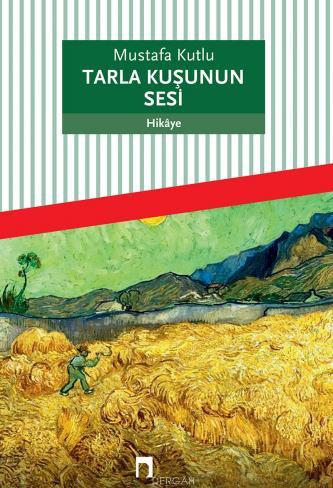
Author(s) | Mustafa Kutlu | ||||||||
|---|---|---|---|---|---|---|---|---|---|
Number of Pages | 226 | ||||||||
Type(s) | Story | ||||||||
Publisher(s) | Dergâh Yayınları | ||||||||
First Publication Year | October 2017 | ||||||||
The Voice of the Field Bird is one of Mustafa Kutlu’s lengthy narratives that examine social transformation through the lens of the individual and the family, woven with historical realities. The novel depicts the transition of Anatolia’s nomadic culture to a settled way of life, while simultaneously presenting a broad historical panorama spanning from the late Ottoman period to the Republican era.
The story begins with Molla Murat, a bright and agile child raised in the mountains who cannot read or write. Drawn to the attention of a battalion imam, Murat gradually becomes a wise leader among his people. He begins to lead a nomadic community, persuades them to adopt a settled lifestyle, and founds a village he names Çamaltı.
The novel traces generational struggles, wars, and social change through Molla Murat’s family. His sons Mustafa, Bekir, and Bilal die as martyrs in the Battle of Çanakkale. His grandson Hamit becomes the continuation of the family line. The events span from the reign of Sultan Abdülhamid II through the proclamation of the Republic and into the era of reforms.
Molla Murat: The protagonist of the story. Leader of the nomadic people. A smart, courageous, and forward-thinking character.
Saliha: The daughter of a bey and Molla Murat’s first wife. She is unable to bear children.
Gülhanım: A girl from a nomadic background. Molla Murat’s second wife. Loved by the family.
Mustafa: Murat’s son. Dies as a martyr in the Battle of Çanakkale.
Binnaz: Mustafa’s wife and Hamit’s mother. Dies shortly after her husband.
Hamit: Murat’s grandson. He continues Murat’s lineage. Marries Cemile and has four children.
Cemile, Yusuf, Ziya, Ayşe, Sefa: Represent the new generation of the family.
Karaduman: A bandit who demands tribute from Molla Murat. He is neutralized by Murat.

Representation of Molla Murat and His Family (Generated by Artificial Intelligence)
Transition from Nomadic to Settled Life: The Voice of the Field Bird narrates the end of traditional nomadic life and the hardships of transitioning to a settled order. Under Molla Murat’s leadership, the Yöruk tribe, raised with the values of nomadic culture, establishes contact with the state, purchases land, and founds the village of Çamaltı. This transition is not merely physical settlement but also a transformation of mindset. As the traditional order dissolves, it gives way to a new social structure, and the novel represents a rupture in civilization.
Social Change and Modernization: The societal transformation from the Ottoman Empire to the Republic is conveyed through individual experiences. Molla Murat evolves from a religious leader to a socio-political guide. The appointment of a revolutionary teacher to the village creates tension between tradition and modernity. While the gendarmerie commander mediates this conflict, the story bears witness to the village’s progress toward modernization.
Family and Intergenerational Continuity: Family bonds form the structural backbone of the narrative. Molla Murat carefully raises his children and grandchildren. His sons Mustafa, Bekir, and Bilal die as martyrs at Çanakkale. His grandson Hamit preserves both the family lineage and the memory of nomadic heritage. This theme establishes a powerful connection between the burden of the past and the hope of the future.
Patriotism and War: The First World War and the subsequent War of Independence shape the novel’s dramatic structure. Molla Murat and his family do not merely engage in economic or cultural struggles but also take up physical arms to defend their land and values. Nomads, who become symbols of resistance, defend their villages against Greek occupation. The martyrdom of Mustafa and his brothers embodies the people’s sacrifice.
The Role of Women in Society: The novel also draws attention through its female characters. Saliha, the bey’s daughter, fails to adapt to nomadic life. Gülhanım, a commoner, forms the foundation of the family. Binnaz is a tragic figure who becomes a young widow and entrusts her son to her grandfather. Women in the story serve both as self-sacrificing mothers and as the pillars of the household.
Leadership and Popular Leadership: Molla Murat is not merely a ruler but a protector, mentor, and builder of the future for his people. His leadership stands at the transition point between the traditional “bey” identity and the modern concept of “community leader.” His struggle against bandits like Karaduman, his integration of his people into the state, and his connections with civic societies reinforce this role.
Reforms and Cultural Adaptation: The reforms enacted after the proclamation of the Republic are reflected in the novel’s final sections. The arrival of the new teacher marks a new phase in communication between the villagers and the state. The encounter between traditional leaders like Molla Murat and revolutionary cadres symbolically represents Türkiye’s journey toward modernization.
Kutlu, Mustafa. Tarla Kuşunun Sesi. Dergah Yayınları, 2024.

Author(s) | Mustafa Kutlu | ||||||||
|---|---|---|---|---|---|---|---|---|---|
Number of Pages | 226 | ||||||||
Type(s) | Story | ||||||||
Publisher(s) | Dergâh Yayınları | ||||||||
First Publication Year | October 2017 | ||||||||
No Discussion Added Yet
Start discussion for "The Call of the Field Bird (Book)" article
Subject
Characters
Themes