


This article was automatically translated from the original Turkish version.
+2 More
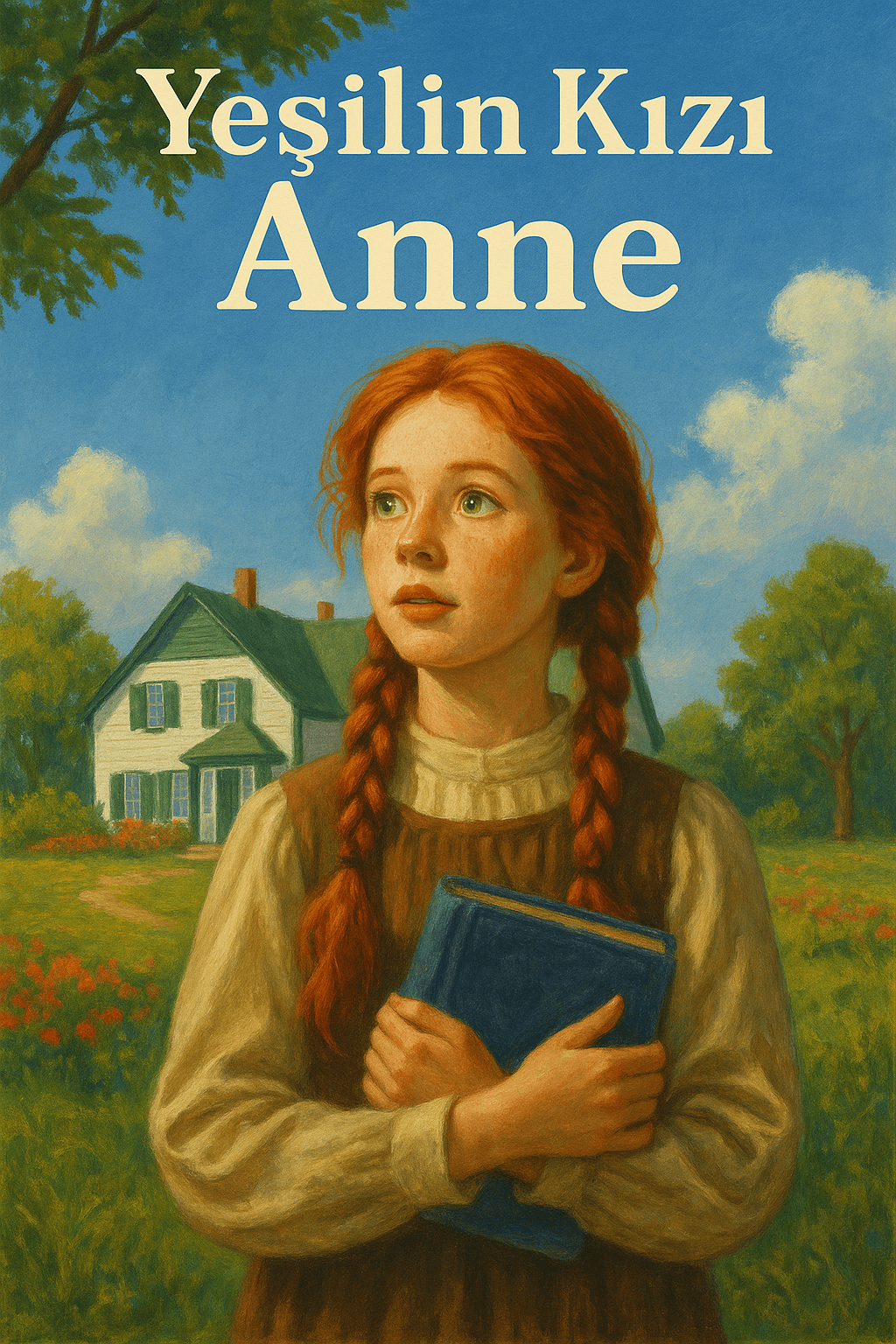
Lucy Maud Montgomery’s novel Anne of Green Gables is the first book in the series of the same name, published in 1908. The story follows Anne Shirley, an orphaned girl who is mistakenly adopted by the sibling pair Marilla and Matthew Cuthbert, who live on Prince Edward Island. While exploring themes such as individual development, social gender roles, education, and imagination, the novel also reflects the socio-cultural structure of its time.
Representative Anne Shirley (generated by artificial intelligence)
Anne of Green Gables begins when Anne Shirley, an orphaned girl, is accidentally adopted by the Cuthbert siblings, who had intended to take in a boy. Anne’s vivid imagination, boundless energy, and talkative nature initially astonish those around her; however, over time these traits help her gain acceptance in the community. The novel addresses themes such as the search for personal identity, a sense of belonging, education, and social gender roles. Anne’s character development is shaped by her inner motivations and the influence of those around her. This process narrates her transition from childhood to adulthood and her integration into society.
Representative Anne Shirley (generated by artificial intelligence)
Anne Shirley occupies the center of the series, and the narrative unfolds along the axis of her personal growth.
Matthew and Marilla Cuthbert, who decide to adopt Anne into their home at Green Gables, embody two distinct social and emotional orientations.
The interactions among these characters point to a form of family sociology that questions, within an academic context, how emotional support and discipline are balanced in a child’s development.
Anne’s closest friend, Diana Barry, is a significant figure in representing social circles and female friendships.
Gilbert Blythe, the male character in the series, is connected to Anne both academically and emotionally.
Anne of Green Gables is an exemplary work of the bildungsroman genre, which focuses on an individual’s development. The novel’s narrative structure is shaped through Anne’s inner world and her relationships with her surroundings. The narrator employs a third-person perspective to recount events while providing deep insight into Anne’s thoughts and emotions. This structure enables readers to empathize with the character and closely follow her developmental journey.
The novel offers a critical perspective on the social gender roles of its time. Anne’s desire for education, her independence, and her behavior that defies traditional female roles have led many to view her as a feminist character. However, in later books of the series, Anne’s focus on marriage and motherhood has been interpreted by some critics as a departure from feminist ideals. This complexity renders the novel’s relationship with social gender roles multifaceted and layered.
Anne of Green Gables has been translated into numerous languages since its publication and has reached wide audiences through various media adaptations. Television and film versions of the novel have gained particular popularity among young viewers. These adaptations have contributed to the novel’s reinterpretation in different cultural contexts and to the international recognition of Montgomery’s works.
Lucy Maud Montgomery was born in 1874 on Prince Edward Island and raised by her grandparents after her mother’s early death. Montgomery’s life was shaped by the strict religious and social norms of her era. During a time when women’s access to education and career opportunities was limited, Montgomery’s literary career demonstrated her resistance to these norms. Her personal experiences and observations are reflected in her works, particularly in the strong and independent portrayals of female characters.
Anne of Green Gables has become an important literary and cultural work through its exploration of themes such as individual development, social gender roles, and imagination. Lucy Maud Montgomery’s personal experiences and the socio-cultural structure of her time have enriched the depth and originality of the novel. The characters, narrative structure, and themes of the book position it uniquely within both children’s literature and general literature.

No Discussion Added Yet
Start discussion for "The Daughter of Green Mother (Book)" article
Plot and Themes
Character Analysis
Anne Shirley: Central Character and Representation
Matthew and Marilla Cuthbert: A Universal Family Model
Diana Barry: Friendship and Social Context
Gilbert Blythe: Academic Competition and Romantic Dynamics
Literary Genre and Narrative Structure
Social Gender Roles and Feminist Perspective
Cultural Impact and Adaptations
Lucy Maud Montgomery and the Socio-Cultural Structure of Her Time