


This article was automatically translated from the original Turkish version.
+1 More
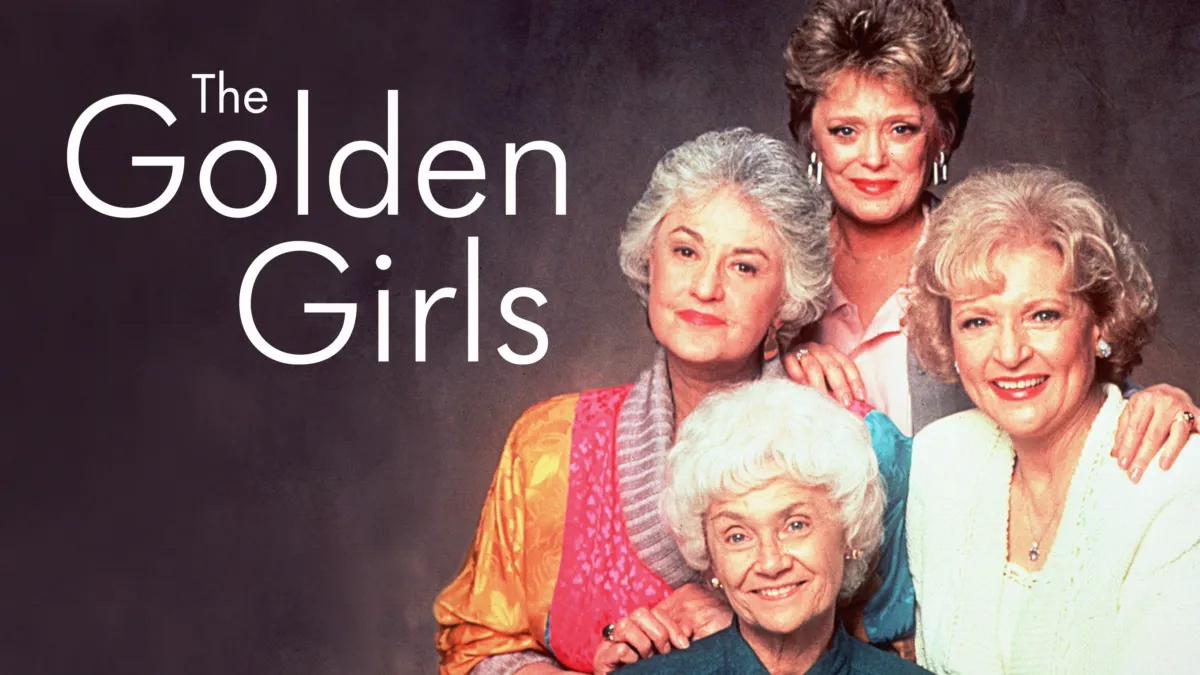
The Golden Girls
Production Year | 1985-1992 | ||||||||
|---|---|---|---|---|---|---|---|---|---|
Type(s) | Sitcom | ||||||||
Number of Episodes | 180 | ||||||||
Number of Seasons | 7 | ||||||||
Director(s) | David Trainer Lex Passaris Terri Minsky Paul Bogart | ||||||||
Main Cast | Estelle Getty (Sophia Petrillo) Rue McClanahan (Blanche Devereaux) Betty White (Rose Nylund) Bea Arthur (Dorothy Zbornak) | ||||||||
Key Themes | Social issues with humorous commentary Social norms Gender equality Women's rights Family relationships Friendship Old age | ||||||||
The Golden Girls is an American sitcom that aired from 1985 to 1992. Created by Susan Harris, produced by Touchstone Television (now ABC Signature), and broadcast on NBC, the series ran for seven seasons and 180 episodes. The main cast features Bea Arthur, Betty White, Rue McClanahan, and Estelle Getty.
It has left a lasting impact on popular culture and has been adapted in various countries.
The Golden Girls is an American sitcom that centers on the shared living experiences of four women in their later years. Set in Miami, Florida, the series follows the daily lives, social interactions, and personal histories of four widowed or divorced women who become housemates.
The characters’ distinct personalities drive their dialogues and conflicts, forming the core of the show. Throughout its run, the series explores themes such as aging, friendship, romantic relationships, family bonds, health issues, and societal norms. While these topics are primarily addressed with humor, they occasionally incorporate dramatic elements.
Dorothy is known for her sharp wit, sarcastic humor, and intellectual personality. A former teacher, she often serves as the group’s voice of reason. She lives with her mother, Sophia.
Rose hails from St. Olaf, a small town in Minnesota. She is portrayed as innocent, optimistic, and somewhat naive. She frequently recounts peculiar and absurd stories from her life in St. Olaf. Her good-natured and generous demeanor makes her a standout among the other characters.

A scene from The Golden Girls (D23)
Blanche is a Southern-born, confident, and flirtatious woman. She lives in a family home and was the first to propose the idea of house-sharing. Her extroverted personality, self-assuredness, and romantic pursuits define her character. She challenges the era’s norms with her open attitude toward female sexuality.
Sophia is Dorothy’s mother. Born in Sicily, she moved in with her daughter after leaving a nursing home. She is known for her honesty, sharp tongue, and biting humor. Throughout the series, she shares brief but impactful stories from her past.
The dynamic among these four women forms the foundation and comedic engine of the series. Despite their differences in age and life experience, their bond is consistently portrayed as a strong and enduring friendship.
The series transformed television conventions by placing elderly women at the center of the narrative, a rarity in its time. All main characters are aged 50 and above. In doing so, it offered an alternative to traditional portrayals by depicting older women as independent, witty, romantic, and active individuals.
The show’s humor arises from the interplay between its distinct personalities: the stern and rational Dorothy, the innocent and well-meaning Rose, the self-assured and romantic Blanche, and the sharp-tongued and energetic Sophia. These interactions form the core of the series’ comedic structure.
Beyond everyday comedy, the series addressed a wide range of social issues including aging, death, women’s health, divorce, immigration, homosexuality, HIV/AIDS, racism, and gender roles. This made it a progressive and socially aware example of storytelling for its time.
The series has been locally adapted under different titles in various countries around the world. It continues to maintain a presence in cultural life through theatrical productions and themed events.

A scene from The Golden Girls (tvguide)
The series is among the few to have won Emmys for all its lead female actresses.
"Golden Globe Awards for 'The Golden Girls.'" GoldenGlobes.com, Hollywood Foreign Press Association, Accessed April 16, 2025. https://www.goldenglobes.com/tv-show/golden-girls.
"The Golden Gırls," *Beyaz Perde*, Accessed April 17, 2025, https://www.beyazperde.com./aramak/?q=the+golden+g%C4%B1rls
Sara Bibel, The Golden Girls: A Cultural History (Lanham, MD: Rowman & Littlefield, 2017).
Tim Brooks and Earle Marsh, The Complete Directory to Prime Time Network and Cable TV Shows, 1946–Present, 9th ed. (New York: Ballantine Books, 2007).

The Golden Girls
Production Year | 1985-1992 | ||||||||
|---|---|---|---|---|---|---|---|---|---|
Type(s) | Sitcom | ||||||||
Number of Episodes | 180 | ||||||||
Number of Seasons | 7 | ||||||||
Director(s) | David Trainer Lex Passaris Terri Minsky Paul Bogart | ||||||||
Main Cast | Estelle Getty (Sophia Petrillo) Rue McClanahan (Blanche Devereaux) Betty White (Rose Nylund) Bea Arthur (Dorothy Zbornak) | ||||||||
Key Themes | Social issues with humorous commentary Social norms Gender equality Women's rights Family relationships Friendship Old age | ||||||||
No Discussion Added Yet
Start discussion for "The Golden Girls (TV Series)" article
Plot
Characters
Dorothy Zbornak (Bea Arthur)
Rose Nylund (Betty White)
Blanche Devereaux (Rue McClanahan)
Sophia Petrillo (Estelle Getty)
Key Features
Unconventional Character Representation
Comedic Style and Character Dynamics
Sensitivity to Social Issues
Theatrical Adaptations and Revivals
Awards
Primetime Emmy Awards
Golden Globe Awards
Other Notable Awards and Honors