


This article was automatically translated from the original Turkish version.
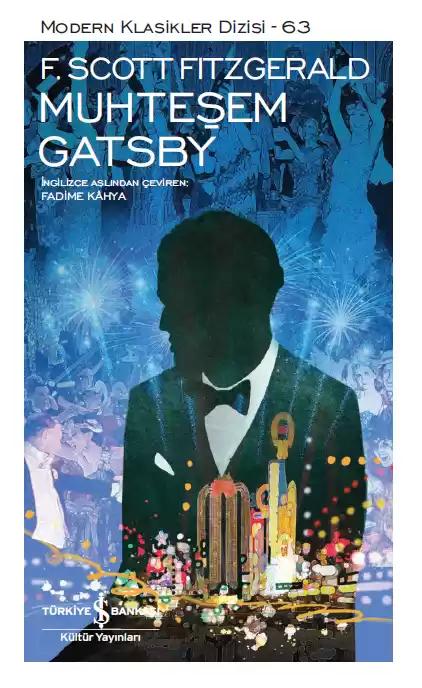
The Great Gatsby
Author(s) | F. Scott Fitzgerald | ||||||||
|---|---|---|---|---|---|---|---|---|---|
Original Title | The Great Gatsby | ||||||||
Publication Year | 1925 | ||||||||
Genre | Novel Drama Modern Classic | ||||||||
Translator(s) | Fadime Kâhya | ||||||||
Publisher(s) | Türkiye İş Bankası Kültür Yayınları | ||||||||
The Great Gatsby (original English title: The Great Gatsby) is a novel written by American author F. Scott Fitzgerald and published in 1925. The book explores the social structure of 1920s America, the corruption of the American Dream, and themes of love, ambition, and disillusionment.

(Generated by artificial intelligence)
The novel recounts events set in the summer of 1922 on Long Island through the eyes of the narrator, Nick Carraway. Nick becomes the neighbor of Jay Gatsby, a mysterious and enigmatic man famed for his extravagant parties. Gatsby has amassed great wealth in the hope of rekindling his romance with Daisy Buchanan, the woman he loved in his youth, and has built a lavish mansion directly across from her home. Throughout the novel, Gatsby’s past, his ambitions, and the tragic end of his relationship with Daisy are revealed.
The Great Gatsby critiques how the idealistic notion of the American Dream has been reduced to material success and ostentation. Gatsby’s achievements are surrounded by hollow grandeur and false relationships. Fitzgerald exposes this dream as leading to moral decay and spiritual emptiness.
Gatsby’s love for Daisy has become less a genuine emotion than an obsession with an idealized version of the past. Everything he does is aimed at reliving a brief moment they once shared. Over time, this love turns into disillusionment.
The novel highlights class distinctions in America. Gatsby’s status as a “new money” individual never allows him to become part of the “old money” class. The world represented by Daisy and her husband Tom is one of privilege, coldness, and emotional detachment.
Gatsby, the novel’s protagonist, is a mysterious man whose wealth captivates those around him, yet who harbors a profound secret about his past. He lives his entire life in pursuit of winning back Daisy. However, this obsession ultimately leads to his tragic end.
Nick, the narrator of the novel, is Gatsby’s neighbor. Belonging to the middle class, Nick is both fascinated by and critical of the wealthy world he encounters. By the end of the novel, he loses faith in everyone except for Gatsby, whom he respects deeply.
Daisy, Gatsby’s great love, is beautiful but indecisive and selfish. When forced to choose between love and status, she prioritizes her social position and security. Her choices lead directly to the collapse of Gatsby’s dreams.
Tom, Daisy’s husband, is a crude and aggressive character. His contempt for Gatsby reveals his true nature and underlying prejudices.
Fitzgerald employs a richly symbolic and metaphorical narrative style. Elements such as the green light, the Valley of Ashes, and Gatsby’s parties serve as key symbols that form the novel’s deeper structure. The narration oscillates between romanticism and realism.
The Great Gatsby tells the story of how both individual dreams and the collective ideal of a nation can collapse. Through themes of love, success, and longing for the past, it reveals the inner conflicts of modern humanity. Gatsby’s story becomes a symbol of humanity’s endless search for meaning.
Fitzgerald, F. Scott. Muhteşem Gatsby. Çev. Fadime Kâhya. İstanbul: Türkiye İş Bankası Kültür Yayınları, 2022

The Great Gatsby
Author(s) | F. Scott Fitzgerald | ||||||||
|---|---|---|---|---|---|---|---|---|---|
Original Title | The Great Gatsby | ||||||||
Publication Year | 1925 | ||||||||
Genre | Novel Drama Modern Classic | ||||||||
Translator(s) | Fadime Kâhya | ||||||||
Publisher(s) | Türkiye İş Bankası Kültür Yayınları | ||||||||
No Discussion Added Yet
Start discussion for "The Great Gatsby (Book)" article
Plot Summary
Themes
The American Dream and Its Corruption
Love and Obsession
Class Division and Status
Characters
Jay Gatsby
Nick Carraway
Daisy Buchanan
Tom Buchanan
Author’s Language and Style
Depth of Meaning