


This article was automatically translated from the original Turkish version.
+2 More
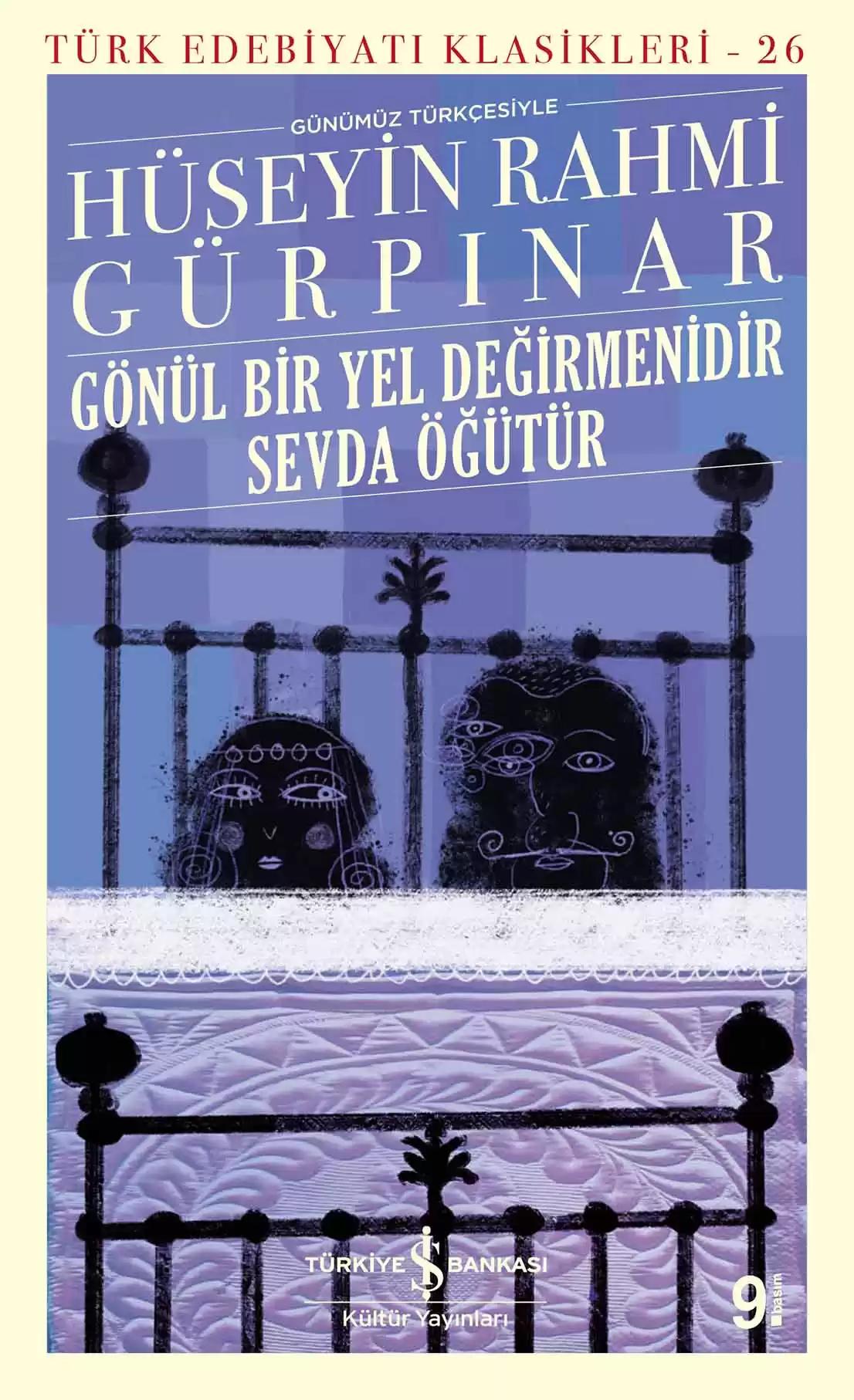
The heart is a windmill that grinds love
Author(s) | Hüseyin Rahmi Gürpınar | ||||||||
|---|---|---|---|---|---|---|---|---|---|
Type(s) | Novel | ||||||||
Subject(s) | Love social pressure and individual conflicts marriage | ||||||||
Theme(s) | Social criticism the social impact of individual choices moral decay | ||||||||
Heart Is a Windmill That Grinds Love is a novel written by Hüseyin Rahmi Gürpınar in 1910 and regarded as one of the major works of realism in Turkish literature. The novel offers a social critique by examining the psychological states of individuals, the social structure, and especially gender relations during the final years of the Ottoman Empire. When analyzed from both historical and sociological perspectives, the novel holds significant value for understanding the cultural and social dynamics of its time. The language of the novel is shaped by a realistic and fluid narrative that reflects the life and social structure of Istanbul during that period.
Heart Is a Windmill That Grinds Love, published in 1910, marks a pivotal moment in Hüseyin Rahmi Gürpınar’s literary career. Influenced by the realism movement, Gürpınar illuminated the social issues of his era through a humorous tone while delivering sharp social criticism. The novel provides a comprehensive reflection of the societal transformations and the adaptation processes of individuals during the late Ottoman period. Turkish literary historians and critics regard it as a successful example of realist and naturalist movements.
The central theme of the novel is the emotional conflicts experienced by individuals and the impact of traditional social structures on these personal processes. Particularly, the roles of women within the family, the tension between societal expectations and individual desires, are explored in detail. Themes of love, loyalty, and personal freedom are prominently featured. In this regard, the work serves as an important resource for academics, researchers, and students in the fields of literature, sociology, psychology, and history. It also offers a rich panorama of the social life of the period for enthusiasts of Turkish literature and general readers.
The novel meticulously portrays the emotional conflicts within individuals and the tension between social norms. Hüseyin Rahmi Gürpınar focuses particularly on the position of women within society and the family, addressing the incompatibility between traditional values and individual aspirations. The inner turmoil experienced by the characters is deeply examined through themes such as love and loyalty. Simultaneously, vivid depictions of Istanbul’s social life convey the cultural and social atmosphere of the era to the reader. While presenting the psychological dimensions of the individual-society conflict in a realist style, the novel invites readers to a comprehensive perspective on both the characters’ world and the social structure of the time.
The novel is not only a work of literary merit but also functions as an important document for understanding the social structure of its era. The transformations experienced by Ottoman society during its modernization process, particularly in terms of family structure and individual-society relations, can be studied through this text. Due to these qualities, the novel is frequently cited as a source by sociologists, historians, and cultural researchers.
Recent editions and academic studies conducted by the Turkish Language Association have made significant contributions to preserving, understanding, and interpreting the language of the novel. Today, the work is frequently referenced in academic theses, articles, and seminars. Moreover, institutions offering literature education consider it a teaching material within the context of realist period studies.
Gürpınar, Hüseyin Rahmi. *Gönül Bir Yel Değirmenidir Sevda Öğütür*. Haz. Ömer Aslan. İstanbul: Türkiye İş Bankası Kültür Yayınları, 2019.
Gürpınar, Hüseyin Rahmi. *Gönül Bir Yel Değirmenidir Sevda Öğütür*. Prepared by: Asiye Figen Kalkan; Publishing Director: Emine Gürsoy Naskali. Türk Dil Kurumu Yayınları, 2021. https://www.tdk.gov.tr/wp-content/uploads/2019/12/G%C3%B6n%C3%BCl-Bir-Yel-De%C4%9Firmenidir-WEB.pdf

The heart is a windmill that grinds love
Author(s) | Hüseyin Rahmi Gürpınar | ||||||||
|---|---|---|---|---|---|---|---|---|---|
Type(s) | Novel | ||||||||
Subject(s) | Love social pressure and individual conflicts marriage | ||||||||
Theme(s) | Social criticism the social impact of individual choices moral decay | ||||||||
No Discussion Added Yet
Start discussion for "The Heart Is a Windmill That Grinds Love (Novel)" article
History and Its Place in Literature
Theme and Target Audience
Structure and Content
Social and Academic Contributions of the Work