


This article was automatically translated from the original Turkish version.
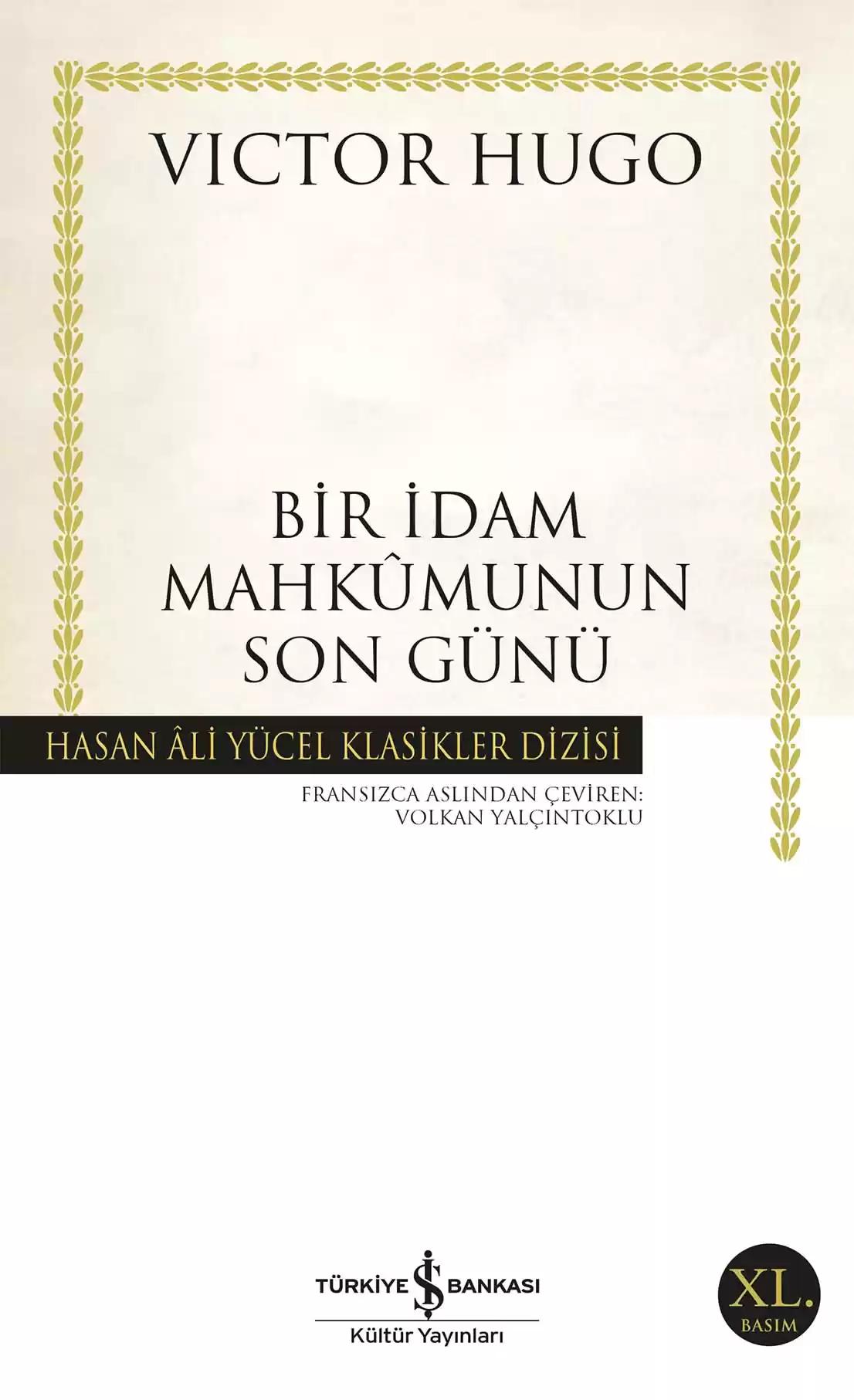
The Last Day of a Death Row Inmate
Author(s) | Victor Hugo | ||||||||
|---|---|---|---|---|---|---|---|---|---|
Genre | Novel | ||||||||
Number of Pages | 120 | ||||||||
Publication Year | 1829 | ||||||||
The Last Day of a Condemned Man, work, published by Victor Hugo in 1829, is a novel that recounts through a diary the experiences of an unnamed prisoner on the way to execution. The work addresses the psychological processes endured by the individual in the context of the death penalty and in this context offers insights into the concepts of conscience, human life, and justice. The novel’s central themes include opposition to the death penalty, the moral dimension of justice, the value of human life, society’s indifference to the practice of execution, the conflict between law and conscience, loneliness, and confrontation with death.
The work is written in the first-person singular narrative. The narrative unfolds through internal monologues, reflecting the prisoner’s mental structure, emotional transitions, and observations regarding the execution process. The style is simple and direct, occasionally enriched with philosophical content.
Roman seems you've provided only the word "Roman" — which is Turkish for "novel" or "fictional narrative."In an encyclopedic context, the appropriate English translation would be:**Novel**If you meant the country "Romania," please clarify — but note that "Roman" in Turkish does *not* refer to Romania; "Romanya" is the Turkish word for Romania.For accuracy and encyclopedic standards:- "Roman" → **Novel** - "Romanya" → **Romania**Please provide additional context if you meant something else. begins with the prisoner’s diary entry after learning of his death sentence. In the first section, the prisoner’s reactions to the verdict, his emotional fluctuations, and his position in the face of impending death are conveyed.
In the second section, the prisoner’s confrontation with the reality of execution and its mental and emotional repercussions are explored. Reckoning with the past, thoughts of death, and shifts in the perception of time are central themes.
In this section, the prisoner’s execution day draws near. The narrative details the events leading up to the moment of execution. The prisoner’s final thoughts and observations are described in terms of the individual’s attitude toward death:
“Death! Merely this word is enough to shatter me... Everything is reduced to this: an inevitable end, step by step approaching.”
The work is evaluated within the social and legal framework of the 19th century. The legal system and social processes that emerged after the French Revolution form the backdrop of the novel. Hugo’s observations of this period significantly influenced the development of the novel’s themes.
The Last Day of a Condemned Man is regarded as one of the earliest examples in Europe literature to focus intensely on the inner world of the individual. The work is frequently cited in scholarly literature concerning human rights and criminal law. Moreover, its emphasis on placing the individual’s psychology at the center of narrative has influenced subsequent developments in the novel form.
Harun Çelik YouTube Channel. "Bir İdam MahkumununSon Erişim / Victor Hugo." Accessed April 21, 2025. https://www.youtube.com/watch?v=KT4M-AuCpCE.
Hugo, Victor. Bir İdam Mahkumunun Son Günü. İstanbul: İş Bankası Kültür Yayınları, 2007.
Johnson, Robert. “A Few Words on the Last Words of Condemned Prisoners.” *Jurnal Pendidikan dan Pengajaran* 22, no. 1 (2017): pp. .
Yönten, Uğur. "Victor Hugo’nun Bir İdam Mahkûmunun Son Günü’nde Ceza Sisteminin Eleştirel Sunumu." Dicle Üniversitesi Sosyal Bilimler Enstitüsü Dergisi 19 (2017): 17–28.

The Last Day of a Death Row Inmate
Author(s) | Victor Hugo | ||||||||
|---|---|---|---|---|---|---|---|---|---|
Genre | Novel | ||||||||
Number of Pages | 120 | ||||||||
Publication Year | 1829 | ||||||||
No Discussion Added Yet
Start discussion for "The Last Day of a Death Row Inmate (Book) " article
Language and Style
Sections of the Book
I. Section: The Initial Shock
II. Section: Inner Collapse
III. Section: The Last Day
Social and Historical Context
Literary Value and Influence