


This article was automatically translated from the original Turkish version.
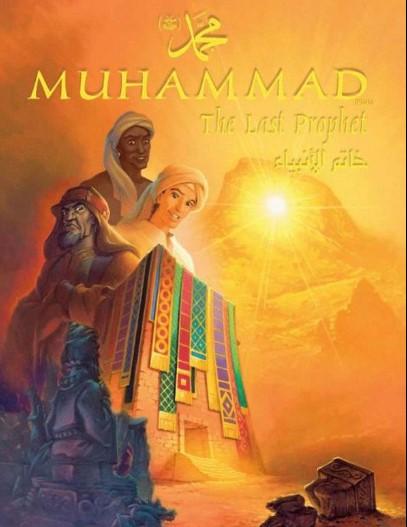
The Last Prophet, Hz. Muhammad
Director(s) | Richard Rich | ||||||||
|---|---|---|---|---|---|---|---|---|---|
Screenwriter(s) | Brian Nissen | ||||||||
Producer(s) | Badr International | ||||||||
Production Year | 2002 | ||||||||
Country | USA | ||||||||
Language(s) | English | ||||||||
Duration | 95 minutes | ||||||||
Genre | Animation Religious Biography | ||||||||
IMDb Rating | 7.5/10 | ||||||||
The Last Prophet, Muhammad (peace be upon him) (The Prophet Muhammad: The Last Prophet) is a 2002 American animated feature film depicting the life of the Islamic prophet Muhammad (peace be upon him). Produced by Badr International and directed by Richard Rich, the film adheres to Islamic guidelines by not depicting the face of Muhammad (peace be upon him), instead focusing on pivotal moments in his life and the emergence of Islam. It is among the first Western-produced animated films created with educational intent and deep respect for religious sensitivities.
The film portrays the life of Muhammad (peace be upon him) not through direct depiction but through events experienced by those around him, alongside the origins of Islam. The narrative begins with a depiction of the social structure of Mecca during the pre-Islamic era known as the Age of Ignorance. It then centers on Muhammad’s reception of revelation, his mission to spread Islam, the resistance of the polytheists, the migration to Abyssinia, the years of boycott, and ultimately the migration to Medina.
The film’s narrative is structured around Harith, a fictional shepherd and one of its central characters, and his family. Through their perspective, the message of Islam, the exemplary character of Muhammad (peace be upon him), and the socio-political conditions of the time are conveyed to the viewer.
The Last Prophet Muhammad (peace be upon him) Ecce müzik)
The film emphasizes core Islamic messages such as the belief in the oneness of God, justice, mercy, patience, and truthfulness. The exemplary character, leadership, and endurance of Muhammad (peace be upon him) are presented indirectly, through narrative and context rather than direct representation.
Guided by historical sources, the film addresses the social structure of Meccan society, the influence of the Quraysh tribe, the institution of slavery, and pre-Islamic practices such as the burial of female infants alive. Within this framework, Islam’s emphasis on social justice and human rights is highlighted.
Production company: Badr International
Director: Richard Rich
Screenwriter: Brian Nissen
Music: William Kidd
Production year: 2002
Duration: 95 minutes
Language: English
Original title: The Prophet Muhammad: The Last Prophet
The film was produced in accordance with Islamic principles of visual representation, respecting the prohibition against depicting Muhammad (peace be upon him). Designed to introduce Islamic principles to Western audiences, it employs animation to appeal to both children and adults.
Released in 2002 in cinemas and on television networks in various countries, the film was also distributed internationally on DVD. Dubbed and subtitled versions reached audiences in several Muslim-majority countries. It has been used as a visual educational resource in schools and mosques.
The Last Prophet, Muhammad (peace be upon him) holds significance as one of the first long-form Western animated films to portray Islamic sacred figures with reverence. Its restrained visual approach to conveying the message of Muhammad (peace be upon him) represents a pioneering effort in religiously sensitive filmmaking. Additionally, by presenting key events from the early years of Islam to young audiences, the film carries substantial educational value.
Beyazperde. "Son Peygamber Hz. Muhammed (The Last Prophet)." Accessed May 2, 2025.
Ecce Müzik. "HZ. MUHAMMED (S.A.V) - Son Peygamber - The Last Prophet." Ecce Müzik YouTube Kanalı. Accessed May 2, 2025. https://www.youtube.com/watch?v=lN1z4XQjRV4
IMDb. "The Prophet Muhammad: The Last Prophet (2002)." Accessed May 2, 2025.

The Last Prophet, Hz. Muhammad
Director(s) | Richard Rich | ||||||||
|---|---|---|---|---|---|---|---|---|---|
Screenwriter(s) | Brian Nissen | ||||||||
Producer(s) | Badr International | ||||||||
Production Year | 2002 | ||||||||
Country | USA | ||||||||
Language(s) | English | ||||||||
Duration | 95 minutes | ||||||||
Genre | Animation Religious Biography | ||||||||
IMDb Rating | 7.5/10 | ||||||||
No Discussion Added Yet
Start discussion for "The Last Prophet Muhammad (Film)" article
Plot
Thematic Structure
Religious and Moral Themes
Historical Context
Production and Release Information
Cast (English Voiceover)
Release and Distribution
Significance and Impact