


This article was automatically translated from the original Turkish version.
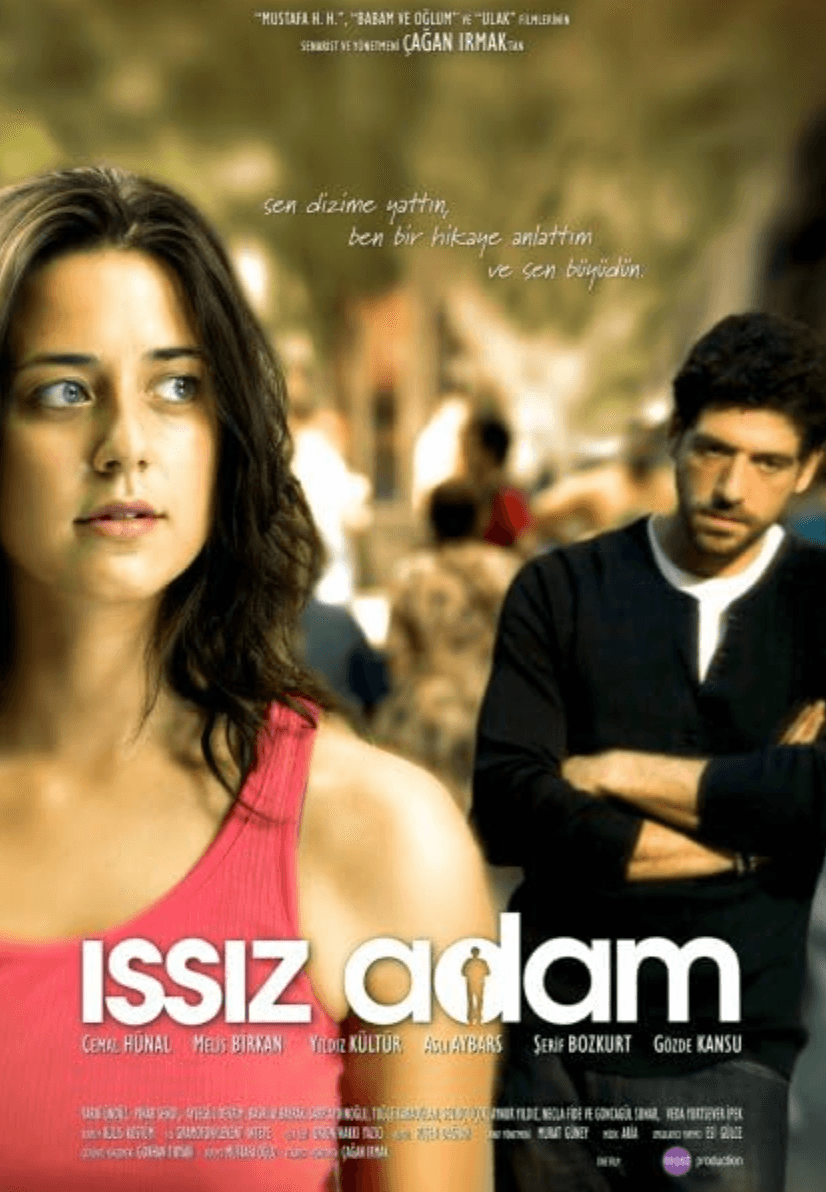
LINK[https://www.imdb.com/title/tt1322930/mediaviewer/rm4063749888/?ref_=tt_ov_i]
Deserted Man
Director(s) | Çağan Irmak | ||||||||
|---|---|---|---|---|---|---|---|---|---|
Screenwriter(s) | Çağan Irmak | ||||||||
Producer(s) | Most Production | ||||||||
Lead Actor(s) | Melis Birkan (Ada) Cemal Hünal (Alper) | ||||||||
Genre | Romance Drama | ||||||||
Production Year | 2008 | ||||||||
Duration | 113 Minutes | ||||||||
Release Date(s) | 7 November 2008 (Türkiye) | ||||||||
IMDb Rating | 6.7/10 | ||||||||
Issız Adam is a 2008 Turkish drama film written and directed by Çağan Irmak. The film explores the impact of modern urban life on individuals through the themes of love, loneliness, and belonging.
The film tells the story of a romantic connection that develops between Alper, a young chef living in Istanbul, and Ada, a vendor of children’s costumes. Alper leads a life driven by a search for freedom and individuality, while Ada is a more romantic and attachment-oriented character. Although their relationship gradually evolves into a passionate love, Alper’s desire for independence and inner restlessness disrupt the emotional balance between them. Due to Alper’s indecisiveness, the relationship ultimately ends. The film concludes with an emotionally compelling finale in which the two characters, years later, confront their shared past — a past they left behind but could never forget.
Çağan Irmak, who directed the film, also wrote the screenplay. The production was handled by Most Production. Filming took place largely in various neighborhoods of Istanbul, with the atmospheres of districts such as Beyoğlu and Cihangir serving as important visual elements. The film’s music is also a striking feature. Particularly, Turkish pop songs from the 1970s — selections from artists such as Fikret Kızılok, Sezen Aksu, and Nil Burak — reinforce the film’s nostalgic and melancholic tone.
Issız Adam examines the conflict between individual freedom and emotional attachment within the context of urban loneliness. While the film delves into the male protagonist’s inner turmoil, his relationship with his mother, and his fear of attachment, it contrasts this with the female character’s deep need for love and belonging. Cultural motifs such as food, books, and music in the film metaphorically reflect the characters’ identities and the nature of their relationships.
After its release in Türkiye in 2008, Issız Adam achieved significant box office success. The film was watched by a total of 2,849,348 viewers, marking it as a major commercial achievement in Turkish cinema history. Its total box office revenue was recorded at approximately 19,649,188 TL.
The film received numerous nominations and awards at various festivals and award ceremonies:
Issız Adam is among the first Turkish films to spark discussion around the figure of the “urban lonely man,” and it was widely debated among younger generations on social media and in cultural publications. Although some critics accused the film of emotional manipulation, it left a profound impact on a broad audience. Moreover, the film’s title has since entered the collective social memory as a term used to describe individuals struggling with attachment issues.
Issız Adam Trailer (YouTube)
Beyazperde. "Issız Adam." Accessed May 17, 2025.
Box Office Türkiye. "Issız Adam." Accessed May 17, 2025. https://boxofficeturkiye.com/film/issiz-adam--2010051
IMDb. 2008. “Full Cast & Crew: Issız Adam (2008).” IMDb. Accessed May 17, 2025. https://www.imdb.com/it/title/tt1322930/fullcredits/?ref_=tt_cst_sm
IMDb. 2008. “Issız Adam (2008) - Görseller.” IMDb. Accessed May 17, 2025. https://www.imdb.com/it/title/tt1322930/mediaviewer/rm4063749888/?ref_=tt_ov_i
Sinemalar.com. "Issız Adam." Accessed May 17, 2025. https://www.sinemalar.com/film/21805/issiz-adam
YouTube. "Issız Adam Fragman." Accessed May 17, 2025. https://youtu.be/eFkKOG0uzpo?si=RHZjv-JXWSi2S94O

LINK[https://www.imdb.com/title/tt1322930/mediaviewer/rm4063749888/?ref_=tt_ov_i]
Deserted Man
Director(s) | Çağan Irmak | ||||||||
|---|---|---|---|---|---|---|---|---|---|
Screenwriter(s) | Çağan Irmak | ||||||||
Producer(s) | Most Production | ||||||||
Lead Actor(s) | Melis Birkan (Ada) Cemal Hünal (Alper) | ||||||||
Genre | Romance Drama | ||||||||
Production Year | 2008 | ||||||||
Duration | 113 Minutes | ||||||||
Release Date(s) | 7 November 2008 (Türkiye) | ||||||||
IMDb Rating | 6.7/10 | ||||||||
No Discussion Added Yet
Start discussion for "The Lonely Man (Film)" article
Plot
Cast
Production Process
Thematic Structure
Budget and Box Office Performance
Awards and Nominations
Cultural Impact and Criticism