This article was automatically translated from the original Turkish version.
+1 More
Original Name(s) | Der Papalagi | ||||||||
|---|---|---|---|---|---|---|---|---|---|
Author(s) | Erich Scheurmann | ||||||||
Translation | Levent Tayla | ||||||||
Publisher(s) | Ayrıntı Yayınları | ||||||||
Type(s) | Edebi Derleme / Kültürel Eleştiri | ||||||||
Number of Pages | 112 | ||||||||
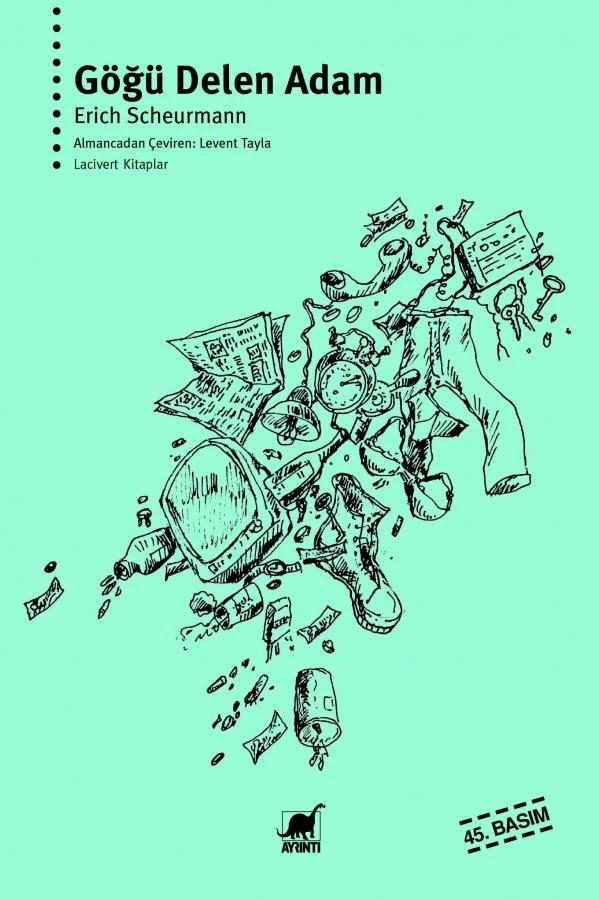
The Man Who Broke Through the Sky (originally Der Papalagi) is an original work composed of short, striking texts that offer an outsider’s perspective on Western civilization. Through the observations of Tuiavii, a chief from one of the Pacific islands, the book interrogates the values and consequences of modernity.
Erich Scheurmann is the compiler of the work and the person who conveyed Tuiavii’s words to a European audience. Scheurmann recorded Tuiavii’s oral narratives and organized them into a cohesive whole. The author’s work functions not only as a direct ethnographic record but also as a critical mirror held up to Western thought through the narrative device of the “indigenous gaze.” The book opens doors to broad cultural and ethical inquiries through simple observations. It unexpectedly generated a global resonance, making the author internationally known.
The work critiques a range of aspects of modern Western society—including customs, clothing, space, concepts of time, money and property, mechanization, law, and religion—through Tuiavii’s voice. Topics are supported by concrete examples drawn from everyday life, aiming to reveal the underlying logic and consequences of Western routine behaviors. The text engages with universal questions through cultural difference: humanity’s relationship with nature, freedom, and alienation are among the central concerns.
The book consists of short, titled passages or spoken fragments, each focusing on a specific theme. The number and arrangement of these passages may vary depending on translation and edition; taken as a whole, the text presents various dimensions of “external questioning.” Due to its style, the sections are sometimes aphoristic and didactic in nature.
Scheurmann uses Tuiavii’s words as a narrative instrument; in this context, the work carries both a compilation and an interpretive layer. The author’s approach takes the form of a literary compilation rather than a direct scientific ethnography, thereby transforming the indigenous voice into a form accessible to Western readers while simultaneously constructing a critical rhetoric. While there are differing assessments regarding the authenticity and accuracy of the narration, the primary function of the text is understood as a challenge to Western values.
The text is conveyed in a simple, direct, and aphoristic language. Tuiavii’s voice as an “outsider” presents modern practices through ironic and clear observations, using simple yet powerful examples. This narrative style generates both a didactic and a meditative effect; the brief passages guide the reader toward reflection.
Scheurmann, Erich. Göğü Delen Adam. Ayrıntı Yayınları. Trans. Levent Tayla.

Original Name(s) | Der Papalagi | ||||||||
|---|---|---|---|---|---|---|---|---|---|
Author(s) | Erich Scheurmann | ||||||||
Translation | Levent Tayla | ||||||||
Publisher(s) | Ayrıntı Yayınları | ||||||||
Type(s) | Edebi Derleme / Kültürel Eleştiri | ||||||||
Number of Pages | 112 | ||||||||
No Discussion Added Yet
Start discussion for "The Man Who Pierced the Sky (Book)" article
General Information About the Book and Author
Subject and Scope
Themes
The Author’s Approach
Narrative Style and Tone