
This article was automatically translated from the original Turkish version.
+1 More
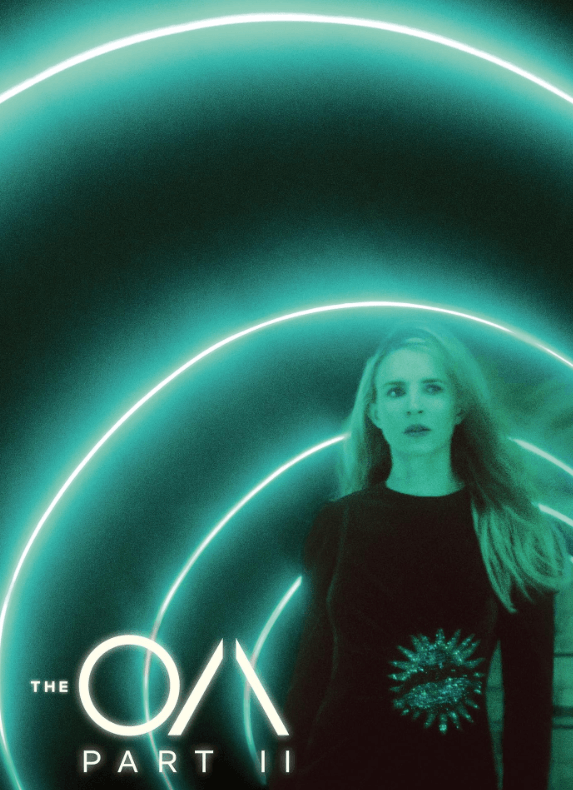
The OA is an American science fiction and mystery series created by Brit Marling and Zal Batmanglij. The first season was released in 2016 and the second season in 2019 on the Netflix platform. The series, consisting of two seasons with eight episodes each, was cancelled before the planned third season.
The central character of the series is Prairie Johnson, a girl who went blind at age seven after experiencing a accident and was subsequently adopted by a family in the United States. After disappearing in her early twenties, she was missing for seven years before suddenly reappearing. Prairie’s return attracted attention not only because of the length of her disappearance but also because she regained her sight despite having been blind before vanishing. Identifying herself as “OA” (Original Angel), Prairie begins sharing her story with a small group around her to explain what happened to her. The series has a multilayered structure built around these narratives, character relationships and perceptions of reality on.

【1】
Identity and the Search for Self
The series focuses on the identity quests of several characters, beginning with Prairie. The concept of identity is examined not only within biological or social contexts but also on a metaphysical level.
Reality and Belief
The supernatural and metaphysical elements within the narrative prompt questions about the boundaries between reality and belief. The truth of OA’s accounts remains unconfirmed and deliberately left open to interpretation.
Trauma and the Healing Process
Prairie’s experiences encompass not only individual trauma but also the collective trauma and search for meaning within a group. The narrative structure addresses the reactions and healing processes that emerge after trauma through indirect and symbolic means trauma.
Multiple Universes and Consciousness Transfer
This theme becomes especially prominent in the second season. The narrative is shaped within the framework of the multiverse theory and explores the possibility of individuals transitioning between different realities. In this context, identity and consciousness transfer become central concepts like.
Community and Solidarity
The characters gathered around Prairie express their personal struggles within a shared narrative, forming a sense of vineyard within the group. This solidarity extends beyond merely listening to the story; participation in the narrative is made tangible through rituals involving bodily movements.
Prairie Johnson / OA (Brit Marling)
The central character of the series. Adopted as a blind girl, she later disappeared and returned seven years later with her sight restored. She identifies herself as OA and claims her past experiences involve a multidimensional structure.
Hap (Jason Isaacs)
Dr. Hunter Aloysius Percy, known as Hap, is a character who conducts unethical experiments driven by scientific curiosity. He abducts Prairie to study various death experiences. He represents the conflict between science and conscience.
Homer (Emory Cohen)
A young man who was held captive alongside Prairie and formed an emotional bond with her. His character gains multiple layers over the course of the series through its discussions of alternate realities and consciousness transfer.
BBA (Phyllis Smith)
A teacher who brings together the young people surrounding Prairie. Initially appearing as an ordinary figure, she gradually assumes an active role within the narrative.
Steve Winchell (Patrick Gibson)
At first glance, he appears aggressive and alienated, but his connection with Prairie accelerates his inner transformation. Under OA’s influence, he moves beyond his defensive personality and joins the group’s process of solidarity.
The series employs a narrative structure that does not follow a linear time flow. Through flashbacks, shifting perspectives, stream-of-consciousness techniques and transitions between different realities, the narrative gains a multilayered building. The fusion of specific movement sequences and verbal storytelling imparts a unique narrative style to the series.
Ritual movements hold a central place in both the formal and thematic structure of The OA. Within the series, a five-stage choreography composed of specific bodily movements is repeatedly performed by the characters as a means of communication and transition. These movements are constructed not merely as physical action but as meaningful symbols within the narrative.
The ritual sequence consists of synchronized body movements performed by the characters as a group, creating an intuitive union sensation. Each section of the choreography symbolizes a specific function, including healing, protection, transition or passage to another plane. The fact that these movements are performed without any verbal communication highlights the nonverbal dimension of the narrative.
The series was cancelled by Netflix after two seasons. This decision sparked reactions among viewers and creators alike. The show’s creators stated that the story remained unfinished. Although various online campaigns were launched after the cancellation, no new season has been produced.
[1]
IMDb. 2016. The OA. Created by Brit Marling and Zal Batmanglij. Netflix. https://www.imdb.com/title/tt4635282/

Themes Explored
Main Characters
Narrative Style and Structural Features
Ritual Movements in The OA
Release History and Conclusion