

This article was automatically translated from the original Turkish version.
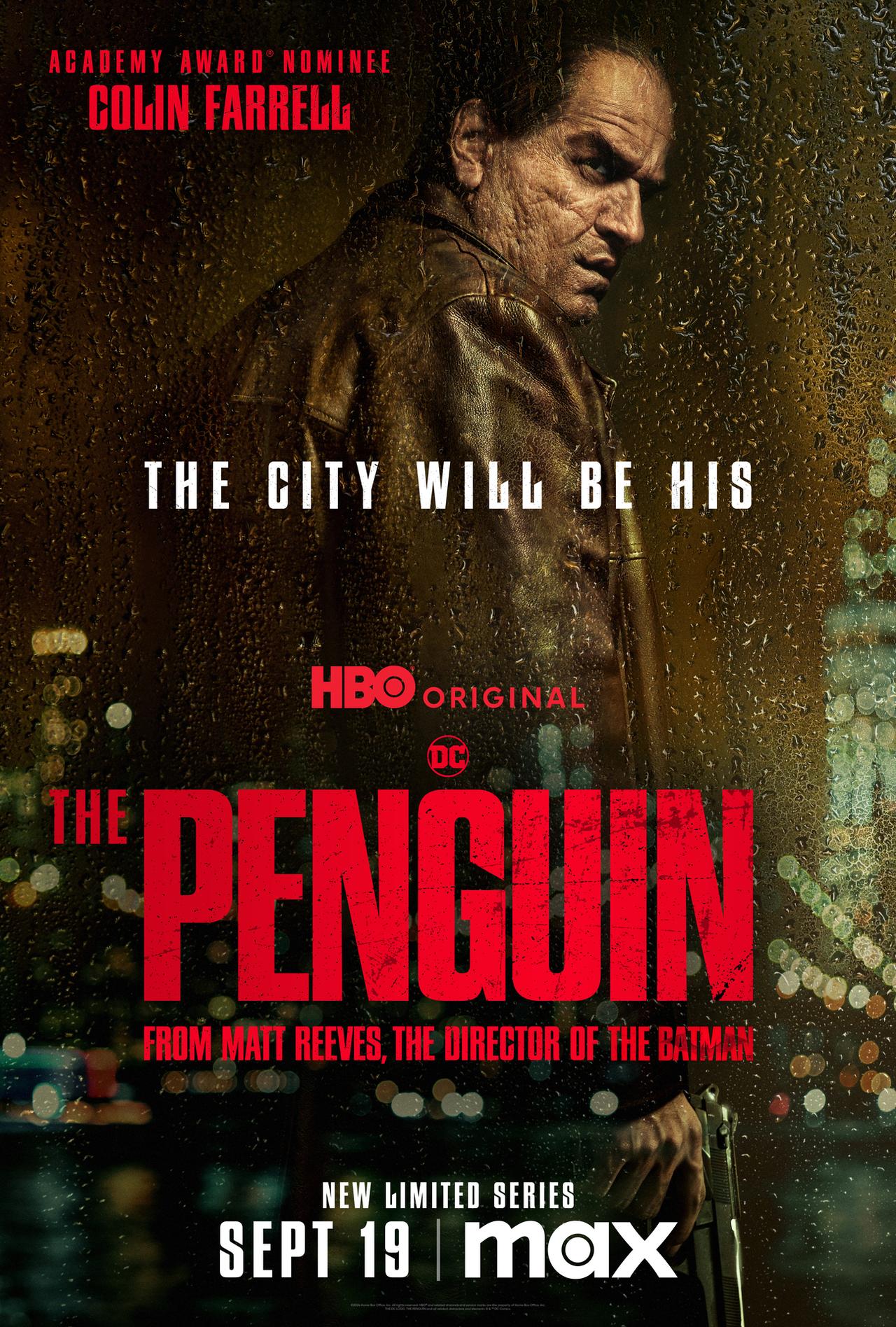
The Penguin is a television series centered on Oswald Cobblepot, a character adapted from the DC Comics universe who first appeared to audiences in the 2022 film The Batman. Developed through a collaboration between Warner Bros. and DC Studios, the production explores the transformation of a figure rising through Gotham City’s underworld. Starring Colin Farrell, the series unfolds immediately after the events of The Batman and aims to delve not only into the character’s criminal past but also into his psychological depth.
Released on HBO Max, the series stands out as a significant example of efforts to expand the Batman universe and deepen the individual narratives of supporting characters. In addition to Farrell’s performance, the production design, which reflects Gotham’s sociopolitical fabric under the direction of Craig Zobel, also draws considerable attention.
The Penguin Trailer (HBO Max)
The series focuses on the power vacuum created after the death of Carmine Falcone, one of Gotham City’s most powerful crime lords. This void offers Oswald Cobblepot (The Penguin), who has long lived in Falcone’s shadow, the opportunity to build his own criminal empire. Still not fully established as a leader, Cobblepot begins reshaping Gotham’s criminal landscape by confronting rival mafia families and corrupt power structures.
In this series, which explores the classic “anti-hero” theme, Oswald Cobblepot’s ascent is portrayed alongside the internal conflicts, betrayals, and reckonings with his past that accompany it. Characters such as Sofia Falcone (Cristin Milioti) emerge with claims to protect Gotham’s legacy, while Cobblepot’s bid for leadership is tested through both physical and psychological trials.
This complex narrative, which redefines Gotham’s underworld, revolves around themes of corruption, loyalty, violence, and revenge. Particularly, references to the protagonist’s past help illuminate the power dynamics within the mafia. The presence of established characters from earlier eras, such as Salvatore Maroni (Clancy Brown), underscores the historical depth of Gotham’s criminal hierarchy.
The series does not merely offer an action-driven crime story; it constructs a narrative centered on character psychology. Oswald Cobblepot’s dark journey—driven by his desire for self-respect, power, and acceptance as a socially ostracized and physically marked individual—adds profound dramatic weight to the story.
Gotham’s aesthetically dark, damp, and chaotic atmosphere creates a visual language that mirrors the protagonist’s inner collapse. Under Craig Zobel’s direction, this atmosphere generates intense tension through night shoots, low-light contrast, and the use of confined spaces.
The series The Penguin examines a range of sociological and psychological themes centered on Gotham City’s underworld. Among these, crime, struggle for power, loyalty, betrayal, and identity search are most prominent. Events unfold through the lens of the city’s criminal structures, with the relationships and transformations of individuals within these systems taking center stage.
The theme of crime is explored through Gotham’s institutionalized organized crime syndicates, illicit economic activities, and violent conflicts of interest. The narrative reveals that crime is not confined to individual acts but acquires an institutional character through its connections with political relationships, public officials, and law enforcement.
The struggle for power becomes evident following the death of Carmine Falcone and the resulting power vacuum in the city. The competition among crime families, shifting alliances and conflicts between various groups, and the emergence of new leaders are all highlighted. Oswald Cobblepot stands at the heart of this struggle, gradually building his own criminal network.
Loyalty and betrayal are two central themes that define the dynamics between characters. Many characters in the series question or abandon their loyalties in pursuit of self-interest. This dynamic triggers both internal character conflicts and unexpected turns in the plot.
The theme of identity search is shaped primarily through Oswald Cobblepot’s past, his social marginalization, and his efforts to carve out a place for himself in the criminal world. The societal discrimination he faces and the humiliation stemming from his physical appearance drive him to construct his identity around power, fear, and domination. Throughout this process, the viewer witnesses the character’s psychological transformation.
The series also explores social collapse through the institutional corruption of Gotham City the dysfunction of the justice system and the society’s entanglement with a cycle of violence. The breakdown of security mechanisms the normalization of crime and individuals’ resort to unethical means to survive in this environment are key elements that underscore the theme of collapse.
The relationships individuals form with crime the moral boundaries shaped by environmental conditions and the atmosphere of injustice in the city are conveyed through character development. In this context the series offers not only a narrative structure but also a thematic analysis within the triangle of individual society and system.

Still from the Film(IMDb)
Oswald Cobblepot / The Penguin
The main character of the series. A figure who exploits the power vacuum created after the death of Carmine Falcone to build his own criminal empire within Gotham City’s underworld. He is known by the nickname “Penguin” due to his physical appearance. Throughout the series Cobblepot’s rise in the criminal world his struggles with rivals and his strategic maneuvers are detailed extensively. The character carries a deep desire to be seen as a figure worthy of respect and fear stemming from past experiences of rejection and humiliation. He draws attention through both his mastery of manipulation and his capacity for direct violence.
Sofia Falcone
As the daughter of the Falcone family she seeks to continue the mafia tradition in Gotham. Following the death of her father Carmine Falcone she strives to reestablish her family’s former influence in the criminal underworld. Sofia emerges as a charismatic and strategic leader posing a significant threat to Oswald Cobblepot’s ascent. Her presence complicates relationships with other criminal actors in the city and shifts the balance of power. The character experiences tensions between familial loyalty and personal ambition.
Victor
Oswald Cobblepot’s right-hand man. He is typically responsible for implementing Cobblepot’s plans on the ground. He plays an active role in the use of violence threats and operational missions. Due to his loyalty he is regarded as one of Cobblepot’s most trusted allies. Victor’s character navigates the line between devotion to his leader and personal boundaries. Although he occasionally confronts moral dilemmas he generally prioritizes his loyalty above all else.
Alberto Falcone
Sofia’s brother and another key member of the Falcone family. He occupies a different position within the family’s power struggle. While he sometimes collaborates with Sofia he also engages in conflicts driven by his own desire for personal power. Alberto’s character is shaped by themes of internal competition and personal greed within a classic mafia family.
Other Supporting Characters
The series features a range of supporting characters embedded in Gotham City’s political judicial and criminal structures. These include bureaucrats linked to city governance corrupt law enforcement personnel leaders of independent criminal organizations hitmen information brokers and journalists. These figures serve as intermediaries obstacles or allies in the plans of both Oswald Cobblepot and the Falcone family. Their function is to reflect the power dynamics and social chaos within the city.

Still from the SeriesIMDb)

No Discussion Added Yet
Start discussion for "The Penguin (Series)" article
Plot
Themes Explored
Characters