


This article was automatically translated from the original Turkish version.
+1 More
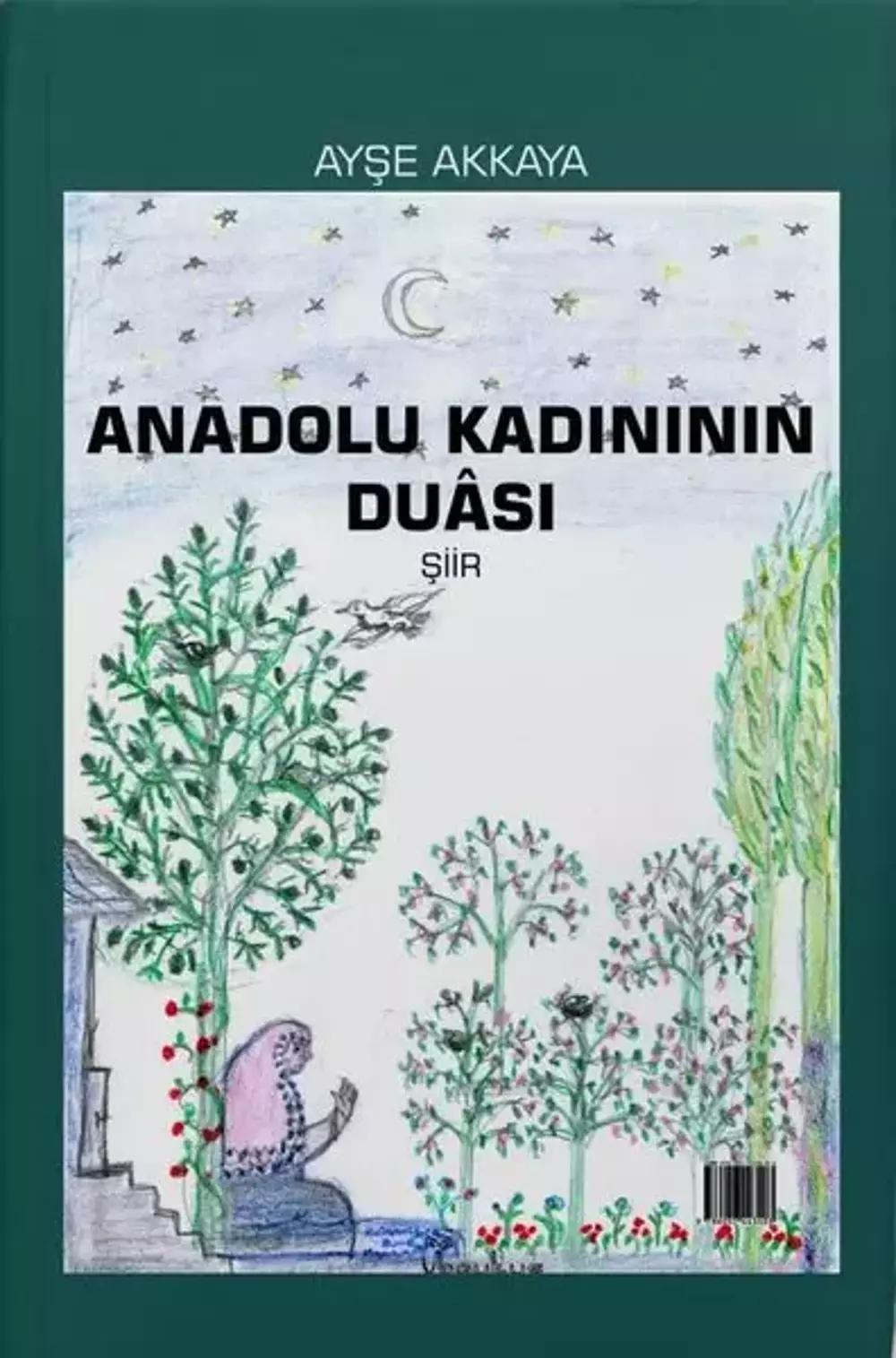
Prayer of an Anatolian Woman Book Cover
Author(s) | Ayşe Akkaya | ||||||||
|---|---|---|---|---|---|---|---|---|---|
Type(s) | Poetry | ||||||||
Publisher(s) | Baykuş Publishing | ||||||||
Year of Publication | May 2021 | ||||||||
Number of Pages | 90 | ||||||||
Cover Design | Ayşe Akkaya | ||||||||
Anadolu Kadının Duâsı is a poetry collection written by Ayşe Akkaya. The first edition was published in May 2021 by Baykuş Yayınevi.
Ayşe Akkaya was born in 1952 in the Göynücek district of Amasya. Her mother is Fatıma and her father is Ali. The second daughter in her family, Akkaya completed her primary education at Göynücek Atatürk Primary School and later studied at the Göynücek Girls’ Quran Course.
In 1971, at the age of 19, she married and gave birth to eight children. One of her children passed away in 1976 at the age of nine months due to pneumonia. Of the seven surviving children, six are boys and one is a girl. The sons work in various professions while the daughter and the poet herself are housewives. Her husband, Mithat Akkaya, is a retired civil servant.
Anadolu Kadının Duâsı is Ayşe Akkaya’s first poetry book, published in May 2021 by Baykuş Yayınevi. The collection consists of poems written by Akkaya between 1971 and the 2000s, compiled and prepared for publication. The book contains a total of 37 poems. The cover is illustrated by Ayşe Akkaya herself. The book is 90 pages long.
The titles of the poems are as follows:
“Anadolu Kadınının Duâsı”, “İlahi”, “İlahi”, “İlahi”, “İlahi”, “İlahi”, “Güzel Kâinat”, “Uyan Gözlerim”, “Yıldızlar”, “Canım Ormanlar”, “Ya Resulullah”, “Ya Rabbi”, “İlahi”, “İlahi”, “Yunus Emre”, “Gönüller Sultanı Yüce Mevlana”, “Mürşit Özlemi”, “Muhammed Raşid (K.S.)”, “Askere Mektup”, “Mustafa Sururi’m”, “Ne Çare”, “Canım Efendim (1)”, “Deli Gönül”, “Dost Özlemi”, “Canım Efendim (2)”, “Zulüme Sitem”, “Ey Kardeşim”, “İlimiz Amasya”, “Öğretmenim”, “İlköğretim Haftası”, “On Dokuz Mayıs Gününde”, “Şirin Göynücek”, “Vay Benim Ömrüm”, “Hasret Özlemi”, “Güzel İlham”, “Ey Oğul”, “Ey Yosma”.

Book cover of Anadolu Kadının Duâsı, drawn by Ayşe Akkaya herself (Ayşe Akkaya)
A significant portion of the work is devoted to supplications to God, love for the Prophet, and Sufi sentiments. The poems titled “İlahi” focus on submission to God, repentance, the transience of worldly life, preparation for the afterlife, purification from sins, and the place of divine love in the human soul. These poems explore themes consistent with the Sufi tradition such as dhikr, prostration, patience, and trust in God.
In poems such as “Anadolu Kadınının Duâsı”, “Askere Mektup”, “On Dokuz Mayıs Gününde”, “İlimiz Amasya”, and “Şirin Göynücek”, the defense of the homeland, national unity, and the value of freedom are emphasized. The poet expresses the historical struggles of the Turkish nation, the sacrifices of soldiers, and the necessity of preserving national values. These poems serve both as prayers and as calls to national consciousness.
In poems such as “Mustafa Sururi’m”, “Canım Efendim (1 and 2)”, and “Dost Özlemi”, love for family members, loyalty between spouses, fidelity in marriage, and the pursuit of friendship are expressed. In these texts, personal emotions are interwoven with advice and warnings.
In the poem “Ey Kardeşim”, the role of women in society, motherhood, domestic responsibilities, and their contribution to the continuity of the nation are highlighted. Women are elevated through their association with concepts such as honor, homeland, and home. This theme constitutes one of the strongest social messages in the work.
Poems such as “Ne Çare”, “Vay Benim Ömrüm”, and “Hasret Özlemi” address personal losses, the hardships of life, endured suffering, and the virtue of enduring with patience. The poet transforms her own struggles from mere expressions of personal emotion into lessons on patience and resilience.

Prayer of an Anatolian Woman Book Cover
Author(s) | Ayşe Akkaya | ||||||||
|---|---|---|---|---|---|---|---|---|---|
Type(s) | Poetry | ||||||||
Publisher(s) | Baykuş Publishing | ||||||||
Year of Publication | May 2021 | ||||||||
Number of Pages | 90 | ||||||||
Cover Design | Ayşe Akkaya | ||||||||
No Discussion Added Yet
Start discussion for "The Prayer of the Anatolian Woman (Book)" article
About the Poet
Work
Themes
Religious and Spiritual Themes
Love of Homeland and Nation
Love, Friendship, and Family Bonds
Social Messages and Female Identity
Sorrow, Longing, and Patience