


This article was automatically translated from the original Turkish version.
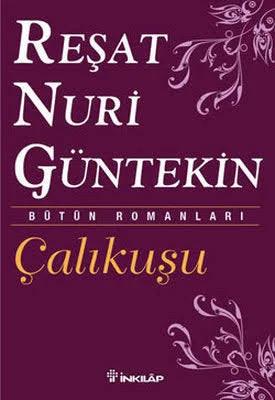
The Çalıkuşu Book
Publication Year | 1922 | ||||||||
|---|---|---|---|---|---|---|---|---|---|
Type(s) | Novel | ||||||||
Author(s) | Reşat Nuri Güntekin | ||||||||
Publisher(s) | İnkılap Kitabevi | ||||||||
Resat Nuri Güntekin’s 1922 novel Çalıkuşu occupies a significant place in Turkish literature as a literary work that reflects individual identity search and social transformation through a female perspective. The novel portrays the cultural, social, and educational structure of pre-Republic Turkey through the life of an idealistic woman who works as a teacher in various regions of Anatolia.
The novel centers on Feride, who loses her family at a young age and, after being betrayed by her fiancé Kamran, leaves Istanbul to begin teaching in Anatolia. Feride’s transition from the entrenched, traditional life of Istanbul to the provincial towns of Anatolia signifies both an internal and societal transformation. Through Feride’s encounters with bureaucracy, social conservatism, and material hardships, the novel reflects the social conditions of the era.
Feride (Çalıkuşu): The central figure of the novel, Feride is portrayed as a lively and intelligent young woman educated in a French school. Her move from Istanbul to Anatolia enables her to encounter diverse segments of society and undergo personal maturation. The nickname “Çalıkuşu” symbolizes Feride’s free-spirited nature, which defies traditional norms. This journey encompasses both emotional and professional development.
Kamran: Feride’s childhood friend and fiancé, whose betrayal triggers Feride’s transformation. At the novel’s conclusion, Kamran’s remorse and the possibility of reconciliation are linked to individual growth.
Münire: Feride’s schoolmate, who embodies traditional female roles.
Hayrullah Bey: An older doctor Feride meets in one of the towns where she serves. Their friendship broadens Feride’s perspective on life.
Education and Teaching: The educational deficiencies, local resistance, and material limitations Feride encounters in Anatolia reveal the challenges facing the era’s education system and social structure. The novel explores the idea of social transformation through education.
Woman and Society: Feride’s depiction as an independent woman with a professional career contrasts sharply with prevailing female role models of the time. This portrayal reflects the literary representation of societal changes.
Love, Loyalty, and Disillusionment: The relationship between Feride and Kamran represents individual emotional development through the themes of loyalty and trust.
The Reality of Anatolia: The novel presents rural life, traditions, and social structures in Anatolia through the eyes of a female teacher. Resat Nuri Güntekin’s own experiences as an inspector significantly influenced this narrative.
Time: The events of the novel take place during the final years of the Ottoman Empire, particularly after the Second Constitutional Era and during the Balkan Wars. The narrative follows a chronological order but includes flashbacks through letters and diary entries.
Place: Istanbul and various Anatolian towns—such as Zeyniler Village, Burhaniye, and Ayvalık—contribute to the novel’s spatial richness.
Narrator: The events are primarily recounted from Feride’s first-person singular perspective. This narrative style deeply conveys the character’s inner world and transformation.
Çalıkuşu is regarded not only as the story of an individual character but also as a document of the social transformations of its time. When evaluated alongside Resat Nuri Güntekin’s other novels, it becomes evident that the author examines the relationship between the individual and society from multiple angles. The work has been adapted for television and cinema in various periods.
Güntekin, Reşat Nuri. Çalıkuşu. İstanbul: İnkılâp Kitabevi, 2019.
Yılmaz, Engin. "Türk Edebiyatında Kadın Öğretmen Tiplemeleri." SAÜ Eğitim Fakültesi Dergisi, no. 14 (October 2007): 240–244. Accessed May 14, 2025.

The Çalıkuşu Book
Publication Year | 1922 | ||||||||
|---|---|---|---|---|---|---|---|---|---|
Type(s) | Novel | ||||||||
Author(s) | Reşat Nuri Güntekin | ||||||||
Publisher(s) | İnkılap Kitabevi | ||||||||
Subject and Content
Characters
Themes
Structural Features
Place in Literary History