


This article was automatically translated from the original Turkish version.

Can a person lose their homeland without losing their home?
Even if the door of their house still stands in the same place, if the street’s layout has changed, neighbors have been replaced by others, and the corner where their childhood unfolded has become inaccessible, can the person still be said to remain in their home? These questions compel us to think of the city as a lived space that shapes human memory, belonging, and visions of the future. Because certain forms of violence eliminate not only the physical environment but also the relationships people have with that place, their ways of clinging to the past, and their ability to build a future within the same geography.
Cities are spaces where social relationships are formed, cultural diversity is lived, and shared experiences are passed from generation to generation. Indeed, the meaning of a street does not stem solely from its physical features, the value of a square does not arise only from its architecture, and the importance of a bridge is not limited to its function of connecting two banks. These spaces host human encounters, collective life experiences, and the continuity of everyday life. Therefore, the destruction of a city is not merely the removal of the built environment but also the damage inflicted on the social relationships and shared ways of life that have developed within it.
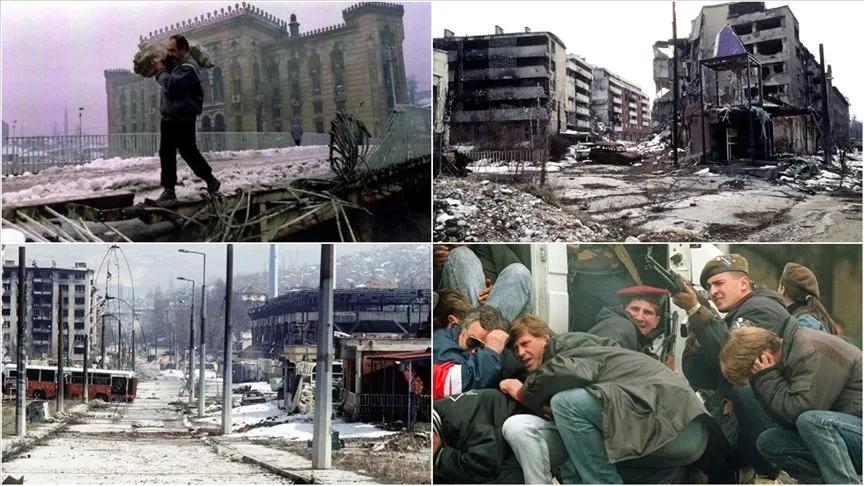
Savaş Sonrası Bosna Hersek (Anadolu Ajansı)
At this point, the concept of urbicide gains significance in explaining a meaning that goes beyond the physical dimension of urban destruction. Coined in the last quarter of the twentieth century, urbicide refers to the deliberate and systematic violence directed against the city itself, targeting its built environment. This form of violence is distinct from unavoidable secondary damage or accidental destruction that occurs during conflict.
In urbicide, destruction serves as a tool to transform urban space, fragment the social fabric, and reassert control over the environment. Therefore, understanding urbicide requires more than counting the number of destroyed buildings. It demands an examination of why these structures were targeted and what relationships, opportunities, and rights were lost when they were erased from people’s lives.
The scope of urbicide is addressed in various dimensions by different thinkers. Approaches led by figures such as Marshall Berman and Ada Louise Huxtable do not limit violence against the city to wartime contexts; they also include forced displacements carried out in the name of urban development and modernization that erase social memory.【1】 In Martin Coward’s framework, urbicide is closely linked to policies of othering. Within this perspective, urban heterogeneity, multiculturalism, and the experience of diverse groups living together become targets; the destruction of the built environment becomes a means to displace marginalized communities and create more homogeneous and closed spaces. Stephen Graham’s approach focuses on urban militarization shaped by the discourse of counterterrorism.【2】 In this model, the destruction of infrastructure is supported by surveillance systems, barriers, and spatial reorganizations to establish lasting control over the city.
A crucial distinction exists between urbicide and genocide. Although both concepts intersect with forms of violence motivated by ethnic, religious, or ideological hostility, they differ in their targets. Genocide aims at the direct elimination of a group, while urbicide targets urbanity, social diversity, and the bonds people form with space. This distinction reveals that urbicide cannot be treated as a mere byproduct of other forms of violence. Because the erasure of the space in which a community continues to exist can profoundly affect its connection to the past, its daily life, and its ability to construct a future.
The Bosnian War (1992–1995) is one example that reveals the consequences of urbicide on social memory and the experience of coexistence. During the war, not only civilians but also the urban environment and public spaces were deliberately targeted. Mosques, libraries, museums, markets, and homes with no strategic military value were systematically destroyed. These attacks also fragmented the urban fabric of Bosnia, which had been shaped by the coexistence of diverse ethnic and religious groups. The meaning of urbicide here extends far beyond the physical destruction of a landscape: the city’s structure, which housed its differences, was deliberately targeted, and the material traces of shared life were sought to be erased.
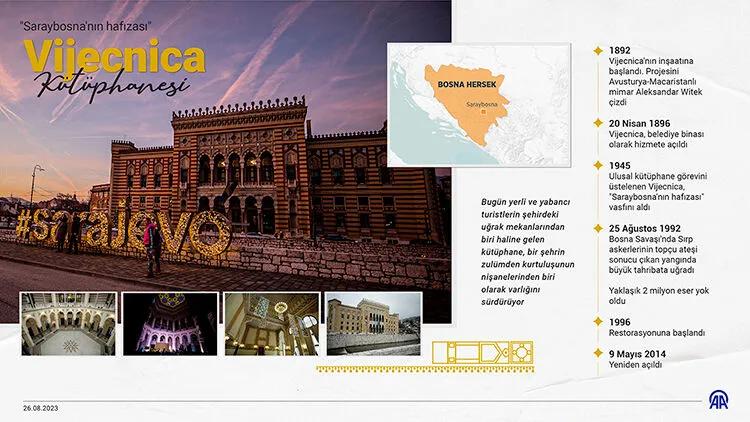
The Memory of Sarajevo, Vijecnica Library (Anadolu Ajansı)
The symbolic significance of the destruction in Bosnia is clearly illustrated by the case of the Mostar Bridge. Built during the Ottoman period and embodying the labor of diverse communities, the bridge stood for 427 years and became one of the tangible symbols of coexistence.【3】 Its destruction by Croatian forces during the war cannot be viewed merely as the loss of a historical structure.
The bridge represented more than a means of transporting people between two banks; it embodied a shared space for different communities. Its destruction transformed the city into a clear dividing line between the Muslim east and the Croatian west. Thus, the removal of the bridge meant not only the severing of a physical connection but also the destruction of the social relationship it symbolized.
Richard Riedlmayer’s characterization of such destruction as “the killing of memory” helps us understand the invisible dimensions of urbicide. The deliberate destruction of the National Library of Sarajevo and the Oriental Institute, along with the targeting of mosques and the fragmentation of the urban fabric, are examples of violence directed at the material traces of a community’s past.【4】 Libraries, historical buildings, and public spaces shape how people see themselves as part of a particular past and how they remember a shared life. When these spaces are removed, the connection between the traces of history and the present weakens.
The consequences of the Bosnian War further reveal the social and spatial dimensions of this destruction. The complex settlement patterns, in which ethnic and religious groups had lived intermingled before the war, became sharply divided regions afterward. The emergence of ethnically homogenized areas, isolated from one another by Serb, Croat, and Bosniak communities, demonstrates that spatial organization is not independent of social relations. When spaces enabling coexistence are eliminated, people may remain in the same location, but their opportunities to meet, form relationships, and sustain a shared daily life are transformed. The destruction of a bridge alters not only how people cross it but also how they reach one another.
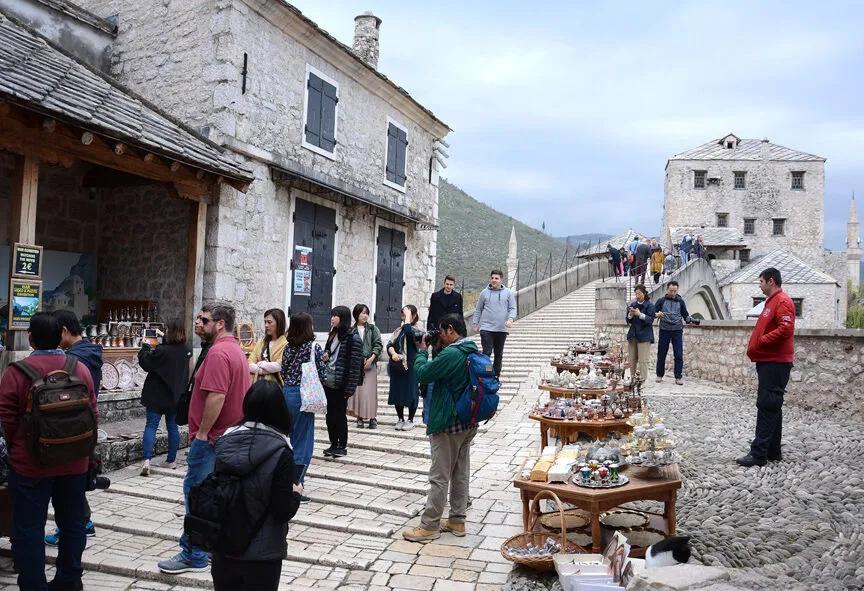
Mostar in Bosnia and Herzegovina, Home to the Ottoman Heritage BridgeAnadolu Ajansı)
It is estimated that approximately 120,000 people lost their lives during the Bosnian War and two million were forced to flee.【5】 These losses highlight the human dimension of the war, while the debate on urbicide draws attention to the deliberate targeting of the places where people live.
Being forced to leave one’s home means the disruption of daily routines, neighborhood relationships, and the spatial markers that help people remember their past. Thus, forced displacement becomes a process through which individuals must reconstruct their relationship with the world they once felt they belonged to.
Urban destruction in Palestine reveals a different model of urbicide. Here, the issue is not merely the destruction of buildings during attacks; rather, destruction, reconstruction, and spatial control processes operate together. In East Jerusalem, the West Bank, and Gaza, the fragmentation of the urban fabric, the demolition of homes, damage to infrastructure, and the shrinking of living spaces indicate a transformation of how space is used and accessed. Indeed, this process limits Palestinians’ ability to continue their lives in their homeland and to exercise control over their own living environments.
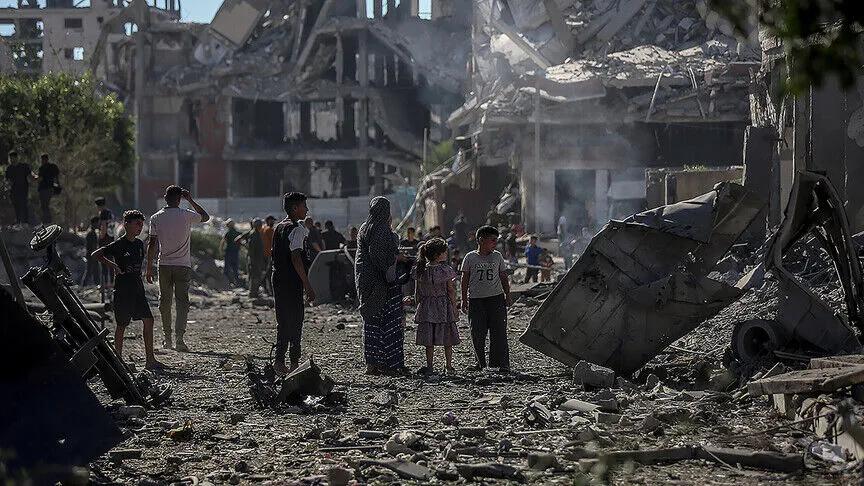
Gazze Şeridi (Anadolu Ajansı)
It is reported that more than 12,000 homes, including in East Jerusalem, have been deliberately demolished since 1967.【6】 These demolitions are linked not only to the loss of housing but also to the displacement of people from their fundamental living spaces and their forced relocation to areas with more restricted conditions.
The targeting of cities such as Ramallah, Nablus, and Jenin, as well as the Refah and Balata refugee camps, demonstrates the spread of destruction across different urban areas. The destruction of historical fabric, public buildings, and infrastructure deprives people of the shared environment they need to sustain their daily lives. In such a situation, the city ceases to be a space that enables life and becomes an environment that undermines the continuity of life.
One prominent phase of urbicide in Palestine emerged in 2002 with the military use of bulldozers.【7】 Under Ariel Sharon’s leadership, operations involving the destruction of the urban fabric, the demolition of house walls, and the opening of new passage corridors turned civilian living areas into direct components of warfare. In the Jenin refugee camp, during the final days of fighting, the center of the camp and 350 buildings were destroyed, leaving approximately 4,000 people homeless.【8】 In this example, the bulldozer is an instrument for reshaping urban space according to military mobility. By demolishing walls, the interior spaces of homes were exposed, making private living areas vulnerable to external intervention.
A Palestinian woman’s account of her experience in 2002 illustrates what this transformation means for human life. While watching television with her family in their living room, she suddenly faced the collapse of a wall and soldiers entering her home.【9】 The striking aspect of this account is how the space people most know and expect to feel safe in becomes instantly unrecognizable. The home, once a place where daily life continued, family bonds were formed, and the uncertainties of the outside world were kept at bay, is opened to insecurity. Thus, destruction not only removes physical boundaries but also shatters the sense of privacy and the individual’s mastery over their own living space.
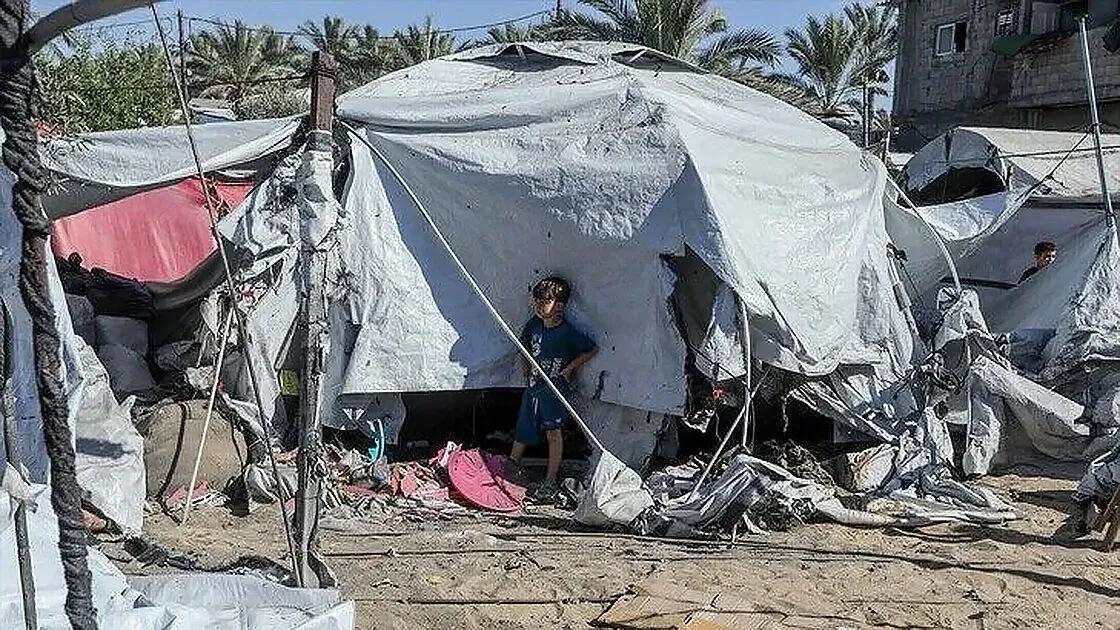
The tent city in Khan Yunis, located south of the Gaza Strip, where civilians displaced from their homes have sought shelter (Anadolu Ajansı)
In Palestine, spatial control also restricts people’s mobility through the declaration of military zones, the construction of barriers, the denial of access to rural lands, and the regulation of movement. As the apartheid wall, checkpoints, and surveillance towers fragment urban space, people encounter numerous obstacles even within their own living areas.
Under these conditions, displacement cannot be explained merely as being forced to leave one’s home.A person may remain in their place of residence but still lose access to the streets they walk, the fields they work, their neighbors, or the spaces they need to sustain daily life. Thus, spatial dislocation goes beyond physical separation; it also affects a person’s freedom to move within and organize their life in their own environment.
The case of Gaza reveals the relationship between the destruction of urban infrastructure and the sustainability of life in a region. It is reported that after the election of Hamas in 2006, 1.5 million people were forced to live under harsh conditions within a designated urban corridor.【10】 Following the blockade that began in 2007, operations in 2009, 2012, and 2014 brought the urban infrastructure to the brink of collapse.【11】 The warning issued by the United Nations Conference on Trade and Development that Palestinian settlements could become uninhabitable by 2020 adds another critical dimension to this debate. For people to continue living in a geography, that geography must provide conditions conducive to daily life. When a place’s infrastructure and the systems that support life are destroyed, the possibility of remaining there becomes increasingly difficult.
The examples of Bosnia and Palestine differ in their historical and political contexts. In Bosnia, urbicide manifested as a policy of othering aimed at dismantling the multicultural social structure and creating ethnically homogenized areas. In Palestine, destruction is accompanied by reconstruction and long-term spatial control through walls, barriers, and surveillance mechanisms. Reducing these two experiences to a single historical narrative would obscure their unique conditions and modes of operation. Yet, when examined together while preserving their differences, they reveal how violence directed at urban space can transform the bonds people form with their living environments.
This shared insight demands a rethinking of the meaning of forced displacement. To be torn from one’s place is not merely to leave behind an address. The home, the streets of the neighborhood, public spaces, and the symbolic structures of the city are elements that enable a person to connect with their past and feel part of a community. When these elements are removed or rendered inaccessible, it becomes harder for a person to continue their life story through space. When a person can find traces of themselves in the memory of their place, they can carry their past into the present; when they believe they can build their future in that space, they can sustain their sense of belonging. Urbicide is one form of violence that interrupts this continuity.
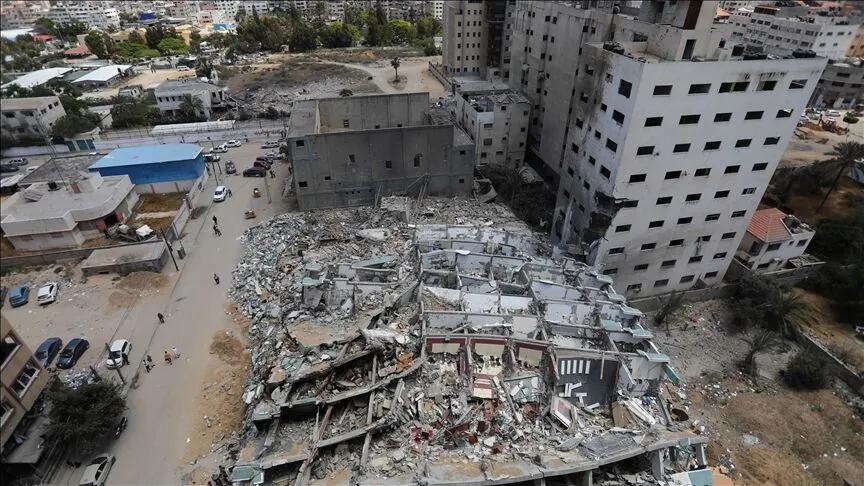
In Gaza, at least 2,000 buildings and 4 mosques were completely destroyed (Anadolu Ajansı)
The severing of the bond with space also raises the question of how collective memory sustains itself. Collective memory leaves traces in the places, buildings, and shared spaces where memories are connected. A library, a bridge, or a square can serve as a material anchor helping people remember their past. When these anchors are removed, even if the past is not entirely erased, the ways of relating to it change.
In Bosnia, the destruction of historical and cultural structures meant the erasure of visible traces of a shared past; in Palestine, the shrinking and fragmentation of living spaces weaken the spatial relationships that sustain daily life. In both cases, space ceases to be a passive carrier of memory; it becomes a fundamental element determining whether social existence can continue.
In this framework, human dignity cannot be understood solely in terms of preserving a person’s physical existence. The ability to feel safe in one’s place, to connect with one’s past, to sustain daily life, and to make decisions about the future are also conditions of a dignified life. The destruction of homes, the fragmentation of the urban fabric, and the denial of access to living spaces affect each of these capacities in different ways. Individuals also confront the loss of control over the environment in which they shape their lives.
The necessity of defining urbicide within a legal framework is another important outcome of this debate. Addressing deliberate urban destruction together with the subsequent processes of reconstruction and control can clarify the scope of this form of violence. Such an approach moves the protection of urban space beyond the preservation of historical monuments or architectural fabric; it transforms it into a matter directly linked to people’s rights, living conditions, and social memory. Because protecting a city also means ensuring that its residents can continue their lives, form relationships with one another, and have a voice in shaping their own future.
Returning to the question we began with: When a person loses their place, what do they truly lose?
The examples of Bosnia and Palestine show that this loss cannot be explained merely by the physical disappearance of a home, a street, or a city. What is lost is simultaneously the connection between past and present, the continuity of social relationships, the sense of security in daily life, and the possibility of building a future in a specific place. The dislocation of people from their living environments, the erosion of their right to shape their space, and the destruction of the urban elements that carry social memory constitute the human dimension of destruction.
Cities are not merely spaces where the experience of coexistence accumulates and is passed on to future generations. Destroying them not only erases the material traces of this accumulation but also transforms the relationships people form with each other and with their own past. The true weight of urbicide lies not in the size of the rubble but in the life opportunities lost behind it. Because a person’s existence in a place, their ability to sustain life on that land, to remember their past, and to build their future is only possible through these connections.
Even if a city can be rebuilt, is it possible to restore the sense of belonging and the collective memory of shared life that were taken from its inhabitants in the same way?
Anadolu Ajansı. "'Mostar Köprüsü ile duygusal bağımız var'." Anadolu Ajansı. Accessed October 13, 2026.https://www.aa.com.tr/tr/dunya/mostar-koprusu-ile-duygusal-bagimiz-var/1305771.
Anadolu Ajansı. "AA Gazze'de İsrail saldırıları sonucu meydana gelen yıkımı havadan görüntüledi." Accessed October 13, 2026.https://www.aa.com.tr/tr/dunya/aa-gazzede-israil-saldirilari-sonucu-meydana-gelen-yikimi-havadan-goruntuledi/2251136.
Anadolu Ajansı. "AB: Gazze'ye giren insani yardım akışı son derece yetersiz ve düzensiz." Accessed October 13, 2026.https://www.aa.com.tr/tr/dunya/ab-gazzeye-giren-insani-yardim-akisi-son-derece-yetersiz-ve-duzensiz/3948969.
Anadolu Ajansı. "Saraybosna kuşatmasının üzerinden 33 yıl geçti." Accessed October 13, 2026.https://www.aa.com.tr/tr/dunya/saraybosna-kusatmasinin-uzerinden-33-yil-gecti/3528868.
Anadolu Ajansı. "Saraybosna'daki Vijecnica Kütüphanesi'nin yakılışının 31'inci yılı dolayısıyla fotoğraf sergisi açıldı." Accessed October 13, 2026.https://www.aa.com.tr/tr/kultur/saraybosnadaki-vijecnica-kutuphanesinin-yakilisinin-31inci-yili-dolayisiyla-fotograf-sergisi-acildi/2976155.
Anadolu Ajansı. "İsrail'in Gazze'de gün boyunca sürdürdüğü saldırılarda 2 kişi hayatını kaybetti, 13 kişi yaralandı." Accessed October 13, 2026.https://www.aa.com.tr/tr/dunya/israilin-gazzede-gun-boyunca-surdurdugu-saldirilarda-2-kisi-hayatini-kaybetti-13-kisi-yaralandi/3996823.
Yılmaz, Fırat Harun, and Ali Şahin. "Kentsel yıkımın Bosna ve Filistin örnekleri üzerinden kentkırım kapsamında değerlendirilmesi." *Selçuk Üniversitesi Sosyal Bilimler Meslek Yüksekokulu Dergisi*, 21 (2018): 92–106. Accessed October 13, 2026.https://www.researchgate.net/publication/324850619_Kentsel_Yikimin_Bosna_ve_Filistin_Ornekleri_Uzerinden_Kentkirim_Kapsaminda_Degerlendirilmesi
Şahin, Nursena. "Vijecnica Kütüphanesi (Vijećnica)." KÜRE. Accessed October 13, 2026. vijecnica-kutuphanesi-vijecnica-12c38.
[1]
Fırat Harun Yılmaz ve Ali Şahin, "Kentsel yıkımın Bosna ve Filistin örnekleri üzerinden kentkırım kapsamında değerlendirilmesi." Selçuk Üniversitesi Sosyal Bilimler Meslek Yüksekokulu Dergisi, 21 (2018): 94-95, erişim tarihi: 13 Ekim 2026. https://www.researchgate.net/publication/324850619_Kentsel_Yikimin_Bosna_ve_Filistin_Ornekleri_Uzerinden_Kentkirim_Kapsaminda_Degerlendirilmesi.
[2]
Yılmaz ve Şahin, "Kentsel yıkımın Bosna ve Filistin örnekleri üzerinden kentkırım kapsamında değerlendirilmesi." 96.
[3]
Yılmaz ve Şahin, "Kentsel yıkımın Bosna ve Filistin örnekleri üzerinden kentkırım kapsamında değerlendirilmesi." 100.
[4]
Yılmaz ve Şahin, "Kentsel yıkımın Bosna ve Filistin örnekleri üzerinden kentkırım kapsamında değerlendirilmesi." 100.
[5]
Yılmaz ve Şahin, "Kentsel yıkımın Bosna ve Filistin örnekleri üzerinden kentkırım kapsamında değerlendirilmesi." 99.
[6]
Yılmaz ve Şahin, "Kentsel yıkımın Bosna ve Filistin örnekleri üzerinden kentkırım kapsamında değerlendirilmesi." 101.
[7]
Yılmaz ve Şahin, "Kentsel yıkımın Bosna ve Filistin örnekleri üzerinden kentkırım kapsamında değerlendirilmesi." 102.
[8]
Yılmaz ve Şahin, "Kentsel yıkımın Bosna ve Filistin örnekleri üzerinden kentkırım kapsamında değerlendirilmesi." 102.
[9]
Yılmaz ve Şahin, "Kentsel yıkımın Bosna ve Filistin örnekleri üzerinden kentkırım kapsamında değerlendirilmesi." 102-103.
[10]
Yılmaz ve Şahin, "Kentsel yıkımın Bosna ve Filistin örnekleri üzerinden kentkırım kapsamında değerlendirilmesi." 103.
[11]
Yılmaz ve Şahin, "Kentsel yıkımın Bosna ve Filistin örnekleri üzerinden kentkırım kapsamında değerlendirilmesi." 103.