


This article was automatically translated from the original Turkish version.
+1 More
Tillo Heriresi is a traditional grape paste made from local grape varieties (Bineytati and Sinceri) grown in the Tillo district of Siirt province in Türkiye. It is prepared using grape must, wheat flour, and white clay, resulting in a soft-textured product. It was officially registered as a geographical indication by the Turkish Patent and Trademark Office on 17 April 2023.
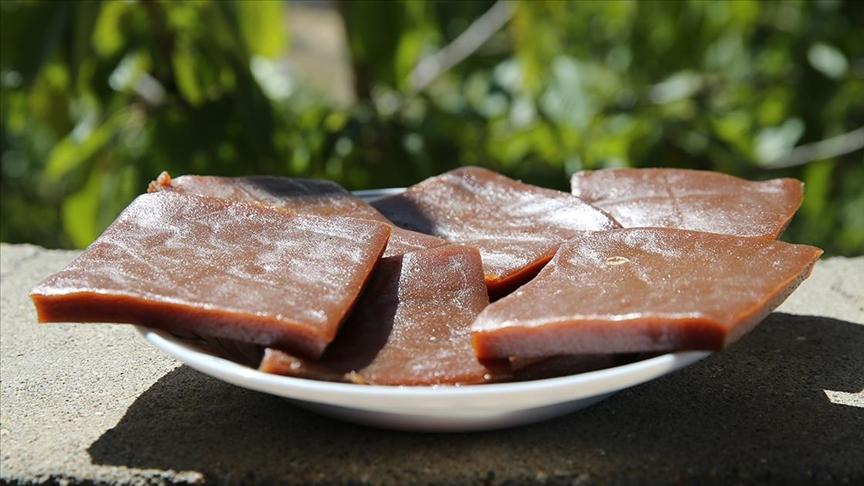
Tillo Heriresi (Anadolu Agency)
The history of Tillo Heriresi dates back approximately 80 years. This product holds an important place in the local culinary culture and was traditionally served on special occasions. Due to its long shelf life, it was also preferred as a travel snack. There is a generations-old production tradition in Sinep village of Tillo. Local artisans such as Hilmi Sevinç learned the craft from their elders and passed it on to their children and grandchildren. Today, families in which three generations work together continue to preserve this tradition.
The product is made without added sugar; its sweetness comes entirely from the natural sugars in the grapes.
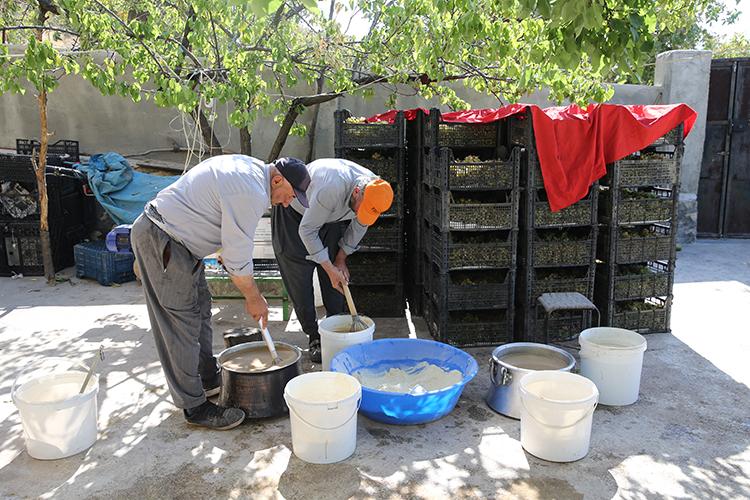
Tillo Heriresi Production Stage (Anadolu Agency)
Tillo Heriresi can be stored for up to six months without spoilage at room temperature in dry, shaded places. It contains no additives and is recognized as a healthy snack due to its natural composition.

Final Product of Tillo Heriresi (Anadolu Agency)
Since its registration, grape cultivation and paste production in the region have gained economic value. With the support of the Siirt Provincial Directorate of Agriculture and Forestry, grape pressing machines have been distributed to producers, and efforts have been made to promote and brand the product. Tillo Heriresi is now shipped to major cities including Istanbul, with Siirt as the primary origin.

History and Cultural Significance
Ingredients Used in Production
Production Process
Physical and Chemical Properties
Consumption and Storage
Economic and Social Contribution
