

This article was automatically translated from the original Turkish version.
Amorphophallus titanum is a plant species endemic to Sumatra Island in Indonesia, belonging to the Araceae (Arum family). Its natural habitat consists of steep slopes in Sumatra’s tropical rainforests. However, its wild population is threatened due to deforestation and soil degradation. As a result, botanical gardens play a crucial role in the conservation of this valuable plant species.
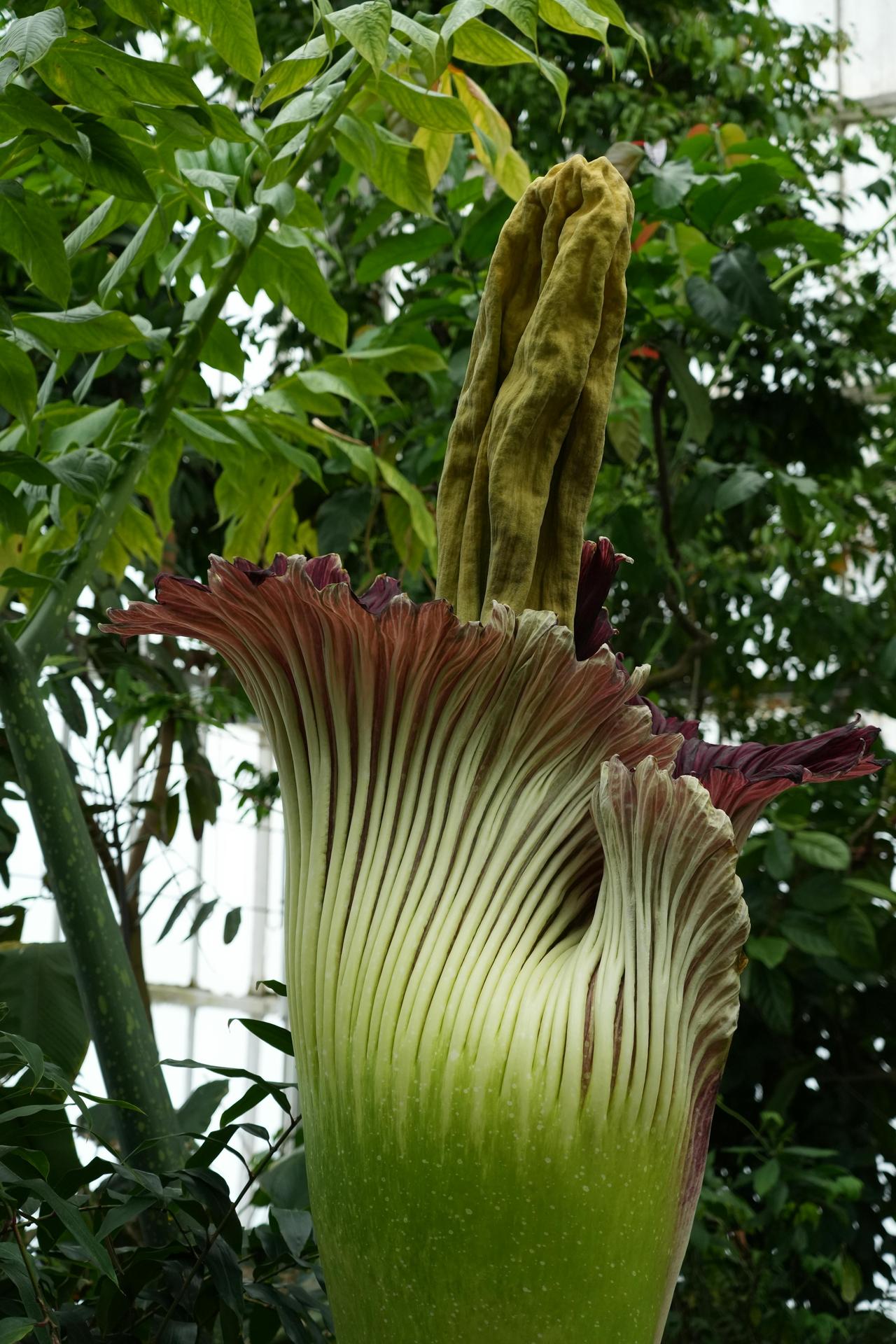
Titan Arum - Pexels
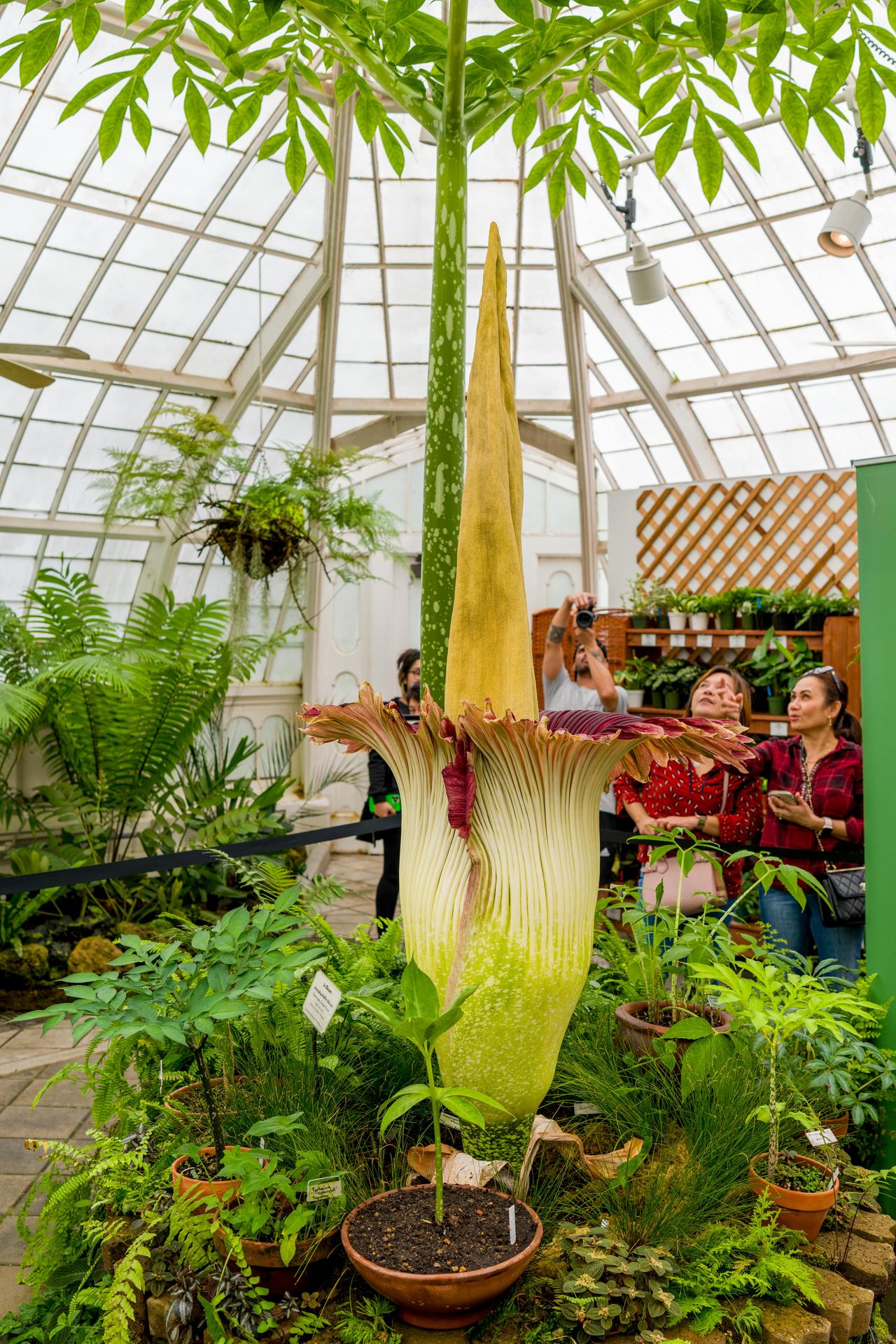
The Titan Arum is a plant with the largest unbranched inflorescence in the world. When in bloom, it can reach up to three metres in height. This massive structure makes it unique in the botanical world. The flower structure is composed of a large inflorescence containing spadices, which are the flower stalks, surrounded externally by a large, petal-like covering called a spathe. The spathe varies in colour from green to cream on its outer surface and is deep burgundy on the inner surface, with pronounced grooves.
In the wild, the Titan Arum blooms rarely, with intervals between blooms ranging from four to ten years. The blooming period lasts only 24 to 36 hours. When it blooms, it emits a strong odour resembling rotting meat, and the temperature of the inflorescence can rise to approximately 36°C during this time. This heat helps the scent disperse over greater distances. After blooming, the inflorescence withers and is replaced by a single, tree-like leaf. This leaf is notable for its white-spotted stem and trifoliate structure.
The Titan Arum attracts flies and other insects by emitting the odour of rotting meat. These insects pollinate the small flowers located at the base of the inflorescence. Additionally, the plant generates heat during blooming, which aids in spreading the scent over a wider area.
The Titan Arum has a large tuber underground that stores nutrients produced through photosynthesis and provides the energy required for blooming. After blooming, the inflorescence withers and is replaced by a single, tree-like leaf. This leaf is notable for its white-spotted stem and trifoliate structure.
It is classified as Endangered on the IUCN Red List. Its wild population is declining due to deforestation and soil degradation in its natural habitats. The blooming of the Titan Arum attracts significant public attention in botanical gardens around the world, particularly at Kew Gardens in London. For example, the blooming of the Titan Arum at Kew Gardens has been met with intense interest from visitors.
The Titan Arum first bloomed outside its natural habitat in 1889 at Kew Gardens in London. Known in Indonesia as bunga bangkai (corpse flower), this plant attracts public interest due to its odour of rotting meat.
“Dünyanın En Büyük Tek Çiçekli Bitkisi: Titan Arum.” Kültür ve Yaşam. Accessed August 16, 2025. https://kulturveyasam.com/dunyanin-en-buyuk-tek-cicekli-bitkisi-titan-arum/
“Titan Arum (Amorphophallus titanum).” Kew Gardens. Accessed August 16, 2025. https://www.kew.org/plants/titan-arum
“Titan Arum: About the Plant.” Chicago Botanic Garden. Accessed August 16, 2025. https://www.chicagobotanic.org/titan/about

Morphological Characteristics
Blooming and Reproduction
Pollination Mechanism
Energy Storage and Life Cycle
Conservation Status and Botanical Gardens
Historical and Cultural Context