This article was automatically translated from the original Turkish version.
Location | Tarsus Türkiye Mersin | ||||||||
|---|---|---|---|---|---|---|---|---|---|
Date(s) | 6th century BCE (Prophet Daniel's era) the mosque was built in 1857 | ||||||||
Significance | It is believed to be the burial site of the prophet who liberated the Jews from the Babylonian captivity through his prophecy | ||||||||
Makam-ı Danyal Camii | Built on top of the tomb in 1857; the final congregational section was added in the 1960s | ||||||||
The Shrine of Prophet Daniel is located in the city center of Tarsus district, Mersin. The tomb is situated beneath the Makam-ı Danyal Camii, which was built in 1857. The mosque is named “Makam Camii” due to the sanctity of the tomb. In the 1960s, an additional prayer space was added to the mosque. Nearby stands the Kubat Paşa Medresesi.
%2520(3).JPG&w=1280&q=75)
Danyal Peygamber Makamı(Türkiye Culture Portal)
It is traditionally believed that Prophet Daniel was born in Jerusalem in 605 BCE and lived during the reign of King Nebuchadnezzar II of Babylon. When the king ordered the killing of all male children born to the Israelites following a dream, Daniel was left in a cave where he was raised by a male and a female lion. He later joined his people and is believed to have liberated the Jews from Babylonian captivity through his wisdom and prophecy. He is regarded as a prophet who bestows abundance.
At the invitation of King Syenessis of Cilicia during a period of famine, Prophet Daniel came to Tarsus. Upon his arrival, prosperity and abundance emerged, and the people refused to let him leave. After his death, he was buried in Tarsus. During the Muslim conquest of Tarsus in the 17th year of the Hijri calendar under Caliph Umar, his body was found in a coffin, with a ring on his finger depicting a child between two lions. Upon Umar’s orders, the grave was deepened and the waters of the Berdan River were redirected to flow over the tomb as a means of protection.

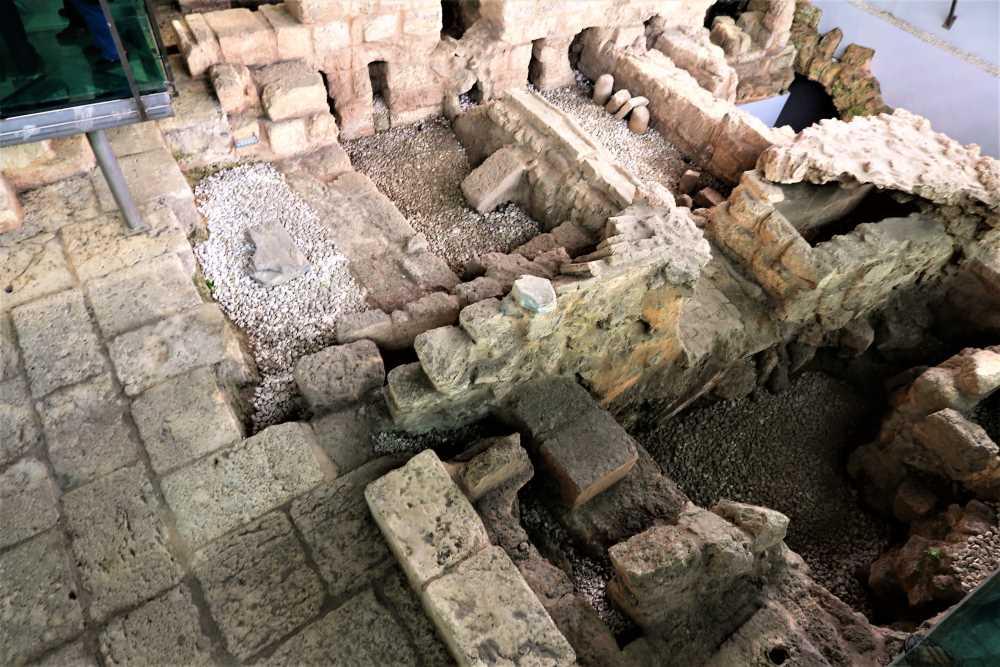
Danyal Peygamber Makamı
During rescue excavations conducted by the Tarsus Museum in 2006–2007, a Roman-era stone bridge, a quadrangular tomb structure dating to the 7th century, a monastery-style dome from the 13th century, arched tombs, and a block of stone bearing a seven-pointed star relief were uncovered. Additionally, the motif of a child between two lions on Prophet Daniel’s ring symbolizes his childhood spent in the cave.
Although written sources regarding Prophet Daniel, who is revered as sacred by Jews, Christians, and Muslims, are scarce, oral traditions are widespread. Based on these traditions, the local population has for centuries believed that he is buried in Tarsus. The tomb was opened to visitors in 2014 following environmental improvements and restoration works.
Culture Portal. "Danyal Peygamberin Makamı (Kabri)." Accessed June 22, 2025.
Tarsus Kaymakamlığı, “Makam-ı Danyal Camii (Danyal Peygamber Türbesi)”, http://www.tarsus.gov.tr/makam-i-danyal-camii-danyal-peygamber-turbesi, Accessed June 22, 2025.
Location | Tarsus Türkiye Mersin | ||||||||
|---|---|---|---|---|---|---|---|---|---|
Date(s) | 6th century BCE (Prophet Daniel's era) the mosque was built in 1857 | ||||||||
Significance | It is believed to be the burial site of the prophet who liberated the Jews from the Babylonian captivity through his prophecy | ||||||||
Makam-ı Danyal Camii | Built on top of the tomb in 1857; the final congregational section was added in the 1960s | ||||||||
No Discussion Added Yet
Start discussion for "Tomb of Prophet Daniel" article
Historical and Religious Significance
Connection to Tarsus and Preservation of the Tomb
Archaeological Findings and the Symbolism of the Ring
Visitation and Beliefs