


+1 More

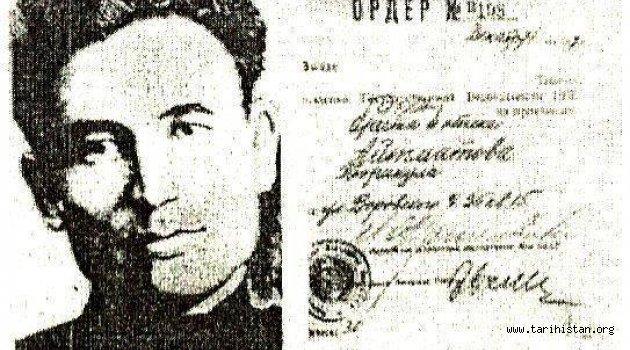
Torekul Aytmatov
Year of Birth | 1903 | ||||||||
|---|---|---|---|---|---|---|---|---|---|
Place of Birth | Şeker Köyü, Talas, Kyrgyzstan | ||||||||
Profession(s) | Educator Intellectual Statesman | ||||||||
Political Activities | Education reforms in Kyrgyzstan, preparation of textbooks for Kyrgyz schools, land and water reform efforts, member of the Communist Party of the Soviet Union | ||||||||
Date of Execution | 5 November 1938 | ||||||||
Place of Execution | NKVD execution site near Bishkek | ||||||||
Törekul Aytmatov was an intellectual born in 1903 in the village of Sugar in the Talas region of Kyrgyzstan. He played significant roles not only in Kyrgyz culture and politics but also within the Soviet Union’s education and administrative systems as an intellectual and educator. However, as a result of the political repression during Stalin’s era, many intellectuals suffered persecution and lost their lives in various ways.
Törekul Aytmatov was educated within the Russian system and studied at the Communist University of the Toilers of the East in Moscow. As one of the intellectuals working to modernize Kyrgyzstan during the early years of the Soviet regime, he was active in educational reforms and participated in initiatives such as the literacy and language reform.
In 1925, he contributed to the establishment of Kyrgyzstan’s education system and ensured the publication of textbooks in the Kyrgyz language. In 1927, he led the commission responsible for implementing land and water reforms, fighting to protect peasants’ land rights and promote agricultural development.
However, due to the perception of these reforms as dangerous by certain segments of society and his association with a distinct Kyrgyz national identity, Törekul Aytmatov was viewed as a threat by the Soviet regime and began to be targeted under Stalin’s “Great Purge” policies in the late 1930s.
Between 1933 and 1934, Törekul Aytmatov was investigated by the Stalinist regime on charges of “nationalism” and “counter-revolutionary activities.” One of the accusations against him was that he was a member of the “Social-Turan Party,” allegedly seeking to separate Kyrgyzstan from the Soviet Union. These allegations were based on forced confessions extracted by the NKVD (Soviet Secret Police), most of which were fabricated.
In 1937, Törekul was added to the list of intellectuals declared “enemies of the people.” He was arrested while at the Professorial Institute in Moscow. After interrogation under torture and despite the complete absence of any credible evidence, he was sentenced to death by the NKVD.
Törekul Aytmatov was executed by firing squad on 5 November 1938 in an NKVD execution site near Bishkek. However, his family was told he had been sent into exile, and the truth was concealed. His wife, Nagima Aytmatov, raised their four children for years, hoping he was still alive and would one day return. The family could obtain no information about him until the 1950s.
After Kyrgyzstan gained independence in 1991, excavations in the Chon-Stone region uncovered a mass grave of intellectuals executed by the NKVD. Investigations confirmed that Törekul Aytmatov was among those buried there.
When Chingiz Aytmatov, Törekul’s son, finally reached his father’s grave, he experienced profound grief. In accordance with his father’s testament, Chingiz Aytmatov was buried beside him in 2008 at the Beyit Cemetery.

Anadolu Ajansı. “Ata-Beyit, Kırgızların En Acı Tarihini Yaşatıyor.” Accessed March 18, 2025. https://www.aa.com.tr/tr/dunya/ata-beyit-kirgizlarin-en-aci-tarihini-yasatiyor/2123420.
Derviş, Leyla, and Symbat Esenkan Kyzy. "Kırgızistan’da Siyasi Katliam (1937-1938)." Kafkas Üniversitesi Sosyal Bilimler Enstitüsü Dergisi 23 (2019): 169-185.
Durukoğlu, Salim. "Türklerin Uğradığı Sürgünleri ve Soykırımları Anlatan Edebi ve Bilimsel Eserler." Düşünce Dünyasında Türkiz 6, no. 32 (2022): 9-50.
Moldoliyeva, Nurgul, Arslan Küçükyıldız, and Tuğba Ekici. Törekul Aytmatov. bilig-4/Kış’97.
Çakan, Varis. "Geçmişten Günümüze Türkistan’da Türklere Yönelik Yapılan Katliamlar." Asya Araştırmaları Uluslararası Sosyal Bilimler Dergisi 5, no. 1 (2021): 13-22.

Torekul Aytmatov
Year of Birth | 1903 | ||||||||
|---|---|---|---|---|---|---|---|---|---|
Place of Birth | Şeker Köyü, Talas, Kyrgyzstan | ||||||||
Profession(s) | Educator Intellectual Statesman | ||||||||
Political Activities | Education reforms in Kyrgyzstan, preparation of textbooks for Kyrgyz schools, land and water reform efforts, member of the Communist Party of the Soviet Union | ||||||||
Date of Execution | 5 November 1938 | ||||||||
Place of Execution | NKVD execution site near Bishkek | ||||||||
Education and Early Career
Soviet Repression and Trial
Execution and Family’s Suffering
Memories and Testament of His Son, Chingiz Aytmatov