


This article was automatically translated from the original Turkish version.

Some films are not merely watched; they are lived, contemplated, and internalized. Christopher Nolan’s 2023 film Oppenheimer is precisely such a work. This film is not just a biography of a nuclear physicist; it is a compelling narrative of how one man’s idea shaped the fate of a nation and the conscience of humanity.
As one of the most innovative directors in modern cinema, Nolan in this film does not overwhelm the viewer with visual spectacle but instead leaves them alone with a moral and intellectual reckoning. Oppenheimer reminds us that cinema can be more than entertainment—it can also be a tool for thought.
Christopher Nolan is an artist who challenges the boundaries of time, memory, and identity in cinema. From Memento to Inception, from Interstellar to Tenet, each of his films plays with time—not only transforming the story but reshaping the viewer’s perception of reality.
But Oppenheimer stands at a different point in this journey.
This time there is no fiction, no dream. There is reality. There is history. There is conscience. In this film, Nolan does not play with time itself but tells the story of a man crushed by time. Oppenheimer may not be as complex as a dream, yet like dreams, it confronts us with reflections of our subconscious—the processes of survival, learning, and healing that unfold in the silence of night. It forces upon us the great questions buried in humanity’s unconscious mind.
class=\
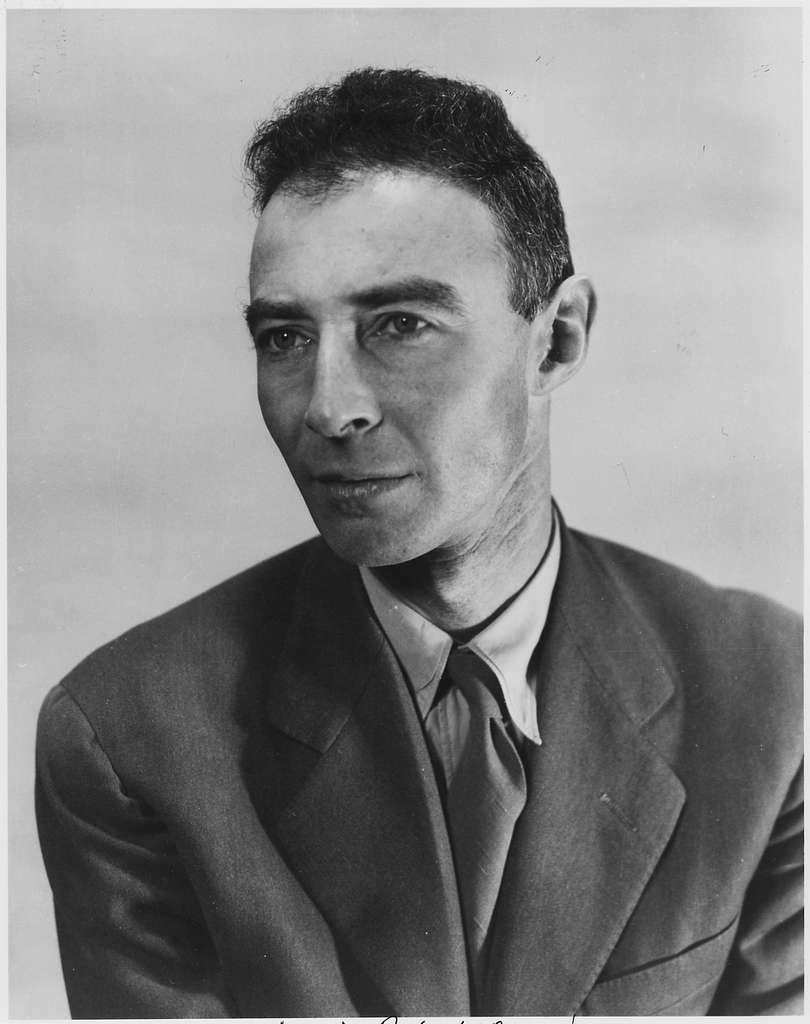
J. Robert Oppenheimer is remembered in history as the creator of the atomic bomb. Yet he was also among those who suffered the most from the power he unleashed. He was a man caught between science and ethics. He cannot be seen as either a hero or a villain. He was a conscience in constant internal conflict.
Christopher Nolan portrays this character not as a legend but as a human being torn by profound inner struggles. Throughout the film, the viewer is confronted with this question: “Should humanity progress at any cost?”
class=\
Oppenheimer’s story is not only the story of scientists but of every person who generates ideas. You might be a physicist working alone in a laboratory or a writer composing in your room.
But never forget: ideas can have far greater impact than you imagine.
An idea, a spark, a vision—these can ignite wars or build peace. And these ideas always begin in the mind of a single human being.
class=\
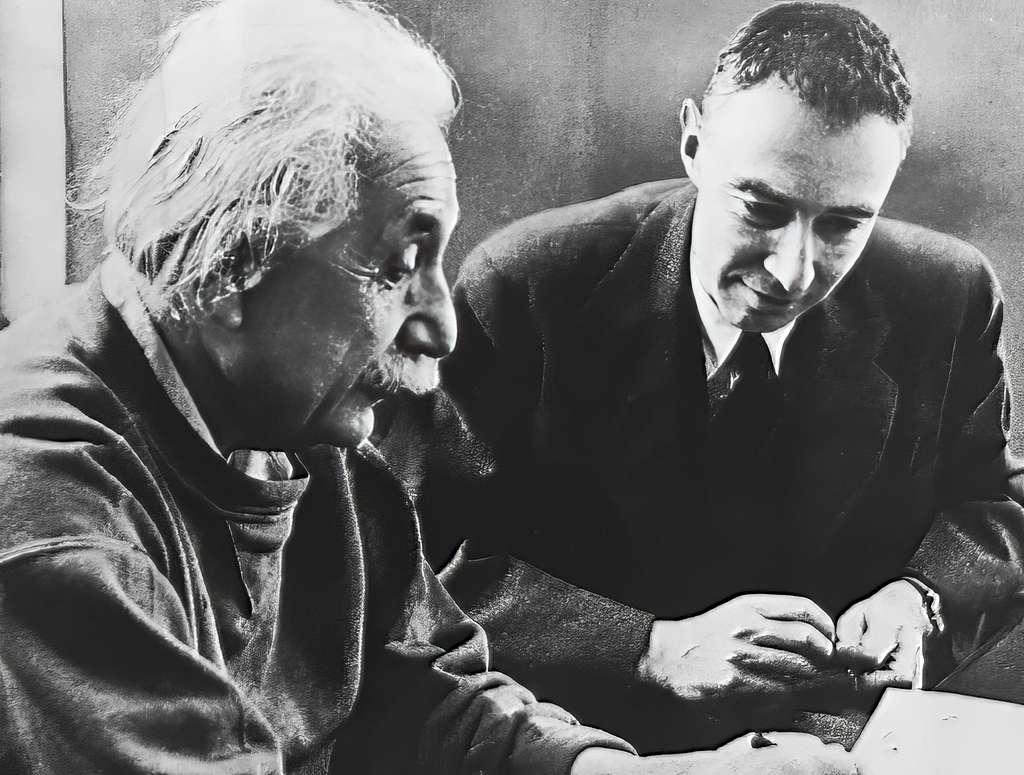
Einstein laid the theoretical foundation of the atomic age and issued warnings about nuclear arms proliferation, while Oppenheimer transformed these theoretical foundations into practice and became the creator of the atomic bomb. Their paths crossed at Princeton, where they exchanged ideas not only on scientific matters but also on ethical dilemmas and the future of humanity. Some aspects of this relationship are dramatized in the film.
class=\
In Nolan’s films, time is usually bent, reversed, or layered. In Oppenheimer, however, time moves forward in a straight line but collides with conscience. Pressing a button lasts only an instant. Yet the consequences of that moment can endure for centuries.
When Oppenheimer pressed that button, he did not merely initiate a physical process—he triggered a turning point in human history, science, and conscience. And that famous line echoes both in the viewer’s mind and in the heart of humanity: “Now I am become Death, the destroyer of worlds.”
Oppenheimer does not merely recount a historical period; it speaks to every era, every person, every idea. Nolan’s storytelling pulls the viewer out of passivity and leaves them alone with questions: “What could my thoughts lead to?” “What should we advance for humanity, and what should we question?”
The film ends, but a questioning begins within the viewer. And perhaps this is exactly what Nolan intended: “Watch not the film, but the idea.” It is this very questioning that helped secure Nolan the award for Best Director.
class=\
The film Oppenheimer made its mark at the 96th Academy Awards (2024 Oscars). This achievement once again solidified Nolan’s position in the world of cinema and marked a pivotal moment in his career.
Although Christopher Nolan had previously been nominated for Oscars for films such as Inception and Dunkirk, he won the Best Director Oscar for the first time. This was seen as a long-overdue completion of his career and the Academy’s ultimate recognition of his artistic vision.
Oppenheimer was a major success both critically and at the box office. This demonstrated that high-quality cinema can reach wide audiences and be crowned with the highest honors.
Nolan went beyond conventional biographical films, weaving Oppenheimer’s inner world and moral dilemmas with his signature techniques of time and narrative. This was an approach that pushed the boundaries of the genre.
BBC News. "Oppenheimer and the Debate Over Historical Events." Accessed June 2, 2025.https://www.bbc.com/news/world-asia-india-66288900
Beyazperde. "96. Akademi Ödülleri'nde Oscar Kazananlar Belli Oldu!" Beyazperde, March 11, 2024. Accessed June 2, 2025.https://www.beyazperde.com/haberler/filmler/haberler-1000070145/
Entertainment Weekly. "Oppenheimer: Christopher Nolan's Atomic Bomb Recreation." Accessed June 2, 2025.https://ew.com/movies/oppenheimer-christopher-nolan-atomic-bomb-recreation/
IMDb. *Oppenheimer.* Accessed June 2, 2025.https://www.imdb.com/title/tt15398776/.
National Geographic. "Oppenheimer: Historical Accuracy in Christopher Nolan's Film." Accessed June 2, 2025.https://www.nationalgeographic.com/history/article/oppenheimer-historical-accuracy-christopher-nolan.
Nolan: A Storyteller Who Dances with Time
The Power of Thought and How an Idea Can Change the World
The Connection Between Einstein and Oppenheimer
A Responsibility Echoing in the Chest of Time
Inspired by Nolan: Writing Your Own Story
Oscar Success and Christopher Nolan’s Place in His Career