


This article was automatically translated from the original Turkish version.
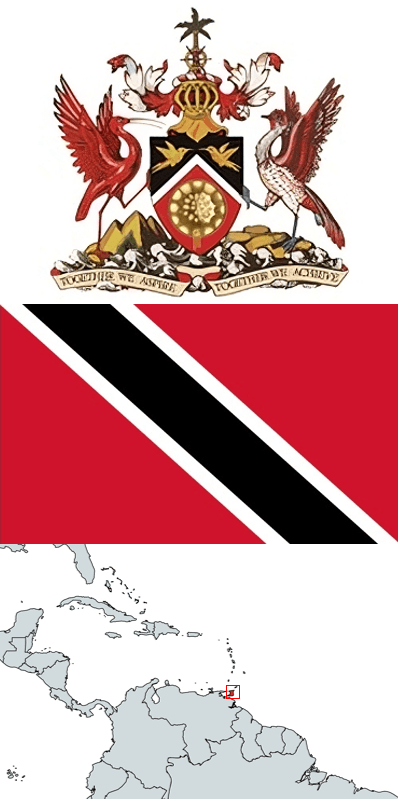
Trinidad ve Tobago
Trinidad and Tobago is an independent island state located in the southern Caribbean, approximately 11 kilometers from the coast of Venezuela, consisting of two main islands—Trinidad and Tobago—and 21 smaller surrounding islets. The country has a total area of 5,128 km² and a population of 1,408,966 according to 2024 estimates【1】. Its capital is Port of Spain and the official language is English. Trinidad and Tobago gained independence from Britain on 31 August 1962 and adopted a parliamentary system of governance. It is distinguished by its multicultural and multi-religious social structure, with prominent communities of African and Indian origin contributing to its cultural diversity. Its economy is largely based on oil, natural gas, and related petrochemical industries; its tropical climate, rich biodiversity including forests and wetland ecosystems, and natural sites such as the La Brea Pitch Lake and the Tobago Main Ridge Forest Reserve also make it significant for tourism and ecotourism.

Port of Spain (Flickr)
The history of Trinidad and Tobago has been shaped by long-term indigenous settlement, European colonial competition, colonial administration, forced labor movements, and political transformations in the 20th century.
The earliest known inhabitants of Trinidad and Tobago were the Arawak and Carib communities who migrated from South America and established settlements on the islands. These indigenous peoples lived by agriculture, fishing, and hunting, developing cultural structures adapted to the island geography. Before European powers arrived, the demographic fabric of the islands was largely defined by these native populations.
In 1498, Christopher Columbus’s arrival in Trinidad is recorded as the first major external contact experienced by the indigenous peoples. This encounter marked the beginning of the colonial processes that would rapidly accelerate on the islands.
Trinidad came under Spanish control in 1498, following Christopher Columbus’s arrival. This period marked the beginning of the islands’ first sustained contact with European powers.
Spanish administration lasted from the 16th century until the late 18th century, during which Trinidad was governed as a Spanish colony. Throughout this period, the island hosted only a limited number of settlers and maintained a low population density.
The essential characteristic of colonial governance was the limited economic and demographic development of the island despite its formal annexation by Spain. The indigenous population was subjected to the impacts of European colonial presence during this time.
Trinidad came under British control in 1797. This political shift resulted in the island being removed from Spanish rule and incorporated into the British Empire. The transfer of Trinidad to Britain was internationally recognized with the Treaty of Amiens in 1802.
During the British period, the social and demographic structure of the island changed significantly. Historical records indicate that populations of African origin were brought to the island during this time. This population movement occurred as part of Britain’s colonial labor system. These communities, brought from Africa during the era of slavery, became a prominent component of the island’s population.
After the abolition of slavery, the British administration began importing indentured laborers from India to address labor shortages. As a result, the Indian-origin population became a structural component of Trinidad’s society.

Cocoa Plantation on Trinidad Island (Library of Congress)
Tobago followed a different historical trajectory; for much of its history, the island changed hands among Spain, England, the Netherlands, and France. This competition among colonial powers resulted in Tobago coming under the administration of various states at different times. Eventually, Tobago was incorporated into British rule, and its administrative structure was reorganized within the broader colonial framework.
Under British administrative reforms, Trinidad and Tobago were merged into a single colonial unit in 1889. This union created a shared administrative structure and laid the foundation for the political developments that followed.

Engraving of Port of Spain, 1912, Frank Weston Benson (Look And Learn) and Photograph of Port of Spain, 1915 (Library of Congress)
Throughout the 20th century, Trinidad and Tobago underwent various constitutional and administrative reforms under British rule. Documented steps included the development of self-governance mechanisms, increased local political representation, and the restructuring of administrative institutions. These reforms formed the foundation for strengthening the islands’ political institutions.
These transformations during British rule helped shape the political environment that eventually led to independence. By the mid-20th century, reforms aimed at expanding political representation and enhancing local governance laid the groundwork for the islands’ departure from colonial administration.

Port of Spain Settlement Area (Library of Congress) and Street View (Library of Congress)
These administrative and political transformations created the essential foundation for separation from colonial rule. As a result, Trinidad and Tobago emerged as an independent state on 31 August 1962.
After independence, the country adopted a parliamentary system of governance and began to assume its status as a sovereign state on the international stage. Trinidad and Tobago participates in international organizations as an independent nation.
In the modern era, Trinidad and Tobago’s social structure is defined by the diverse communities brought to the islands during historical processes. African-origin populations and Indian-origin indentured laborers introduced during the British period remain prominent elements of the country’s demographic diversity after independence.
The Islamic faith, introduced primarily through migration waves from the 19th century onward, has become established and continues to be one of the country’s minority religious traditions.
Trinidad and Tobago’s national anthem, composed and lyricized in 1962 by Patrick S. Castagne, is titled “Forged From the Love of Liberty.” The lyrics reflect an understanding of the nation’s character, the people’s will to live in unity, and their collective identity despite differences. Castagne’s composition has become a symbol embodying the spirit of independence and the courage of the nation.
Trinidad and Tobago National Anthem (Vocal National Anthems)
Trinidad and Tobago’s national flag was selected in 1962 from designs prepared by the Independence Committee. The red, white, and black colors represent the philosophy of the new nation, the principle of unity and harmony, the country’s aspirations, and the shared spirit underlying its cultural diversity. The colors also symbolize fire, water, and earth.
Black represents the determination, strength in unity, and richness of the people. Red symbolizes the element of fire, the dynamism of the nation, the energy of the sun, and the courage of its people. White represents the sea surrounding the islands, the national heritage, pure ideals, and the principle of equality. The flag’s colors and meanings collectively reflect the nation’s past, present, and shared values for the future.
Trinidad and Tobago’s other national symbols include the national coat of arms, national bird, national flower, and national instrument.
Trinidad and Tobago’s coat of arms was prepared in 1962 by a committee, with design contributions from Carlisle Chang and George Bailey. It was officially approved by the College of Arms in 1962.
The birds on either side of the coat of arms are the scarlet ibis and the cocrico, representing native species. The three peaks motif originates from early British colonial seals of Trinidad and is associated with the three hills Columbus used to name the island. The coconut palm is derived from Tobago’s former colonial seals.
The national motto “Together we aspire, Together we achieve” appears on the coat of arms. The emblem is used as the official seal on all official documents and requires a license for reproduction. It may only be displayed in full color, gold, silver, bronze, or black and white.
Trinidad and Tobago has two official national birds: the Scarlet Ibis (Eudocimus ruber) and the Cocrico (Ortalis ruficauda). Both species are recognized as national symbols in official sources.
Scarlet Ibis (Scarlet Ibis/Eudocimus ruber): The Scarlet Ibis is Trinidad’s national bird. It is characterized by its distinctive red plumage and black-tipped wings. It measures 53–69 cm in length with a wingspan of approximately 97 cm. This species is found primarily in wetlands in western and southern Trinidad. Major habitats include Caroni, Carli Bay, Roussillac, South Oropouche, Icacos, and Los Blanquizales. The Scarlet Ibis was declared the national bird in 1962 following independence.
The Scarlet Ibis is one of the birds representing Trinidad’s national identity and is one of the three birds featured on the national coat of arms.
Its presence on the coat of arms signifies its role as a symbol of the nation’s natural heritage and local fauna.

Scarlet Ibis (Flickr)
Cocrico (Cocrico/Ortalis ruficauda): The Cocrico is Tobago’s national bird. It belongs to the order Galliformes and the family Cracidae. The species is of medium size and capable of short-distance flight. Its tail feathers are dark brown and reddish; its weight ranges from approximately 800 grams to 1.3 kilograms, and sex cannot be distinguished by external appearance. The Cocrico is found in Tobago, Bequia, and certain regions of Central and South America; it is a tree-dwelling species inhabiting both forests and forest edges, often moving in groups. Its diet consists of fruits, vegetables, and seeds; therefore, despite being a national symbol, it is also considered a pest due to damage to agricultural crops. The species is protected under Trinidad and Tobago’s “Conservation of Wildlife Act (1958).”
The Cocrico is one of the three birds on the national coat of arms and serves as a symbol representing Tobago’s local natural heritage. Historically, the bird’s earliest recorded name was “Cockerrico” in 1683; in subsequent centuries, it was also known as “Cockricko,” “Cockrico,” and “Tobago Pheasant.”
Trinidad and Tobago’s national flower is the Chaconia (Wursewiczia coccinea), a native plant species officially recognized as a national symbol. The plant is commonly found in the country’s Lower Montane Rain Forests and Seasonal Evergreen Forest regions. The flower’s distinctive feature is that its visible “flower” is actually two rows of bright red petaloid sepals. Chaconia is a species often found in forest clearings alongside vines and epiphytes. Its recognition as the national flower underscores its significant role in both the natural vegetation and the country’s official identity.

Chaconia (Flickr)
The steelpan (steel drum) is recognized as Trinidad and Tobago’s national instrument. Developed in the 1940s on oil drums, the instrument became widespread after the establishment of steel orchestras in 1951 and was used as a regional representative at the United Nations’ 50th anniversary celebrations in 1995. The United Nations (UN) acknowledges the steelpan as an instrument that originated in Trinidad and Tobago. The UN notes that the steelpan is linked to cultural, social, and economic development and can be utilized in tourism, culture, and education. Based on its significance, the United Nations has declared 11 August as World Steelpan Day.

Steelpan (Flickr)
Trinidad and Tobago is located in the southern Caribbean, between the Caribbean Sea and the Atlantic Ocean, very close to the coast of Venezuela. The country’s topography is shaped by Trinidad’s Northern Range mountainous area, the Caroni Plain to its south, the Central Range, and the Southern Range; the highest point is El Cerro del Aripo. Tobago is defined by its northern Main Ridge mountainous area and southwestern limestone plateaus.
The climate is tropical; the country is influenced by both the Caribbean Sea and the Atlantic Ocean. The seas are enriched by nutrient-laden waters from the Amazon, Essequibo, and Orinoco rivers. The country’s rich biodiversity, including forest habitats, wetlands, and nutrient-rich marine environments, forms the core of its natural environment.
The country’s area is 5,128 km², with a coastline of 362 km. Its capital is Port of Spain. Other important cities on Trinidad include Arima, Chaguanas, Point Fortin, and San Fernando; on Tobago, it is Scarborough.
Trinidad and Tobago is an island state located in the southern Caribbean, between the Caribbean Sea and the Atlantic Ocean. The country is situated very close to the northeast coast of Venezuela and is among the Caribbean nations nearest to the South American continent. It lies between 10°–11° North latitude and 60°–61° West longitude.

Map of Trinidad and Tobago (CIA The World Factbook)
As an island state, Trinidad and Tobago has no land borders.
Its neighbors are defined by maritime boundaries:
The country’s only prominent neighbor is Venezuela, with all other directions bordered by the Caribbean Sea and the Atlantic Ocean.
Trinidad and Tobago’s topography varies due to the differing geological origins of the two islands. Trinidad Island is an extension of the northeastern part of the South American continent, with a topography defined by three main mountain ranges and the broad plains between them. Tobago Island is geologically distinct from Trinidad and has a structure similar to the ABC Islands. Both islands are surrounded by the Caribbean Sea and the Atlantic Ocean, with coastal areas presenting diverse landforms.

Tobago (Pexels)
Trinidad’s north is defined by the Northern Range, considered an eastern extension of the Andes Mountains of South America. This mountain range, composed of approximately 150-million-year-old metamorphic rocks, includes the country’s highest point, El Cerro del Aripo (940 m), and El Tucuche. This mountainous region has been shaped by the erosive effects of fast-flowing small rivers. South of the Northern Range lie the Central Range elevations, which have a lower and more undulating topography. At Trinidad’s southernmost end is the Southern Range, characterized more by steep hills. Additionally, isolated elevations such as Anaparima (San Fernando) Hill and Tamana Hill demonstrate the region’s geological diversity; Tamana Hill is a remnant of an ancient large coral reef.
Tobago’s topography is defined by two features: the limestone plateau in the southwest and the volcanic Main Ridge, which covers two-thirds of the island. The island’s highest point, Pigeon Peak (550 m), is located on the Main Ridge.

Map of Trinidad’s Elevations, 1700 (Picryl) and Map of Tobago’s Elevations, 1799 (Look and Learn)
South of the Northern Range lies the extensive Caroni Plain, one of Trinidad’s most prominent flatland areas. To the south of this plain is the Central Range, and further south, the more rugged Southern Range. In addition to Caroni, smaller coastal plains are found in the eastern regions.
Drainage valleys extending from the southern slopes of the Northern Range toward the Caroni Plain are among the country’s main topographic features.
Trinidad has extensive drainage systems along its western and eastern coasts. Large swamps and wetlands such as Nariva and Caroni are part of coastal ecosystems connected to river systems. Most of the country’s significant wetlands are linked to river systems. Trinidad’s Caroni Swamp is the country’s largest brackish wetland; the Nariva Swamp is the largest freshwater wetland and the region with the richest biodiversity.
In Tobago, the Buccoo Swamp is one of the island’s important coastal ecosystems and forms an ecological unity with the Buccoo Reef.
Main water sources in Trinidad:
Main water sources in Tobago:
Trinidad and Tobago lies between the Caribbean Sea and the Atlantic Ocean and is exposed to the influence of both water bodies. The seas around the country are enriched by nutrient-laden currents from the Amazon, Essequibo, and Orinoco rivers.

Trinidad and Tobago (Pexels)
Trinidad’s coasts feature extensive swamps, tidal mudflats, and coastal plains. Tobago’s coasts consist of steep and rugged shores in the north and lower and broader coastal strips in the south. Both islands’ coastal areas, along with reefs and tidal flats, form important marine habitats.
Located near 10° North latitude, Trinidad and Tobago has a distinct tropical climate characterized by year-round warmth and humidity, with clearly defined dry and rainy seasons.
The country’s vegetation consists of diverse tropical habitats, including mountain rainforests, seasonal deciduous forests, mangroves, swamps, and reef-associated coastal ecosystems.
Trinidad and Tobago has a pronounced tropical climate with very low annual temperature variations. This location causes the islands to remain under a warm and humid atmosphere throughout the year.
High mountainous areas play a significant role in the climate. Trinidad’s Northern Range and Tobago’s Main Ridge uplift tropical air currents, increasing convective rainfall; rainfall amounts increase with elevation.
Rainfall in the country is fed by different atmospheric systems, including the Northeast Trade Winds and tropical waves and low-pressure systems from the Atlantic, due to its geographic position. The Northeast Trade Winds make the eastern coast more humid, the western coast drier, and the central regions the wettest. These systems are especially influential during the rainy season.
Seasonal Rainfall Pattern: Trinidad and Tobago’s rainfall regime is clearly divided into two seasons. The dry season runs from January to May, and the wet season from June to December. Approximately 80% of rainfall occurs during the wet season.
Rainfall Amounts: There is a clear relationship between topography and rainfall amounts.
Trinidad
Tobago
Hurricane Impacts: Although Trinidad and Tobago lies officially south of the hurricane belt, it has occasionally been affected by hurricanes. Significant hurricanes experienced in the country include:
Tobago has also experienced two tropical storms within the century, often affected by the southern bands of northern hurricanes.
These systems can produce several meters of rainfall in a single day, causing particularly notable landslides due to excessive rainfall.
Trinidad and Tobago’s vegetation consists of diverse habitats shaped by elevation differences, climatic conditions, and geological history. The country is home to over 2,000 plant species, with habitat diversity extending from mountain forests to coastal swamps.
Vegetation in Mountainous Areas: Around the highest points, El Cerro del Aripo and El Tucuche, lies a type of forest known as Elfin Woodland, characterized by constant moisture and cloud cover. In these areas, annual rainfall exceeds four meters, tree trunks are stunted (less than 10 m tall), and epiphytes, ferns, mosses, and palms are common. Below 900 meters, Upper Montane Rain Forest occurs, where trees reach 25 meters in height and palms and fern species are abundant. Between 750 and 150 meters, Lower Montane Rain Forest has developed. This habitat is found throughout Trinidad’s mountain ranges and Tobago’s Main Ridge region; it is characterized by trees exceeding 50 meters in height, high biodiversity, climbing bamboos (Arthrostylidium spp.), and numerous epiphyte species.
Forests at Medium and Low Elevations: Lower elevations are covered by Seasonal Evergreen Forest. These forests are partially deciduous due to the annual dry season. Prominent species in this habitat include crappo (Carapa guianensis) and guatecare (Eschweilera subglandulosa). Additionally, bromeliads, aroids, orchids, ferns, and the national flower Chaconia (Warsewiczia coccinea) are common in these areas. At the lowest elevations near the coast, Semi-evergreen Seasonal Forest is found. This region contains the largest tree species on the islands; kapok (Ceiba pentandra) and sandbox (Hura crepitans) are characteristic examples of this forest type.
Wetlands and Savannas: Trinidad and Tobago host many types of wetlands. The Caroni Swamp is the country’s largest brackish wetland; the Nariva Swamp is the largest freshwater wetland and exhibits high biodiversity. Tobago’s Buccoo Swamp forms an ecological unity with the Buccoo Reef. Savanna areas (Aripo and Erin savannas) contain only plant species unique to these habitats and are notable for their adapted species. Wetlands also include Marsh Forest, Palm Marsh Forest, and widespread mangrove swamps.
Coastal and Marine-Related Vegetation: Coastal ecosystems are linked to swamps, tidal mudflats, and coral reefs. Vegetation extends not only on land but also in marine-connected areas.
Due to its geographic position and diverse geological origins, Trinidad and Tobago is one of the Caribbean’s richest countries in biological diversity. Together, the two islands host over 2,000 plant species, hundreds of animal species, and numerous endemic organisms.【2】
Plant Diversity: Trinidad has over 300 tree species, and Tobago has over 160.【3】
The richness of the vegetation is explained by the islands’ proximity to the South American continent and their historical geographic connection to Caribbean island ecosystems. The country contains numerous habitat types, including elfin woodland, montane rainforests, seasonal deciduous forests, mangroves, palm swamps, savannas, and coastal plant communities. In these habitats, epiphytes, bromeliads, ferns, palm species, orchid species, and mangrove plants are common.
Animal Diversity: The country’s fauna diversity is high due to its proximity to the South American continent. Sources indicate:
Large wetlands such as Caroni and Nariva are important habitats for both bird species and freshwater organisms. Buccoo Swamp and Buccoo Reef are areas where coastal and marine species are concentrated in Tobago.

Green Parrot in Trinidad and Tobago (Pexels)
National Species and Ecological Importance: The country’s two national birds, the Scarlet Ibis (Eudocimus ruber) and the Cocrico (Ortalis ruficauda), are important components of natural diversity, both in their distribution and conservation status.
Additionally, species such as the pawi (Trinidad piping-guan) found in Trinidad are considered critically important within native fauna.
Wetland and Coastal Ecosystems: Trinidad’s Nariva Swamp is the country’s largest freshwater wetland and stands out for its high species diversity. The Caroni Swamp is one of the main coastal wetlands. Tobago’s Buccoo Swamp has coastal ecosystems connected to reefs.
Mangroves, seagrasses, and coastal plants play a vital role in sustaining the country’s coastal fauna and flora.
Determinants of Ecological Diversity: The main determinants of biological diversity in the country are:
Trinidad and Tobago’s natural resources are categorized into two main groups: subsurface resources and hydrocarbons, and economic minerals.
The country’s main natural resources are listed as oil, natural gas, and asphalt. Trinidad and Tobago has produced oil and natural gas for over a century, reaching cumulative oil production of over three billion barrels and hosting some of the largest natural gas processing facilities in the Western Hemisphere.【4】
Phoenix Park Gas Processors Ltd. has an annual production capacity of 70,000 barrels of natural gas liquids (NGL) and is a key component of the country’s hydrocarbon chain.【5】
The country is also one of the world’s largest exporters of ammonia and producers of methanol; this production is directly based on natural gas reserves.
The minerals extracted in the country include:
Most of these minerals are of sedimentary origin; limestone and sandstone are heavily used as construction materials, and porcellanite is extracted as a cement alternative.
The energy infrastructure is largely based on natural gas-powered electricity generation and extensive petrochemical facilities. The transportation infrastructure includes a large number of ports, particularly those developed for the energy sector. The country has three airports and extensive industrial zones supporting energy, mining, and port activities.
Electricity Generation: Electricity generation in Trinidad and Tobago is largely based on natural gas-fired power plants. The main operator of the electricity sector is the Trinidad and Tobago Electricity Commission (T&TEC), responsible for transmission and distribution; the country’s first electricity system was established in 1895, and T&TEC began national distribution in 1946. Electricity generation facilities include the Scarborough Power Station (11 MW) and the Cove Power Station (65.6 MW; dual-fuel natural gas–diesel); the Cove facility has been operated on natural gas since 2013. Independent power producer PowerGen operates three major plants: Point Lisas (838 MW), Port of Spain (270 MW), and Penal (236 MW). Additionally, Trinity Power Ltd. operates a 225 MW gas turbine at Point Lisas. One of the country’s largest facilities, the Union Estate Power Station (La Brea), is a 720 MW combined-cycle power plant. Approximately 99.5% of electricity production in Trinidad and Tobago comes from fossil fuels.
Oil and Natural Gas Processing Infrastructure: Trinidad and Tobago’s oil and natural gas processing infrastructure is a large industrial structure based on long-standing hydrocarbon production. In addition, the country has 11 ammonia and 7 methanol plants, all of which produce directly from natural gas and have made the country one of the world’s leading ammonia exporters. Infrastructure areas serving the oil and natural gas sector include Galeota Port, Brighton Port, Point Lisas Industrial Port, and particularly the expanding Point Lisas South and East Industrial Estate. These facilities and port complexes form the foundation of the country’s oil exploration, extraction, processing, and petrochemical production chain.
Trinidad and Tobago’s transportation infrastructure has developed as a system centered around seaports, industrial port areas, energy logistics facilities, and airports, in line with the country’s geographic structure and energy-centered economy. Trinidad and Tobago has three airports. These airports are part of the country’s transportation infrastructure suited to its island structure, serving both domestic and international flights.
Maritime Transport and Ports: The country’s port network has a structure that supports both commercial shipping and the energy industry. There are a total of ten ports in the country; one is medium-sized, four are small, and five are very small. Major ports are recorded as Point Lisas Port, Point Lisas Industrial Port, Pointe-à-Pierre Port, Port of Spain, Galeota Port, and Brighton Port. Galeota Port is a port facility expanded to serve oil exploration and offshore energy companies. This port serves as an eastern Trinidad-based center providing support for the energy sector’s technical needs.
Brighton Port is particularly linked to heavy industry and petrochemical activities.
Energy sector infrastructure operates integrated with ports. Oil and natural gas production and processing facilities are located in industrial areas connected to ports.
Prominent energy infrastructure facilities include Phoenix Park Gas Processors Ltd. (natural gas liquids processing plant), the Point Lisas energy and petrochemical complex, and exploration-production facilities supporting Galeota and Brighton ports.
These structures support the country’s intensive hydrocarbon activities in terms of transportation, storage, and processing.
The currency is the Trinidad and Tobago Dollar (TTD). The economy is primarily based on the energy sector (oil–natural gas–petrochemicals). The country is a major producer of LNG, ammonia, and methanol. Mining highlights economic minerals such as limestone, gypsum, copper, sand–gravel, and porcellanite. Industrial infrastructure is concentrated in industrial zones such as Point Lisas, Brighton, and Galeota. The services sector has developed, contributing through tourism, banking, and trade.
Trinidad and Tobago’s main trading partners are the United States, Argentina, Brazil, Chile, and Colombia.

1 Trinidad and Tobago Dollar (TTD) from 2006 (Look And Learn)
• GDP (Nominal): $24.01 billion (estimated).
• Real Growth: 1.5% growth.
• GDP per Capita: $16,900 (estimated).
• Inflation: 3.7% (estimated).
• Unemployment: 4.9%.
• Exports: $11.56 billion, main items: oil, petroleum products, chemicals, natural gas.
• Imports: $8.08 billion, main items: machinery, industrial equipment, food, chemicals.
The country’s economy is fundamentally based on oil and natural gas. The energy sector accounts for approximately 40% of GDP and 80% of exports.【7】The country is one of the world’s leading suppliers of liquefied natural gas (LNG).
The main minerals extracted in the country are:
Industrial production is concentrated around petrochemicals, methanol–ammonia production, steel, aluminum, construction materials, and energy processing facilities. Regions such as Point Lisas Industrial Estate, Galeota Port, Brighton Port, and Union Industrial Estate are centers of industrial production.

Port of Spain, Trinidad and Tobago (Flickr)
Trinidad and Tobago’s agricultural sector constitutes a small part of the economy. Key agricultural production areas are bananas, various vegetables, and tropical crops.
The country has diverse forest ecosystems, savannas, swamps, and coastal habitats, which provide not only ecological value for biodiversity but also serve as environmental foundations for local agricultural production and coastal fishing. The fishing sector is also a contributor to the economy.
The services sector occupies a broad position in the economy. Tourism, banking, trade, and other service areas are among the country’s non-energy activities. Trinidad and Tobago has a modern banking and financial system, and financial services play a significant role in the economy. Key components of the financial system include commercial banks, government financial institutions, industrial investment structures financing the energy sector, and widespread banking infrastructure supporting the services sector.
Trinidad and Tobago’s foreign trade is defined by its oil and natural gas-based export structure, with the economy largely based on hydrocarbon exports. Export value is $11.56 billion USD, and import value is $8.08 billion USD.
The sectors in which Trinidad and Tobago’s exports are notably concentrated are as follows:
Machinery and Industrial Equipment: Machinery and industrial equipment lead the import items. This aligns with the economy’s energy and industrial structure.
Food Products: Another major import category is food and consumer goods.
Chemicals and Industrial Raw Materials: Chemicals and industrial raw materials hold a significant share in import composition.
Transportation and Industrial Equipment: Transportation, storage, and industrial equipment are imported as part of industrial expansion projects.
The United States is Trinidad and Tobago’s largest trading partner. In 2022, the country exported $5.4 billion USD to the U.S. and imported $3.5 billion USD from it. Main export products include iron, crude oil, LNG, and methanol. A Double Taxation Avoidance Agreement (1970) and an Investment Agreement (1996) are in place between the U.S. and Trinidad and Tobago.【8】
Trinidad and Tobago’s demographics are characterized by a population of 1.4 million with a multicultural and multi-religious social structure; the majority of the population is concentrated in western Trinidad, with African and East Indian-origin communities forming the dominant groups. The population growth rate is very low, and the country exhibits a slight population loss and emigration trend.
Trinidad and Tobago’s population is approximately 1.4 million. The population is significantly concentrated on Trinidad Island, with Tobago making up a small portion of the total population. Trinidad, being the island where industry and services are concentrated, has the majority of the urban population. Tobago has smaller settlements. The age structure shows a balanced profile of young and elderly populations: 18.7% of the population is aged 0–14, 67.2% is aged 15–64, and 14.1% is aged 65 and over. The overall sex ratio is at the level of 1.01 males per female.

Population Distribution of Trinidad and Tobago (2024) (CIA)
Trinidad and Tobago’s total population is estimated at 1,408,966 (2024). Of this, 708,260 are male and 700,706 are female. The population is concentrated in western Trinidad, particularly in the western half of the island, and in southern Tobago. 53.4% of the population lives in urban areas (2023), and the urbanization rate increased by 0.23% annually between 2020 and 2025. The urban population of the capital, Port of Spain, is recorded at 545,000 (2023).【10】

Port of Spain (Flickr)
The age structure shows a balanced profile of young and elderly populations: 18.7% of the population is aged 0–14, 67.2% is aged 15–64, and 14.1% is aged 65 and over. The overall sex ratio is at the level of 1.01 males per female.
Trinidad and Tobago’s ethnic structure consists of diverse communities. The largest groups in the country are those of African and Indian origin. The ethnic structure was formed by communities brought from Africa during the colonial period and Indian-origin indentured laborers brought during the British period. These two major groups define the country’s demographic character. Other communities include small European-origin groups, Chinese, Syrian–Lebanese communities, and mixed groups.
East Indian-origin people constitute 35.4% of the population, and African-origin people constitute 34.2%. Additionally, 15.3% are mixed–other, 7.7% are African–Indian mixed, 1.3% are other, and 6.2% are unspecified (2011).【11】
Trinidad and Tobago is a multi-religious society. The most common religion is Christianity, with various denominations widely represented. Hinduism holds a significant share of the population and is prevalent among Indian-origin communities. The Muslim population constitutes a smaller minority but remains part of the country’s religious mosaic.
Religious distribution is as follows: Protestant groups 32.1%, Roman Catholics 21.6%, Hindus 18.2%, Muslims 5%, Jehovah’s Witnesses 1.5%, other religions 8.4%, non-religious 2.2%, and unspecified 11.1% (2011).【12】
Migration movements are among the factors affecting demographics. The country’s population growth rate is low at 0.1% (2024). The net migration rate is –0.9 migrants per 1,000 people, indicating that Trinidad and Tobago is a country of emigration. Trinidad and Tobago is a country of emigration, with particularly the youth population moving abroad for work. The population pyramid indicates a gradually aging population structure due to low fertility and increasing elderly populations.【13】
The official language is English, but in Trinidad and Tobago, languages such as Trinidadian Creole English, Tobagonian Creole English, Caribbean Hindustani, Trinidadian Creole French, Spanish, and Chinese are also spoken.
Educational expenditures in Trinidad and Tobago constitute a significant item in the country’s economic indicators, with 2.9% of GDP (2023 estimate) and 12.6% of the national budget (2025 estimate) allocated to education. These figures place the country at 159th globally in terms of education spending as a share of GDP. Literacy rates are high; according to 2022 estimates, the female literacy rate is recorded at 93.8%.【14】
Trinidad and Tobago’s education system is implemented through various institutions under the Ministry of Education, including pre-school institutions, primary and secondary schools, universities, tertiary institutions, vocational training centers, nursing schools, government institutions, and special-purpose educational organizations. The structure of educational institutions in the country is regulated and accredited by the Ministry.
Trinidad and Tobago’s culture is a multilayered and dynamic structure resulting from the long-term interaction of diverse ethnic, linguistic, and religious communities. The country stands out in the Caribbean for its ethnic, religious, and cultural diversity; intercultural tolerance, cultural interaction, and freedom of expression are encouraged by official institutions. This diversity is clearly reflected in daily life practices as well as in music, festivals, literature, and cuisine.
Trinidad and Tobago’s cultural structure has been shaped by the coexistence of multiple ethnic and religious communities. The population consists of African-origin, East Indian-origin, mixed (dougla/doghla) groups, and small Chinese and Syrian communities. Major religions in the country include Catholicism, Hinduism, Pentecostal/Evangelical traditions, Presbyterianism, Spiritual Shouter Baptist faith, and Islam. This demographic structure forms the foundation of cultural diversity.
The official language of the country is English, and all official procedures are conducted in this language. In daily life, local dialects, Creole, Patois, and Hindustani-influenced speech forms are observed. Some communities speak Spanish and French; in some schools in Trinidad, Hindi is taught. The linguistic structure emerged from the combination of historical English, French, Spanish, and African-origin Creole influences in the region.
Trinidad stands out for its vibrant festival culture, while Tobago contributes to cultural activities alongside its natural areas. The country’s most important cultural event, Carnival, developed from the fusion of Roman Catholic traditions and African-origin rituals and has transformed into a globally recognized festival. The festival is defined by mask characters, costumes, street parades, and musical elements.
Trinidad and Tobago’s music is represented by calypso, reggae, and steelpan. Calypso is a genre associated with regional oral traditions. Reggae is part of the region’s cultural interactions. Steelpan, developed in Trinidad and Tobago, is defined as the only acoustic instrument to emerge in the 20th century.
The country contributes to Caribbean literature, performing arts, and visual arts. Writers, actors, dancers, and visual artists from Trinidad and Tobago or associated with the region hold an important place in Caribbean cultural production. V. S. Naipaul is the Trinidad and Tobago-born author who received the Nobel Prize in Literature (2001). Other authors associated with the region who received the Nobel Prize are Wole Soyinka (1986) and Derek Walcott (1992). Artists have also produced internationally recognized works in visual arts and music.
Trinidad and Tobago’s cuisine is described as a reflection of cultural diversity; Indian-influenced dishes such as roti and curry, street foods like doubles, pelau, seafood, and tropical fruits are considered key elements of the cuisine. The regional culinary diversity includes Trinidad and Tobago’s unique dishes. Trinidad and Tobago cuisine is shaped around Indian-origin spicy dishes, African-origin cooking techniques, local Caribbean products, street food culture, rice and meat mixed hot dishes, seafood, and tropical fruits.
Doubles, a food made by placing a spiced chickpea mixture between two fried breads, is a widely consumed daily food in Trinidad. Pelau also holds an important place in the country’s cuisine; pelau is a one-pot dish of rice, meat, and vegetables, commonly consumed on the island. In addition, seafood, particularly fish and shrimp varieties, are key elements of the cuisine. Influenced by the tropical climate, mango, papaya, coconut, and other tropical fruits play an important role in daily consumption.
Trinidad and Tobago’s sports culture aligns with the general Caribbean structure, particularly in cricket, athletics, boxing, and swimming. Trinidad and Tobago-born athletes have played important roles in the West Indies Cricket Team, and the country has produced internationally successful athletes in various disciplines.
In Trinidad and Tobago, tourism is a multifaceted sector developed around the country’s natural areas, coastal ecosystems, geological formations, and cultural infrastructure. Significant portions of tourist attractions are managed by state institutions, and national policy aims to develop tourism based on sustainability principles. Tourism is supported by a comprehensive legal investment framework; various nature conservation areas, cultural structures, and recreation facilities form the basis of tourist activities.
The country’s most well-known natural areas include the La Brea Pitch Lake and the Tobago Main Ridge Forest Reserve. The La Brea Pitch Lake, covering approximately 100 acres (41 hectares) and reaching depths of 76 meters, is the world’s largest natural asphalt lake; it attracts about 20,000 visitors annually. The naturally moving asphalt on the lake’s surface presents a geological phenomenon and holds economic value for local communities.
The Main Ridge Forest Reserve in Tobago, declared a protected area in 1776, is among the world’s oldest legally protected forest reserves. The reserve encompasses a vast ecosystem of lowland humid rainforests, montane forests, and xerophytic vegetation. With over 200 bird species and numerous endemic species, the reserve has become a central hub for ecotourism.
Additionally, beaches and coves are important elements of the country’s tourism. Beach areas such as Maracas Bay, Matelot Bay, Paria, Grand Tacarib, and Madamas are used for recreation, scenery, and marine activities.
Modern cultural facilities play a significant role in the development of cultural tourism in the country. The National Academy for the Performing Arts – Lord Kitchener Auditorium (NAPA), opened in 2009, is one of Trinidad and Tobago’s four national performing arts centers and was developed under the national cultural policy. The venue has become part of the cultural tourist experience through theater, music, and performing arts events.

National Academy for the Performing Arts (Flickr)
Additionally, the La Vigie Paramin Viewpoint in Trinidad offers a combined view of Port of Spain and the Caribbean Sea; it provides visitors with access to natural landscapes and local community culture. Located on the slopes of Maraval, the area reflects the culture of the Paramin village, home to a Creole community.
The Carnival Museum in Port of Spain is part of cultural projects linked to Port of Spain’s UNESCO “City of Music” status. Along with the “Music Walk of Fame,” “Music Zones,” and other cultural initiatives, the Carnival Museum is part of the city’s cultural heritage infrastructure.
Especially the island of Tobago is a significant region in terms of species diversity. The Main Ridge Forest Reserve on this island has won global ecotourism awards. The reserve was selected by the World Travel Awards as the “World’s Best Ecotourism Destination” between 2003 and 2006.【15】 This demonstrates the competitiveness of the country’s natural areas in the international tourism market.
Trinidad and Tobago’s UNESCO-designated areas are only on the UNESCO Tentative List. There is no UNESCO-recognized World Heritage Site in the country. However, two important areas have been officially nominated for UNESCO status.
Located on the southern edge of the Oropuche Lagoon in southwestern Trinidad. The site’s importance lies in its designation as the oldest pre-Columbian settlement in the Caribbean. Artifacts found in the region include shell mounds, stone tools, plant processing stones, and a human skeleton (“Banwari Man”) dating to 5000–3000 BCE. It holds value as a key reference point for understanding migration routes from South America to the Caribbean.
According to 2019 data, the profile of visitors to the country is as follows:
These data indicate that Trinidad is primarily chosen for business and conference tourism, while Tobago is preferred for vacation, recreation, and ecotourism.
Tourism holds a moderate but strategic share in the country’s economy. Particularly in Tobago, tourism plays a more decisive role in the regional economy.
The promotion of the tourism sector is comprehensively regulated by the Tourism Development Act (2000). The law defines various tourism projects such as accommodation facilities, destination management companies, diving centers, marinas, and ecological lodges, and provides incentives such as tax exemptions, accelerated depreciation, and capital expenditure advantages. The law also includes special permits and exemptions for tourism infrastructure, equipment imports, and investment capital, requiring projects to comply with sustainability criteria.
National policy structures tourism based on sustainable development, preservation of cultural heritage, public-private sector cooperation, local community participation, and enhancing the country’s global competitiveness. The policy includes many strategic areas aimed at diversifying tourism. The National Tourism Policy includes objectives such as “preservation of historic buildings, sites, and spaces” and “identification of priority heritage sites for UNESCO nomination.”
Various initiatives since the 1960s to establish a national park system have been interrupted due to planning issues, inter-institutional conflicts, and land ownership problems. Nevertheless, protected areas form the core axis of ecotourism planning. The ecotourism approach is linked to policies aimed at conserving biodiversity, particularly in Main Ridge and other natural reserves.
Encouraging new cruise lines, strengthening port infrastructure, and enhancing cultural experiences for cruise passengers are also part of tourism policies.

Tobago (Pexels)
Trinidad has five official tourism regions:
These regions form the primary geographic framework for planning, investment, product diversification, and destination management in the national tourism policy. The Northwest Region (Port of Spain and surroundings) focuses on culture, entertainment, conferences, and event-based tourism; Port of Spain’s UNESCO “City of Music” status enhances the region’s appeal. The East Region includes natural attractions such as ecotourism, turtle watching, caves, and mud volcanoes.
Tobago’s official tourism regions are:
Port of Spain (Trinidad): The country’s primary urban tourism center. It holds the UNESCO “City of Music” status and is known for its nightlife, culture, entertainment, music events, and festivals. It is described as a “living city experience.”
Scarborough (Tobago): The administrative center of Tobago. It is the main destination for tourists seeking vacation and recreation.
Diego Martin – Arima – Tunapuna/Piarco (Trinidad): Located within the Northwest Tourism Region alongside Port of Spain. These serve as supporting centers with nightlife, culture, heritage sites, and nature tourism activities.
Tobago Main Ridge Forest Reserve (Tobago) and La Brea Pitch Lake (Trinidad) are the country’s important natural areas. Other notable natural areas include:
Nariva Swamp / Aripo Savannas / Caroni Swamp
Matura – Madamas – Paria – Grand Tacarib – Matelot
Trinidad and Tobago’s famous tourist beaches and bays include:

Maracas Beach (Unsplash)
The country conducts its foreign policy through active participation in multilateral platforms, based on fundamental principles such as sovereignty and equality of states, non-interference in internal affairs, and adherence to international law. In this context, it is a member of organizations such as the United Nations and the Caribbean Community (CARICOM).
The country gained independence from the United Kingdom on 31 August 1962 and established its independent foreign policy. The foreign policy line has consistently followed the axes of multilateralism, regional cooperation, and international law from independence to the present. Port of Spain’s hosting of regional meetings has enhanced the country’s diplomatic visibility. Internationally, Trinidad and Tobago has pursued a policy aligned with sovereignty and recognition principles in UN voting.
Trinidad and Tobago has become a prominent country in the Caribbean region due to its economic development, transportation connectivity, and energy resources. This position has granted the country a strong role in regional diplomacy and coordination. Trinidad and Tobago is also one of the UN member states that recognize Palestine.
There is a close, institutionalized, and multidimensional relationship between Trinidad and Tobago and the United States.
Security and Military Cooperation: The two countries have a Status of Forces Agreement (SOFA); this agreement will enable higher levels of coordination and joint operational capacity between their armed forces. Trinidad and Tobago became the 14th country to join the SOUTHCOM Human Rights Initiative; within this framework, human rights programs are implemented in public security and defense institutions. Under the Caribbean Basin Security Initiative (CBSI), joint programs with the U.S. are conducted in maritime security, cybersecurity, and crime fighting. The CBSI-TAFT team provides technical support to Caribbean coast guard and patrol units.
Technical and Institutional Assistance: The U.S. CDC runs joint programs with Trinidad and Tobago to develop public health and laboratory capacity. USAID opened an office in the country in 2022, focusing on rule of law and climate change projects.
Diplomatic Representation and Social Ties: Trinidad and Tobago has an embassy in Washington, D.C. Approximately 13,000 U.S. citizens live in Trinidad and Tobago; about 10,000 U.S. citizens visit the country annually.【18】
On 18 September 2025, Prime Minister Kamla Persad-Bissessar and China’s Ambassador to Trinidad and Tobago, Ren Hongyan, held bilateral talks and discussed grant matters. On 25 September 2025, Trinidad and Tobago’s Minister of Foreign Affairs and CARICOM, Sean Sobers, and China’s Deputy Minister of Foreign Affairs, Miao Deyu, discussed multilateral and bilateral cooperation areas on the margins of the UN General Assembly.
Diplomatic relations between Trinidad and Tobago and the Soviet Union were established on 6 June 1974. In 1992, the Trinidad and Tobago government officially recognized the Russian Federation as the successor to the Soviet Union. In 2004, Russia’s Foreign Minister Sergey Lavrov and Trinidad and Tobago’s Foreign Minister Knowlson Gift signed a protocol on political consultations between the two countries’ foreign ministries. The first consultations were held in Port of Spain in 2005.
Trinidad and Tobago is one of the leading and economically strongest members of the Caribbean Community (CARICOM). The country, with its high national income, natural resources, and educated population, is among the developed states in the Caribbean. Trinidad and Tobago serves as the region’s natural transportation hub and is a crucial crossroads for Caribbean access. This position plays a decisive role in the country’s economic and political interactions with other Caribbean nations. Trinidad and Tobago’s foreign policy is based on regional cooperation, multilateral diplomacy, and Caribbean solidarity, alongside the characteristic principles of small island states. Trinidad and Tobago has hosted a security conference with the Southern Command (SOUTHCOM) covering Caribbean countries.
Trinidad and Tobago is a member of the African, Caribbean and Pacific Group of States (ACP). Within this framework, the country participates in joint development, trade, and political dialogue platforms with African countries, joins the same negotiation blocs as African states within the EU–ACP partnership, and conducts cooperation with African countries through multilateral frameworks rather than directly.
Diplomatic relations between Turkey and Trinidad and Tobago were established on 22 May 1972. This date marks the beginning of official diplomatic contacts and forms the foundation of the relationship. For many years, relations progressed at a limited level due to both countries’ foreign policies focused on their own regions.
One of the most significant events in Turkey–Trinidad and Tobago relations was the CARICOM–Turkey Ministerial Meeting. The First Meeting of Ministers of Foreign Affairs on the Mechanism of Turkey–CARICOM Relations was held in Istanbul from 17–21 July 2014. Trinidad and Tobago’s Foreign Minister attended this meeting. This meeting marked an important stage in strengthening multilateral diplomatic engagement between the two countries.
In recent years, Turkey’s opening policy toward Latin America and the Caribbean has led to a significant acceleration in relations with Trinidad and Tobago. Turkey’s efforts to become more visible in the Caribbean, the opening of new embassies, and the increase in technical and institutional cooperation projects form the background of this acceleration. The first Turkish Embassy in Port of Spain became operational on 25 August 2018.
The first ambassador was Hayriye Nurdan Erpulat Altuntaş.
Additionally, Trinidad and Tobago’s Minister of Foreign Affairs attended the UN 75th General Assembly High-Level Meeting in Durban in 2021. Although not directly linked to Turkey, this demonstrates that both countries participated in the same international processes.
Turkey has implemented technical cooperation projects in the region through TİKA, and Trinidad and Tobago has become part of Turkey’s foreign policy agenda within this regional framework.
Trinidad and Tobago is an active and full member of the following international organizations:
These organizations align with the country’s foreign policy pillars of multilateralism, regional solidarity, and international law.
United Nations (United Nations) and Specialized Agencies: Trinidad and Tobago is a member of the United Nations and all relevant specialized agencies. This membership forms the fundamental framework of the country’s commitment to international law, diplomatic representation, and global governance. Cooperation with UN specialized agencies (ILO, UNESCO, WHO, FAO, etc.) is conducted under this membership.
Commonwealth of Nations: The country is a full member of the Commonwealth, composed of former British colonies. This membership provides connections with the United Kingdom and other island states in areas of democracy, rule of law, development, and technical cooperation.
Organization of American States (OAS) – Organization of American States: Trinidad and Tobago is a member of OAS, which conducts diplomatic dialogue with continental countries. Within this framework, the country participates in joint agendas with other American states in areas of human rights, security, and economic cooperation.
Caribbean Community (CARICOM) – Caribbean Community: This is the country’s most important regional organization membership.
Within CARICOM, Trinidad and Tobago actively participates in:
Association of Caribbean States (ACS) – Association of Caribbean States: Trinidad and Tobago is a member of ACS, which encompasses Caribbean Basin countries. This organization is a broad platform targeting trade, transportation, disaster management, and regional development.
Non-Aligned Movement (NAM) – Non-Aligned Movement: The country is a member of the Non-Aligned Movement and emphasizes non-interference, sovereignty, and equality of states in its foreign policy. This membership forms the ideological framework supporting Trinidad and Tobago’s multilateral diplomacy approach.
Group of 77 (G-77): Trinidad and Tobago is a member of the G-77 bloc of developing countries. Through this platform, the country:
African, Caribbean and Pacific Group of States (ACP) – African, Caribbean and Pacific Group of States: The country is a full member of the ACP group, where joint development and trade policies with the EU are conducted. In this context, Trinidad and Tobago participates in multilateral negotiation blocs with African and Pacific countries.
World Trade Organization (WTO) – World Trade Organization: This membership demonstrates that Trinidad and Tobago conducts its trade regime in accordance with global norms.
Trinidad and Tobago’s security structure is defined by the limited size of its military, the central role of its police force, and institutional arrangements focused on combating crime, smuggling, and terrorism threats specific to the Caribbean geography. The country’s defense structure is a dual system composed of the Trinidad and Tobago Defence Force (TTDF) and the Trinidad and Tobago Police Service (TTPS); priority areas include combating drugs and organized crime, maritime security, and terrorism threats.
The primary institution responsible for internal security is the TTPS. The TTPS carries out duties to maintain public order, combat organized crime, prevent gang activities, and ensure the country’s overall internal stability.
Trinidad and Tobago actively participates in regional and international partnerships in the field of security.
Caribbean Basin Security Initiative (CBSI): Trinidad and Tobago is an active participant in the CBSI program, jointly conducted by Caribbean countries and the United States. Within this framework, the country cooperates with other Caribbean states and the U.S. in the following areas:
CBSI-TAFT Technical Support Mechanism: CBSI-TAFT teams provide technical support, capacity building, and training to security institutions in Trinidad and Tobago and other Caribbean countries. These activities aim to strengthen border security and crime-fighting capacity.
Status of Forces Agreement (SOFA): SOFA is part of the security partnership between the U.S. and Trinidad and Tobago. It generally establishes a legal framework supporting security cooperation between the two countries.
SOUTHCOM Human Rights Initiative: Trinidad and Tobago is the 14th country to join the U.S. SOUTHCOM Human Rights Initiative. This initiative aims to strengthen human rights standards in security institutions, particularly contributing to the institutional development of police forces.
CANSEC – Caribbean Nations Security Conference: Trinidad and Tobago has hosted the CANSEC summit, which addresses Caribbean countries’ security priorities. This summit helps harmonize regional security policies.
The main security priorities for Trinidad and Tobago are:
These priorities indicate that the country’s security policy is largely shaped along the axis of internal security–border security–regional cooperation.
Trinidad and Tobago’s military structure is organized under the name Trinidad and Tobago Defence Force (TTDF). The TTDF was established when the country gained independence in 1962. Today, the TTDF has become one of the largest armed forces among English-speaking Caribbean nations. The TTDF consists of four main components: Land Forces (Regiment), Coast Guard, Air Guard, and Reserve Forces. This structure provides an integrated defense system addressing the country’s land, sea, and air security needs. The TTDF and TTPS (police) are both under the National Security Ministry. There is no conscription in the country.
The general duties of the TTDF are:
Defense expenditures are approximately 1% of GDP as of 2024.【19】
As of 2025, the armed forces have a total of 5,000 personnel.【20】
The modern Regiment structure was established on the basis of units transferred to Trinidad and Tobago after the dissolution of the West Indies Federation in 1962. Its origins trace back to 19th-century local defense structures. It has participated in disaster relief and peacekeeping missions regionally (e.g., support after Hurricane Ivan in Grenada). The Regiment consists of two regular infantry battalions, along with engineering and logistics units.
The Air Guard conducts air defense, patrol flights, and surveillance and search and rescue missions. It provides air support for land and sea operations.
The Coast Guard was established on 27 August 1962. Today, it has become one of the largest maritime security forces in the Caribbean. There are over 1,500 active Coast Guard personnel in Trinidad and Tobago.【21】
The Reserve Forces were established in September 1963 as the Volunteer Defence Force. Initially, it was a volunteer force created to support the regular military during periods of need. Over time, it has professionalized and become one of the four official main components of the TTDF.
The operational history of the Trinidad and Tobago Defence Force has been shaped since its founding in 1962 by duties such as ensuring maritime security, supporting internal security, regional disaster response, security operations for international meetings, search and rescue activities, combating smuggling, and continuous border surveillance.
Since the late 1960s, the Coast Guard has conducted continuous maritime patrols, border surveillance, anti-smuggling operations, and intelligence-based operations; it has become the country’s primary operational force in port security and maritime traffic control. Since then, search and rescue and emergency response have formed a significant part of Coast Guard operations.
In subsequent years, the Regiment, as the land component of the TTDF with its two infantry battalions, actively participated in both internal security and regional humanitarian assistance missions. The Regiment’s most prominent operational activity was the disaster relief mission to Grenada after Hurricane Ivan. This mission demonstrated the TTDF’s capacity to respond to regional crises. During the same period, the Regiment also participated in peacekeeping support and national public order maintenance missions.
In 2009, the security of the 5th Summit of the Americas, hosted by Trinidad and Tobago, was a major operational activity supported by the Reserve Forces. This mission demonstrated that the Reserve Forces are not only in a support role but also play an active role in critical national security operations.
In the following period, the TTDF has regularly continued its duties of protecting national sovereignty, coordinating with civil authorities, disaster response, combating illegal trade, and search and rescue.
Alkins-Koo, Mary, Floyd Lucas, Lorraine Maharaj, Shobha Maharaj, Dawn Phillip, Wayne Rostant, and Sharda Surujdeo-Maharaj. "Water Resources And Aquatic Biodiversity Conservation: A Role For Ecological Assessment Of Rivers In Trinidad And Tobago." Caribbean Environmental Forum-2, Paper. Port of Spain (June 2004). Accessed November 22, 2025.
Alphonsus Ragbir. "Port of Spain and Environs." Flickr. Accessed November 26, 2025. https://www.flickr.com/photos/alphonsusragbir/50358397248/in/photostream/
Alphonsus Ragbir. "Port of Spain." Flickr. Accessed November 26, 2025. https://www.flickr.com/photos/alphonsusragbir/50358399198/in/photostream/
Anadolu Ajansı. "Filistin Devleti'ni tanıyan BM üyesi ülkelerin sayısı 157'ye çıktı." Accessed November 26, 2025. https://www.aa.com.tr/tr/dunya/filistin-devletini-taniyan-bm-uyesi-ulkelerin-sayisi-157ye-cikti/3695956
Avcı, Meral and Rıza Kurtuluş. "Trinidad ve Tobago." *TDV İslâm Ansiklopedisi*, Volume 41, İstanbul (2012): 312-314. Accessed November 20, 2025. https://islamansiklopedisi.org.tr/trinidad-ve-tobago
Bernard DUPONT. "Scarlet Ibis (Eudocimus ruber) captive specimen." Flickr. Accessed November 20, 2025. https://www.flickr.com/photos/berniedup/50199070783/
CARICOM (Caribbean Community). "Our Culture." caricom.org. Accessed November 26, 2025.
Central Intelligence Agency (CIA). "Trinidad and Tobago." cia.gov. Accessed November 20, 2025. https://www.cia.gov/the-world-factbook/countries/trinidad-and-tobago/
Central Intelligence Agency (CIA). "Trinidad and Tobago." cia.gov. Accessed November 26, 2025. https://www.cia.gov/the-world-factbook/countries/trinidad-and-tobago/map/
David Stanley. "National Academy for the Performing Arts Centre." Flickr. Accessed November 30, 2025. https://www.flickr.com/photos/davidstanleytravel/13380620295/in/photostream/
Dominik Gryzbon. "Scenic View of Trinidad and Tobago Coastal Village." Pexels. Accessed November 22, 2025. https://www.pexels.com/photo/scenic-view-of-trinidad-and-tobago-coastal-village-30826607/
Dominik Gryzbon. "Vibrant Green Parrot in Trinidad and Tobago." Pexels. Accessed November 19, 2025. https://www.pexels.com/photo/vibrant-green-parrot-in-trinidad-and-tobago-30817513/
Dominik Gryzbon. "fotograf/30826590/." Pexels. Accessed November 22, 2025. https://www.pexels.com/tr-tr/fotograf/30826590/
Formulanone. "Port-of-Spain Morning." Flickr. Accessed November 26, 2025. https://www.flickr.com/photos/30552029@N00/16642256697
Ganesh Ramsumair. "fotograf/deniz-doga-plaj-orman." Pexels. Accessed November 22, 2025. https://www.pexels.com/tr-tr/fotograf/deniz-doga-plaj-orman-16528439/
Garcia, Gary Wayne, Anil Roopchand, Jalaludin Khan, Romano A. Mac Farlane et al. *The National Birds and an Endangered Bird of Trinidad and Tobago: The Cocrico [Ortalis ruficauda], The Scarlet Ibis [Eudocimus ruber], The Green Hermit/ Guy’s Hermit/ White Tailed Hermit/ [Phaethornis guy guy] and The Pawi [Aburria pipile/Pipile pipile].* Wildlife Book 3. GWG Publications. Champs Fleurs, 2014. Accessed November 20, 2025.
Institute of Marine Affairs. "Beaches and Bays of Trinidad and Tobago." ima.gov.tt. Accessed November 30, 2025. https://www.ima.gov.tt/beaches-bays-of-trinidad-and-tobago/
Leach, Melissa and James Fairhead. "Science, Policy and National Parks in Trinidad and Tobago." *Forest Science and Forest Policy: Knowledge, Institutions and Policy Processes Project Report*. Changing Perspectives on Forests: Ecology, People and Science/Policy Processes in West Africa and theCaribbean Çalıştayı. March 26–27, 2001. Accessed November 30, 2025. https://www.ids.ac.uk/download.php?file=files/TrinidadNationalParks.pdf
Library of Congress. "Trinidad-Port of Spain-Public domain portrait photograph." LOC's Public Domain Archive. Accessed November 30, 2025. https://loc.getarchive.net/media/trinidad-port-of-spain-c17e04
Library of Congress. "Trinidad-sorting cocoa beans plantation." LOC's Public Domain Archive. Accessed November 26, 2025. https://loc.getarchive.net/media/trinidad-sorting-cocoa-beans-plantation
Library of Congress. "[Street scene, Port of Spain, Trinidad and Tobago]." LOC's Public Domain Archive. Accessed November 30, 2025. https://loc.getarchive.net/media/street-scene-port-of-spain-trinidad-and-tobago
Library of Congress. "[Three British(?) boys standing on a sidewalk in a residential neighborhood, Port of Spain, Trinidad and Tobago]." LOC's Public Domain Archive. Accessed November 30, 2025. https://loc.getarchive.net/media/three-british-boys-standing-on-a-sidewalk-in-a-residential-neighborhood-port
Look And Learn. "1 dollar banknote, Central Bank of Trinidad and Tobago, Trinidad & Tobago, 2006." History Picture Archive. Accessed November 26, 2025. https://www.lookandlearn.com/history-images/YNK1006405/1-dollar-banknote-Central-Bank-of-Trinidad-and-Tobago-Trinidad-Tobago-2006?t=1&q=trinidad+and+tobago&n=21
Look And Learn. "Map of the island of Tobago for the History of the West Indies." History Picture Archive. Accessed November 26, 2025. https://www.lookandlearn.com/history-images/YB0040756/Map-of-the-island-of-Tobago-for-the-History-of-the-West-Indies?t=1&q=trinidad+and+tobago&n=11
Look And Learn. "Port Of Spain." History Picture Archive. Accessed November 26, 2025. https://www.lookandlearn.com/history-images/YB0003960/Port-of-Spain?t=1&q=trinidad+and+tobago&n=4
Mapchart. "Trinidad ve Tobago Haritası." mapchart.net/world.html. Accessed November 19, 2025.
Meg Stewart. "Steel Pan Lessons." Flickr. Accessed November 20, 2025. https://www.flickr.com/photos/megstewart/4101466111/
Milwaukee Public Museum. "History of Trinidad." mpm.edu. Accessed November 20, 2025. https://www.mpm.edu/research-collections/anthropology/online-collections-research/east-indians-trinidad/history
Ministry Of Education. "Agencies." Government Of Republic Of Trinidad And Tobago. Accessed November 22, 2025. https://moe.gov.tt/agencies/#tertiary
Ministry Of Education. "Anasayfa." Government Of Republic Of Trinidad And Tobago. Accessed November 22, 2025. https://www.moe.gov.tt/
Ministry Of Education. "Part-Time Programme of Continuing Education and Training for Adults (PTPCE) 2024-2025." Government Of Republic Of Trinidad And Tobago. Accessed November 22, 2025. https://www.moe.gov.tt/ptpce-2024-2025/
Ministry Of Education. "The Nursing Education Unit (NEU)." Government Of Republic Of Trinidad And Tobago. Accessed November 22, 2025. https://www.moe.gov.tt/the-nursing-education-unit-neu/
Ministry of Culture and Community Development. "La Vigie Paramin Lookout." Government Of Republic Of Trinidad And Tobago. Accessed November 30, 2025. https://mtca.gov.tt/tourism_facilities/la-vigie-paramin-lookout/
Ministry of Culture and Community Development. "National Academy for the Performing Arts – Lord Kitchener Auditorium (NAPA)." Government Of Republic Of Trinidad And Tobago. Accessed November 30, 2025. https://mtca.gov.tt/tourism_facilities/national-academy-for-the-performing-arts-lord-kitchener-auditorium-napa/
Ministry of Energy and Energy Industries. "Economic Minerals." Government Of Republic Of Trinidad And Tobago. Accessed November 22, 2025. https://www.energy.gov.tt/our-business/aggregates/economic-minerals/
Ministry of Energy and Energy Industries. "Electric Power." Government Of Republic Of Trinidad And Tobago. Accessed November 22, 2025. https://www.energy.gov.tt/our-business/electric-power/
Ministry of Energy and Energy Industries. "Oil and Gas industry." Government Of Republic Of Trinidad And Tobago. Accessed November 22, 2025. https://www.energy.gov.tt/our-business/oil-and-gas-industry/
Ministry of Energy and Energy Industries. "Ports and Industrial Estates." Government Of Republic Of Trinidad And Tobago. Accessed November 22, 2025. https://www.energy.gov.tt/our-business/projects/infrastructural-development/ports-and-industrial-estates/
Ministry of Foreign and CARICOM Affairs. "Coat of Arms." Government Of Republic Of Trinidad And Tobago. Accessed November 20, 2025. https://foreign.gov.tt/about/trinidad-tobago/coat-arms/
Ministry of Foreign and CARICOM Affairs. "Foreign Policy." Government Of Republic Of Trinidad And Tobago. Accessed November 26, 2025. https://foreign.gov.tt/foreign-policy/
Ministry of Foreign and CARICOM Affairs. "National Anthem." Government Of Republic Of Trinidad And Tobago. Accessed November 20, 2025. https://foreign.gov.tt/about/trinidad-tobago/national-symbols/national-anthem/
Ministry of Foreign and CARICOM Affairs. "National Bird." Government Of Republic Of Trinidad And Tobago. Accessed November 20, 2025. https://foreign.gov.tt/about/trinidad-tobago/national-symbols/national-bird/
Ministry of Foreign and CARICOM Affairs. "National Flag." Government Of Republic Of Trinidad And Tobago. Accessed November 20, 2025. https://foreign.gov.tt/about/trinidad-tobago/national-symbols/national-flag/
Ministry of Foreign and CARICOM Affairs. "National Flower." Government Of Republic Of Trinidad And Tobago. Accessed November 20, 2025. https://foreign.gov.tt/about/trinidad-tobago/national-symbols/national-flower/
Ministry of Foreign and CARICOM Affairs. "National Instrument." Government Of Republic Of Trinidad And Tobago. Accessed November 20, 2025. https://foreign.gov.tt/about/trinidad-tobago/national-symbols/national-instrument/
Ministry of Foreign and CARICOM Affairs. "National Symbols." Government Of Republic Of Trinidad And Tobago. Accessed November 20, 2025. https://foreign.gov.tt/about/trinidad-tobago/national-symbols/
Ministry of Foreign and CARICOM Affairs. "Trinidad & Tobago." Government Of Republic Of Trinidad And Tobago. Accessed November 22, 2025. https://foreign.gov.tt/about/trinidad-tobago/
Ministry of Foreign and CARICOM Affairs. "Trinidad and Tobago secures funding from the Government of the People's Republic of China." Government Of Republic Of Trinidad And Tobago. Accessed November 26, 2025. https://foreign.gov.tt/resources/news/trinidad-and-tobago-secures-funding-from-the-government-of-the-peoples-republic-of-china/
Ministry of Tourism, Culture and the Arts. *National Tourism Policy Trinidad & Tobago.* Accessed November 30, 2025. https://mtca.gov.tt/wp-content/uploads/2022/06/National-Tourism-Policy-Linked-Web-1.pdf
Ministry of the Attorney General and Legal Affairs. *Tourism Development Act Chapter 87:22*. Updated: December 31, 2016. Accessed November 30, 2025. https://mtca.gov.tt/wp-content/uploads/2022/06/A.Tourism-Development-Act.pdf
Picryl. "[Map showing Trinidad Island and adjacent coast of Venezuela]." Picryl. Accessed November 26, 2025. https://picryl.com/media/map-showing-trinidad-island-and-adjacent-coast-of-venezuela
Rooks, Courtenay, and Gregor Barclay. "Natural History of Trinidad and Tobago." Edited by B. R. Reid. *Caribbean Heritage*, University Press of the West Indies, 2012, pp. 220-235. Accessed November 20, 2025.
Scot Nelson. "Warszewiczia coccinea (Double chaconia)." Flickr. Accessed November 20, 2025. https://www.flickr.com/photos/scotnelson/9169993340/
The African Heritage Centre. "Trinidad and Tobago." africanheritagecentre.org. Accessed November 26, 2025.
The Embassy of the Russian Federation in the Cooperative Republic of Guyana. "Russia – Trinidad and Tobago." guyana.mid.ru. Accessed November 26, 2025.
The UN Refugee Agency (UNHCR). "Trinidad and Tobago Country Overview." help.unhcr. Accessed November 22, 2025. https://help.unhcr.org/trinidadandtobago/about-trinidad-and-tobago/country-information/
Thruston Benny. "green trees near body of water during daytime." Unsplash. Accessed November 30, 2025. https://unsplash.com/photos/green-trees-near-body-of-water-during-daytime-hoM_Cgwmnw8
Trinidad and Tobago Defence Force. "About Us." ttdf.mil.tt. Accessed November 30, 2025.
Trinidad and Tobago Defence Force. "Air Guard." ttdf.mil.tt. Accessed November 30, 2025. https://ttdf.mil.tt/ttag/
Trinidad and Tobago Defence Force. "Coast Guard." ttdf.mil.tt. Accessed November 30, 2025.
Trinidad and Tobago Defence Force. "Regiment." ttdf.mil.tt. Accessed November 30, 2025.
Trinidad and Tobago Defence Force. "Reserves." ttdf.mil.tt. Accessed November 30, 2025.
Trinidad and Tobago Embassy in Ankara. "History of the Embassy and Our Former Ambassadors." portofspain-be.mfa.gov. Accessed November 30, 2025.
Türkiye Cumhuriyeti Dışişleri Bakanlığı. "Trinidad ve Tobago'nun Ekonomisi." mfa.gov. Accessed November 22, 2025. https://www.mfa.gov.tr/trinidad-ekonomisi.tr.mfa
Türkiye Cumhuriyeti Dışişleri Bakanlığı. "Trinidad ve Tobago'nun Siyasi Görünümü." mfa.gov. Accessed November 26, 2025. https://www.mfa.gov.tr/trinidad-siyasi-gorunumu.tr.mfa
Türkiye Cumhuriyeti Ministry of Foreign Affairs. "Turkey - Trinidad andTobago Siyasi Relations." *mfa.gov*. Accessed November 26, 2025. https://www.mfa.gov.tr/turkiye-trinidad-siyasi-iliskileri.tr.mfa
U.S. Embassy In Trinidad & Tobago. "The United States and Trinidad and Tobago Strengthen Strategic Partnership on Security Cooperation." tt.usembassy.gov. Accessed November 26, 2025.
U.S.Department Of State. "U.S. Relations With Trinidad and Tobago." 2021-2025.state.gov. Accessed November 26, 2025. https://2021-2025.state.gov/u-s-relations-with-trinidad-and-tobago/
UNESCO World Heritage Convention. "Banwari Trace Archaeological Site." whc.unesco.org. Accessed November 30, 2025.
UNESCO World Heritage Convention. "La Brea Pitch Lake." whc.unesco.org. Accessed November 30, 2025.
UNESCO World Heritage Convention. "Tobago Main Ridge Forest Reserve." whc.unesco.org. Accessed November 30, 2025. https://whc.unesco.org/en/tentativelists/5646/
UNHCR (The UN Refugee Agency). "Living in Trinidad and Tobago." help.unhcr.org. Accessed November 26, 2025.
United Nations. "Resolution adopted by the General Assembly on 24 July 2023." General Assembly (A/RES/77/316). Accessed November 20, 2025. https://docs.un.org/en/A/RES/77/316
United Nations. "World Steelpan Day 11 August." un.org. Accessed November 20, 2025.
VocalNationalAnthems. "Trinidad and Tobago National anthem Vocal." YouTube Video, 1:12. Accessed November 20, 2025. https://www.youtube.com/watch?v=wEanw8JzH7o
İNSAMER. "Trinidad ve Tobago." insamer. Accessed November 22, 2025. https://www.insamer.com/tr/ulke-profili-trinidad-ve-tobago/
[1]
Central Intelligence Agency (CIA). "Trinidad and Tobago." cia.gov. Erişim Tarihi: 22 Kasım 2025. https://www.cia.gov/the-world-factbook/countries/trinidad-and-tobago/#people-and-society
[2]
Rooks, Courtenay ve Gregor Barclay. "Natural History of Trinidad and Tobago." ed. B. R. Reid. Caribbean Heritage. University Press of the West Indies. 2012. s. 220. Erişim Tarihi: 20 Kasım 2025. https://www.researchgate.net/publication/233379246_Natural_History_of_Trinidad_and_Tobago
[3]
Rooks, Courtenay ve Gregor Barclay. "Natural History of Trinidad and Tobago." ed. B. R. Reid. Caribbean Heritage. University Press of the West Indies. 2012. s. 225. Erişim Tarihi: 20 Kasım 2025. https://www.researchgate.net/publication/233379246_Natural_History_of_Trinidad_and_Tobago
[4]
Ministry of Energy and Energy Industries. "Oil and Gas industry
Overview." Government Of Republic Of Trinidad And Tobago. Erişim Tarihi: 22 Kasım 2025. https://www.energy.gov.tt/our-business/oil-and-gas-industry/
[5]
Ministry of Energy and Energy Industries. "Oil and Gas industry
Overview." Government Of Republic Of Trinidad And Tobago. Erişim Tarihi: 22 Kasım 2025. https://www.energy.gov.tt/our-business/oil-and-gas-industry/
[6]
Central Intelligence Agency (CIA). "Trinidad and Tobago." cia.gov. Erişim Tarihi: 22 Kasım 2025. https://www.cia.gov/the-world-factbook/countries/trinidad-and-tobago/#economy
[7]
Türkiye Cumhuriyeti Dışişleri Bakanlığı. "Trinidad ve Tobago'nun Ekonomisi." mfa.gov. Erişim Tarihi: 22 Kasım 2025. https://www.mfa.gov.tr/trinidad-ekonomisi.tr.mfa
[8]
U.S. Department Of State. "U.S. Relations With Trinidad and Tobago." 2021-2025.state.gov. Erişim Tarihi: 26 Kasım 2025. https://2021-2025.state.gov/u-s-relations-with-trinidad-and-tobago/
[9]
Central Intelligence Agency (CIA). "Trinidad and Tobago." cia.gov. Erişim Tarihi: 22 Kasım 2025. https://www.cia.gov/the-world-factbook/countries/trinidad-and-tobago/#people-and-society
[10]
Central Intelligence Agency (CIA). "Trinidad and Tobago." cia.gov. Erişim Tarihi: 22 Kasım 2025. https://www.cia.gov/the-world-factbook/countries/trinidad-and-tobago/#people-and-society
[11]
Central Intelligence Agency (CIA). "Trinidad and Tobago." cia.gov. Erişim Tarihi: 22 Kasım 2025. https://www.cia.gov/the-world-factbook/countries/trinidad-and-tobago/#people-and-society
[12]
Central Intelligence Agency (CIA). "Trinidad and Tobago." cia.gov. Erişim Tarihi: 22 Kasım 2025. https://www.cia.gov/the-world-factbook/countries/trinidad-and-tobago/#people-and-society
[13]
Central Intelligence Agency (CIA). "Trinidad and Tobago." cia.gov. Erişim Tarihi: 22 Kasım 2025. https://www.cia.gov/the-world-factbook/countries/trinidad-and-tobago/#people-and-society
[14]
Central Intelligence Agency (CIA). "Trinidad and Tobago." cia.gov. Erişim Tarihi: 22 Kasım 2025. https://www.cia.gov/the-world-factbook/countries/trinidad-and-tobago/#people-and-society
[15]
Melissa Leach ve James Fairhead. "Science, Policy and National Parks in Trinidad and Tobago." Forest Science and Forest Policy: Knowledge, Institutions and Policy Processes Projesi Raporu. Changing Perspectives on Forests: Ecology, People and Science/Policy Processes in West Africa and the Caribbean Çalıştayı. 26-27 Mart 2001. Erişim Tarihi: 30 Kasım 2025. https://www.ids.ac.uk/download.php?file=files/TrinidadNationalParks.pdf
[16]
Ministry of Tourism, Culture and the Arts. National Tourism Policy Trinidad & Tobago. Erişim Tarihi: 30 Kasım 2025. https://mtca.gov.tt/wp-content/uploads/2022/06/National-Tourism-Policy-Linked-Web-1.pdf
[17]
Ministry of Tourism, Culture and the Arts. National Tourism Policy Trinidad & Tobago. Erişim Tarihi: 30 Kasım 2025. https://mtca.gov.tt/wp-content/uploads/2022/06/National-Tourism-Policy-Linked-Web-1.pdf
[18]
U.S. Department Of State. "U.S. Relations With Trinidad and Tobago." 2021-2025.state.gov. Erişim Tarihi: 26 Kasım 2025. https://2021-2025.state.gov/u-s-relations-with-trinidad-and-tobago/
[19]
Central Intelligence Agency (CIA). "Trinidad and Tobago." cia.gov. Erişim Tarihi: 30 Kasım 2025. https://www.cia.gov/the-world-factbook/countries/trinidad-and-tobago/#military-and-security
[20]
Central Intelligence Agency (CIA). "Trinidad and Tobago." cia.gov. Erişim Tarihi: 30 Kasım 2025. https://www.cia.gov/the-world-factbook/countries/trinidad-and-tobago/#military-and-security
[21]
Trinidad and Tobago Defence Force. "Coast Guard." ttdf.mil.tt. Erişim Tarihi: 30 Kasım 2025. https://ttdf.mil.tt/ttcg/

Trinidad ve Tobago
No Discussion Added Yet
Start discussion for "Trinidad and Tobago" article
History
Early Period and First Settlements
Spanish Rule (1498–1797)
British Period (1797–1962)
Independence (1962)
Post-Independence and Modern Era (1962–Present)
National Anthem
Flag
Other National Symbols
National Coat of Arms
National Birds
National Flower
National Instrument
Geography
Location
Borders and Neighbors
Topography
Mountains
Plains and Valleys
Rivers and Lakes
Seas and Coasts
Climate, Vegetation, and Biodiversity
Climate
Vegetation
Biodiversity
Natural Resources
Subsurface (Hydrocarbon) Resources
Economic Minerals
Energy and Transportation Infrastructure
Energy Infrastructure
Transportation Infrastructure
Energy Logistics Infrastructure
Economy
Key Economic Indicators (2024)【6】
Sectoral Distribution
Energy Sector
Mining and Natural Resources
Industry and Manufacturing
Agriculture, Fishing, and Forestry
Services Sector and Financial System
Foreign Trade
Export Structure
Import Structure
Economic Relations with the United States
Demographics and Education
Key Demographic Indicators (2023–2024)【9】
Birth and Death Data
Health Indicators
Age Structure and Dependency Ratios
Population Distribution and Urbanization
Ethnic Structure
Religious Distribution
Migration and Population Decline
Spoken Languages
Education
Educational Institutions
Accreditation and Regulatory Bodies
Special-Purpose Educational Organizations
Continuing Education and Adult Learning
Culture
Ethnic and Religious Structure
Language
Festivals
Music Culture
Art and Literature
Culinary Culture
Sports Culture
Tourism
Natural Tourist Areas
Cultural Tourism
Ecotourism and Biodiversity-Based Visit Areas
UNESCO World Heritage Sites
Trinidad and Tobago’s UNESCO Tentative List Sites
Archaeological Sites
Banwari Trace Archaeological Site (Trinidad)
Tourism Sector
Visitor Profile to the Country【16】
Tourism’s Share in the Economy【17】
Tourism Policies
Tourist Regions
Main Tourist Cities
Natural Areas and National Parks
Beaches
Foreign Policy and Security
Foreign Policy from Establishment to Present
Bilateral Relations
Relations with the United States
Relations with China and Russia
Relations with Caribbean Countries
Relations with African Countries
Relations with Turkey
International Organizations
Security
International Security Cooperation
Security Threats and Priorities
Army and Military Capacity
Land, Air, Sea Components, and Reserve Forces
Land Component – Trinidad and Tobago Regiment (TTR)
Air Component – Trinidad and Tobago Air Guard (TTAG)
Sea Component/Coast Guard – Trinidad and Tobago Coast Guard (TTCG)
Reserve Forces (Defence Force Reserves)
Operational History