


This article was automatically translated from the original Turkish version.
+1 More
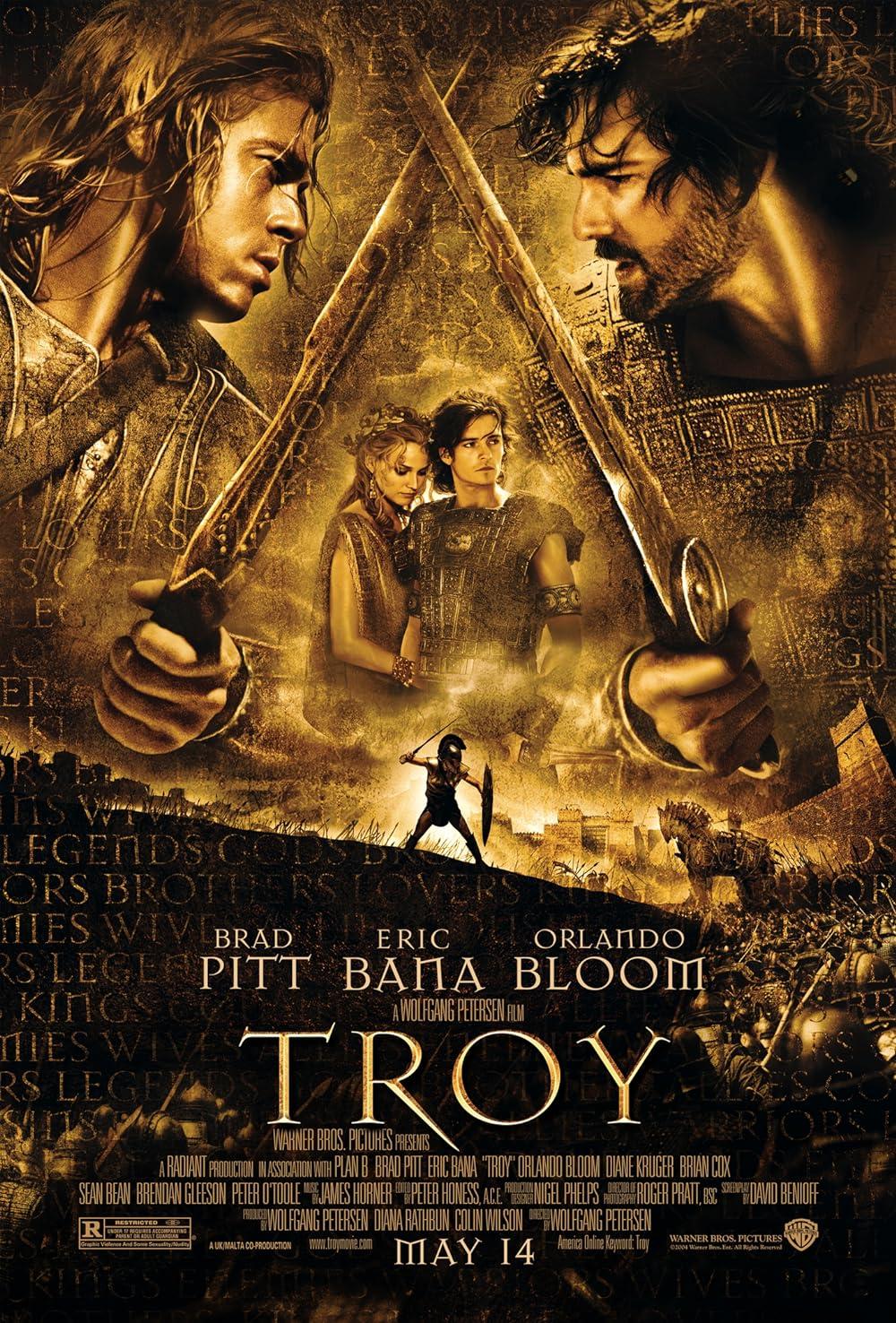
Troy Film Poster
Original Title | Troy | ||||||||
|---|---|---|---|---|---|---|---|---|---|
Year of Production | 2004 | ||||||||
Director(s) | Wolfgang Petersen | ||||||||
Screenplay(s) | David Benioff | ||||||||
Duration | 163 minutes (theatrical) 196 minutes (director's cut) | ||||||||
Language(s) | English | ||||||||
Genre | Drama War History | ||||||||
Production Company | Warner Bros. Pictures | ||||||||
Music(s) | James Horner | ||||||||
Cast(s) | Brad Pitt Vincent Regan Sean Bean Brian Cox Orlando Bloom Eric Bana Peter O'Toole Diane Kruger | ||||||||
Budget(s) | Approximately 175 million dollars | ||||||||
Revenue | Approximately 497 million dollars | ||||||||
Source | Based on Homer's Iliad epic | ||||||||
Troy (original), directed by Wolfgang Petersen and written by David Benioff, is a 2004 historical epic film.
Based on Homer’s epic Iliad, one of the most celebrated works of ancient Greek literature, film reimagines the Trojan War with dramatic and emotional elements, bringing it to the big screen. While this war holds a central place in Greek mythology, the film presents it through a more realistic and human lens.
The film was produced under the leadership of Warner Bros. Pictures by Helena Productions and Plan B Entertainment common. Roger Pratt served as director of photography, and the score was composed by James Horner. Filming took place on large sets built in Malta and Mexico, with digital effects used sparingly. The film premiered first in the United States on 14 May 2004 (USA).
Budgeted at approximately $180 million, the production earned around $497 million worldwide. The theatrical version runs 163 minute, while the 2007 director version (director’s cut) extends to 196 minutes.
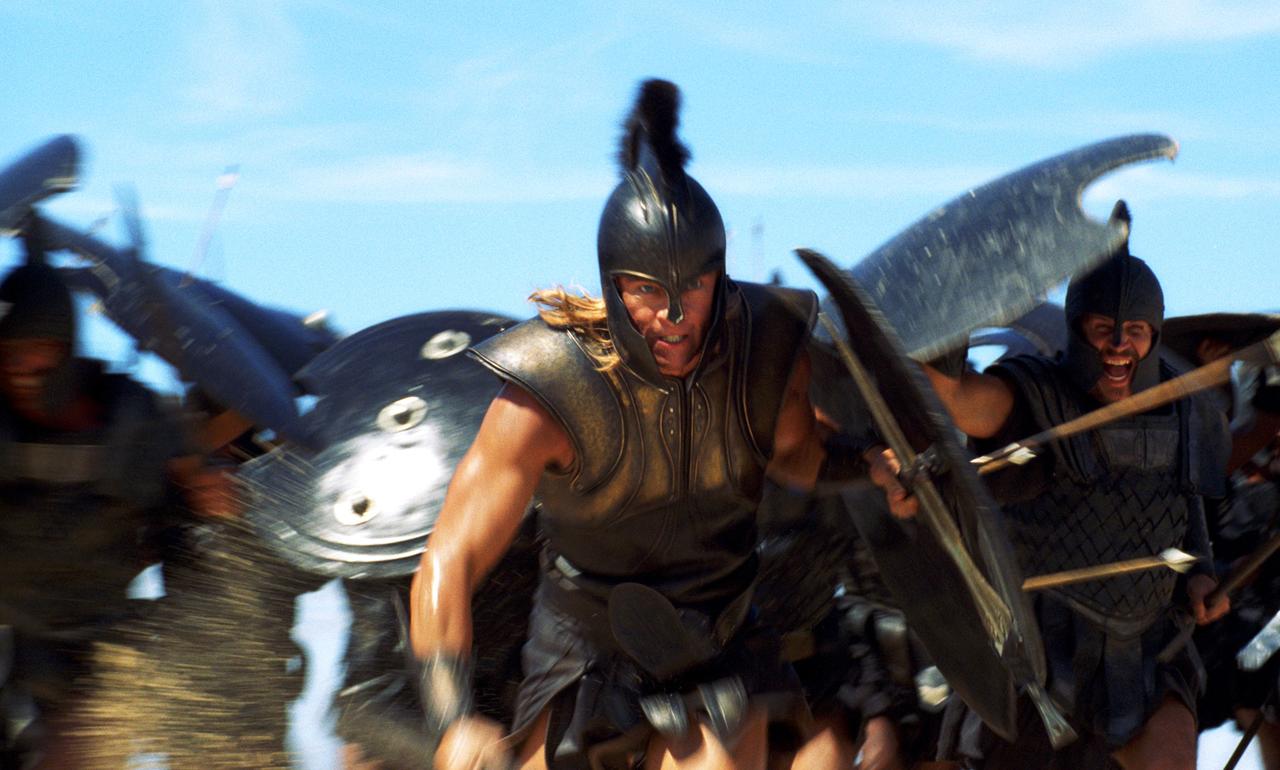
The film begins with the abduction of Helen, Queen of Sparta, by Paris, Prince of Troy, Paris, which triggers a coalition of Greek city states to launch a on against Troy under a unified journey led by King Agamemnon. Helen’s abduction is seen by her husband, King Menelaus, and his brother Agamemnon as justification for war. Achilles, the greatest warrior of the Greeks, joins Agamemnon’s army, while the Trojan forces, commanded by Prince Hector, prepare to defend their city.
The film focuses on Achilles’ personal conflicts, Hector’s sense of duty, and the pivotal events that determine the outcome of the Trojan War. Unlike Homer’s Iliad, the film expands its narrative to include the events that initiate and conclude the war.
Troy draws its foundation from Homer’s Iliad, but significantly deviates from its narrative structure and style. Supernatural elements are omitted in the film. The direct intervention of gods, prophecies, and mythological creatures have been removed from the screenplay. Thus, the film aims to reinterpret myth within a historical context. In this regard, the production is regarded as an adaptation committed to “historical realism.”
In the film, Achilles is portrayed as a figure of unmatched martial skill. He seeks personal immortality through glory and achievement. His psychological struggles and individual choices play a decisive role in the unfolding of events.
Hector, the commander of Troy, is depicted as a character defined by values such as honor, loyalty and responsibility. His loyalty to his family and people makes him one of the most balanced characters in the film.
Paris, the Trojan prince whose relationship with Helen directly triggers the war, is portrayed in the film as indecisive and weak-willed character. His warrior qualities are overshadowed by those of Hector.
Queen Helen of Sparta is presented in the film as a figure whose beauty sets the events in motion. Her character is treated in a romantic and dramatic framework, often reduced to the status of an object.
Odysseus, representing the tactical intelligence of the Greek army, emerges as the architect of the Trojan Horse plan in the final stages of the war. He is one of the most rational characters in the film.

The film draws attention with its grand-scale production values. The walls of Troy, Greek ships, and battlefields are designed in accordance with period aesthetics. Large-scale battle scenes, sword fights, and castle sieges are rendered with technical authenticity.
James Horner’s score effectively creates a atmosphere that complements the film’s dramatic tone, providing thematic depth especially during emotional and conflict-driven moments.
In the 2007 director’s cut, the film’s runtime was extended by 33 minutes, allowing for more detailed development of certain characters and battle sequences. The role of Briseis is expanded, and several plot points are presented with greater consistency. The director’s cut has been generally regarded by critics and audiences as a more cohesive narrative.
Troy stands as an example of reimagining a mythological subject on the cinematic stage. The film, while not strictly bound to its Literary source, highlights themes such as war, honor, the quest for immortality, and personal conflict, aiming to present the classical tale in an accessible and visually compelling manner. Although it has been subject to debate regarding historical and mythological accuracy, the production is regarded as a compelling example in the epic cinema genre.
Beyazperde. "Truva." Beyazperde. Accessed April 11, 2025. https://www.beyazperde.com/filmler/film-47357/.
Box Office Mojo. "Troy." Box Office Mojo. Accessed April 11, 2025. https://www.boxofficemojo.com/title/tt0332452/.
Ebert, Roger. "Troy." *RogerEbert.com*, May 13, 2004. Accessed April 11, 2025. https://www.rogerebert.com/reviews/troy-2004.
IMDb. *Troy* (2004). Accessed April 11, 2025. https://www.imdb.com/title/tt0332452/.
Letterboxd. "Troy." Letterboxd. Accessed April 11, 2025. https://letterboxd.com/film/troy/.
Sinemalar.com. "Truva." Sinemalar.com. Accessed April 11, 2025. https://www.sinemalar.com/film/584/truva.
TUİÇ Akademi. "Truva (2004)." *TUİÇ Akademi*. Accessed April 11, 2025. https://www.tuicakademi.org/truva-2004/.
Özfatura, M. Necati. "Truva Filmi." *Türkiye Gazetesi*, July 27, 2004. Accessed April 11, 2025. https://www.turkiyegazetesi.com.tr/kose-yazilari/m-necati-ozfatura/truva-filmi-207174.

Troy Film Poster
Original Title | Troy | ||||||||
|---|---|---|---|---|---|---|---|---|---|
Year of Production | 2004 | ||||||||
Director(s) | Wolfgang Petersen | ||||||||
Screenplay(s) | David Benioff | ||||||||
Duration | 163 minutes (theatrical) 196 minutes (director's cut) | ||||||||
Language(s) | English | ||||||||
Genre | Drama War History | ||||||||
Production Company | Warner Bros. Pictures | ||||||||
Music(s) | James Horner | ||||||||
Cast(s) | Brad Pitt Vincent Regan Sean Bean Brian Cox Orlando Bloom Eric Bana Peter O'Toole Diane Kruger | ||||||||
Budget(s) | Approximately 175 million dollars | ||||||||
Revenue | Approximately 497 million dollars | ||||||||
Source | Based on Homer's Iliad epic | ||||||||
Production and Technical Features
Plot Summary
Historical and Literary Basis
Characters and Their Portrayals
Achilles (Brad Pitt)
Hector (Eric Bana)
Paris (Orlando Bloom)
Helen (Diane Kruger)
Odysseus (Sean Bean)
Visual Design and Music
Director’s Cut