

This article was automatically translated from the original Turkish version.
+2 More
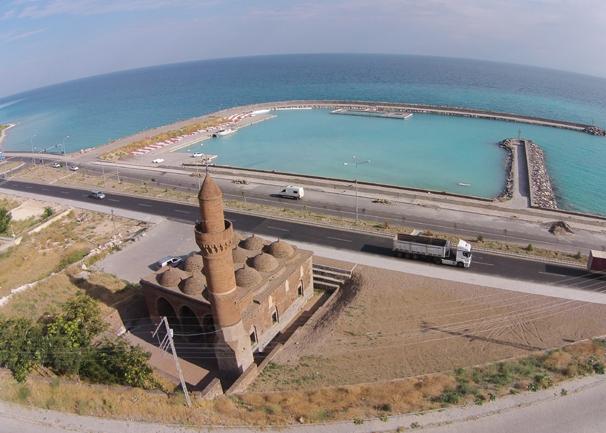
Tuğrul Bey Camii, located immediately below Adilcevaz Castle in the Adilcevaz district of Bitlis, is a 16th-century Ottoman-era structure and the first domed mosque in Anatolia. The building has undergone various repairs throughout its history and underwent a comprehensive restoration in 1965; it continues to serve its religious function today.
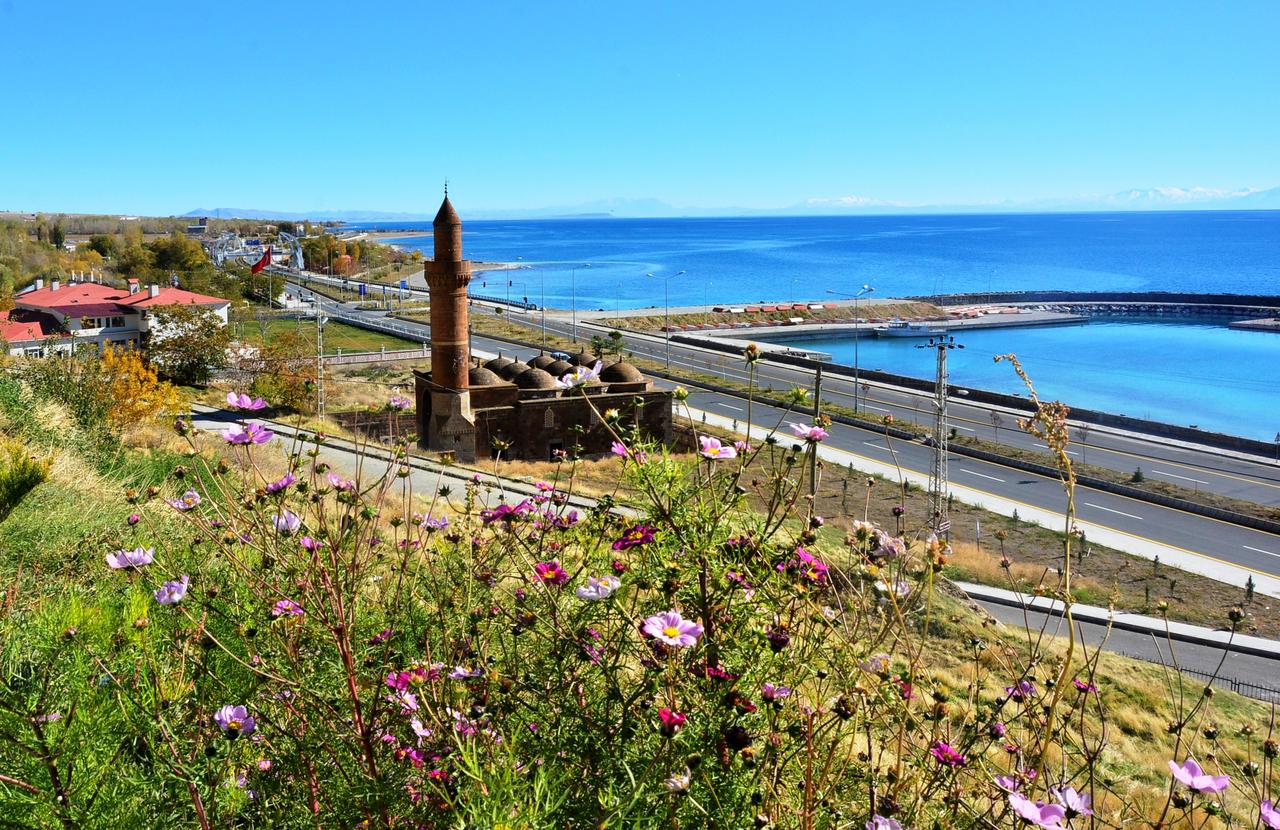
Tuğrul Bey Camii (Tuğrul Bey Camii)
The structure was built according to the early Ottoman "Ulu Cami" typology. The roof of the mosque consists of a total of twelve small domes. The rear prayer area on the north façade exhibits a three-domed form supported by two columns and extensions of the main walls. At the central axis of this section, an arched entrance door is set within a pointed-arch niche. Although a space for an inscription has been allocated above the door, no inscription has been placed there. On either side of the rear prayer area, single windows provide illumination.
At the center of the rectangular prayer space stand four columns that form the building’s load-bearing system. These columns are connected to each other and to the walls by arches, defining the internal spatial division. The interior ceiling system comprises nine small domes with stone pendentive transitions. The window arrangements on the side walls are organized in two rows: those on the eastern and western façades feature pointed arches below and above, with the upper row containing one more window than the lower. On the mihrab wall, three pointed-arch windows are arranged in two rows.
The mihrab projects outward as a five-sided niche, crowned with a pyramidal cap. Adjacent to the northwest corner of the building, rising in alignment with the rear prayer area, is a square-based minaret. The upper sections of the minaret’s base feature meander motifs and decorative bands. After the transition from the square base to the circular shaft, the shaft is visually enriched by a band of white stone with a woven motif, placed beneath a single row of stone.
Architectural Plan and Exterior Features
Interior Design and Structural Elements
Mihrab and Minaret Features