


This article was automatically translated from the original Turkish version.
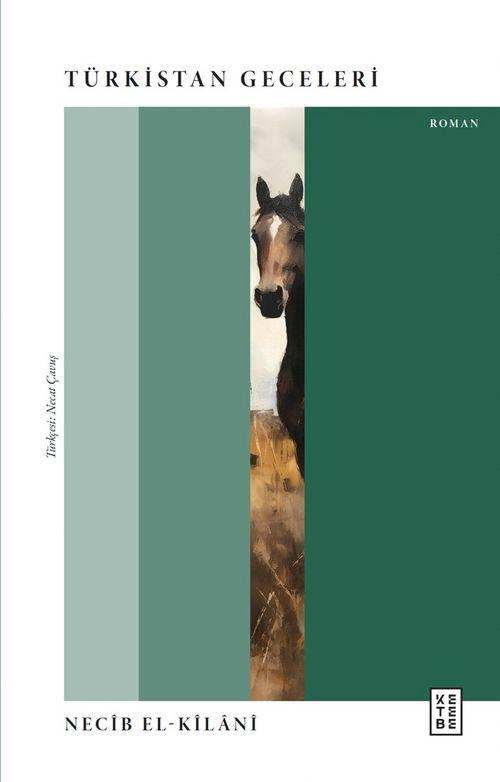
Author(s) | Necib El-Kiylani | ||||||||
|---|---|---|---|---|---|---|---|---|---|
Publisher(s) | Ketebe Yayınevi | ||||||||
Translator(s) | Necat Çavuş | ||||||||
Original Title of the Book | Leyâlî Türkistân | ||||||||
Language(s) | Türkçe | ||||||||
Number of Pages | 184 | ||||||||
Egyptian author Necîb el-Kîlânî’s novel Türkistan Geceleri (Leyali Türkistan) is a narrative that examines the independence struggles and popular resistance in the Turkistan region between 1931 and 1951. Roman combines literature and history to shed light on the tragedies experienced not only by Turkistan but by the entire Islamic world. only East

Türkistan Geceleri from the Perspective of Artificial Intelligence
Türkistan Geceleri begins with the narrator’s Mecca encounter with Mustafa Murat Hazret, a resistance fighter from Eastern Turkistan. Mustafa Murat Hazret recounts to Necîb el-Kîlânî the tragedies he has endured and the struggle of his people for independence. Throughout the novel, his personal story unfolds in parallel with the collective resistance of the Turkistan people.
In the work, the 1931 uprising in Kumul (Hami), sparked by the oppressive treatment and abuses of Chinese governors, is presented as a central dönüm point. The novel also describes how the Soviet Union, alongside China, supported efforts to suppress these independence movements. Hoca Niyaz and Osman Batur like are portrayed as heroic figures, celebrated for their charismatic leadership and their ability to organize and guide fighters in resistance.
At the end of the novel, the people of Eastern Turkistan, under intense pressure from their enemies, decide to flee to Kashmir. However, very few survive this arduous migration. One of the main reasons for this exodus is China’s intensified policies of cultural assimilation targeting the Eastern Turkistan population, especially after Mao Zedong’s communist revolution in 1949. During this period, people can choose to seek refuge in other countries for safety. The efforts of leaders such as Mehmet Emin Buğra and İsa Yusuf Alptekin to reach Türkiye form a crucial part of the events depicted in the novel. Yet, of the approximately 2000 who fled, only a fraction succeeded in reaching Türkiye.
Beyond its historical narrative, the novel carries a strong political dimension. work exposes the effects of invasions and oppression in Turkistan, sharply criticizing attempts at assimilation and the policies of socialist regimes aimed at eradicating religious and cultural values. Throughout the novel, the author employs an ironic tone to critique communism, which he views as ideologically rooted in atheism, and its destructive impact on the Turkistan people.
The recurring theme in Necîb el-Kîlânî’s works — “organized evil” — is prominently evident in this novel. The Russian and Chinese occupations are constructed through the author’s intellectual framework, shaped during his Cold War years, as a perspective opposed to oppression. The protagonist, Mustafa Murat Hazret, emphasizes in recounting his people’s suffering that Turkistan’s Muslims must return to their “true essence.” This ideological message permeates the entire event fabric of the novel as a central unconscious call.
The novel skillfully balances historical reality with literary fiction. The historical identities of leaders such as Hoca Niyaz and Osman Batur are rendered in the text as symbols of resistance. The stories Mustafa Murat Hazret tells Necîb el-Kîlânî reflect not merely an individual tragedy but the epic of a nation’s resistance. Mustafa Murat’s words encapsulate the novel’s main idea: “We were defeated, Necmetülleyl, we were defeated. But we did not lose. As long as I exist, you exist, and as long as Hoca Niyazes grow, the dark veil of night is stirring.”
The novel also pays attention not only to major events but to the daily tragedies of individuals. The happiness once found in the Turkistan region is interwoven with profound suffering, underscoring the people’s devotion to their cultural identity and history. The effects of Chinese assimilation policies are illustrated through specific details, such as the forced marriages of Turkish women. The character Necmetül Leyl is presented as an individual embodiment of this oppression.
Türkistan Geceleri is a significant work that carries the story of Turkistan’s resistance onto the international stage through literary form. The novel’s political messages also contain a critique directed at other regions of the Islamic world. While criticizing the indifference of Muslim countries to the oppression in Eastern Turkistan, the author draws attention with these words: “Is Hajj prescribed for Muslims so that they go and return unchanged? I do not think so!”
The author’s literary style in conveying historical realities has endowed the novel with universal resonance. Its epic tone in narrating resistance and its ideological stance transform the work from a mere historical account into a text of personal and collective inquiry.
Necîb el-Kîlânî’s Türkistan Geceleri is a work that addresses the historical struggle of the Eastern Turkistan people, their resistance against cultural assimilation, and their human tragedies. The novel does not merely bear witness to a nation’s fight; it must be regarded as a text that questions the collective consciousness of the Islamic world and calls it to action. By challenging the boundaries between literature and history, the novel successfully conveys to the reader, with universal sensitivity, the injustices faced by individuals and societies and the resistance they mount against them.
El-Kiylani, Necib. Türkistan Geceleri. Trans. Necat Çavuş. Istanbul: Ketebe Yayınları, 2024.
Yeni Şafak. "Türkistan Geceleri." Accessed January 7, 2025. https://www.yenisafak.com/kultur-sanat/turkistan-geceleri-604128.

Author(s) | Necib El-Kiylani | ||||||||
|---|---|---|---|---|---|---|---|---|---|
Publisher(s) | Ketebe Yayınevi | ||||||||
Translator(s) | Necat Çavuş | ||||||||
Original Title of the Book | Leyâlî Türkistân | ||||||||
Language(s) | Türkçe | ||||||||
Number of Pages | 184 | ||||||||
No Discussion Added Yet
Start discussion for "Turkistan Nights (Book)" article
Subject and Structure of the Novel
Themes and Ideological Messages
Historical Reality and Literary Fiction
The Significance of the Work and the Author’s Perspective