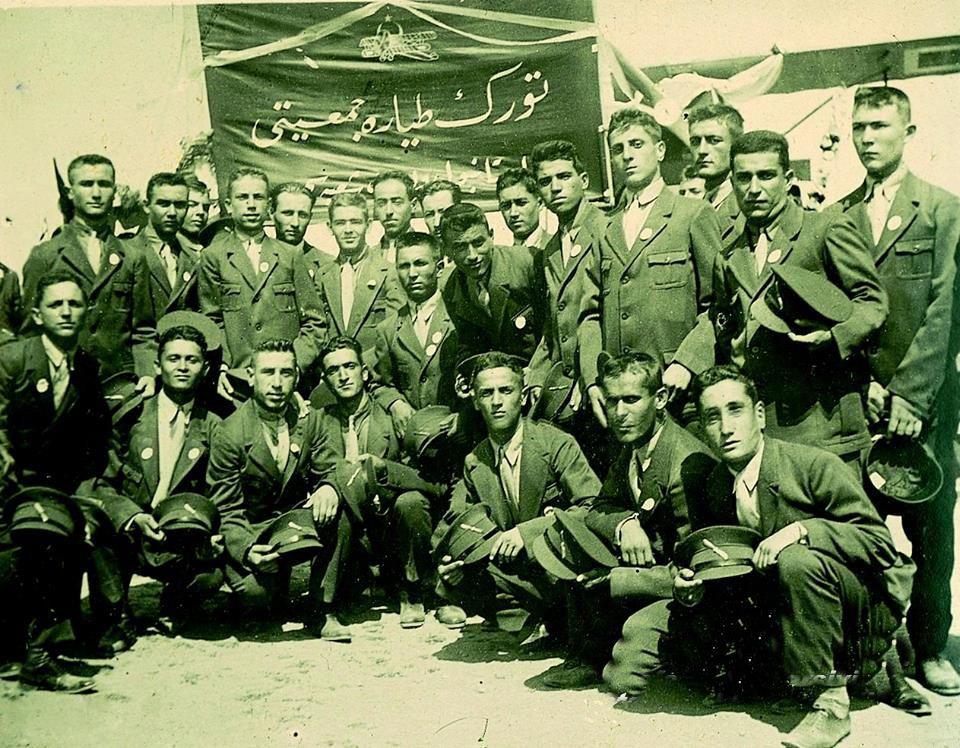


This article was automatically translated from the original Turkish version.
+2 More
Official Name(s) | Türkkuşu Flight School | ||||||||
|---|---|---|---|---|---|---|---|---|---|
Founding Date | 3 May 1935 | ||||||||
Founding Location | Etimesgut, Ankara, Türkiye | ||||||||
Founder(s) | Mustafa Kemal Atatürk | ||||||||
Affiliated Institution | Turkish Aeronautical Association (THK) | ||||||||
First Director | Abdurrahman Türkkuşu | ||||||||
Fields of Education | Glider, Parachute, Powered Flight, Model Aircraft, Paragliding, Balloon, Sailplane | ||||||||
Educational Facilities | Etimesgut, İnönü, Efes, Karain, Erzincan | ||||||||
Important Achievements | Emrullah Ali Yıldız's 14 hour 20 minute glider flight (1938), Ziya Aydoğan's 466 km glider flight, Hakan Zengin's Guinness record (2004), Funda Durusu's gold medal (2004) | ||||||||
Important Event(s) | 1st World Air Games (1997) Turkish Air Games (2000-2002-2004) | ||||||||
Current Name | THK Flight Academy | ||||||||
University | Turkish Aeronautical Association University (2011) | ||||||||
Participation | FAI (1929), IACE (1953), EASA (1998) | ||||||||
Military Contribution | Cyprus Peace Operation (1974) | ||||||||
Türkkuşu Flight School is a flight school established on 3 May 1935 under the directives of Mustafa Kemal Atatürk and playing a significant role in the development of Turkish aviation. Operating as a unit of the Turkish Aeronautical Association (THK), Türkkuşu was founded to promote civil aviation, introduce young people to aviation, and train professional pilots.
The origins of Türkkuşu trace back to the Turkish Aircraft Society, established on 16 February 1925 by order of Mustafa Kemal Atatürk. The society was created to advance Turkish aviation and guide youth toward this field. At its 6th Grand Congress on 24 May 1935, it changed its name to the Turkish Aeronautical Association (THK). Türkkuşu Flight School opened on 3 May 1935 at the Etimesgut campus in Ankara. Atatürk personally named the school “Türkkuşu” and emphasized the national importance of aviation in his opening speech.
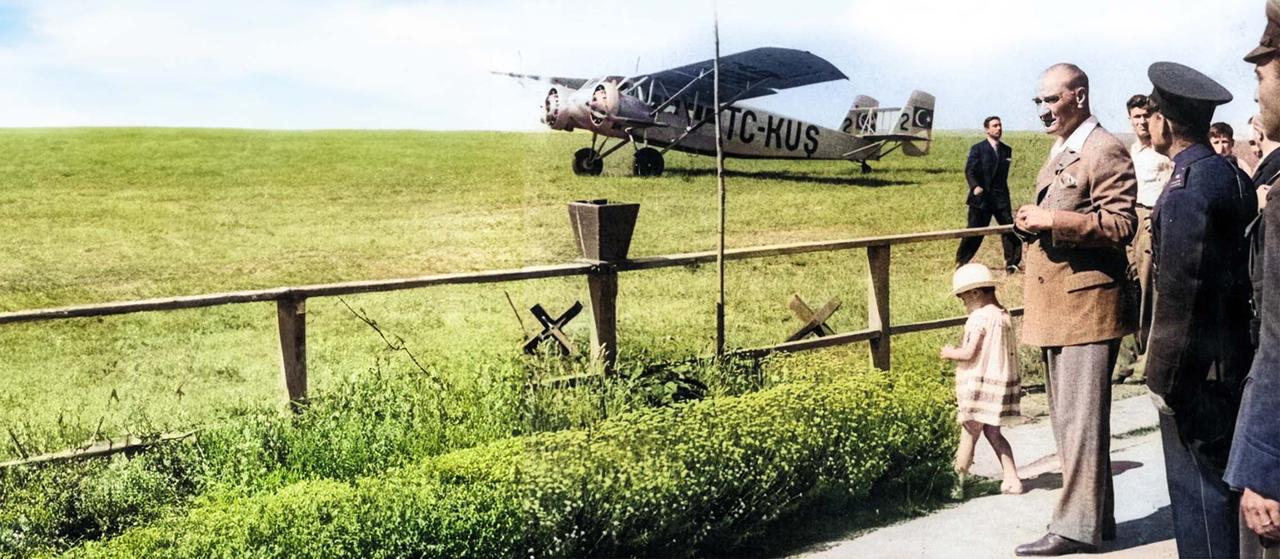
Atatürk at Türkkuşu Flight School (Turkish Aeronautical Association)
In his speech, he stated: “Just as the Turk walks and moves with knowledge and self-confidence through the mountains, forests, plains and seas of his homeland, he must also be able to move in the same manner across the skies of his nation. This begins by familiarizing the Turk with the birds of the homeland and the air of the homeland from childhood.”
Türkkuşu’s initial activities began with glider and parachute schools. The first director of the Parachute School was Abdurrahman Türkkuşu, who had received parachute training in Russia. In 1936, a school named Tayyare Okulu was opened to provide powered aircraft training and began producing pilots for the Turkish Armed Forces. From its founding, Türkkuşu enabled young people to become acquainted with aviation through glider, parachute, powered flight and model aircraft schools.
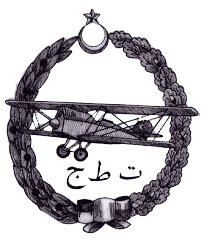
Symbol of the Turkish Aircraft Society (Turkish Aeronautical Association)
Türkkuşu operates not only from its main campus in Etimesgut but also through training facilities in İnönü (Eskişehir), Efes, Karain (Antalya) and Erzincan. The İnönü High Glider Camp opened on 10 July 1936; the Etimesgut Powered Flight Camp and parachute towers in Ankara and İzmir were established in 1937. İnönü was selected as a gliding center due to its favorable geographical and wind conditions. Evaluations by Vecihi Hürkuş regarding the geographical features between Eskişehir and Bursa, along with studies conducted by Russian aviation expert Sergei Anokhin, played a decisive role in this selection.
Since 1936, Türkkuşu has trained pilots for the Turkish Armed Forces through powered aircraft instruction. Sabiha Gökçen, one of the first students at the Tayyare Okulu and later the world’s first female combat pilot, also served as an administrator at the school. The school has organized training in various air sports including gliding, parachuting, paramotoring, paragliding and model aircraft. In 1996, the Very Light Aircraft School was established, offering training in balloons, hang gliders and paragliders.
Türkkuşu’s educational infrastructure was supported by gliders produced at the Akköprü Workshop under THK and by British Miles Magister aircraft assembled at the facility, which was converted into a factory in 1940. The Etimesgut Aircraft Factory was established between 1939 and 1941. From 1944 onward, THK produced THK-1, THK-3, THK-4, THK-7, THK-9 and THK-13 gliders, as well as THK-2, THK-5 and THK-10 aircraft for training, medical and transport purposes. Additionally, Turkey’s first engine factory, established by THK at Gazi Forest Farm, operated until 1951 and was transferred to the Machine and Chemical Industry Corporation in 1952.
Since its founding, Türkkuşu has trained thousands of pilots, glider pilots, parachutists and air sports enthusiasts. On 12 June 1938, Türkkuşu instructor Emrullah Ali Yıldız set a world record with a glider flight lasting 14 hours and 20 minutes. His student Ziya Aydoğan achieved a major success by flying 466 kilometers from the İnönü Training Center to Kayseri in a glider. On 10 July 1936, Vecihi Hürkuş broke a record by remaining airborne for 5 hours and 45 minutes in the PS-2 glider.
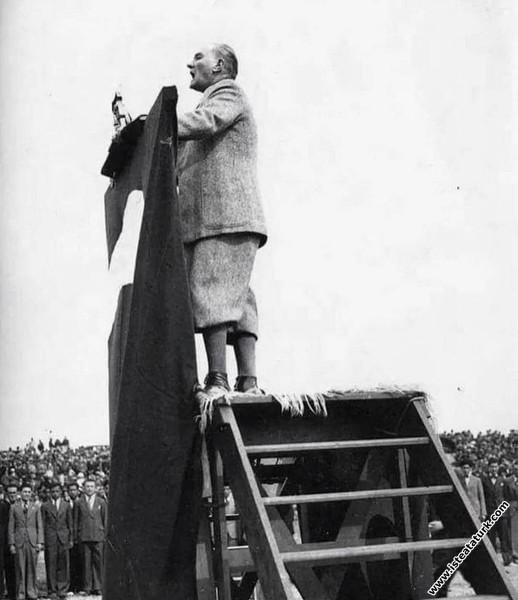
Atatürk Speaking at the Opening of Türkkuşu (Turkish Aeronautical Association)
THK became a member of the Fédération Aéronautique Internationale (FAI) in 1929 and has represented Turkey in air sports. It joined the International Association of Air Cadets (IACE) in 1953 and the European Air Sports Association (EASA) in 1998. Türkkuşu organized the 1995 World Parachute Championship, the 1996 Test Competitions for the First World Air Games, and the 1997 First World Air Games, which attracted 3,200 athletes from 61 countries.
Turkey Air Games were held in 2000, 2002 and 2004. On 19 June 2004, THK parachute instructor Hakan Zengin entered the Guinness Book of World Records by performing a parachute jump with a flag measuring 433.5 square meters. In 2004, Funda Durusu won a gold medal at the 4th FAI World Paragliding Target Championship. In the same year, ten wingsuit parachutists made history by flying from Europe to Asia during the Eurasia Marathon.
Türkkuşu also played a role in the 1974 Cyprus Peace Operation. During the operation, parachutists trained by THK participated in airborne insertion missions, and the institution’s aircraft and pilots were deployed. Since 1985, THK has conducted aerial firefighting operations, utilizing Türkkuşu’s training infrastructure.
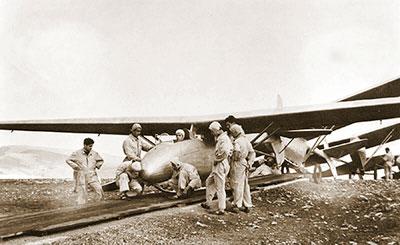
A Frame from Türkkuşu’s Flight Activities (Turkish Aeronautical Association)
Today, Türkkuşu operates as the THK Flight Academy. Pilot training in accordance with the regulations of the General Directorate of Civil Aviation is provided at training centers in Ankara, İzmir and Antalya. The academy has trained approximately 7,000 pilots and supplies personnel to airline companies. Established in 2011, the Turkish Aeronautical Association University is Türkiye’s first specialized university in aviation and space sciences. It operates through academic units in Ankara and İzmir Selçuk. The THK Flight Academy provides education to students of the Pilotage Department within the university.
In 2010, THK established the THK Aviation Foundation and began aircraft maintenance operations in 2013 through THK Technical Inc. The institution generates income from public donations, sacrificial animal hides, fitra, zakat and voluntary contribution envelopes. Türkkuşu provides personnel, technical knowledge and equipment support to civil aviation companies.
Since 1935, Türkkuşu has played a central role in the education and development of Turkish aviation. Established under the vision of Mustafa Kemal Atatürk, the institution introduced thousands of young people to aviation through glider, parachute and powered flight training and gained international recognition through world records and achievements. With ongoing operations at its campuses in Etimesgut, İnönü, Karain and other locations, Türkkuşu continues to contribute to the aviation sector through the THK Flight Academy and THK University. The history of Türkkuşu encapsulates the institutional development of Türkiye in the field of aviation.
Atatürk Araştırma Merkezi. "Cumhuriyet Tarihinde Bugün 3 Mayıs Türkkuşu Uçuş Okulu." Accessed May 3, 2025. https://ataturk.org.au/akm-belleten-cumhuriyet-tarihinde-bugun-3-mayis-turkkusu-ucus-okulu/
Turk Hava Kurumu. "Atatürk’ün Mirası Türkkuşu 89 Yaşında!" Accessed May 3, 2025. https://www.thk.org.tr/haberdetaygetir.php?h_id=136
Türk Hava Kurumu Teknik A.Ş. "Tarihçe." Accessed May 3, 2025. https://thkteknik.com/tarihce.php
Türk Hava Kurumu. "Türk Tayyare Cemiyeti." Accessed May 3, 2025. https://www.thk.org.tr/turk_tayyare_cemiyeti


Official Name(s) | Türkkuşu Flight School | ||||||||
|---|---|---|---|---|---|---|---|---|---|
Founding Date | 3 May 1935 | ||||||||
Founding Location | Etimesgut, Ankara, Türkiye | ||||||||
Founder(s) | Mustafa Kemal Atatürk | ||||||||
Affiliated Institution | Turkish Aeronautical Association (THK) | ||||||||
First Director | Abdurrahman Türkkuşu | ||||||||
Fields of Education | Glider, Parachute, Powered Flight, Model Aircraft, Paragliding, Balloon, Sailplane | ||||||||
Educational Facilities | Etimesgut, İnönü, Efes, Karain, Erzincan | ||||||||
Important Achievements | Emrullah Ali Yıldız's 14 hour 20 minute glider flight (1938), Ziya Aydoğan's 466 km glider flight, Hakan Zengin's Guinness record (2004), Funda Durusu's gold medal (2004) | ||||||||
Important Event(s) | 1st World Air Games (1997) Turkish Air Games (2000-2002-2004) | ||||||||
Current Name | THK Flight Academy | ||||||||
University | Turkish Aeronautical Association University (2011) | ||||||||
Participation | FAI (1929), IACE (1953), EASA (1998) | ||||||||
Military Contribution | Cyprus Peace Operation (1974) | ||||||||
No Discussion Added Yet
Start discussion for "Turkkuşu Flight School" article
History
Educational Activities and Infrastructure
Achievements and Contributions
Current Role and Institutional Development