


This article was automatically translated from the original Turkish version.
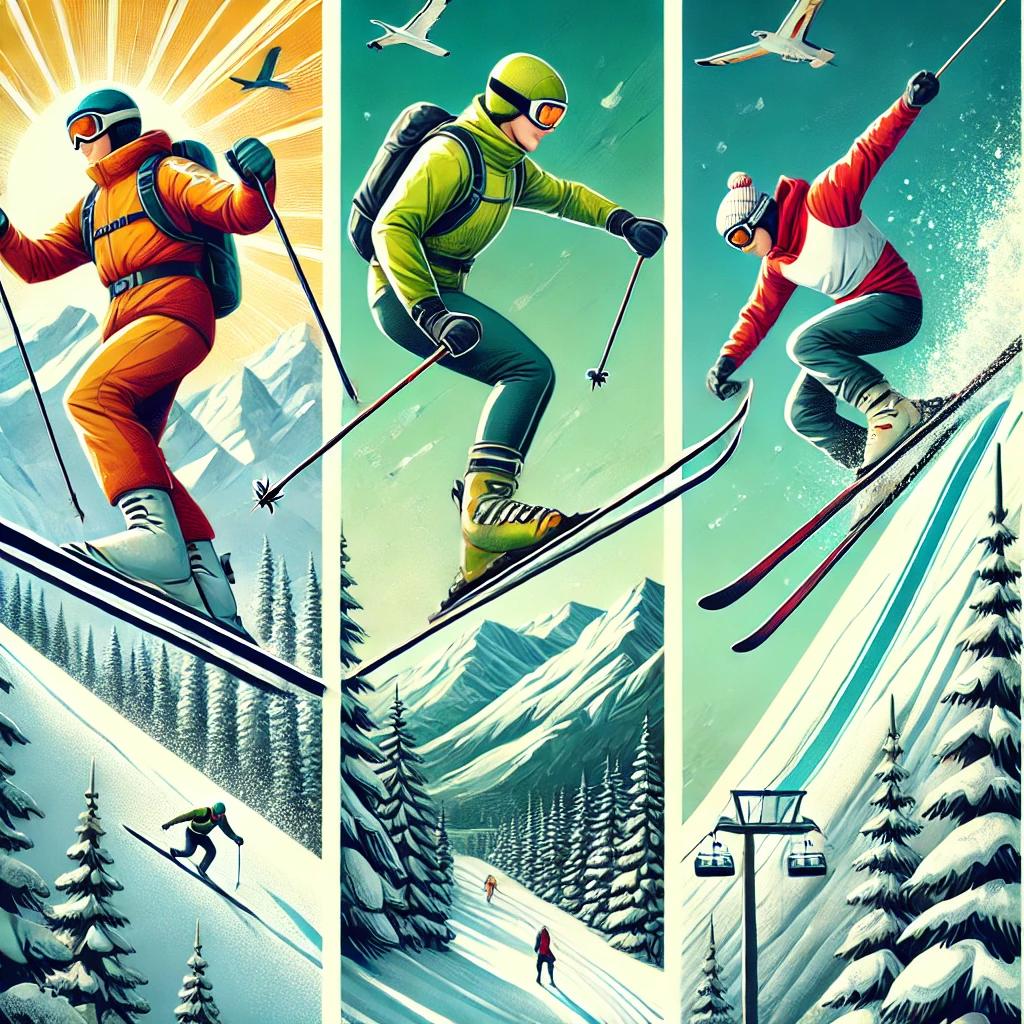
Ski Types: Alpine, Nordic, and Freestyle
Types of Skiing | Freestyle Nordic Discipline Alp Discipline | ||||||||
|---|---|---|---|---|---|---|---|---|---|
Skiing is an activity with a deep historical tradition and broad diversity among winter sports. Geographic conditions, cultural differences, and technological advancements have enabled the development of skiing into various disciplines. Skiing types can generally be categorized under three main headings: Alpine skiing, Nordic skiing, and Freestyle skiing. Each, in terms of equipment used, application areas, and techniques, differs significantly from the others.
History and Development
The Alpine discipline of skiing derives its name from the Alps and is a mountain-based sport. It gained popularity in the late 19th century in Austria and Switzerland and was first introduced as an Olympic discipline at the 1936 Winter Olympics.
Technical Features and Equipment
Alpine skiing is typically performed on prepared and groomed ski slopes. This discipline requires speed and control on sloped terrain, and athletes use the following equipment:
Sub-disciplines
Alpine skiing is divided into several sub-disciplines:

This example video of Alpine skiing was generated by artificial intelligence.
History and Characteristics
Nordic skiing originates from the Scandinavian region. Historically, it was primarily used for transportation and later evolved into a competitive sport. It has been an Olympic discipline since the first Winter Olympics in 1924.
Equipment and Techniques
Nordic skiing is typically performed on unprepared snow surfaces and natural trails. The equipment used in this discipline includes:
Sub-disciplines
Nordic skiing is divided into two main categories:

This example video of Nordic skiing was generated by artificial intelligence.
The Birth of a Modern Discipline
Freestyle skiing emerged in the mid-20th century as a more creative and free-form approach to the sport. It was officially introduced as an Olympic discipline at the 1992 Winter Olympics.
Equipment and Courses
Freestyle skiing is typically performed on courses filled with artificial or natural obstacles. Equipment and course features include:
Sub-disciplines
Freestyle skiing is divided into various disciplines that emphasize different skills and acrobatic abilities:

This example video of Freestyle skiing was generated by artificial intelligence.
Skiing disciplines require a wide range of physical endurance, technical skill, and aesthetic performance. Alpine skiing emphasizes speed and control, Nordic skiing demands endurance and technical capacity, and Freestyle skiing highlights creative expression and artistic movement. Each discipline appeals to different abilities, enriching the diversity of winter sports. Skiing as an activity attracts widespread interest both at the professional level and for recreational purposes.
Allen, E. John B. The Culture and Sport of Skiing: From Antiquity to World War II. Amherst: University of Massachusetts Press, 2007.
Bennett, John W. Nordic Skiing: A Comprehensive Guide to Cross-Country and Ski Touring. New York: Praeger, 1981.
Foster, Patrick. Freestyle Skiing: The Fundamentals of Moguls, Aerials, and Acro-Skiing. London: Routledge, 1995.
International Ski Federation (FIS). "Ski Disciplines: Rules and Regulations." Accessed January 13, 2025. https://www.fis-ski.com.
Sanders, Doug. Alpine Skiing: Techniques and Tactics. Champaign, IL: Human Kinetics, 2001.
U.S. Ski & Snowboard Association. "History of Skiing and Snowboarding." Accessed January 13, 2025. https://www.usskiandsnowboard.org.
Vance, William M. Skiing Around the World: A Comprehensive Guide to Ski Resorts and Techniques. Seattle: Snowline Publishing, 2010.

Ski Types: Alpine, Nordic, and Freestyle
Types of Skiing | Freestyle Nordic Discipline Alp Discipline | ||||||||
|---|---|---|---|---|---|---|---|---|---|
Alpine Skiing
Nordic Skiing
Freestyle Skiing