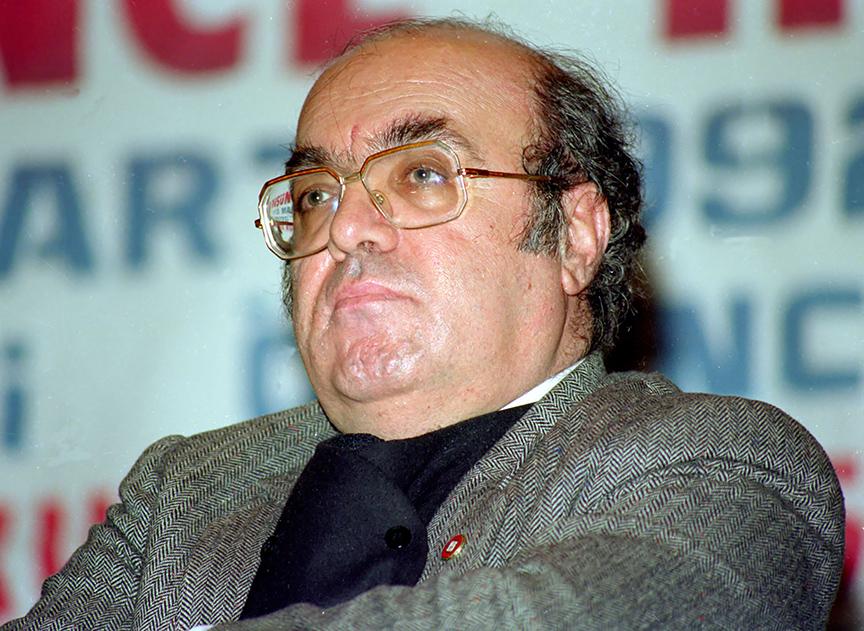
+2 More

Babası | Hakkı Şinasi Mumcu | ||||||||
|---|---|---|---|---|---|---|---|---|---|
Annesi | Nadire Mumcu | ||||||||
Death | 24 January 1993, Ankara, (Bombing Attack) | ||||||||
Birth | 22 August 1942, Kırşehir | ||||||||
Profession(s) | Journalist Lawyer Writer | ||||||||
Education | Ankara University (1961–1965) Faculty of Law | ||||||||
Uğur Mumcu (22 August 1942 – 24 January 1993) is a journalist, writer and lawyer who played a decisive role in the development of investigative journalism in Türkiye. His articles and research were shaped around Türkiye’s recent political history, the rule of law, military interventions, terrorism, foreign policy, intelligence structures and secularism. He based his work on documentary journalism methods.
Uğur Mumcu was born in Kırşehir. His father, Hakkı Şinasi Mumcu, was a land registry officer and his mother was Nadire Mumcu. Due to his family’s public service duties, he spent most of his childhood in Ankara. This period is documented as one in which he received regular education and developed a reading habit at an early age.
He completed his primary education in Ankara and his secondary education at Ankara Cumhuriyet Middle School and Ankara Deneme High School. He then enrolled at Ankara University Faculty of Law and graduated in 1965. His legal education formed the foundation for his systematic use of legal concepts in his later writings.
He began his writing career during his university years. In 1962 he won the Yunus Nadi Award for his article titled “Turkish Socialism” published in the newspaper Cumhuriyet. During the same period he participated in student movements and served as president of the Ankara University Faculty of Law Students’ Association. This era marked a clear turning point in Mumcu’s engagement with political thought.
In 1969 he began working as an assistant in the administrative law chair at Ankara University Faculty of Law. However, he chose journalism over an academic career. This choice is linked to his desire to use legal knowledge for public oversight and public information.
Uğur Mumcu viewed journalism not merely as a means of reporting news but as a field of public responsibility. In his articles published in Ant, Cumhuriyet, Devrim, Yeni Ortam, Milliyet and Cumhuriyet, he relied on documents, archives and testimonies. He adopted a method based on verifiable information rather than rumor.
Mumcu’s journalistic practice was directly influenced by Türkiye’s political environment shaped by military interventions. The 27 May 1960, 12 March 1971 and 12 September 1980 coups were critically examined in his writings within the context of the rule of law, democracy and freedoms. His arrest and imprisonment during the 12 March period deepened his emphasis on the relationship between the state and the individual.
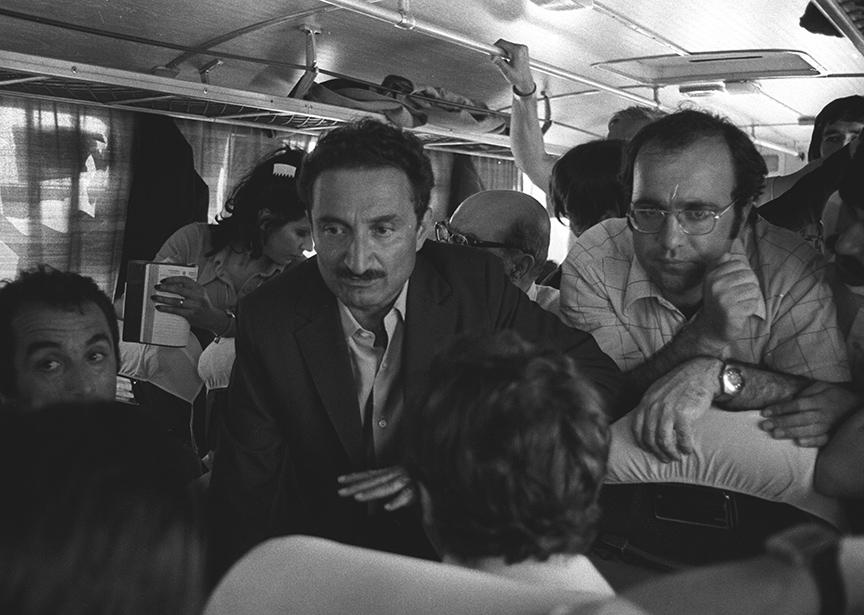
Bülent Ecevit and Uğur Mumcu (AA)
Mumcu’s journalistic approach was built on principles of document-based research, archival review, use of legal texts and comparison of testimonies. His investigations covered terrorist organizations, arms trafficking, foreign intelligence relations, connections between religious orders and politics, and internal state structures. This approach is regarded as the key factor distinguishing him from his contemporaries in column journalism.
In the early 1990s, Mumcu’s work focused particularly on the Kurdish issue, the PKK, Hizbullah, counter-guerrilla structures and foreign interventions. It is clearly evident from his files and notes that he was preparing a comprehensive dossier on the Kurdish question at the time of his death.
Uğur Mumcu Assassination File (32. Gün Arşivi)
Uğur Mumcu was killed on 24 January 1993 when a bomb placed on his car exploded outside his home in Ankara. The assassination triggered widespread public reaction in Türkiye and received intense media coverage.
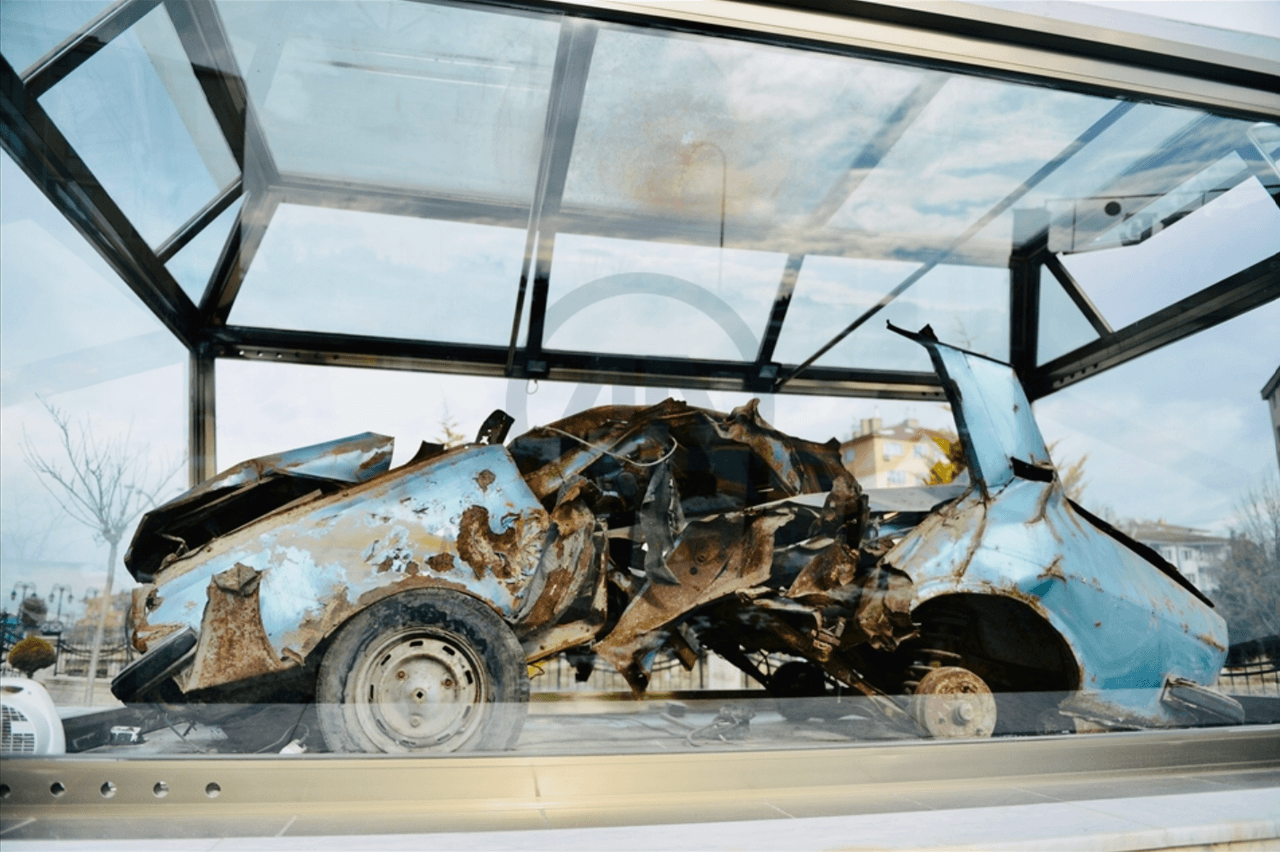
Uğur Mumcu’s Car Blown Up by Bomb (AA)
Following Uğur Mumcu’s assassination by a bomb attack in Ankara on 24 January 1993, the investigation was conducted by the Ankara State Security Court Prosecution. Evidence collected at the scene revealed that the attack was carried out using a remote-controlled explosive device. In the initial phase, no clear identification of the individual or structure behind the attack was possible and the investigation explored multiple possibilities.
According to case files, Uğur Mumcu’s assassination has been linked to different perpetrators and organizations across various periods; however, no definitive conclusion has been reached that fully explains all connections. The assassination continues to be regarded within Türkiye as one of the unresolved or incompletely clarified political killings.
In later stages of the investigation, a structure referred to as the “Islamic Movement Organization” was presented to the public and in case files as the perpetrator. Several individuals were arrested and tried under this allegation. Claims have been made that the organization had links to Iran and that the assassination was carried out by this structure. However, these claims remained controversial during the judicial process and the case file was disrupted at various stages.
Who Killed Uğur Mumcu and Cem Ersever? (32. Gün Arşivi)
In the late 1990s, a comprehensive investigation named “Operation Umut” examined Uğur Mumcu’s assassination alongside other political killings. Some defendants were convicted in this case; however, verdicts were partially overturned or remanded for incomplete examination at the Court of Cassation stage. The process was marked by lengthy trials, insufficient evidence and contradictory testimonies.
In subsequent years, the allegation emerged that Uğur Mumcu’s assassination was linked to a structure called “Tevhid-i Selam / Jerusalem Army”. New investigations were opened and some suspects were connected to this organization. However, this allegation also failed to yield a conclusive and definitive judicial outcome that fully explains the assassination.
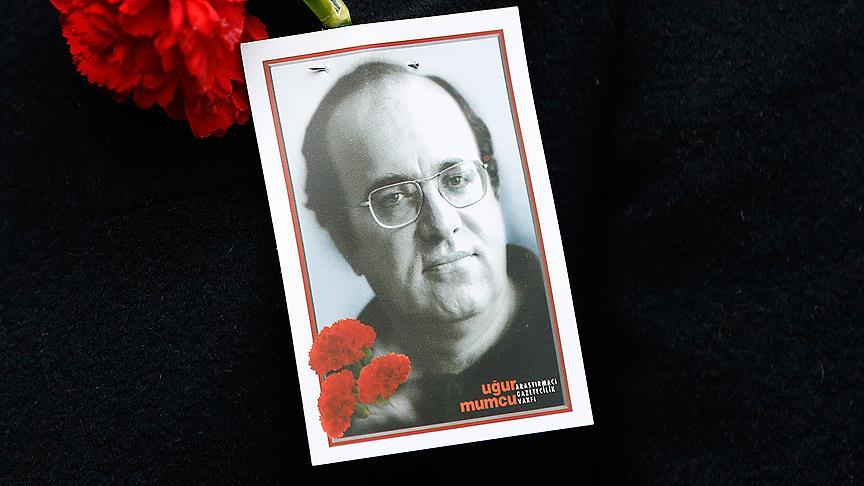
Uğur Mumcu (AA)
Although some perpetrators were punished in judicial rulings, it is clearly stated in the case files that the decision-making structure or individuals behind the attack have never been fully identified. Therefore, although the assassination appears legally concluded, it is still regarded as a “unclarified” case from a social and historical perspective.
Uğur Mumcu’s books and compiled articles focus on Türkiye’s recent political history, terrorism, secularism, foreign policy and state structure. These works are regarded not only as journalistic products but also as documents of their era.
His works include:
The awards received by Uğur Mumcu include:
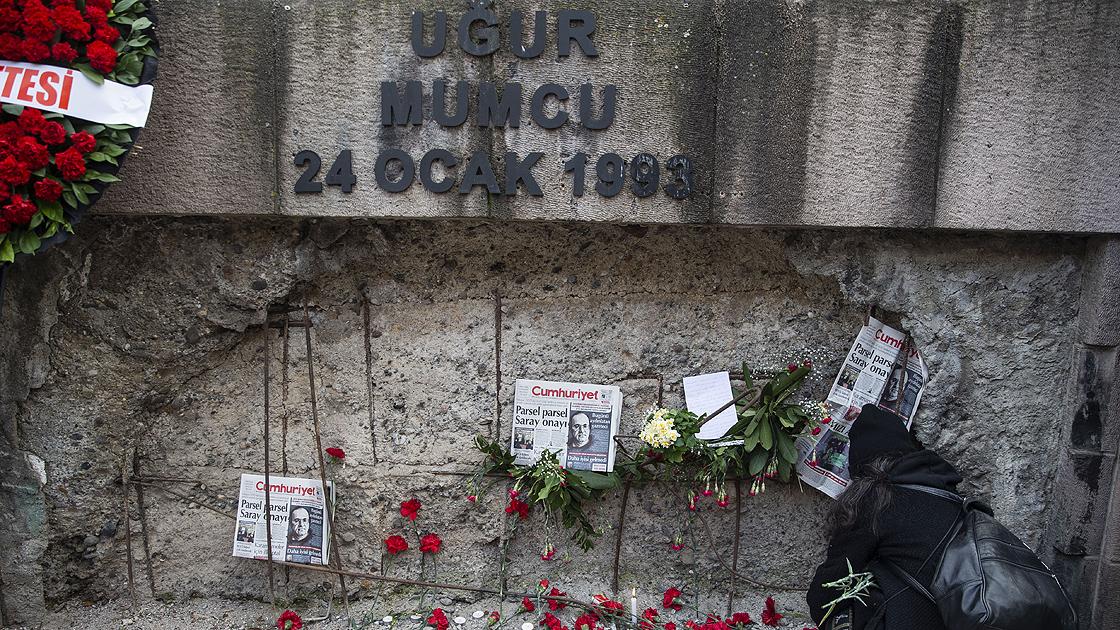
Commemoration Event (AA)
The assassination has been interpreted through different political perspectives in the national press. The murder is presented not merely as the killing of a journalist but as a symbolic event concerning press freedom, democracy and the rule of law.
Since his death, commemorative events have been held annually on 24 January.
The Song ‘Uğur’lar Olsun’ (Selda Bağcan)
The Uğur Mumcu Investigative Journalism Foundation, established in his memory, conducts educational, publishing and event activities to support investigative journalism. Mumcu remains a symbolic figure in discussions on press freedom and investigative journalism in Türkiye.
After Uğur Mumcu’s assassination, Selda Bağcan composed the song “Uğur’lar Olsun”.
32. Gün. "Uğur Mumcu Suikastı Dosyası | 1993 | 32. Gün Arşivi." YouTube Video, 19:14. Accessed January 20, 2026. https://www.youtube.com/watch?v=MotcUgiseZM
32. Gün. "Uğur Mumcu ve Cem Ersever'i Kim Öldürdü? | 1994 | 32. Gün Arşivi." YouTube Video, 15:53. Accessed January 20, 2026. https://www.youtube.com/watch?v=DORfiDsXxas
Anadolu Ajansı. "Gazeteci yazar Uğur Mumcu'nun otomobili Eskişehir'de parkta sergileniyor." Accessed January 20, 2026. https://www.aa.com.tr/tr/pg/foto-galeri/gazeteci-yazar-ugur-mumcunun-otomobili-eskisehirde-parkta-sergileniyor/147
Anadolu Ajansı. "Gazeteci-yazar Uğur Mumcu anıldı." Accessed January 20, 2026. https://www.aa.com.tr/tr/turkiye/gazeteci-yazar-ugur-mumcu-anildi-/1712258
Anadolu Ajansı. "Gerçeklere adanan bir ömür." Accessed January 20, 2026. https://www.aa.com.tr/tr/turkiye/gerceklere-adanan-bir-omur/1039475
Anadolu Ajansı. "Uğur Mumcu suikastının üzerinden 26 yıl geçti." Accessed January 20, 2026. https://www.aa.com.tr/tr/portre/ugur-mumcu-suikastinin-uzerinden-26-yil-gecti/1372090
Anadolu Ajansı. "Uğur Mumcu suikastının üzerinden 30 yıl geçti." Accessed January 20, 2026. https://www.aa.com.tr/tr/gundem/ugur-mumcu-suikastinin-uzerinden-30-yil-gecti/2794728
Erdost, Muzaffer İlhan. "Uğur Mumcu Miladı Öncesi ve Sonrası." *Memleket Siyaset Yönetim* 9 (2009): 1–32. Accessed January 20, 2026. https://dergipark.org.tr/tr/pub/msydergi/article/1254108?issue_id=75922
Konaklı, Gizem. *Uğur Mumcu ve Uğur Mumcu Suikastinin Kamuoyuna Yansıması*. Master's thesis, Dokuz Eylül University, Atatürk's Principles and History of Revolution Institute, İzmir, 2016. Accessed January 20, 2026. https://tez.yok.gov.tr/UlusalTezMerkezi/tezDetay.jsp?id=EM5fbtqGqOPK0efM2P_TOg&no=mg12pPy4zZ_HY579-n4MeA
Selda Bağcan. "Uğur'lar Olsun." YouTube video, 4:11. Accessed January 20, 2026. https://www.youtube.com/watch?v=7nft7VuNtt0&t=2s
Uğur Mumcu Research Journalism Foundation. "Uğur Mumcu Murder." umag.org.tr. Accessed January 20, 2026. https://www.umag.org.tr/ugurmumcu/11-ugur-mumcu-cinayeti.html
Uğur Mumcu Research Journalism Foundation. "Uğur Mumcu'nun Hayatı." Accessed January 20, 2026. https://www.umag.org.tr/ugurmumcu/6-ugur-mumcunun-hayati.html

Babası | Hakkı Şinasi Mumcu | ||||||||
|---|---|---|---|---|---|---|---|---|---|
Annesi | Nadire Mumcu | ||||||||
Death | 24 January 1993, Ankara, (Bombing Attack) | ||||||||
Birth | 22 August 1942, Kırşehir | ||||||||
Profession(s) | Journalist Lawyer Writer | ||||||||
Education | Ankara University (1961–1965) Faculty of Law | ||||||||
Family and Childhood Years
Education
University Years and the Beginning of His Writing Career
Career
Academic Experience
Transition to Journalism and Professional Approach
Approach to Investigative Journalism
The 1990s and Final Works
Death
Investigation and Legal Proceedings
Allegation of the “Islamic Movement Organization” and Iranian Connection
Operation “Umut” and Judicial Process
Allegation of “Tevhid-i Selam / Jerusalem Army”
The Issue of Inciters
Works
Awards
Legacy and Influence