
 Recently Added:
This article was automatically translated from the original Turkish version.
USA Department of Defense’s decision follows political tensions arising between Donald Trump, President of the United States, and Friedrich Merz, Chancellor of Germany, in the context of a potential war with Iran. The decision was made as a direct consequence of the political tensions between President Donald Trump and Chancellor Friedrich Merz in the context of the Iran conflict. The announcement came during a period of sharp diplomatic exchanges between the two leaders and is therefore viewed not only as a military move but also as a political signal.
The U.S. side stated that the decision resulted from a reassessment of military deployments in Europe, taking into account factors such as “field conditions” and “operational requirements.” It is expected that the withdrawal will be completed within six to twelve months.
The U.S. military presence in Germany is known as the largest American deployment in Europe. As of the end of 2025, more than 36,000 U.S. military personnel are stationed in Germany. These forces are distributed across numerous strategic bases, including primarily Ramstein Air Base.
U.S. bases in Germany serve not only to defend Europe but also function as logistical hubs for operations in the Middle East, Africa, and Eurasia. This dual role enhances the strategic importance of this military presence within NATO.
During the period in which the decision was announced, reciprocal statements by Donald Trump and Friedrich Merz drew significant attention. Merz argued that the United States had failed to present a coherent strategy in its negotiations with Iran and claimed that the American side had been “humiliated” by Iranian negotiators.
Trump responded sharply to these remarks, asserting that Merz had made serious misjudgments regarding Iran policy. He also criticized Germany’s economic and political performance. These mutual statements reinforced the interpretation that the troop withdrawal decision was directly linked to diplomatic tensions.
The U.S. plan to withdraw troops from Germany is regarded as a development with significant implications for the balance of power within NATO. The United States, as the largest military power in NATO, is one of the principal actors in European security.
In this context, the reduction in troop numbers is seen as a factor that could heighten security concerns, particularly among Eastern European countries. Given Russia’s military activities in the region, the decline of the U.S. military presence in Europe has sparked debates about the credibility of deterrence.
The U.S. administration’s decision to withdraw troops from Germany is viewed as part of a broader strategic transformation. This approach is grounded in the policy of gradually shifting the U.S. military focus from Europe to the Indo-Pacific region.
The Trump administration has repeatedly emphasized that allied nations must increase their defense spending and take greater responsibility for their own security. In this context, Germany’s failure for years to meet NATO’s 2 percent defense spending target has been a frequent point of criticism.
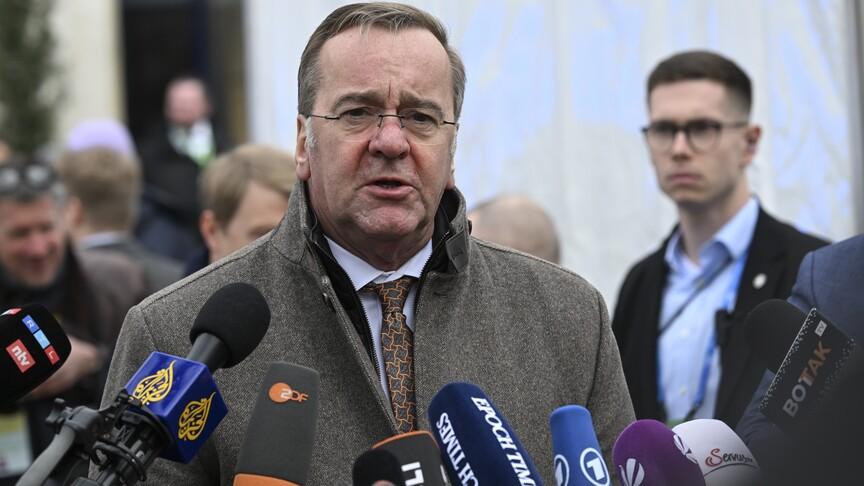
German Defense Minister Boris Pistorius stated that the presence of U.S. troops in Germany is important for both Germany and the United States. At the same time, he acknowledged that the trend toward reducing the U.S. military presence in Europe was foreseeable.
In recent years, Germany has significantly increased its defense spending. It is projected that by 2027, Germany’s defense budget will rise substantially and exceed 3 percent of its gross domestic product. This is seen as steps taken by Germany to strengthen its role within NATO.
The Trump administration previously attempted to reduce the number of U.S. troops in Germany. A 2020 plan to withdraw approximately 12,000 troops was blocked by the U.S. Congress and later canceled by the Joe Biden administration.
This highlights differing views within U.S. domestic politics regarding the reduction of military presence in Europe. There have occasionally been disagreements between Republican and Democratic lawmakers on this issue.
The U.S. military presence in Europe is not limited to Germany. Approximately 12,000 U.S. troops are stationed in Italy and around 10,000 in the United Kingdom. Japan, meanwhile, stands out as the country with the largest number of U.S. troops globally.
Trump’s remarks suggesting that troops in Italy and Spain could also be withdrawn have brought to the fore the possibility of a broader restructuring of the U.S. military presence across Europe.
The U.S. decision to withdraw troops from Germany is regarded as a pivotal moment for the future of transatlantic relations. This development has the potential to produce long-term effects on NATO’s functioning, Europe’s defense capacity, and the United States’ global military priorities.
The implementation process and scope of the decision are among the factors that will determine the direction of U.S. relations with its allies and shape the future of the international security architecture.
Reuters. “US Troop Drawdown Underlines European Defence Responsibility, German Minister Says.” Erişim tarihi: 2 Mayıs 2026. https://www.reuters.com/business/aerospace-defense/us-troop-drawback-underlines-european-defence-responsibility-german-minister-2026-05-02/
The Guardian. “US-Israel War Live: Germany Reacts to US Troop Withdrawal.” Erişim tarihi: 2 Mayıs 2026. https://www.theguardian.com/world/live/2026/may/02/us-israel-war-iran-germany-american-troops-donald-trump-middle-east-latest-news-updates
Anadolu Agency. "Germany Says US Troop Withdrawal Foreseeable Amid Iran Tensions." Accessed May 2, 2026. https://aa.com.tr/en/europe/germany-says-us-troop-withdrawal-foreseeable-amid-iran-tensions/3924835
BBC News. "US to Withdraw Troops from Germany." Accessed May 2, 2026. https://www.bbc.com/news/articles/c0729d374mxo
BBC Türkçe. "ABD Almanya’dan Askerlerini Çekiyor." Accessed May 2, 2026. https://www.bbc.com/turkce/articles/cr5pml77y54o
Deutsche Welle. "ABD Almanya’dan Askerlerini Çekerse Ne Olur?" Accessed May 2, 2026. https://www.dw.com/tr/abd-almanyadan-askerlerini-çekerse-ne-olur/a-77005581
Deutsche Welle. "Trump Tehdit Etmişti: ABD Almanya’dan 5 Bin Asker Çekiyor." Accessed May 2, 2026. https://www.dw.com/tr/trump-tehdit-etmişti-abd-almanyadan-5-bin-asker-çekiyor/a-77017483
Milliyet. "ABD’den Flaş Almanya Kararı: 5 Bin Asker Geri Çekilecek." Accessed May 2, 2026. https://www.milliyet.com.tr/dunya/son-dakika-abdden-flas-almanya-karari-sure-verildi-5-bin-asker-geri-cekilecek-7580959
NPR. "U.S. to Withdraw Troops from Germany." Accessed May 2, 2026. https://www.npr.org/2026/05/02/g-s1-119864/u-s-withdraw-troops-germany
Reuters. "US Troop Drawdown Underlines European Defence Responsibility, German Minister Says." Accessed May 2, 2026. https://www.reuters.com/business/aerospace-defense/us-troop-drawback-underlines-european-defence-responsibility-german-minister-2026-05-02/
The Guardian. "US-Israel War Live: Germany Reacts to US Troop Withdrawal." Accessed May 2, 2026. https://www.theguardian.com/world/live/2026/may/02/us-israel-war-iran-germany-american-troops-donald-trump-middle-east-latest-news-updates

The United States announced it plans to withdraw approximately 5,000 troops as part of a decision to reduce its military presence in Germany. The U.S. Department of Defense stated that the withdrawal will be completed within six to twelve months and that the decision was made as part of a broader reassessment of military deployments in Europe. The German side emphasized that the presence of U.S. troops serves the interests of both countries but acknowledged that the withdrawal was foreseeable.
No Discussion Added Yet
Start discussion for "United States' Decision to Withdraw Troops from Germany (May 2026)" article
May 2, 2026
U.S. Military Presence in Germany
May 2, 2026
Tensions in U.S.-Germany Relations
May 2, 2026
Implications for NATO and European Security
May 2, 2026
Shift in U.S. Global Military Strategy
May 2, 2026
Germany’s Defense Policy and Reactions
May 2, 2026
Previous Initiatives and Continuity
May 2, 2026
Other U.S. Military Deployments in Europe
May 2, 2026
Strategic and Geopolitical Consequences