


This article was automatically translated from the original Turkish version.
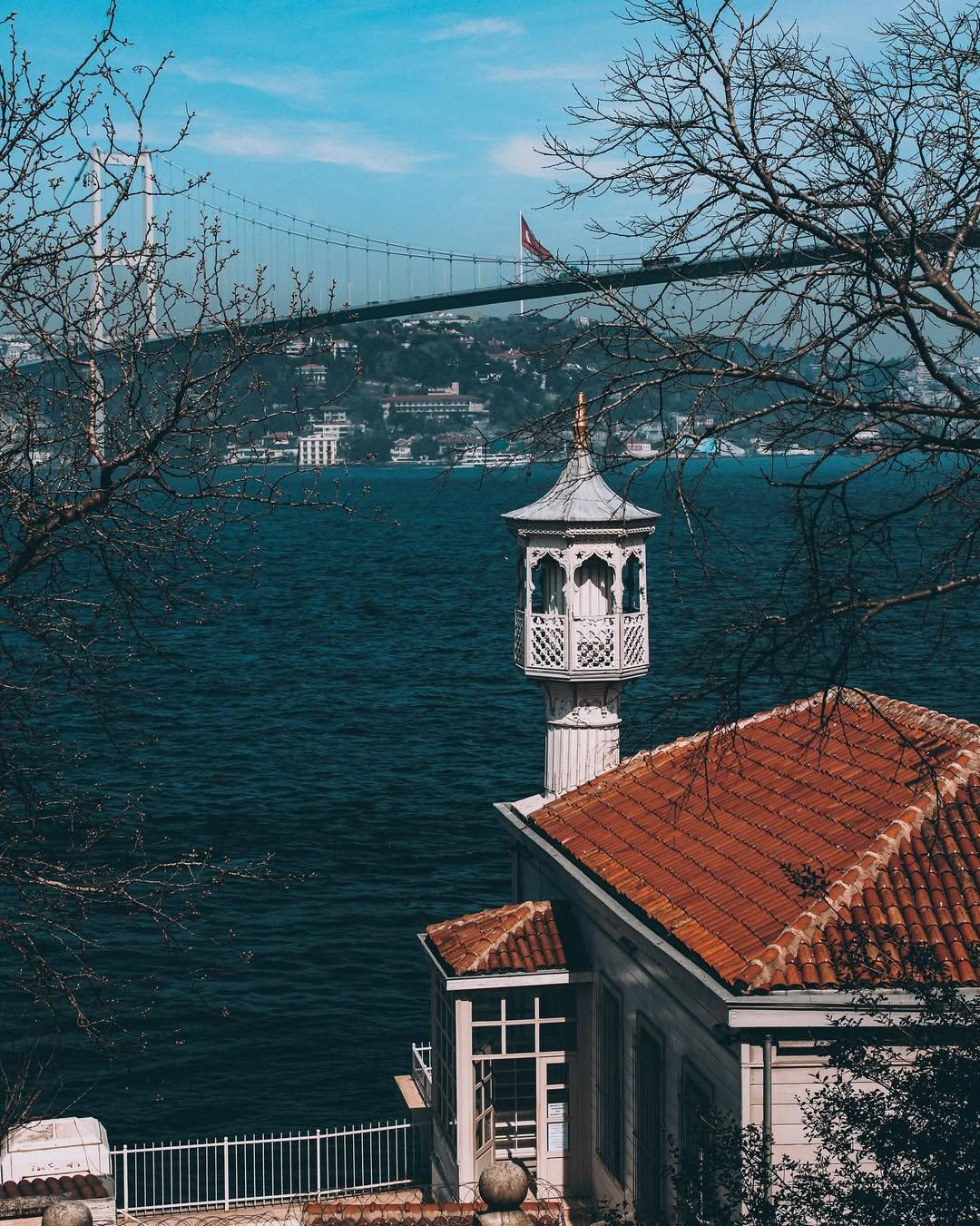
Üryanizade Ahmet Esat Efendi Cami is a historical mosque located in the Kuzguncuk neighborhood of the Üsküdar district in Istanbul, on Abdullahağa Caddesi, covering an area of place. It was constructed in 1860 by Üryanizade Ahmet Esat Efendi, a prominent figure of the period. Local traditions claim that the construction of the mosque was completed in just 40 days.
The mosque is a rectangular structure that reflects elements of traditional Ottoman mosque architecture. The ground floor is built of stone and was originally used as a boathouse. The upper floor was constructed using wood. This kiosk-like structure, associated with the mosque, features a simple design that is both functional and aesthetically restrained. Large windows face the entrance facade and the sea side, while the other facades have no windows.
The structure was built together with its surrounding courtyard. Access to the courtyard is provided from the southeast via the street. The mosque entrance is protected by a canopy reached after ascending five steps. The canopy has a single-sloped wooden roof and is plastered on top. The mosque’s exterior walls are painted in a light cream color.
The mosque’s minaret is designed simply, in harmony with the kiosk-like character of the building. It is a single-balconied minaret constructed of wood. The balcony is decorated with baklava motifs and crowned with an octagonal lead-covered dome. The balcony also features stepped arches, five-pointed stars, and muqarnas as decorative elements like.
The interior of the mosque exhibits a minimalist design typical of its late period. The mihrab is a simple niche carved from marble. The minbar follows the same simplicity and is constructed of wood. The prayer area is covered by a wooden ceiling and sealed from the outside by a pierced wooden screen. One of the most notable features inside the mosque is the arrangement of the ground-floor gallery and the women’s gallery.
The mosque has undergone various restoration efforts over the years. Comprehensive restoration work begun in 2013 was carried out with due regard for preserving the historical integrity of the structure. The restoration was completed in 2017, and the mosque was reopened for worship. During the restoration, original wooden elements and plastered walls were preserved, while deteriorated parts were renewed.
Today, the mosque remains actively in use, serving both as a place of religious worship and as a historically significant structure. It continues to function as an important religious and cultural center for the local neighborhood residents and visitors.
"Dersaadet’in Nazendesi." Fikriyat. Accessed January 17, 2025. https://www.fikriyat.com/kultur-sanat/2018/03/24/dersaadetin-nazendesi.
"Kuzguncuk Üryanizâde Ahmet Esat Efendi Camii." Turan Akıncı. Accessed January 17, 2025. https://www.turanakinci.com/kuzguncuk-uryanizade-ahmet-esat-efendi-camii.
"Üryanizâde Ahmet Esat Efendi Camii." Tarihi.ist. Accessed January 17, 2025. https://www.tarihi.ist/uryanizade-ahmet-esat-efendi-cami/.

No Discussion Added Yet
Start discussion for "Üryanizade Ahmet Esat Efendi Cami" article
Construction Process and Architectural Features
Minaret and Other Features
Interior Space and Prayer Area
Restoration and Current Condition