


This article was automatically translated from the original Turkish version.
+1 More
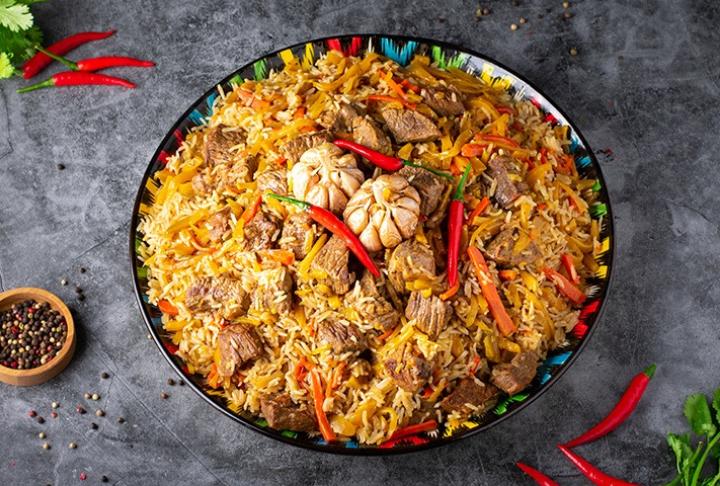
Uzbek Pilaf
Origin(s) | Uzbekistan – The traditional and most common dish of Central Asian cuisine. | ||||||||
|---|---|---|---|---|---|---|---|---|---|
MAIN MATERIALS | Rice, carrot, onion, meat (lamb/beef). Optional: chickpea, raisin, garlic, cumin, quince, walnut, tail fat, quail egg. | ||||||||
Uzbek plov is one of the foundational dishes of Central Asian culinary culture and one of the most renowned and beloved dishes in Uzbek cuisine. This dish holds an important place in the cultural memory of the society beyond merely being a source of nutrition. With hundreds of variations prepared using different ingredients and techniques, Uzbek plov continues to be preserved today as an integral part of centuries-old traditions.
It is commonly believed that the origins of Uzbek plov date back to ancient times and that it was recommended by the physician Ibn Sina. Some legends recount that Amir Timur had this dish prepared for his army. In Uzbekistan, plov is not merely a meal; it has become an inseparable component of social rituals such as weddings, funerals, and holidays. Known also as “aş” or “palov,” this dish was inscribed in 2016 by UNESCO on the Representative List of the Intangible Cultural Heritage.
There are over a hundred varieties of Uzbek plov. These are named according to their preparation method, ingredients used, regional differences, and even the occasion for which they are served. Examples include Samarkand plov, Bukhara plov, Fergana plov, Toy aşı, Devzira plov, and çayhane plov. The main ingredients in plov are typically rice, meat (usually lamb or beef), carrots, and onions. Some varieties also include quince, dried grapes, quail eggs, garlic, tail fat, and lamb tail fat.
Tashkent Wedding Plov is a special variety of Uzbek plov, traditionally served in the early morning hours at weddings. This type of plov features a preparation method that minimizes frying and emphasizes steaming. Its ingredients include rice, yellow carrots, meat, onion for sautéing, dried grapes, chickpeas, cumin, black pepper, and turmeric. This plov should have a pale yellowish hue visually.
The dish is prepared in large cauldrons, with ingredients cooked in two separate stages and then subjected to a steaming process. Wood or natural gas may be used during cooking, and lamb tail fat and quail eggs are added on top when serving. Served in pairs on plates at weddings, this plov draws attention for both its visual appeal and nutritional value.

Uzbek Plov (Anadolu Agency)
In 2017, a 7,360-kilogram portion of Uzbek plov prepared in Tashkent was entered into the Guinness Book of World Records as the “world’s largest plov.” In addition, Uzbek plov is prepared and served not only in Uzbekistan but also in Russia, Türkiye, Europe, and America. Thus, a regional delicacy has become a globally recognized national culinary element.
Yavuz explained that they commissioned special cauldrons for making Uzbek plov and began cooking the dish over wood fires inside them.
Yavuz shared that they first fry onions in the oil placed in the cauldron, then add the boiled meat. He summarized the plov-making process as follows:
“Next, we add the thinly sliced carrots to the cauldron and sauté everything together. We then add hot water and bring it to a boil. Once the cauldron begins to boil, we add the dried grapes and spices. After cooking for one and a half hours, we remove the wood from beneath the cauldrons and tightly cover them with large cloths. We cover them with cloth so that the steam does not escape and the rice grains remain intact. Then we place additional dried grapes and the large pieces of meat boiled separately in another cauldron on top. We serve the plov on plates and offer it to our wedding guests.”
Uzbek plov is not merely a dish; it is a heritage imbued with cultural, historical, and sociological meaning. This flavor, passed down from generation to generation for centuries, continues to exist both as an element reflecting the social structure of Uzbek society and as a valued component of global gastronomy. Plov remains one of the signature dishes of Uzbek cuisine through its symbolic meanings, its role in ceremonies, and its production process.
AA, 2023a: Yüzyıllardır Değişmeyen Gelenek: Özbek Pilavı, Anadolu Ajansı.
AA, 2023b: Özbek Pilavı UNESCO Listesinde, Anadolu Ajansı.
AA, 2023c: Dünyanın En Büyük Özbek Pilavı Pişirildi, Anadolu Ajansı.
AA, 2023d: Hatay’daki Özbeklerin Düğün Geleneği: Özbek Pilavı, Anadolu Ajansı.
Accessed November 26, 2025.
Accessed November 26, 2025.
Accessed November 26, 2025.
Please provide the actual citation content that is represented by `https://www.aa.com.tr/tr/dunya/dunyanin-en-buyuk-ozbek-pilavi-pisirildi/904814` so I can translate it according to the specified rules. Without the text of the citation, I cannot perform the translation.

Uzbek Pilaf
Origin(s) | Uzbekistan – The traditional and most common dish of Central Asian cuisine. | ||||||||
|---|---|---|---|---|---|---|---|---|---|
MAIN MATERIALS | Rice, carrot, onion, meat (lamb/beef). Optional: chickpea, raisin, garlic, cumin, quince, walnut, tail fat, quail egg. | ||||||||
Historical Background and Cultural Significance
Varieties and Categories
Tashkent Wedding Plov
Gastronomic Value and International Recognition
Preparation of Uzbek Plov