

+2 More

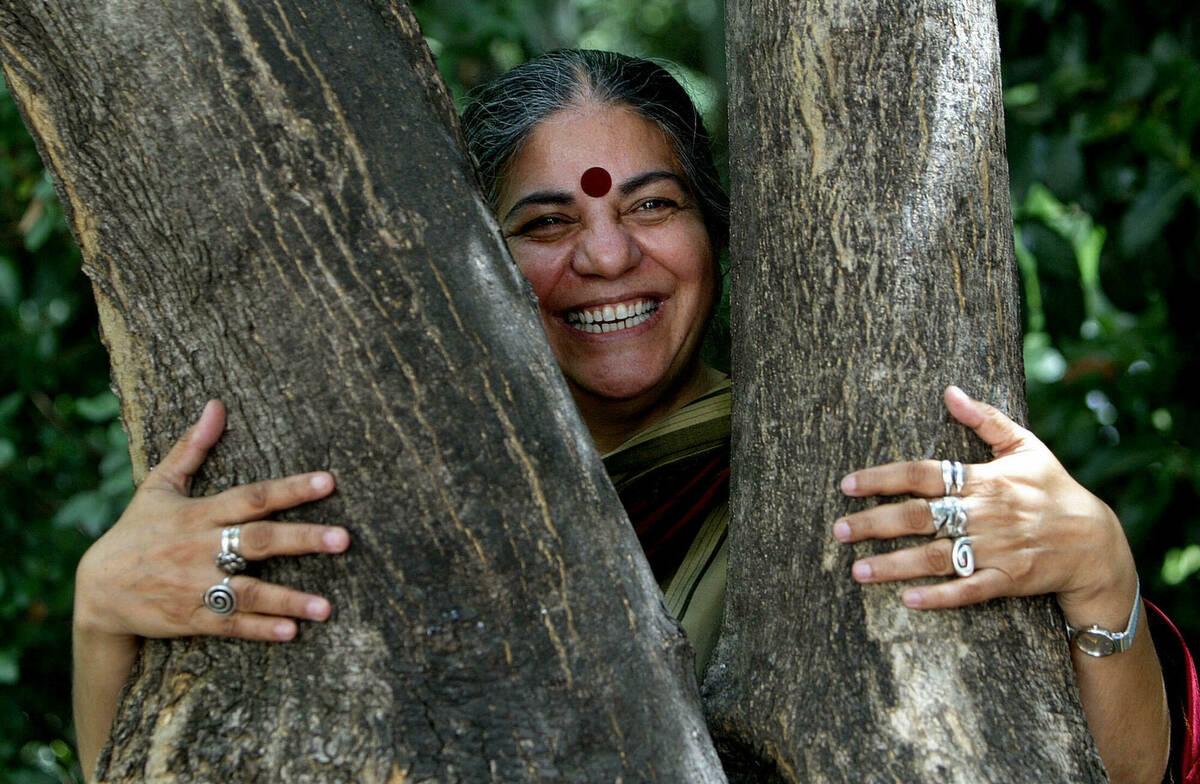
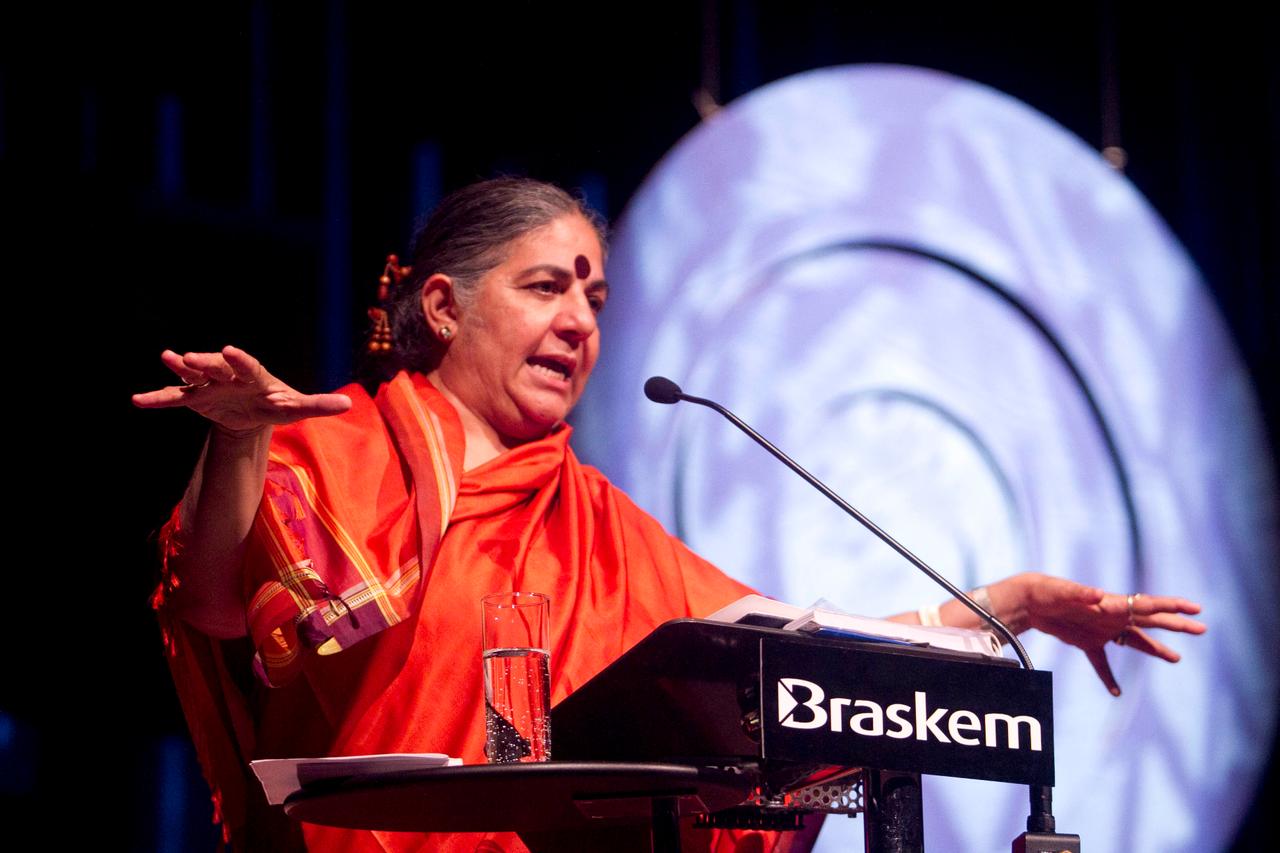
Vandana Shiva is an Indian physicist, environmental activist, feminist theorist, and one of the leading thinkers in postcolonial ecology. Since the late 20th century, she has become one of the most influential global figures in ecofeminism through her work on environmental justice, biodiversity, indigenous knowledge systems, and the relationship between women and nature.
Vandana Shiva was born on November 5, 1952, in Dehradun, India. Her father was a forest conservator, and her mother was an educator who supported agrarian reforms. Her interest in nature was shaped during her childhood. She first studied physics, earning her undergraduate degree in India, and later completed her Ph.D. in quantum physics at the University of Western Ontario in Canada.
However, Shiva’s academic path extended far beyond physics. After returning to India, she began working on philosophy of science, development policy, and the rights of nature. In 1982, she founded the Research Foundation for Science, Technology and Ecology, and in 1991 launched Navdanya, a seed sovereignty movement. These initiatives positioned her as a global leader in resistance to industrial agriculture, seed monopolies, and biopiracy.
Shiva’s theoretical approach is rooted in critiques of the colonization of indigenous knowledge, the invisibilization of women’s labor, the commodification of nature, and Western-centric models of development. She sharply criticizes capitalist patriarchy for viewing both women and nature as resources to be exploited.
She argues that ecofeminism must be shaped by the realities of the Global South. In her view, peasant women are both carriers of ecological knowledge and protectors of the planet through their sustainable relationship with nature. For Shiva, ecofeminism is not merely a theoretical framework but a way of life.
Her definition of ecofeminism can be encapsulated in the following striking statement:
"Women have been identified with nature. But this identification should mean we protect nature through women, not exploit it as we have exploited women." — Staying Alive: Women, Ecology and Development (1988)
In these words, Shiva critiques certain essentialist positions in Western feminism while emphasizing the ethical responsibility women hold toward nature. She calls for this relationship to be rebuilt on the basis of solidarity and sustainability, not domination.
One of Shiva’s most well-known contributions is her comprehensive critique of the politics of biodiversity. Her work against genetically modified organisms (GMOs), chemical agriculture, patent regimes, and seed monopolies has brought ecofeminist thought to the forefront of global agricultural policy. Her focus on indigenous knowledge, women’s agricultural labor, and the human-soil relationship has had a transformative impact on discussions around development, science, and environmental policy.
Through the Navdanya movement, thousands of farmers in India have received agroecological training, traditional seeds have been preserved, and agricultural resilience has been strengthened. Her concepts such as “seed freedom” and “the rights of Mother Earth” have become rallying points in environmental movements worldwide.
She is also considered a founding figure of postcolonial ecofeminism, particularly through her critiques of developmentalist and colonial ecologies.
Mellor, Mary. Feminism and Ecology. Cambridge: Polity Press, 1997.
https://www.wiley.com/en-us/Feminism+and+Ecology-p-9780745614732
Shiva, Vandana. Biopiracy: The Plunder of Nature and Knowledge. Boston: South End Press, 1997.
Shiva, Vandana. Earth Democracy: Justice, Sustainability and Peace. Cambridge, MA: South End Press, 2005.
Shiva, Vandana. Soil Not Oil: Environmental Justice in an Age of Climate Crisis. Cambridge, MA: South End Press, 2008.
Shiva, Vandana. Staying Alive: Women, Ecology and Development. London: Zed Books, 1988.
Shiva, Vandana. The Violence of the Green Revolution: Third World Agriculture, Ecology, and Politics. London: Zed Books, 1991.
Warren, Karen J. “The Power and the Promise of Ecological Feminism.” Environmental Ethics 12, no. 2 (1990): 125–146.
https://doi.org/10.5840/envethics199012221

Vandana Shiva
Life and Education
Theories and Ecofeminism
Contributions to the Literature
Major Works
This article was created with the support of artificial intelligence.
