
 Recently Added:

This article was automatically translated from the original Turkish version.
On 22 October 2026, nationwide opposition demonstrations took place in Venezuela's capital Caracas and in the cities of Valencia, Maracay, San Cristóbal and Maracaibo, demanding free elections and political reforms. The actions, organized by María Corina Machado's Vente Venezuela movement, marked the first large-scale opposition protests in the country after a gap of approximately two years.
The protests occurred during a political transition process under interim president Delcy Rodríguez, following the capture of former president Nicolás Maduro by US forces on 3 January 2026. Protesters demanded the publication of an election schedule, the restructuring of democratic institutions and the release of individuals detained on political grounds.
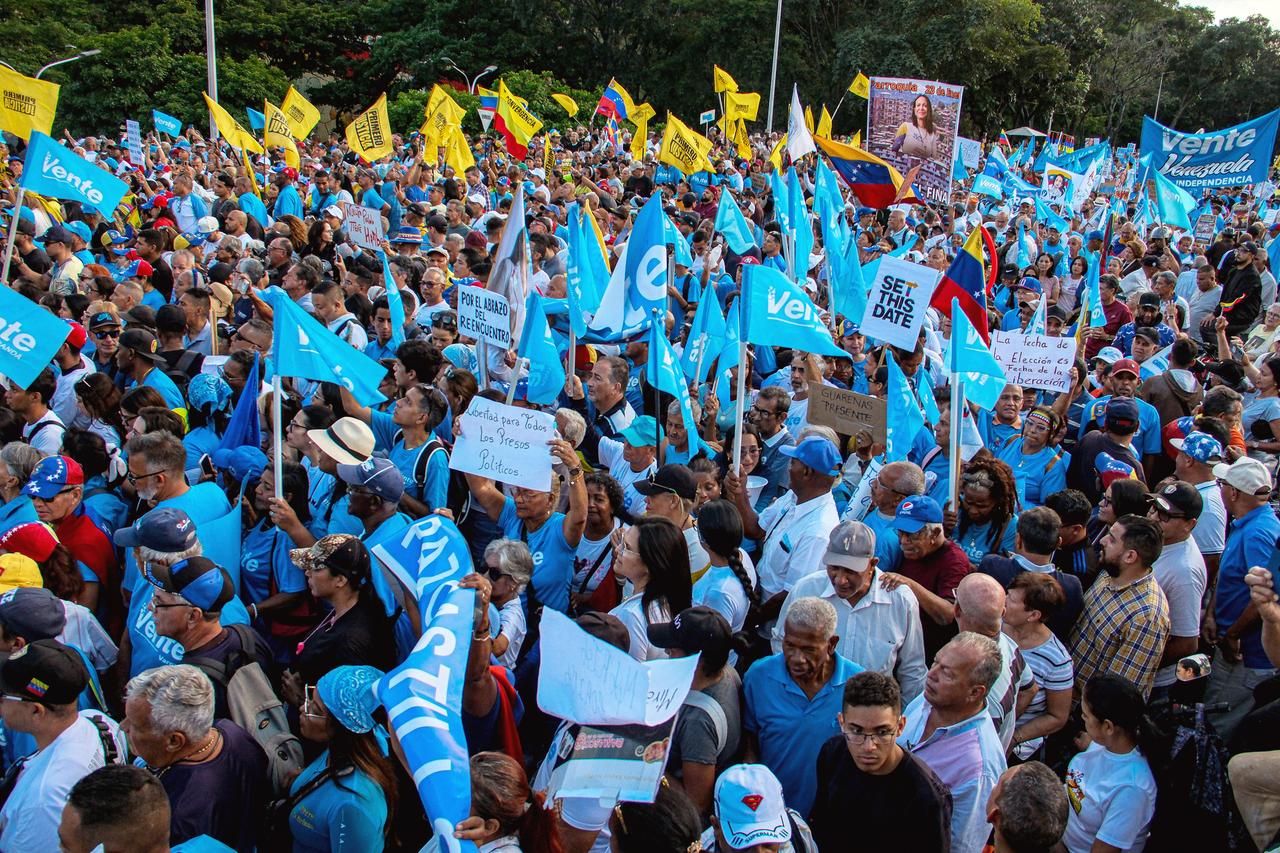
Protests in Venezuela, 23 October 2026 (Anadolu Ajansı)
The results of Venezuela's 2024 presidential election triggered prolonged political disputes between the government and the opposition. The opposition, citing its own ballot tallies, argued that its candidate Edmundo González Urrutia had won the election. The Venezuelan government, however, declared Nicolás Maduro the victor, a result supported by the country's electoral and judicial institutions.
The government's failure to publish detailed election results intensified debates over the transparency of the vote. Following the election, opposition demonstrations were met with arrests, and security forces' interventions against protesters became the subject of international human rights scrutiny.
María Corina Machado went into hiding after the political developments following the election and later left Venezuela. Her last public appearance in Venezuela occurred during protests in January 2025 marking Maduro's third inauguration as president.
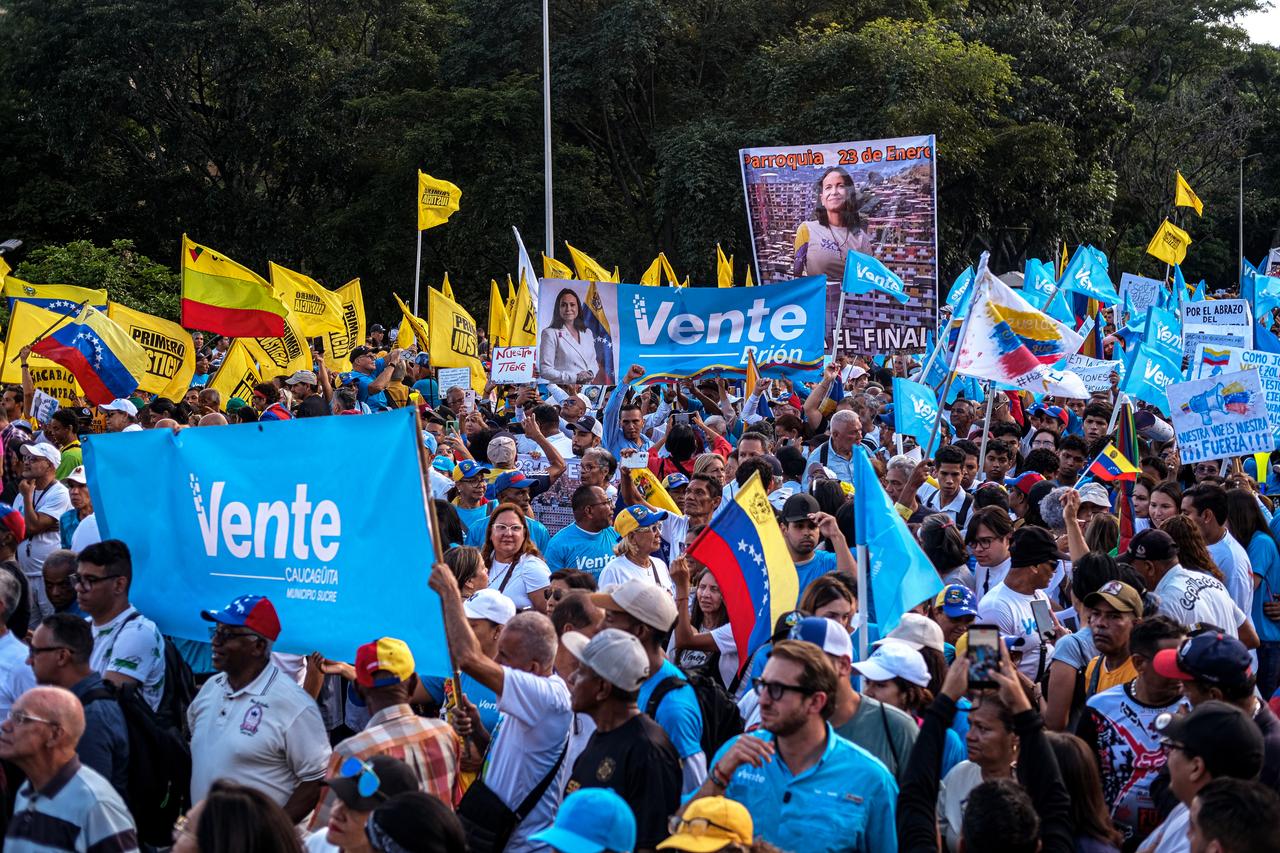
Protests in Venezuela, 23 October 2026 (Anadolu Ajansı)
The political process in Venezuela entered a new phase on 3 January 2026, following a military operation by US forces that resulted in the capture of Nicolás Maduro.
After Maduro was taken to the United States, Delcy Rodríguez, who had previously served as vice president, assumed the interim presidency. The United Socialist Party of Venezuela (PSUV), to which Rodríguez belongs, remained in power.
The administration of US President Donald Trump developed close ties with the interim government led by Rodríguez. The United States' influence over Venezuela's oil sector and economic reforms also increased during this period.
Trump and Rodríguez announced that new elections would be held in the country but did not set official dates for the presidential or parliamentary elections. The uncertainty surrounding the election schedule played a key role in motivating the opposition to organize new demonstrations.
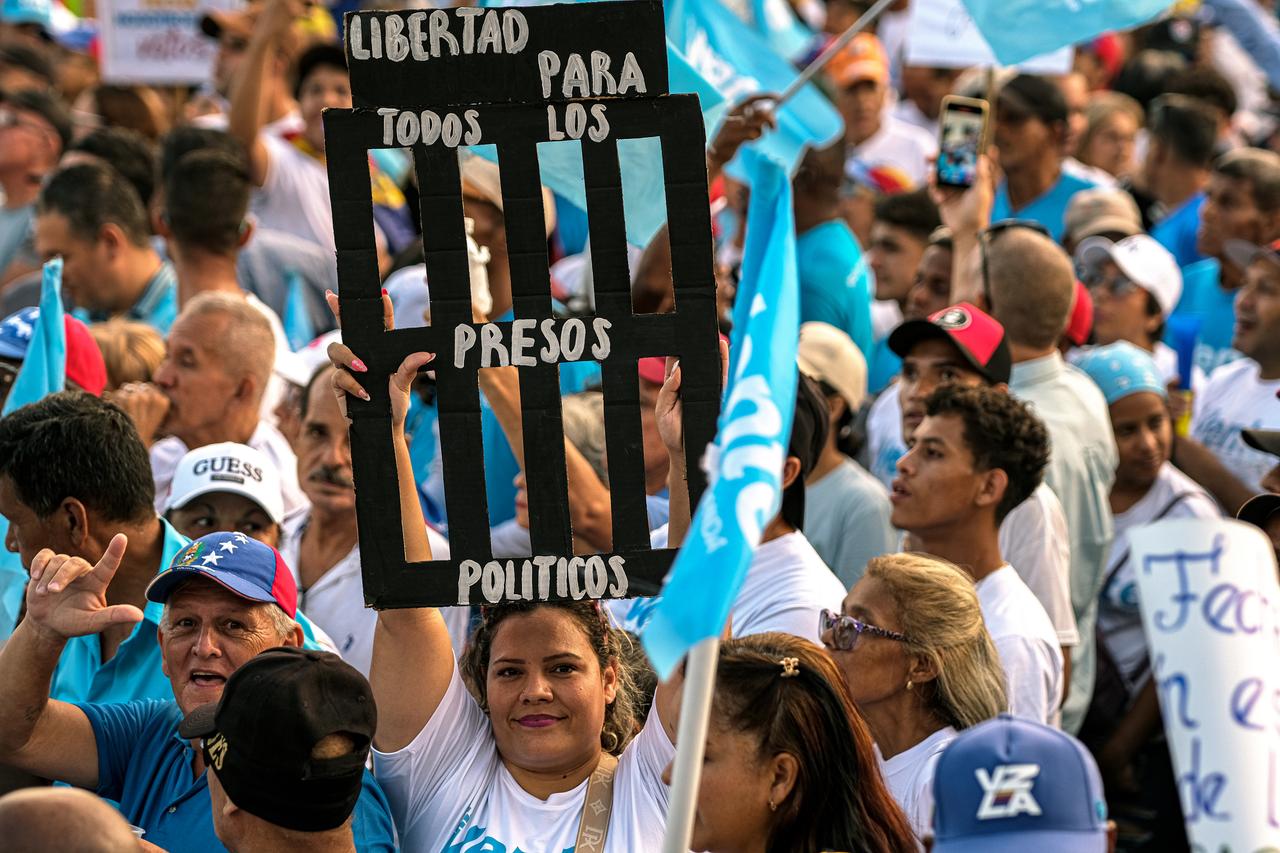
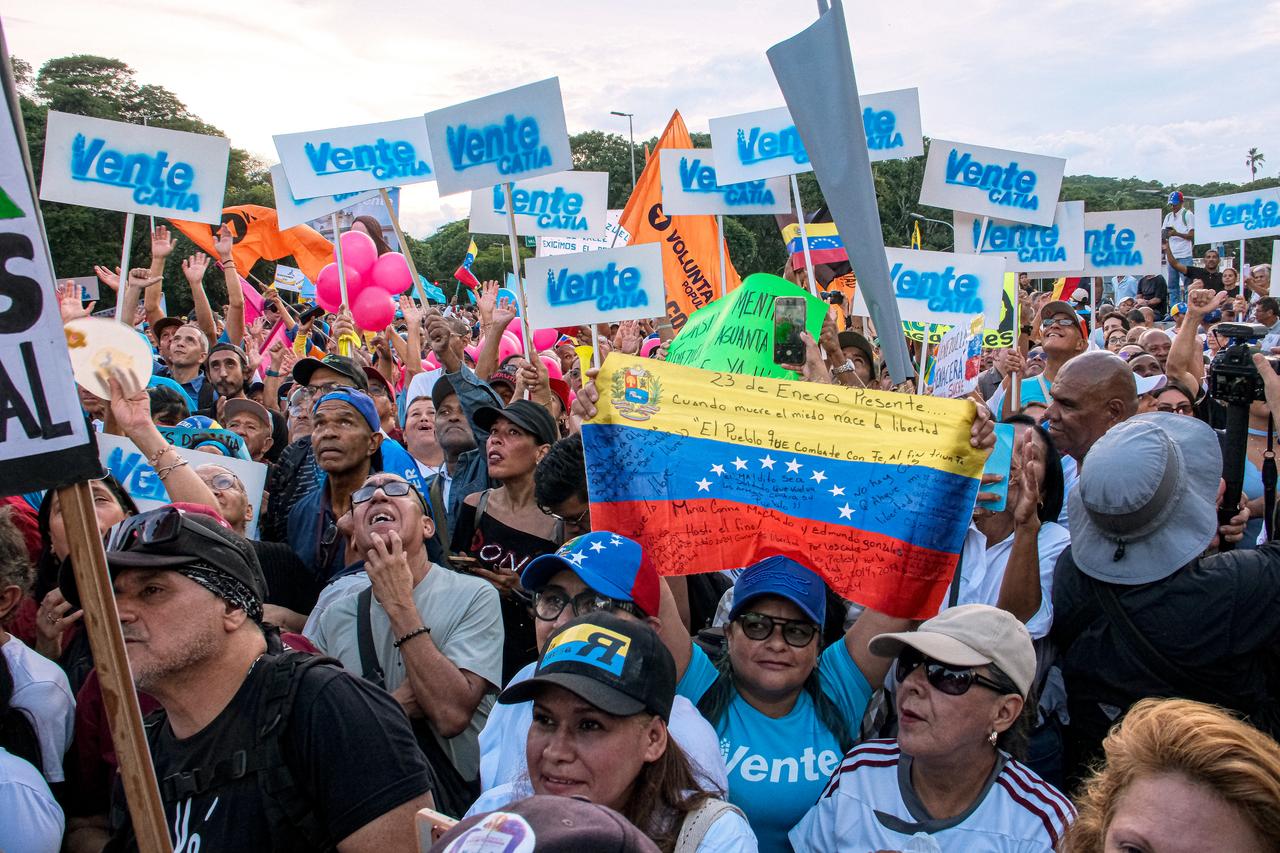
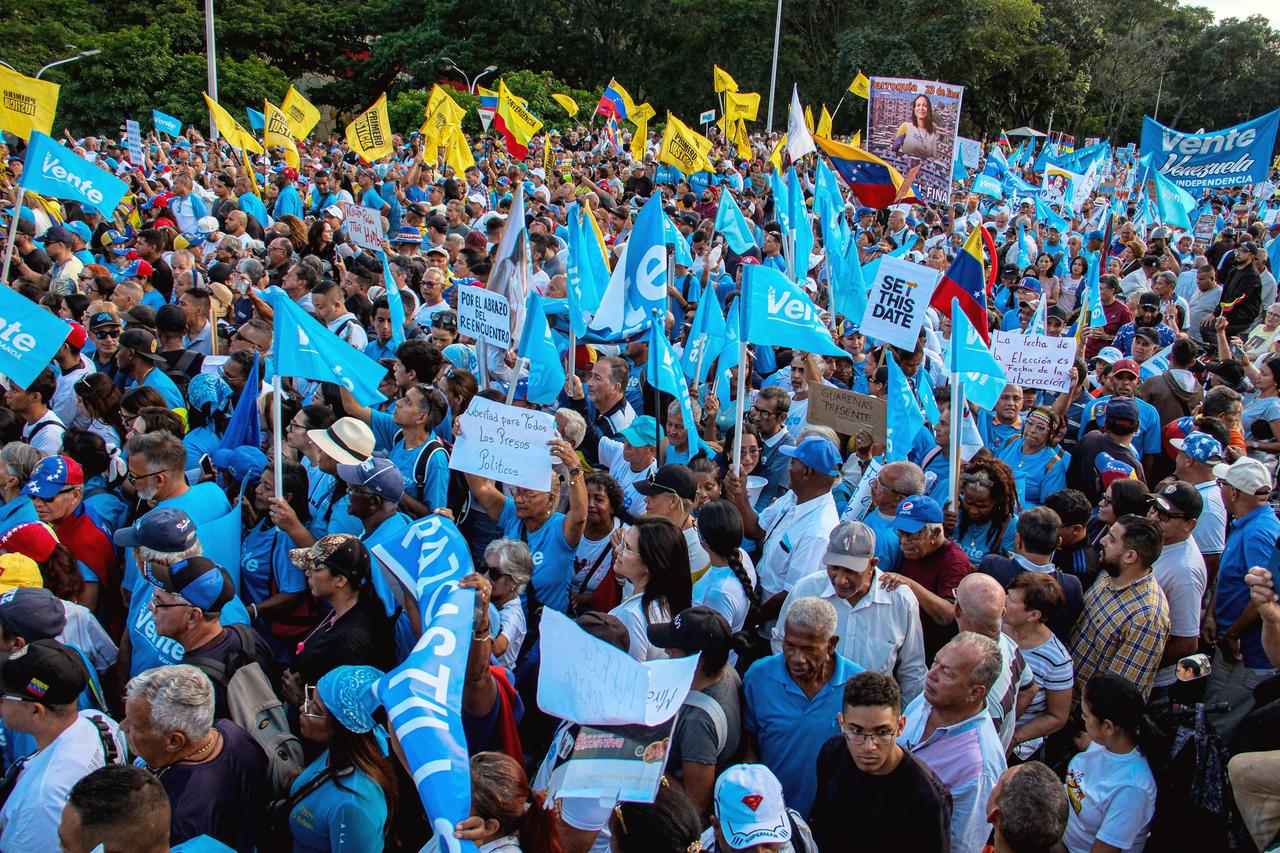
On 22 October 2026, thousands of people participated in demonstrations across various Venezuelan cities at the call of the Vente Venezuela movement. In Caracas as well as in Valencia, Maracay, San Cristóbal and Maracaibo, protesters carried Venezuelan flags and called for political change.
The core demands of the protests included the organization of presidential elections, the publication of an official election schedule, the restructuring of political institutions and the release of political prisoners.
Economic problems and deficiencies in public services were also highlighted during the protests. Some demonstrators noted that Maduro's removal had not yet resolved the country's economic and social challenges. Leosmary Hernández, an 18-year-old student who participated in the Maracay demonstrations, expressed her belief that change was possible, citing economic hardship and difficulties in her education. Rayeska Puesme, who joined the protests in Caracas, stated that despite political change, opportunities for employment and education remained limited and that she was considering emigration due to the country's uncertainty.
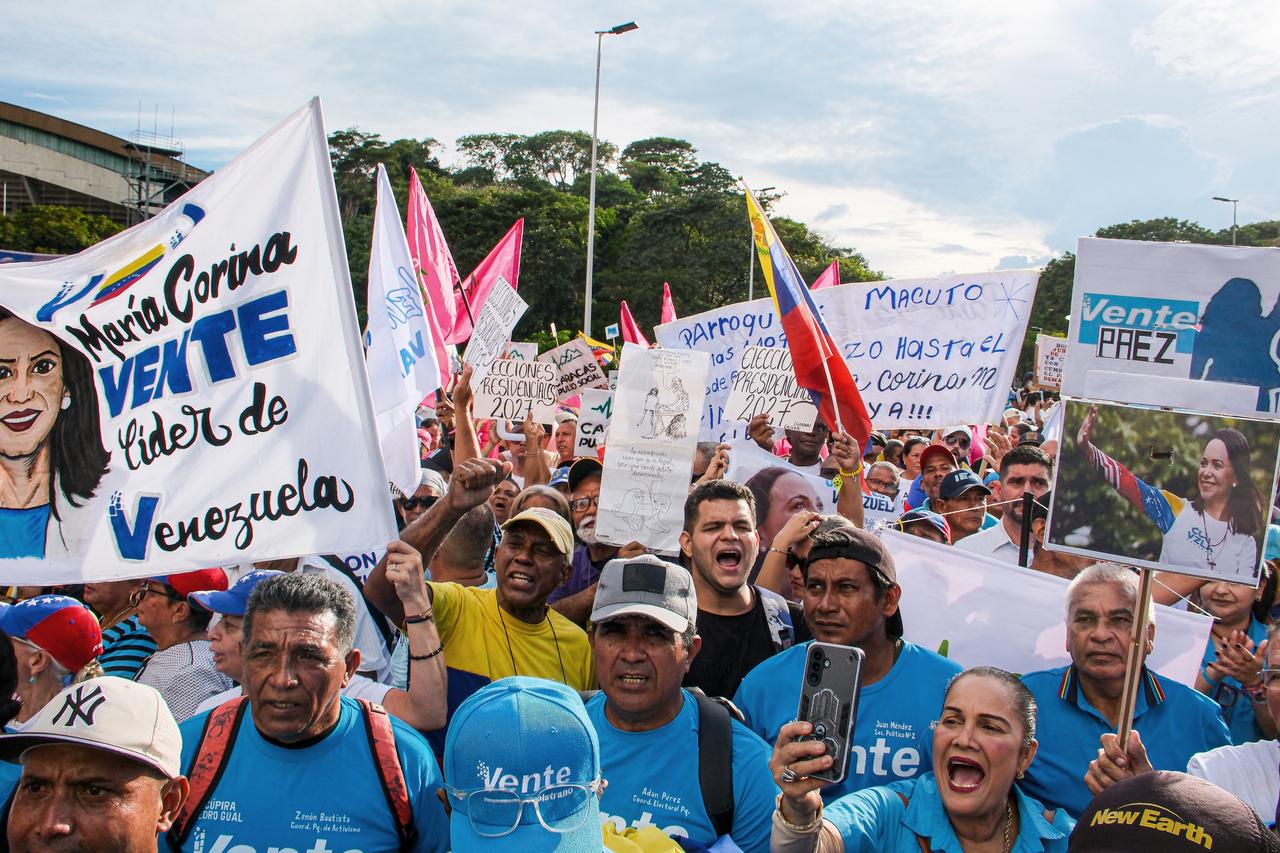
Protests in Venezuela, 23 October 2026 (Anadolu Ajansı)
One of the key demands raised during the protests was that presidential elections not be postponed until 2028. María Corina Machado stated that elections must be held no later than July 2027. Opposition representatives argued that elections must not only be held but also conducted under fair and transparent conditions.
María Débora Marín, a shop owner who participated in the protests in Valencia, said they demanded that presidential elections be held without delay and that the election schedule be announced immediately.
The opposition called for strengthening the independence of the electoral council and implementing judicial reforms to ensure the credibility of the electoral process. As of October 2026, the interim government had not issued a binding schedule for the elections.
María Corina Machado, one of the leading figures of Venezuela's opposition, began living abroad following the political developments after the 2024 elections. The Nobel Peace Prize laureate has accused the interim administration of delaying the electoral process and called for accelerating the democratic transition.
Machado's Vente Venezuela movement played a central role in organizing the October 2026 protests. Calls were also made during the demonstrations for Machado to return to Venezuela.
Efforts by the opposition leader to return to the country have caused disagreements within its relations with the United States. According to Reuters, US officials requested that Machado delay her return. Machado, however, stated that she wished to play a direct role in the political transition process.
Protests in Venezuela, 23 October 2026 (Anadolu Ajansı)
On 22 October, the presence of security forces was reported to be limited. Unlike previous years, when opposition demonstrations were met with heavy-handed interventions, protesters in many cities were able to complete their marches and disperse peacefully.
On the same day, the ruling United Socialist Party of Venezuela also called for a march in Caracas under the banner of Breast Cancer Awareness Month. While pro-government supporters planned to march from Plaza Venezuela toward the presidential palace, the opposition's intention to gather in the same area prompted a change in the protest location. Interior Minister Diosdado Cabello's participation in the pro-government march was broadcast on state television.
Political negotiations between Delcy Rodríguez's administration and a segment of the opposition, supported by the United States, continued into October 2026.
Discussions focused on restructuring the Supreme Court and the National Electoral Council to enable elections. The reforms aimed to strengthen the independence of electoral institutions and enhance the credibility of future elections.
A delegation led by Dinorah Figuera represented the opposition in the talks. Machado's movement was not directly represented in the negotiations.
A September report by Reuters suggested that institutional reforms could take a long time and that elections might not be held before the end of 2027. Nevertheless, the interim administration declared its commitment to achieving a democratic transition without providing a definitive election schedule.
Protests in Venezuela, 23 October 2026 (Anadolu Ajansı)
The protests also demanded the release of individuals detained on political grounds.
Foro Penal, a human rights organization providing legal support to detainees in Venezuela, reported that despite the release of some individuals under an amnesty law adopted in 2026, more than 320 political prisoners remained in detention.
The organization stated that it monitors the legal status of individuals it believes were arrested due to their opposition activities or political involvement. The Venezuelan government, however, denied allegations of political imprisonment and defended the amnesty law as broadly inclusive.
Longstanding economic problems in Venezuela featured prominently among the social grievances raised during the October 2026 protests.
Demonstrators cited inflation, power outages, insufficient job opportunities and failures in public services as factors negatively affecting daily life. Mass emigration, which had occurred in previous years due to economic and political instability, formed another dimension of the election debate.
The opposition has initiated efforts to update voter registrations and facilitate participation in voting for Venezuelans living abroad. It was reported that Vente Venezuela had developed a digital application to collect information from overseas voters.
Following Maduro's capture, the US administration maintained political and economic relations with Venezuela's interim government.
President Donald Trump stated that he supported the efforts of Delcy Rodríguez's administration and indicated that it was still too early for elections in the country. The United States' influence over Venezuela's energy resources and economic reforms also became part of the political discourse. The Washington administration supported institutional reform negotiations between the interim government and the opposition.
Within the opposition, however, differing views emerged regarding the US approach to the transition. While some opposition supporters viewed the US role positively, others expressed frustration over the delays in elections and the continued presence of officials from the previous administration.
The protests of 22 October 2026 brought renewed attention to demands for the publication of an election schedule and the acceleration of Venezuela's political transition.
The demonstrations were recorded as one of the largest-scale actions organized by the opposition across Venezuela since Nicolás Maduro's removal from office.
As of 23 October 2026, the interim government had not announced a definitive date for presidential or parliamentary elections. While negotiations between the opposition and the government continued, the restructuring of electoral institutions, the status of political prisoners and María Corina Machado's potential return to the country remained central issues on the political agenda.
Al Jazeera. "Venezuelans demand elections in first national protest in nearly two years." Accessed October 23, 2026.
France 24. "Venezuela protests demand return of Nobel-winning leader Machado." Accessed October 23, 2026.https://www.france24.com/en/live-news/20261023-venezuela-protests-demand-return-of-nobel-winning-leader-machado
Reuters. "Venezuelans call for elections in first national protest in nearly two years." Accessed October 23, 2026.
TIME. "Venezuelans Take to the Streets to Demand Democracy." Accessed October 23, 2026.

In Venezuela, thousands of people took to the streets in the first nationwide opposition protests held after approximately two years, demanding free elections and political reform. Demonstrations in numerous cities including the capital Caracas called for the publication of an election schedule and the release of political prisoners by the interim president Delcy Rodríguez. Opposition leader María Corina Machado urged that elections be held no later than July 2027.
No Discussion Added Yet
Start discussion for "Venezuela Election Protests (October 2026)" article
October 23, 2026
Political Background of the Protests
October 23, 2026
Capture of Nicolás Maduro and Interim Governance
October 23, 2026
Organization of the 22 October Protests
October 23, 2026
Election Schedule and Opposition Demands
October 23, 2026
María Corina Machado's Political Role
October 23, 2026
Security Forces' Conduct and Pro-Government Demonstrations
October 23, 2026
Negotiations Between the Interim Government and the Opposition
October 23, 2026
Political Detainees and Human Rights Demands
October 23, 2026
Impact of Economic Problems on the Protests
October 23, 2026
The Role of the United States in Venezuela's Political Transition
October 23, 2026
Outcomes of the Protests