
This article was automatically translated from the original Turkish version.
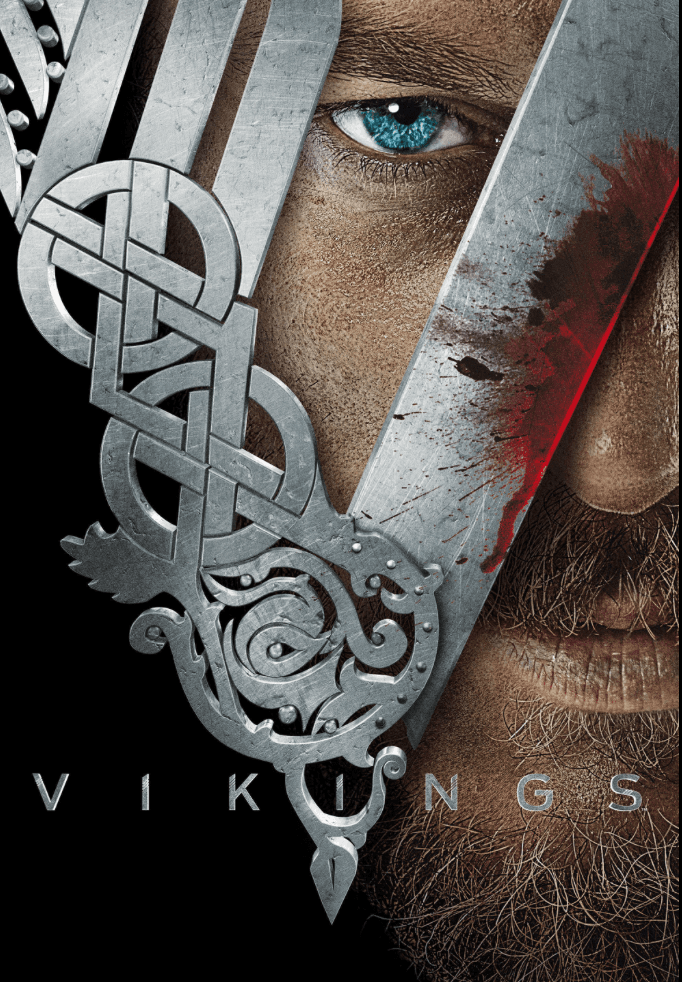
Vikings
Door | Action Historical Drama | ||||||||
|---|---|---|---|---|---|---|---|---|---|
Creator | Michael Hirst | ||||||||
Producer | Michael Hirst John Weber Morgan O'Sullivan | ||||||||
Actor | Alexander Ludwig Gustaf Skarsgård Katheryn Winnick Travis Fimmel | ||||||||
Platform | History Channel Amazon Prime Netflix | ||||||||
Number of Episodes | 89 (6 seasons) | ||||||||
Duration | Average 45 minutes | ||||||||
The series "Vikings" is a production that premiered on History Channel in 2013 and ran for six seasons. Due to the limited number of written sources on the Viking Age, the series constructs a narrative that fills many historical gaps with dramatic fiction. Created by Michael Hirst, the production offers a more epic framework than his previous history-focused projects such as "The Tudors", this time centered on Norse mythology and Early Medieval Europe.
In his statements, Hirst points out that the Viking Age relies on very few written documents, and one of the reasons it is called the "Dark Ages" is precisely this lack of sources. Consequently, the series is forced to creatively fill in these historical gaps.
At the center of the series stands Ragnar Lothbrok, not as a historical figure but as a mythological and semi-historical character derived from multiple sources. The name Ragnar appears in Norse sagas, Irish chronicles, and Frankish records. However, these different sources often provide independent and conflicting information.
According to Michael Hirst, Ragnar is in fact a fictional composite of several real individuals. For instance, Reginherus, who led the 845 AD Siege of Paris, is considered a historical counterpart to Ragnar. Figures such as Danish King Horik I and his predecessor Reginfrid are also believed to have inspired aspects of the Ragnar character.
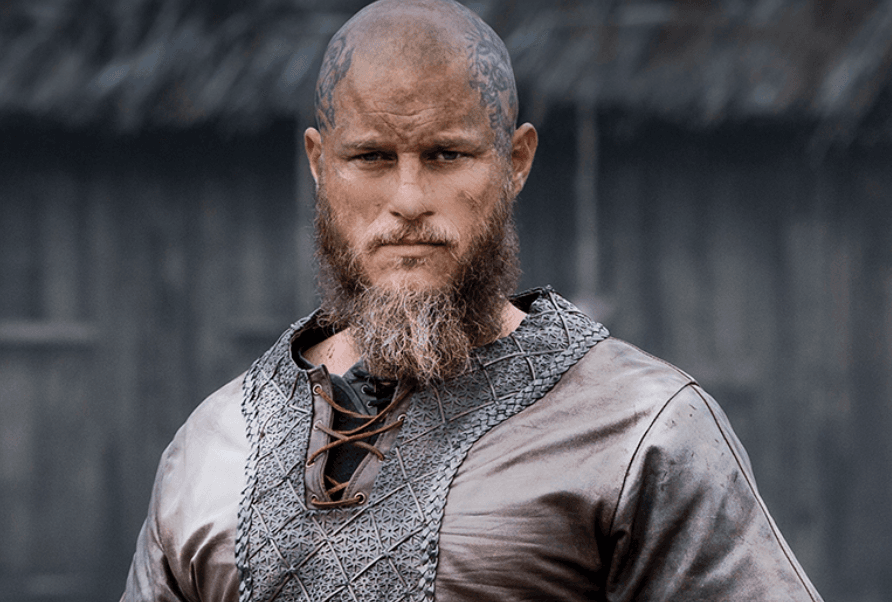
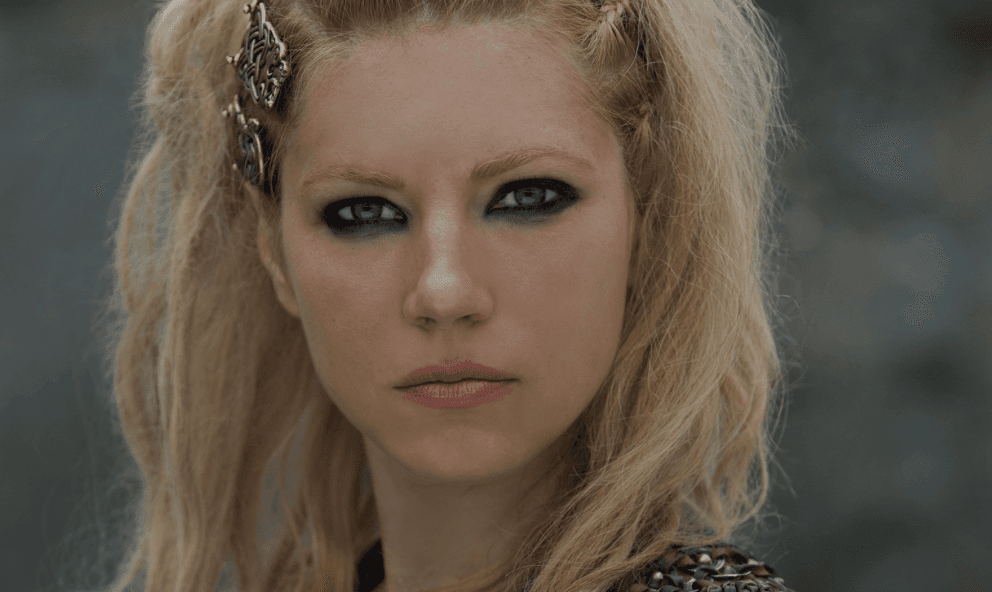
Travis Fimmel as Ragnar Lothbrok.
The primary texts inspiring the series include the 13th-century written accounts of the Saga of Ragnar Lothbrok and Gesta Danorum. Most of these texts were composed centuries after the events they describe and should be regarded as written records of oral cultural traditions.
Therefore, many events depicted in the series are dramatic adaptations of legendary narratives rather than historical facts. Nevertheless, the series strives to remain faithful to mythological storytelling, incorporating the ghostly presence of the god Odin, prophecies, symbols, and dreams throughout its scenes. In this way, it consciously bridges history and mythology.
The chronology of historical events is frequently altered in the series. For example, the Siege of Paris actually occurred in two separate campaigns in 845 and 885. However, for dramatic cohesion, these sieges are combined in the series. Similarly, characters who were historically unrelated are portrayed as family members—a deliberate choice made to provide viewers with a more unified narrative.
The opening event, the Lindisfarne Raid, took place historically in 793 and is widely regarded as the moment marking the beginning of the Viking Age. In the series, this event is dramatized and linked to the rise of the main character, serving as a vehicle to reveal the political atmosphere of the era.
"Vikings" never claims to be a historical documentary. Instead, it weaves together historical events, mythological elements, and dramatic narrative structures to present a powerful legendary tale. The production team focuses less on historical accuracy than on capturing the "spirit" of the era. The motivations, political maneuvers, and religious inquiries of the characters are shaped within this framework.
Although the series’ fictional choices may be criticized by historians, they have rekindled public curiosity about the Vikings and served as an entry point for non-academic audiences. In this sense, the series can be viewed not merely as a television product but as a contemporary interpretation of cultural memory.
The series "Vikings" does not limit itself to portraying Vikings as bloodthirsty invaders; it also aims to convey their social organization, worldview, and daily practices to viewers. In this regard, the series goes beyond audience expectations by offering a more holistic framework of early Medieval Northern European society.
Although Vikings are often remembered as barbaric invaders, the series dismantles this perception. Through elements such as runic inscriptions, social classes, craftsmanship, and gender roles, it demonstrates that they possessed a sophisticated cultural structure of their own.
The hierarchical structure of Viking society is carefully depicted in the series. Society is divided into three main classes:
This structure provides a fundamental backdrop for understanding social conflicts, leadership struggles, and differing perspectives within the community.
The status of women in Viking society was more autonomous compared to many contemporary European societies. Women could own property, initiate divorce, and even, in some cases, take part in warfare. This situation is portrayed in the series with both dramatic and historical accuracy.
The figure of the "shieldmaiden" is attested in both mythological and historical sources. By centering this character, the series emphasizes the presence of women on both the battlefield and in politics.
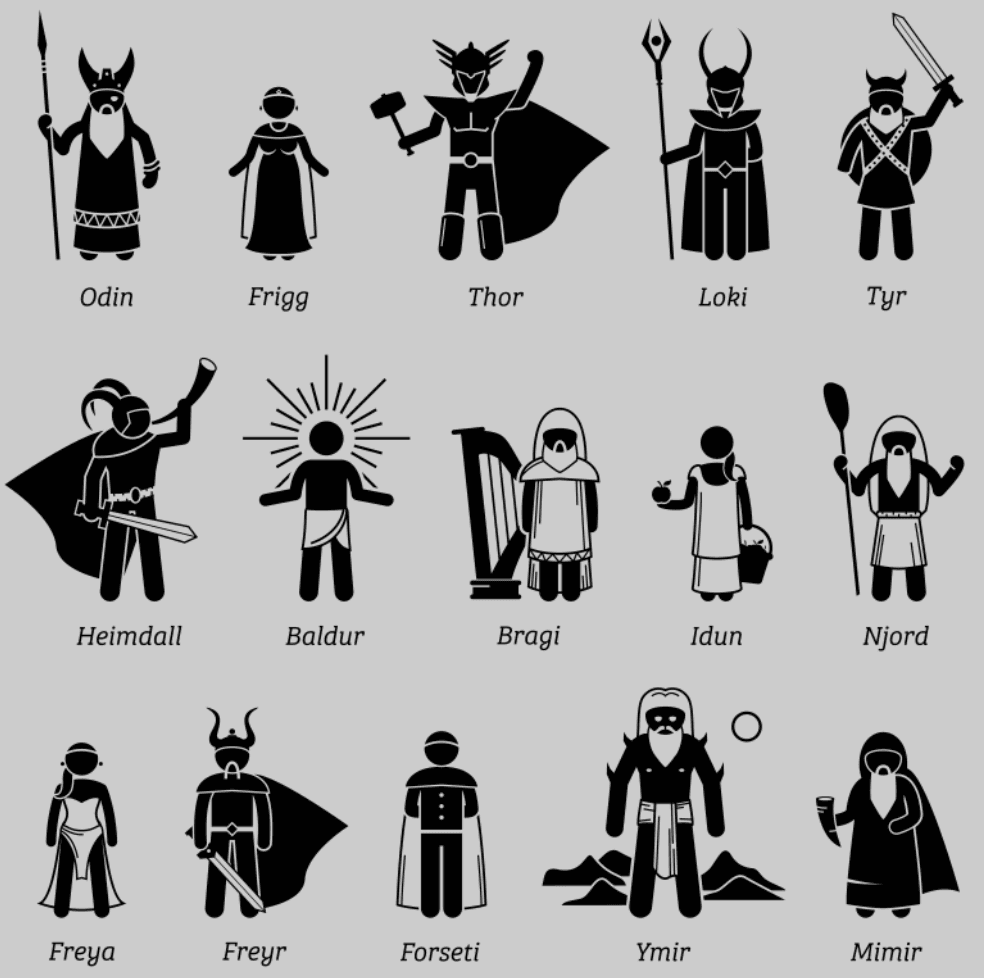
The Viking religious worldview is directly tied to nature and death. Symbols and religious rituals frequently seen in the series are used to materialize this mythological universe. The gods are not represented in human form but through animal shapes or natural phenomena. Odin is the most powerful deity and appears in the series as a raven or an old man, intervening in events.
Death is central to their belief system. For the Vikings, dying in battle meant being called to Valhalla by Odin. This fearless warrior ethos is one of the fundamental elements shaping the characters’ perception of fate.
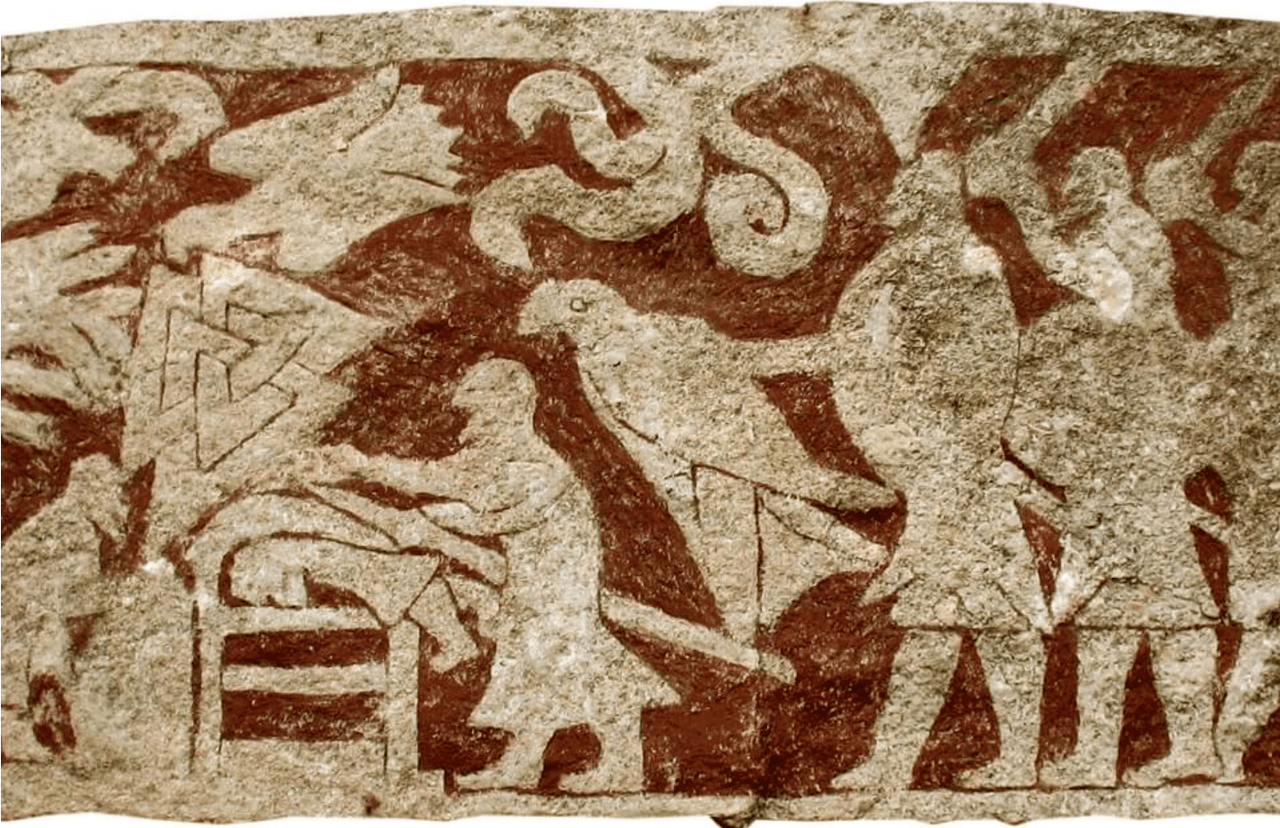
The Vikings were not a literate society, but they used a writing system called "runor". This alphabet was primarily used on grave stones and runic monuments. In the series, "runestones" are presented as a form of memory stone, recalling historical events and heroic deeds.
The scarcity of these written records granted the series creators the freedom to fill historical gaps with fiction. Yet this very absence also enabled the series to employ a continuous dialogue between myth and history.
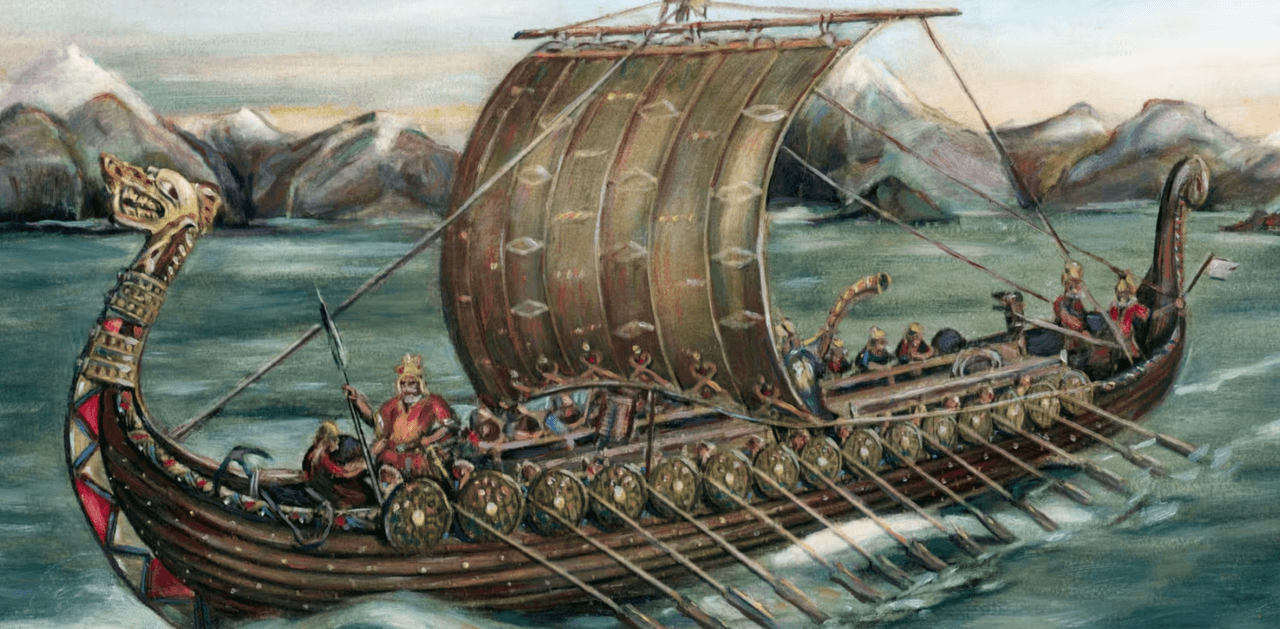
The series also portrays the Vikings not only as warriors but as highly skilled shipbuilders and engineers. In particular, the longship was a crucial technological innovation that enabled them to reach continental Europe swiftly and effectively. Their navigational skills are emphasized through frequent sea voyage scenes.
Trade, overseas relations, and agriculture also form part of the series’ background. In this way, the series depicts the Vikings not merely as warriors but also as traders, farmers, and craftsmen.
Although "Vikings" is set within a historical framework, it is fundamentally a fictional narrative. According to producer Michael Hirst, the limitations of historical sources inevitably leave gaps in the storytelling. This situation has allowed screenwriters to make creative interventions regarding historical figures and events. Rather than reproducing historical accuracy verbatim, the series prioritizes fidelity to the spirit of the events to construct a more dramatic structure.
This narrative approach lends cinematic depth to the series and opens broad space for character development. The focus is less on rigid historical lines and more on lived experience and emotional truth.
The character of Ragnar is composed of the amalgamation of several figures mentioned in historical documents. Reginherus’s role in the 845 Siege of Paris is portrayed in the series as one of Ragnar’s most famous battles. However, many events attributed to Ragnar’s lifetime actually belong to different individuals and periods. For instance, the tactic of feigning death during a siege, used by Viking commander Hastein, is assigned to Ragnar in the series.
This fictional arrangement is important not only for historical accuracy but also for dramatic intensity and character continuity. The events built around Ragnar’s character provide the series with a narrative backbone.
Many historical events in the series have been compressed or reordered chronologically. Events that occurred centuries apart are shown as unfolding within the lives of the same characters. This is a deliberate choice made to create a more cohesive and comprehensible narrative.
For example, the merging of the Paris sieges or the depiction of Kattegat—a geographical sea area—as a port city are examples of such fictional interventions. The series does not claim to present a true historical account; rather, it positions itself as a story inspired by historical sources.
Some characters in the series are entirely fictional. Athelstan, for instance, has no historical counterpart and was created by the writers to establish dramatic connections. Similarly, while the character Floki is inspired by the historical figure Floki Vilgerðarson, his portrayal in the series is largely fictional.
Rollo’s depiction as Ragnar’s brother also contradicts historical reality. There is no evidence that Rollo, the Duke of Normandy, had any familial connection to Ragnar. However, the series uses this bond to enrich its narrative with complex family conflicts and political intrigue.
One of the series’ key female characters, Lagertha, is mentioned only briefly in historical sources as a warrior woman. In the series, however, she assumes a far more central role as Ragnar’s wife, a holder of the title of countess, and Bjorn’s mother. Lagertha’s possession of both political and military power can also be interpreted as a feminist reinterpretation.
Such narrative choices bring to the screen scenarios that may not be documented historically but are plausible within mythological or social contexts.
"Vikings" reshapes events according to dramatic needs without entirely abandoning historical reality. Rather than striving for complete fidelity to historical truth, the series aims to reflect the atmosphere and emotional truth of the era. Therefore, viewers must understand that not all events depicted align exactly with those recorded in history books; however, they should accept that the series interprets this reality in an aesthetic manner.
Ultimately, the series uses historical narrative as a tool; its primary goal is to provoke thought, evoke emotion, and inspire curiosity. This approach elevates the series beyond being merely a period drama and transforms it into a broader narrative form.
The series "Vikings" covers events from the late 8th century to the mid-9th century. However, its visual narrative is shaped not by historical accuracy but by dramatic structure and character development. Although the series appears to unfold over a period of 30 to 40 years, there are gaps of up to a century between the actual historical timing of events.
For example, some expeditions shown as carried out by Ragnar Lothbrok actually belong to historical figures who lived long after him. Similarly, some characters portrayed as his children were not contemporaries of Ragnar in historical records. This demonstrates that the series brings together figures from different generations within a single timeline to create a unified narrative.
The first major event in the series’ timeline is the Lindisfarne Raid of 793. Historically, this event is accepted as the beginning of the Viking Age. This monastery on the east coast of England became one of the first targets due to its vulnerable structure and religious significance.
This attack is not merely portrayed as a raid; it is presented as the dawn of a new era that threatened the social and religious order of Europe. In the series, this event is placed at the narrative’s outset as a turning point that concretizes the Vikings’ outlook on Western Europe, their courage, and their ambitions.
In later seasons, the narrative shifts focus from Ragnar to his sons, representing not only a dramatic renewal but also an effort to emphasize the intergenerational transmission of history. In Ragnar’s absence, characters such as Bjorn, Ivar, and Ubbe emerge as representatives of Viking expansion across different geographical regions.
Each son undertakes expeditions in different directions, distinguishing themselves characteristically while also serving a functional role in demonstrating how Viking influence spread across Europe. This narrative structure presents Viking history not as the story of a single hero but as the collective tale of a lineage and community.
Over time, the series shows the Vikings reaching not only England but also Frankish territories, the Mediterranean, North Africa, and even distant overseas lands. This geographic expansion is accompanied by a fragmented sense of time. Each expedition represents a temporal rupture.
The time jumps used in the series create the impression that events in these different regions occurred within the same generation. In reality, some of these expeditions took place centuries apart. Nevertheless, these choices generate an epic sense of continuity and convey the scale of Viking expansion.
The series incorporates not only historical time but also mythological time into its narrative. Elements such as prophecies, dreams, and divine signs disrupt the linear perception of time. This reflects a tendency to present historical events as part of a "chain of fate."
For the characters, time is cyclical rather than chronological: the spirits of the dead return, prophecies determine the future, and gods intervene in human destinies. This understanding shapes the series’ timeline not only according to historical documents but also according to the rules of a mythological universe.
Although the timeline of "Vikings" may appear historically inconsistent, it is functionally effective for narrative cohesion. The narrative compresses or expands the timeline to allow individual character developments to intersect. As a result, Ragnar’s journey as a first-generation character is extended through his children and followers into a multigenerational story.
In this sense, the timeline is not historical but narrative-driven. The primary goal is to enable viewers to feel the transformation of the era and bear witness to its spirit.
Since its premiere, "Vikings" has captivated not only history enthusiasts but also a broad global audience. A series focused on the dark and little-known period of Medieval Europe has transcended historical storytelling to become a cultural phenomenon. Originally aired on History Channel, the production later moved to global platforms such as Amazon Prime and Netflix, gaining wider accessibility.
This transition has reinforced the perception of the series not merely as a historical narrative but as a visual aesthetic and character-driven epic.
The series has been evaluated controversially in academic circles. Some historians have pointed out discrepancies in character chronologies, familial relationships, and political positions compared to historical reality. For example, portraying Ragnar and Rollo as brothers or merging the Paris sieges raises issues of historical accuracy.
However, these criticisms are balanced by the fact that the series never claimed to be a historical documentary. As producer Michael Hirst has clearly stated, the aim is not to teach but to use aesthetic and dramatic language to understand and sense the era. In this sense, "Vikings" is not a source that reproduces history verbatim but a narrative infused with historical sensitivity.
The series has significantly altered the public memory of the Vikings. Previously associated with barbarism, plunder, and violence, Vikings in the series are portrayed as complex, multidimensional individuals. This has led to a global transformation in perceptions of Viking culture, influencing areas ranging from literature and video games to music and fashion design.
Runic symbols, mythological references, and costume designs from the series have become widespread, particularly among younger audiences, merging Viking culture with a modern iconography. Floki’s engineering, Lagertha’s leadership, and Ragnar’s internal questioning have transformed from historical figures into contemporary symbols.
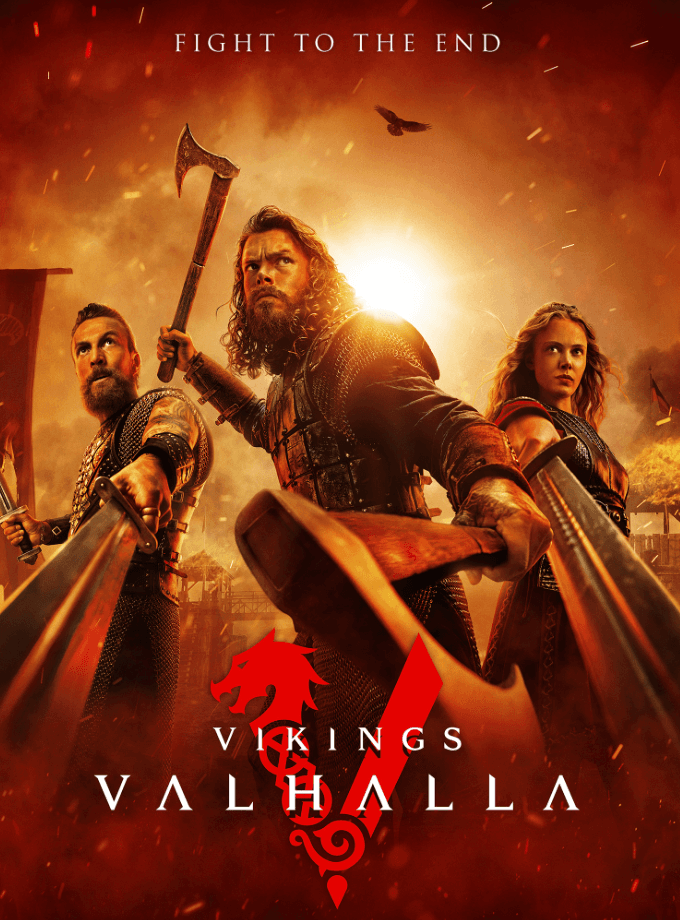
The success of the series has paved the way for new projects with continuation potential. The spin-off "Vikings: Valhalla" is set approximately a century later and explores the final period of the Viking Age while maintaining the same balance: a structure that constantly moves between historical reality and dramatic fiction.
Although some characters in the spin-off are based on historical figures (such as Leif Erikson and Freydis Eiriksdottir), the plot is largely fictional. This demonstrates that the "Vikings" universe has evolved into a multilayered mythology rather than a single narrative.
The series’ greatest impact is the historical curiosity it instills in viewers. Those who question whether Ragnar, Bjorn, or Ivar truly existed find themselves immersed in sagas, Medieval chronicles, and archaeological discoveries. By blurring the boundaries between history and fiction, the series transforms viewers from passive recipients into active researchers.
In this sense, "Vikings" can be regarded not as a revival of history in popular culture but as a production that prompts viewers to rethink it. While following in the footsteps of earlier historical dramas like "The Tudors", it presents an aesthetic that further expands the fine line between myth and reality.
"Blood Eagle: Viking Ritual Had Real Anatomical Consequences." Keele University. Accessed April 1, 2025.https://www.keele.ac.uk/research/researchnews/2021/december/blood-eagle/viking-ritual-anatomy.php.
IMDb. “Vikings (2013–2020).” Accessed April 1, 2025.https://www.imdb.com/title/tt2306299.
IMDb. “Vikings: Valhalla” (2022– ). Accessed April 1, 2025.https://www.imdb.com/title/tt11311302/.
“Exploring the History Behind Vikings.” History.com. Accessed April 1, 2025.https://www.history.com.
“The Entire Vikings Timeline Explained.” Looper. Accessed April 1, 2025.https://www.looper.com/317122/the-entire-vikings-timeline-explained.
“Vikings Show: The True Story of Ragnar & Mythology Changes.” ScreenRant. Accessed April 1, 2025.https://screenrant.com/vikings-show-true-story-ragnar-mythology-changes.
“YouTube – Vikings Final Scene: Ragnar's Sons Avenge Him.” YouTube. Accessed April 1, 2025.https://www.youtube.com/watch?v=9GgxinPwAGc&t=2s.

Vikings
Door | Action Historical Drama | ||||||||
|---|---|---|---|---|---|---|---|---|---|
Creator | Michael Hirst | ||||||||
Producer | Michael Hirst John Weber Morgan O'Sullivan | ||||||||
Actor | Alexander Ludwig Gustaf Skarsgård Katheryn Winnick Travis Fimmel | ||||||||
Platform | History Channel Amazon Prime Netflix | ||||||||
Number of Episodes | 89 (6 seasons) | ||||||||
Duration | Average 45 minutes | ||||||||
No Discussion Added Yet
Start discussion for "Vikings (TV Series)" article
Historical Background
The Origin and Fictional Interpretation of Ragnar Lothbrok
From Saga Narratives to the Series: The Nature of the Sources
The Distance Between the Series and Reality
The Series’ Purpose: Not a Documentary, but a Legend
The Viking World: Society, Belief, and Culture
A Three-Tiered Social Structure
The Position of Women: Between Freedom and Power
Belief Systems: Mythology, Gods, and Prophecies
Written Culture and Oral History
Daily Life and Technological Competence
Fictional Liberties and Historical Consistency
The Enriched Fiction of Ragnar Lothbrok
Consolidating Historical Timelines
Fictional Characters and Constructed Relationships
The Rise of Female Characters Within Fiction
Balancing Accuracy and Impact
Timeline and Intergenerational Continuity
The Beginning of the Viking Age: The Lindisfarne Raid
From Ragnar to His Sons: Intergenerational Continuity
Transitions Between Locations and Geographic Expansion
Conflict Between Mythological and Historical Time
Flexibilizing Time for Narrative Cohesion
Legacy and Place in Popular Culture
Academic Interest and Criticism
The Reconstruction of the Viking Image in Popular Culture
The Expanding Universe After the Series: "Vikings: Valhalla"
Enduring Impact: Cultural Curiosity and Inquiry