

This article was automatically translated from the original Turkish version.
+1 More
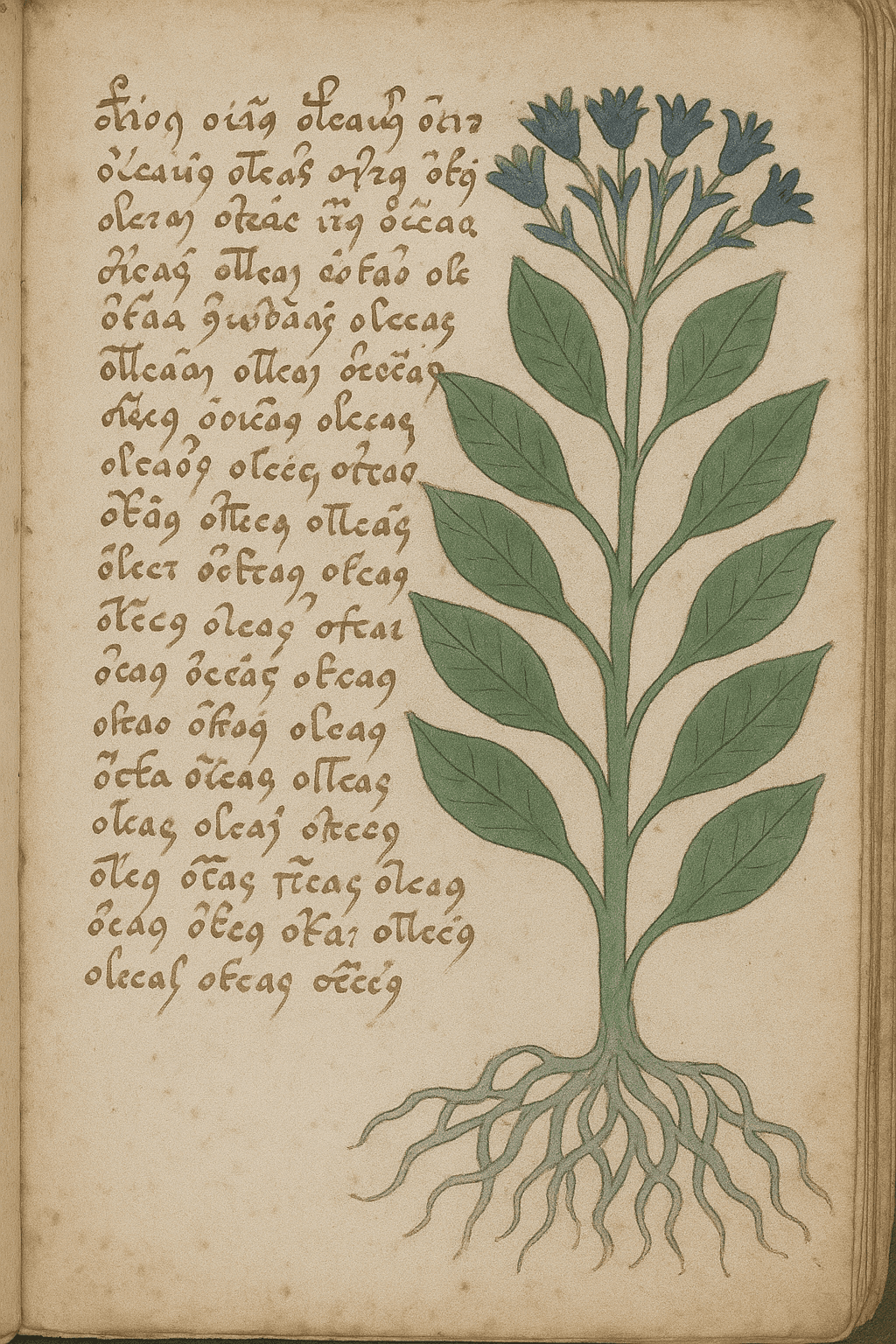
Voynich Manuscript (generated by artificial intelligence)
Title(s) | Voynich Manuscript | ||||||||
|---|---|---|---|---|---|---|---|---|---|
Material(s) | Parchment | ||||||||
Number of Pages | ~240 (missing pages exist) | ||||||||
Language/Writing System | Unknown | ||||||||
Location | Beinecke Rare Book & Manuscript Library Yale University | ||||||||
Named After | Wilfrid Voynich | ||||||||
Current Status | Unsolved manuscript | ||||||||
The Voynich Manuscript is an illustrated book dated to the early 15th century, written in an unknown language and script, and remains one of the rare unsolved works in modern cryptography and linguistics. There is no definitive information about its author, purpose, or content. It derives its name from Wilfrid Voynich, a Polish-American bookseller who purchased the manuscript in 1912.

Voynich Manuscript (generated by artificial intelligence.)
The manuscript’s origins have been dated to between 1404 and 1438 through carbon testing of its parchment. The identity of its original owner or author is unknown. In the 17th century, it is believed the manuscript entered the library of Holy Roman Emperor Rudolf II in Prague. It later passed to the Jesuit College in Rome and was purchased by Wilfrid Voynich in 1912. After examining it, Voynich introduced the manuscript to the public and distributed it to various scholars in an effort to decipher it. In 1969 it was donated to Yale University and is now preserved at the Beinecke Rare Book and Manuscript Library.
The Voynich Manuscript consists of approximately 240 parchment pages, though some pages are missing. The manuscript contains numerous colored illustrations alongside the text. Its content is generally classified into five main sections:
The writing system used in the text does not correspond to any known alphabet. Letter-like symbols are written from left to right, and the page layout resembles that of Latin manuscripts.
The Voynich Manuscript has been studied for over a century by cryptologists, linguists, and amateur researchers. During World War II, American military cryptographers attempted to decode it but achieved no success. In the 21st century, computer-assisted analyses were conducted, and statistical models and artificial intelligence methods were applied, yet the key to the language or cipher has not been found. Various theories have proposed that the manuscript contains secret scientific knowledge, medical recipes, astrological interpretations, or is simply a hoax. However, today the Voynich Manuscript is still regarded as one of the most famous unsolved historical texts, its mystery intact.
Ardıç, Ahmet. *Voynich Elyazmasının 33v Sayfasının Okunuşu.* Yüksek Elektrik Mühendisi ve Bağımsız Araştırmacı. Accessed August 13, 2025. https://turkicresearch.com/files/articles/84985f2e-212e-4b2f-97da-8903cda2a3ba.pdf
Erten, Deniz, and Mehtap Uygungöz. “Yazının Amacında Aykırı Bir Üslup: Asemik Yazı.” *Sanat & Tasarım Dergisi* 13, no. 2 (2023): 497–510. Accessed August 13, 2025. https://dergipark.org.tr/en/download/article-file/3595545
Şamlıoğlu, İbrahim Emre. “Voynich El Yazması.” *Tahkik* 3, no. 2 (December 31, 2020): 623–627. Accessed August 13, 2025. https://dergipark.org.tr/en/pub/tahkik/issue/59444/854568

Voynich Manuscript (generated by artificial intelligence)
Title(s) | Voynich Manuscript | ||||||||
|---|---|---|---|---|---|---|---|---|---|
Material(s) | Parchment | ||||||||
Number of Pages | ~240 (missing pages exist) | ||||||||
Language/Writing System | Unknown | ||||||||
Location | Beinecke Rare Book & Manuscript Library Yale University | ||||||||
Named After | Wilfrid Voynich | ||||||||
Current Status | Unsolved manuscript | ||||||||
Origin and Discovery
Physical Characteristics and Content
Decipherment Attempts and Current Status