


This article was automatically translated from the original Turkish version.
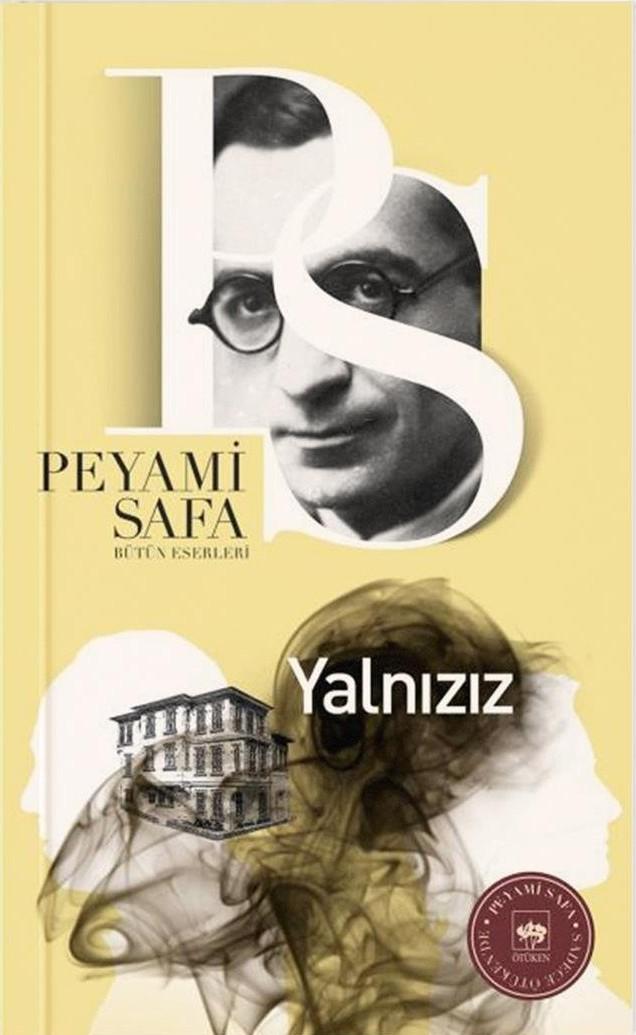
Yalnızız is a significant novel by Peyami Safa, published in 1951 and representing the mature phase of his literary career. The novel has earned a unique place in Turkish literature through its profound exploration of individual inner conflicts, the impact of social change, and the East-West dichotomy.
First serialized in 1950 in the newspaper Yeni İstanbul, Yalnızız was published as a book in 1951. As Safa’s final novel, it embodies the culmination of his intellectual and literary achievements. The novel delves deeply into the protagonist’s sense of loneliness, internal struggles, and the effects of social transformation on the individual.
The novel centers on the inner world of Samim, an idealistic writer, and the lives of the characters surrounding him. Samim retreats into a fictional country he calls Simeranya, escaping the disappointments of the real world. This utopia is depicted as a world where the conflicts between East and West have ended and falsehood does not exist.
The novel thoroughly examines the individual’s sense of loneliness, existential questioning, and conflicts with societal values. The characters’ inner worlds clash with societal expectations, intensifying their feelings of isolation and inner unrest.
The most prominent themes include:
Loneliness and Inner Conflict: The novel places at its core the inner struggles and sense of isolation experienced by the protagonist Samim. This loneliness is portrayed through the individual’s alienation and dissonance with a modernizing society.
East-West Opposition: As in many of Peyami Safa’s works, the conflict between Eastern and Western cultures is addressed. However, Yalnızız does not treat this merely as a cultural issue but also as a moral and intellectual one.
Morality, Conscience, and Metaphysical Search: Throughout the novel, characters confront moral dilemmas that reflect the author’s attempt to synthesize Islamic ethics, Western philosophy, and individual conscience. Samim’s imaginary land of Simeranya can be interpreted as an allegory of this metaphysical quest.
Yalnızız possesses a rich narrative structure. The novel is told from a third-person perspective but frequently employs interior monologues and stream-of-consciousness techniques to convey the characters’ inner worlds and psychological states.
The novel is divided into three main sections, each focusing on the lives and internal conflicts of different characters. This structure supports the thematic depth and character development of the novel.
Formally, Yalnızız is divided into three parts. Although each section centers on a different character and plotline, they all converge around the central theme of loneliness. Peyami Safa departs from classical narrative structures by incorporating modernist techniques:
Interior monologues and stream-of-consciousness methods are used to explore the psychological depth of the characters. Symbolism is employed extensively. Contrasts such as “Simeranya,” “light-dark,” and “East-West” carry ideological weight in the narrative. The novel also has a didactic quality; the author frequently uses characters’ voices to directly express his own ideas.
The characters in the novel are allegorical, each representing a specific intellectual or social viewpoint:
Samim: An intellectual, thinker, and morally conscious individual who embodies resistance against societal corruption.
Mürşit: Samim’s brother; represents positivist and materialist thought. He is indifferent to moral norms.
Selmin: A confused young woman caught between two worlds; a psychological manifestation of the East-West conflict.
Meral: Symbolizes societal pressures on women. Her identity is constructed through issues of womanhood, love, and belonging.
The novel addresses not only the individual’s inner world but also the social structure of the era, including questions of female identity, urbanization, and moral decay. The crises and fractures experienced by the characters are both personal and collective in nature.
Safa’s critique of Westernization is clearly evident throughout the text. However, this critique does not rest on a purely traditionalist stance; the author advocates a synthesis that harmonizes Western scientific progress with Eastern spiritual values.
Yalnızız offers a profound exploration of the individual’s sense of loneliness, conflicts with societal values, and internal questioning. By addressing themes such as the East-West dichotomy, the individual’s place in society, and women’s social roles, the novel provides a critical perspective on the social and cultural fabric of its time. Peyami Safa’s novel Yalnızız has secured an important place in Turkish literature through its deep examination of the individual’s inner world, conflicts with societal values, and the experience of loneliness. With its narrative techniques, psychological depth, and thematic richness, it is a work worthy of literary and sociological analysis.

No Discussion Added Yet
Start discussion for "We Are Alone (Book)" article
Subject and Thematic Structure
Narrative Techniques and Structure
Structural Features
Character Cast and Symbolic Meanings
Social and Philosophical Dimensions
Thematic Depth and Literary Value