


This article was automatically translated from the original Turkish version.
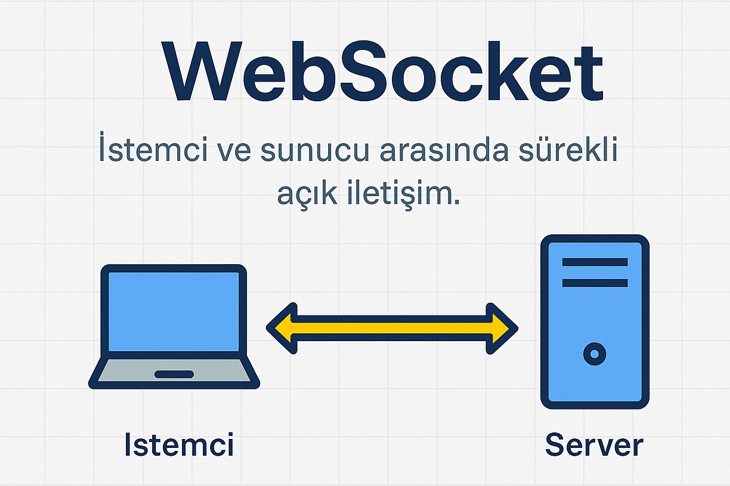
WebSocket is an internet protocol that enables low-latency, full-duplex communication between a client and a server. Unlike the HTTP protocol, it allows data exchange over a persistent TCP connection. This feature has made WebSocket the preferred communication method for applications requiring real-time data updates and interactive communication.
WebSocket generates less network traffic and offers lower latency compared to traditional HTTP polling and long polling methods. WebSocket technology provides efficient data communication in applications such as the Internet of Things (IoT), online games, instant messaging systems, and live streaming platforms. This protocol was developed as a suitable solution for scenarios requiring low bandwidth usage and high efficiency.
The WebSocket protocol consists of two main stages: connection establishment and data transmission. This structure enhances data transmission efficiency by maintaining a persistent connection.
WebSocket communication begins with a traditional HTTP request. The client sends an HTTP "Upgrade" request to upgrade the existing connection to the WebSocket protocol. When the server accepts this request, a persistent TCP-based connection is established. This process involves the following steps:
After this stage, communication becomes fully duplex and continuous, eliminating the need to establish a new TCP connection for each message.

WebSocket Architecture (drawn by YZ)
After the connection is established, communication between the client and server occurs in the form of frames over the TCP connection. WebSocket supports both text (UTF-8 encoded) and binary data transmission. Additionally, ping-pong mechanisms are used during the connection to ensure data integrity.
WebSocket increases communication efficiency by establishing a direct, persistent channel between the client and server. Unlike traditional HTTP methods, the protocol avoids repeating header information with each message transmission.
The WebSocket client initiates the connection. The server accepts the client’s Upgrade request and prepares the environment necessary for data transmission. This communication model significantly reduces network load for systems with limited resources, such as IoT devices.

The process of full-duplex data transmission over a persistent TCP connection between client and server is shown schematically. (Drawn by YZ)
The performance of the WebSocket protocol offers distinct advantages compared to HTTP polling and long polling methods.
Experimental studies have determined that WebSocket’s message transmission latency is three times lower than that of HTTP polling methods. WebSocket provides a significant advantage in applications requiring high-frequency data transmission, such as sensor data transfer.
In addition to low latency, WebSocket offers high throughput. Experiments have shown that the WebSocket protocol can process more data than other methods, particularly with small data payloads.
WebSocket usage results in energy savings, especially on devices with limited resources. Since HTTP polling requires establishing a new connection for each message, WebSocket’s persistent connection structure achieves lower energy consumption.
The WebSocket protocol is widely used in the following areas:

Some use cases of WebSocket (drawn by YZ)
In these areas, the advantages offered by WebSocket—low latency, reduced network load, and energy efficiency—are decisive factors.

Structure of the WebSocket Protocol
Connection Setup (Handshake)
Data Transmission
WebSocket Architecture
Client-Server Model
WebSocket Performance
Latency
Throughput
Energy Consumption
WebSocket Use Cases