

This article was automatically translated from the original Turkish version.
Weight(s) | 10.3–23 g | ||||||||
|---|---|---|---|---|---|---|---|---|---|
Family | Hirundinidae | ||||||||
Conservation Status | LC (Least Concern)-IUCN | ||||||||
Egg Count | 1–7 individuals | ||||||||
Incubation Period | 14–16 days | ||||||||
Wingspan | 26–29 cm | ||||||||
Genus | 13–14 cm | ||||||||
Class | Aves | ||||||||
Realm | Animalia | ||||||||
Order | Chordata | ||||||||
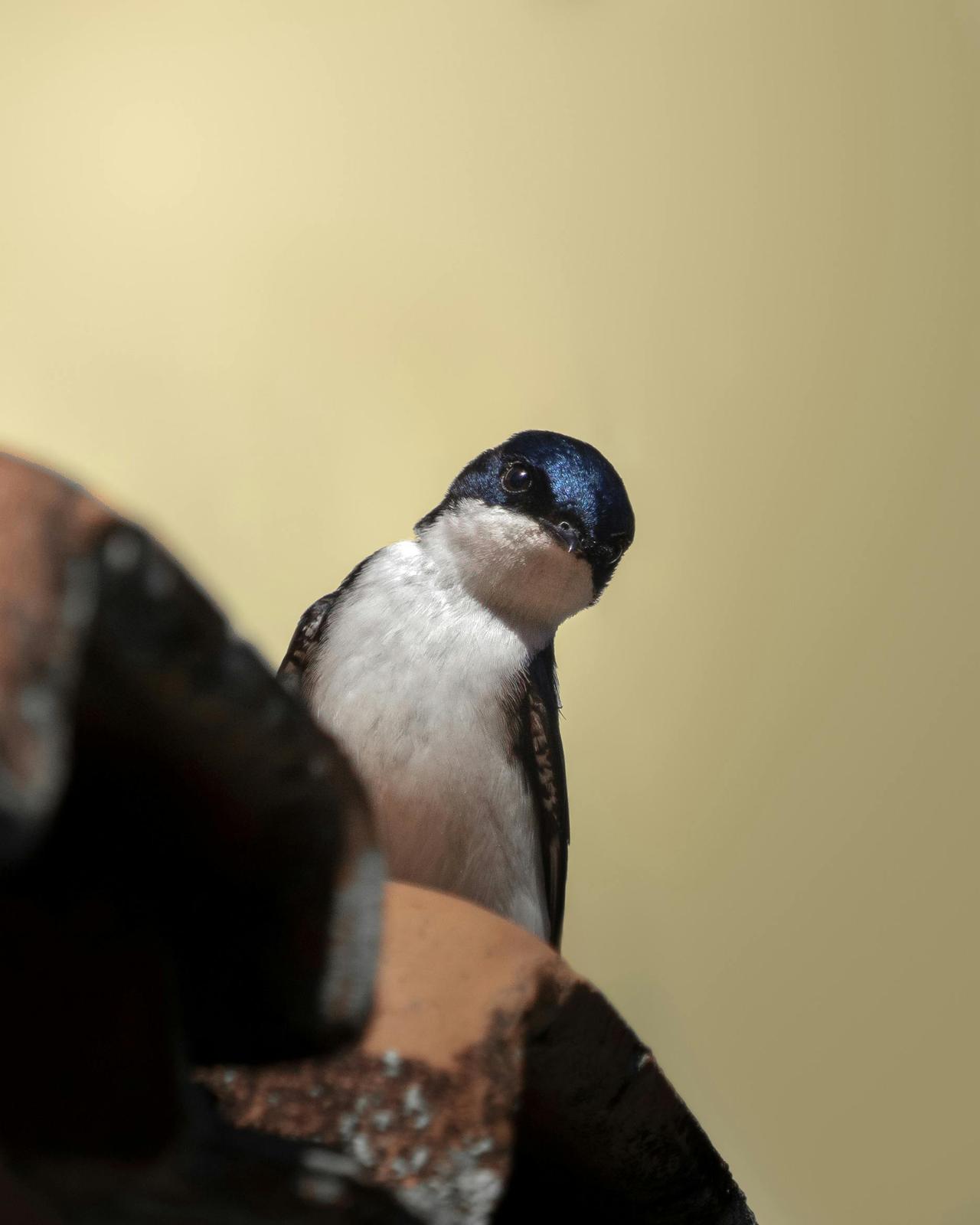
House Martin (Delichon urbicum) is a migratory bird species belonging to the family Hirundinidae. It breeds in temperate regions of Europe, North Africa and Asia, and spends the winter months in Sub-Saharan Africa and tropical Asia. In Türkiye it is one of the most common summer migrants and passage species. The species is recognized by its dark bluish-black upperparts, entirely white underparts and broad white rump. It builds its nests from mud on buildings bridges caves and rock faces.
The House Martin is a bird species within the family Hirundinidae of the order Passeriformes. It was first described in 1758 by Carl Linnaeus under the name Hirundo urbica. It was later reclassified within the genus Delichon. Current taxonomy recognizes two subspecies of the House Martin: D. u. urbicum and D. u. meridionale. Previously considered a subspecies of the same species D. lagopodum is now regarded by some recent sources as a separate species the Siberian House Martin.
The House Martin (Delichon urbicum) is a small bird measuring 13–14 cm in length weighing 10.3–23 g and with a wingspan of 26–29 cm. During the breeding season the upperparts and crown of males are glossy blue-black. The rump is white and in some individuals white feather bases may be visible on the nape. The wings and tail are black and the tail is moderately forked. The underparts are entirely white and the legs are covered with white feathers.
Outside the breeding season the white rump is accompanied by brownish-grey speckling on the face sides throat and flanks. Females have more greyish underparts than males. Juveniles are paler and browner with less prominent blue gloss and shorter tails. The bill is short and broad.
The House Martin (Delichon urbicum) is widely distributed across temperate regions of Europe North Africa and Asia. During the breeding season it occurs throughout much of Europe some parts of the Middle East and northern Asia. It has a broad range extending as far as western Siberia. In Türkiye it is a common summer migrant and passage species found throughout the country with breeding records in various regions including along the coastline.
In winter the species migrates to Sub-Saharan Africa and tropical Asia. Populations in southern Europe North Africa and western and central Asia also move to Africa and southwest Asia for the winter. Occasional wintering records exist in some regions.
Its habitat includes open areas coastal cliffs agricultural land and human settlements. It lives in colonies in cities villages farms and small settlements. Nests are built on building exteriors bridges caves quarries and rock faces. Nests are typically constructed from mud on vertical surfaces with a small entrance opening at the top.
The House Martin is a social bird that is active throughout the day and usually occurs in flocks. During the breeding season it lives in colonies which typically contain more than ten pairs but sometimes form much larger groups. Individuals build nests close together and exhibit a tight social structure within the colony.
The species is fast and agile in flight frequently flapping its wings rapidly making sharp turns and gliding for extended periods. During foraging it may dive glide or spiral in flight. It typically feeds at high altitudes but may forage at lower heights near its nest. It can travel up to approximately 2 km while foraging.
The House Martin is almost entirely insectivorous. Its diet consists mainly of small insects caught in flight particularly flies (Diptera) and aphids. Ants various other insect groups and other small flying insects are also part of its diet. In exceptional cases it may feed on small fruits.
The species primarily forages while flying. It is sometimes observed feeding alongside other aerial insectivores. Feeding usually occurs at high altitudes averaging 21 m during the breeding season and exceeding 50 m in wintering areas. Occasionally it lands on the ground rocks or vegetation to pick up insects. In agricultural areas it follows plows and large animals to catch insects stirred into the air.
The House Martin exhibits a socially monogamous breeding system. During the breeding season it lives in colonies and nests are typically built close together.
The breeding period varies by region. In northwestern and central Europe egg laying begins in May while in northern and northeastern Europe it occurs from late May to June. In southern Spain and North Africa it starts between March and May. In northern India and surrounding areas breeding occurs in June–July. The breeding season generally lasts until August–September or October and most individuals raise two broods per year.
The nest is built by both partners using mud pellets and takes on average 8–18 days (average 10.4 days) to complete. The nest is a closed structure with a small entrance at the top. Nests are usually attached to the exterior surfaces of buildings under bridges or on rock faces; occasionally natural cliffs caves and rarely trees are used. Old nests may be reused.
Incubation lasts approximately 14–16 days; some local studies report a range of 13–19 days. Chicks typically leave the nest after approximately 3–4 weeks. The fledging period lasts 22–32 days. After fledging the young return to the nest for several nights and continue to be fed by their parents.
The House Martin (Delichon urbicum) is classified as Least Concern (LC) on the IUCN Red List.
The population trend is described as stable. The global estimated number of mature individuals ranges between 38.3 million and 80.2 million.【1】
Birds of the World. "Common House Martin (Delichon urbicum) – Introduction." Cornell Lab of Ornithology. Accessed May 8, 2026. https://birdsoftheworld.org/bow/species/comhom1/cur/introduction
International Union for Conservation of Nature (IUCN). “Delichon urbicum (Northern House Martin).” *The IUCN Red List of Threatened Species.* Accessed May 8, 2026. https://www.iucnredlist.org/species/103811886/264561964
Ornito. "Ev Kırlangıcı." *Ornito Kuş Atlası.* Accessed May 8, 2026. https://ornito.org/Bird/Detail/177.
TRAKUS. "Ev Kırlangıcı (Hirundo rustica)." *TRAKUS Kuş Veritabanı.* Accessed May 8, 2026. https://www.trakus.org/kods_bird/uye/?fsx=2fsdl17@d&tur=Ev%20kırlangıcı.
Yonamine, Neil. “Common House Martin Near Yellow Wall.” Pexels. Accessed May 8, 2026. https://www.pexels.com/photo/common-house-martin-near-yellow-wall-13524081/.
[1]
International Union for Conservation of Nature “Delichon urbicum (Northern House Martin)” The IUCN Red List of Threatened Species Accessed 8 May 2026 https://www.iucnredlist.org/species/103811886/264561964


Weight(s) | 10.3–23 g | ||||||||
|---|---|---|---|---|---|---|---|---|---|
Family | Hirundinidae | ||||||||
Conservation Status | LC (Least Concern)-IUCN | ||||||||
Egg Count | 1–7 individuals | ||||||||
Incubation Period | 14–16 days | ||||||||
Wingspan | 26–29 cm | ||||||||
Genus | 13–14 cm | ||||||||
Class | Aves | ||||||||
Realm | Animalia | ||||||||
Order | Chordata | ||||||||
No Discussion Added Yet
Start discussion for "Western House Martin (Delichon urbicum) " article
Taxonomy
Morphological Characteristics
Distribution and Habitat
Behavior and Ecology
Diet
Breeding
Conservation Status