


This article was automatically translated from the original Turkish version.
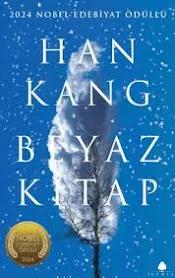
White Paper
White Book (Book)
Original Name(s) | White (Heuin – The White Book) | ||||||||
|---|---|---|---|---|---|---|---|---|---|
Publisher(s) | April Yayıncılık | ||||||||
Year of Publication | 2016 (South Korea), 2017 (English translation), 2019 (Turkish translation) | ||||||||
Type(s) | lyrical narrative autobiographical fiction Essay-novel | ||||||||
Number of Pages | 160 | ||||||||
Han Kang’s work White Book stands out among the poetic and experimental narratives of contemporary South Korean literature. In this book, the author explores themes of death, grief, memory, and rebirth, both on a personal and universal level. The book is not a novel in the classical sense; rather, it resembles an internal monologue and meditation unfolding through fragmented prose, centered around white-colored objects and images.
White Book is dedicated to the author’s sister, who died before birth. Han Kang conveys the emotional traces left by this early loss through short sections built around white-colored objects. Ordinary items such as snowflakes, white rice, salt, milk, and thread serve as conduits for establishing connections between life, death, and remembrance. The narrator remains nameless for the majority of the book, and the setting is a gray, cold European city. This spatial alienation underscores the universality of grief while simultaneously mirroring the narrator’s inner journey.
White Book rejects classical narrative structures. Its sections are brief, intense, and poetic. Visual gaps, paragraph breaks, and pages consisting of a single sentence slow down the reading experience and invite contemplation. This form intensifies the emotional weight of the content.
Han Kang’s White Book draws attention as a quiet, introspective work distant from grand events or dramatic storytelling. While using white objects to recount a lost life, the author also interrogates the ways in which humans cope with sorrow. The book guides the reader on an emotional and intellectual journey, prompting reflection on the meaning of confronting death, mourning, and beginning anew.
Han, Kang. Beyaz Kitap. Çev. Gülin Değer. İstanbul: April Yayıncılık, 2019.

White Paper
White Book (Book)
Original Name(s) | White (Heuin – The White Book) | ||||||||
|---|---|---|---|---|---|---|---|---|---|
Publisher(s) | April Yayıncılık | ||||||||
Year of Publication | 2016 (South Korea), 2017 (English translation), 2019 (Turkish translation) | ||||||||
Type(s) | lyrical narrative autobiographical fiction Essay-novel | ||||||||
Number of Pages | 160 | ||||||||
Subject and Structure
Themes
Style and Form