

This article was automatically translated from the original Turkish version.
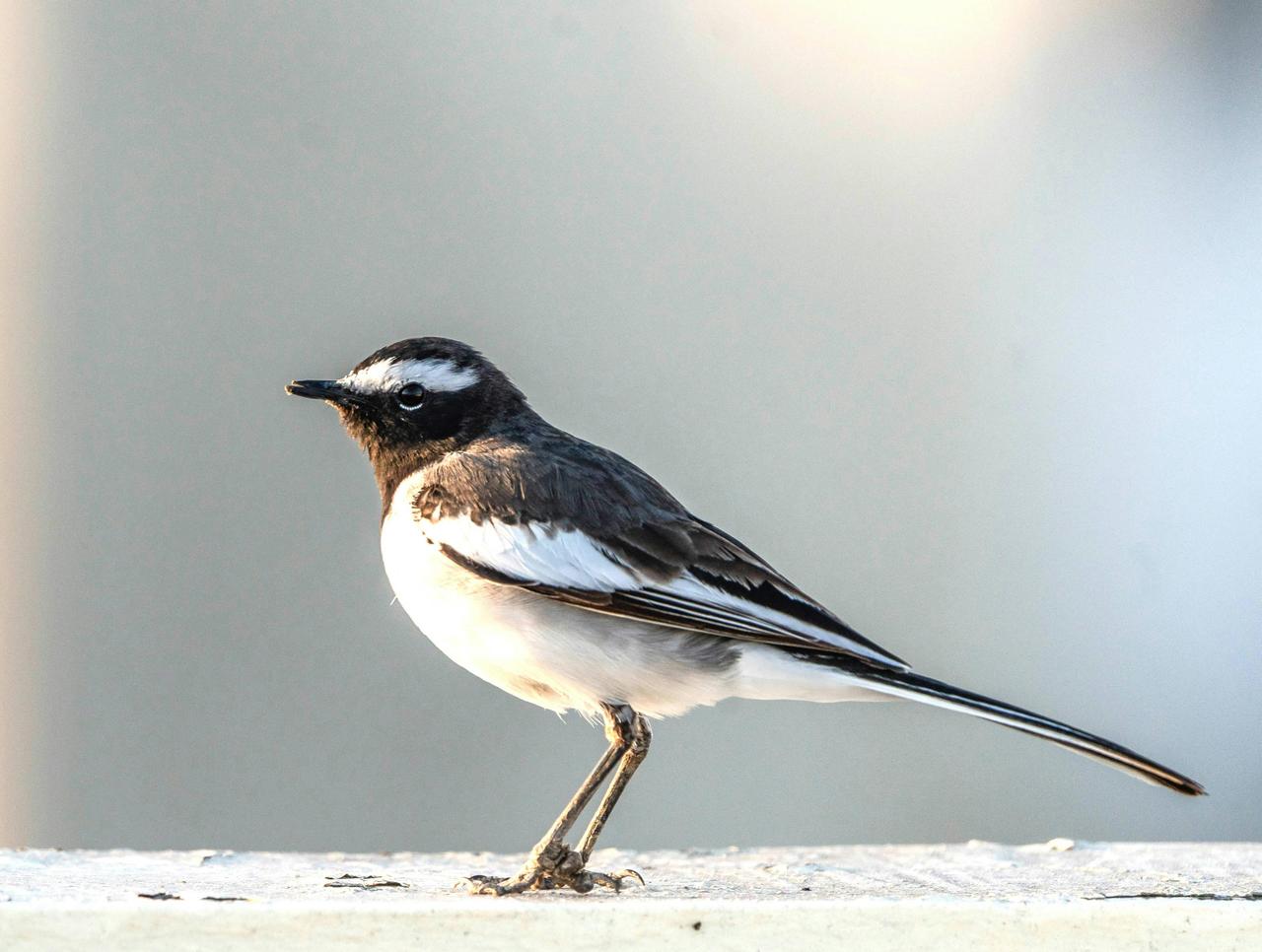
The white wagtail (Motacilla alba) is a slender, small songbird species found across Europe, most of Asia and northern Africa. This species measures approximately 18 centimetres in length and is recognized by its plumage dominated by black, white and grey colours.
The wingspan ranges from 23 to 30 centimetres and body weight varies between 18 and 27 grams. The white wagtail’s key physical features include a head with black and white markings, a black breast, a grey back and a long tail that is characteristic of the species and is constantly bobbed up and down. The majority of the tail feathers are black with white outer feathers. The external appearance of the birds varies according to the breeding season, sex and age. During the breeding season the forehead cheeks and sides of the neck are white while the crown nape and breast are black. Outside the breeding season only a narrow black band remains between the breast and nape. Females resemble males morphologically but their colours are duller; the black on the breast covers a narrower area and there is no black on the nape. Juveniles and birds in winter plumage have paler underparts and a distinct black half-moon shaped collar pattern on the breast.
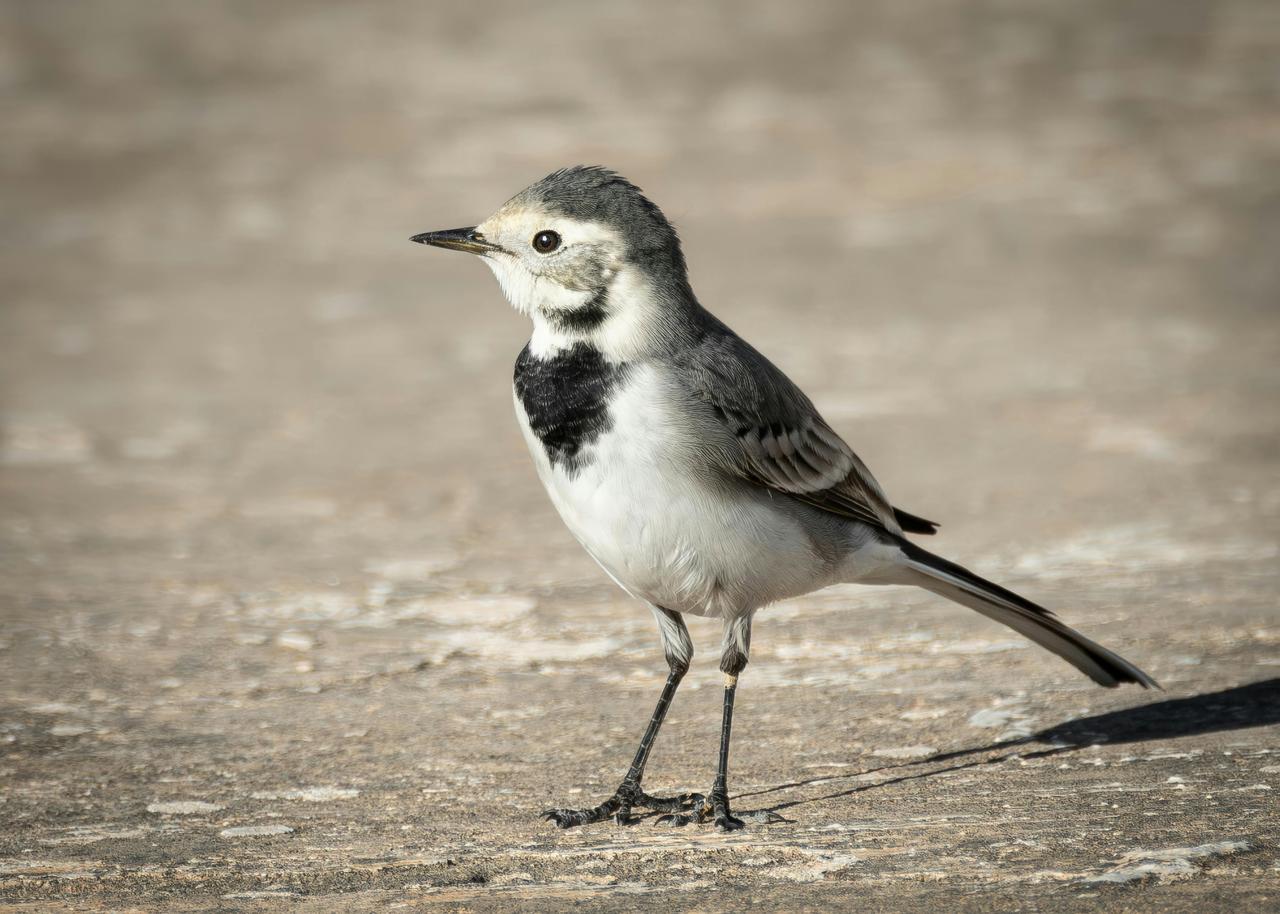
Ak kuyruksallayan (Motacilla alba) (pexels)
This species is widespread across Eurasia and northern Africa in almost all open and semi-open habitats excluding deserts. In North America it occurs only as a limited summer migrant in western Alaska. In Türkiye it is a resident species over much of the country but is a summer migrant in northern Eastern Anatolia and a winter migrant east of southeastern Anatolia. Ecologically it prefers river and lake shores beaches agricultural fields and open non-forested areas. It has also adapted well to human-modified environments and can be found near water in town and city centres.
Its diet consists primarily of insects and for this reason it is classified as an insectivorous species. The bird forages in open areas near water feeding on flies crane fly larvae caterpillars moths and various other insects. It is also known to consume spiders earthworms very small fish and seeds occasionally. While foraging it walks on the ground gathers food and makes sudden sprints or leaps into the air to catch prey. Its flight pattern is undulating and while flying it frequently emits a metallic two-syllable call with emphasis on the second syllable “tsi-lit” or “şisik”. The function of its most characteristic behaviour—the constant tail-bobbing—is thought to serve to distract prey intimidate other birds in its territory and signal constant vigilance to potential predators.
White wagtails adopt a monogamous breeding system and defend their nesting territory. During courtship rituals the male raises its bill to display the black throat patch runs in zigzags around the female lowers and spreads its tail to perform pronounced bending postures. The breeding season spans from April to August across its range. The cup-shaped nest is built by both males and females using grass leaves and fine twigs and is placed in crevices among stones by riverbanks in building cavities on roofs or in stone wall holes. The female lays three to eight eggs (typically four to six) that are approximately 20 by 15 millimetres in size and weigh 2.3 grams each. The eggs are pale white with fine grey or brown spots. Incubation lasts 12 to 13 days and is carried out by both parents with the female spending more time on the nest. After hatching the chicks are fed jointly by both parents and fledge after 11 to 16 days. For about a week after fledging the young continue to be fed by their parents before becoming fully independent and capable of finding their own food.
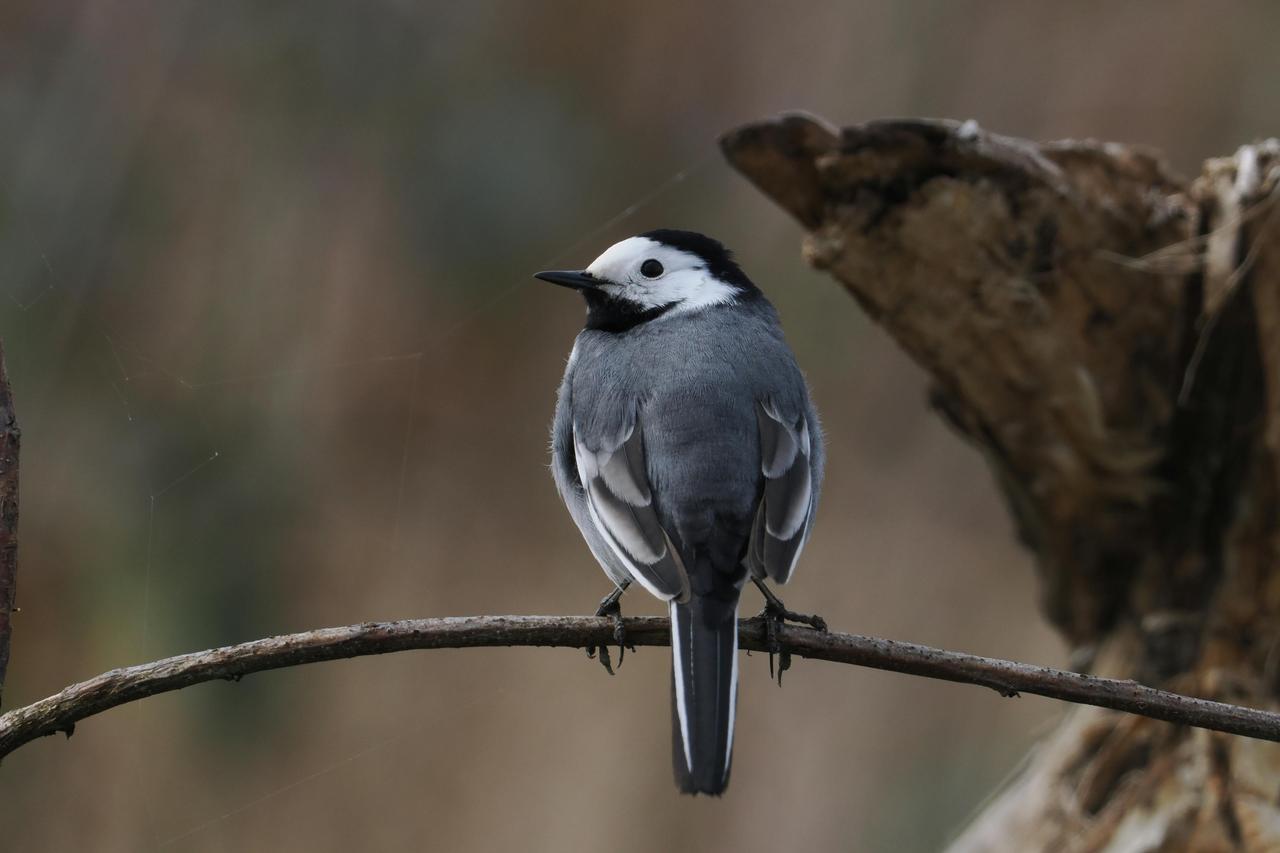
Ak kuyruksallayan (Motacilla alba) (pexels)
This species is highly adaptable to human-induced environmental changes and habitat modifications and maintains a robust and widespread population across the majority of its range. Due to its extensive distribution and stable population status it is listed as “Least Concern” (LC) on the International Union for Conservation of Nature (IUCN) Red List of Threatened Species.
Audubon. "White Wagtail." Audubon Field Guide. Accessed April 29, 2026. https://www.audubon.org/field-guide/bird/white-wagtail
ORNİTO.ORG. "Ak Kuyruksallayan." Ornito. Accessed April 29, 2026. https://www.ornito.org/Bird/Detail/28
Pexels. "Doğal Yaşam Alanındaki Beyaz Kuyruksallayanın Yakın Çekimi." Accessed April 29, 2026. https://www.pexels.com/tr-tr/fotograf/dogal-yasam-alanindaki-beyaz-kuyruksallayanin-yakin-cekimi-31212068/
Pexels. "Su Kenarında Beyaz Kuyruksallayan." Accessed April 29, 2026. https://www.pexels.com/tr-tr/fotograf/31235608/
Pexels. “Oldendorf'ta Bir Dalda Tüneyen Beyaz Kuyruksallayan.” Accessed April 29, 2026. https://www.pexels.com/tr-tr/fotograf/oldendorf-ta-bir-dalda-tuneyen-beyaz-kuyruksallayan-31703267/
eBird. "Ak Kuyruksallayan." eBird. Accessed April 29, 2026. https://ebird.org/species/whiwag
İZKUŞ. "Ak Kuyruksallayan." T.C. İzmir Kuş Cennetini Koruma ve Geliştirme Birliği. Accessed April 29, 2026. https://izmirkuscenneti.gov.tr/2022/12/05/ak-kuyruksallayan/

No Discussion Added Yet
Start discussion for "White wagtail (Motacilla alba)" article
Physical Characteristics
Distribution and Habitat
Feeding and Behaviour
Reproductive Biology
Population and Conservation Status