


This article was automatically translated from the original Turkish version.
+2 More
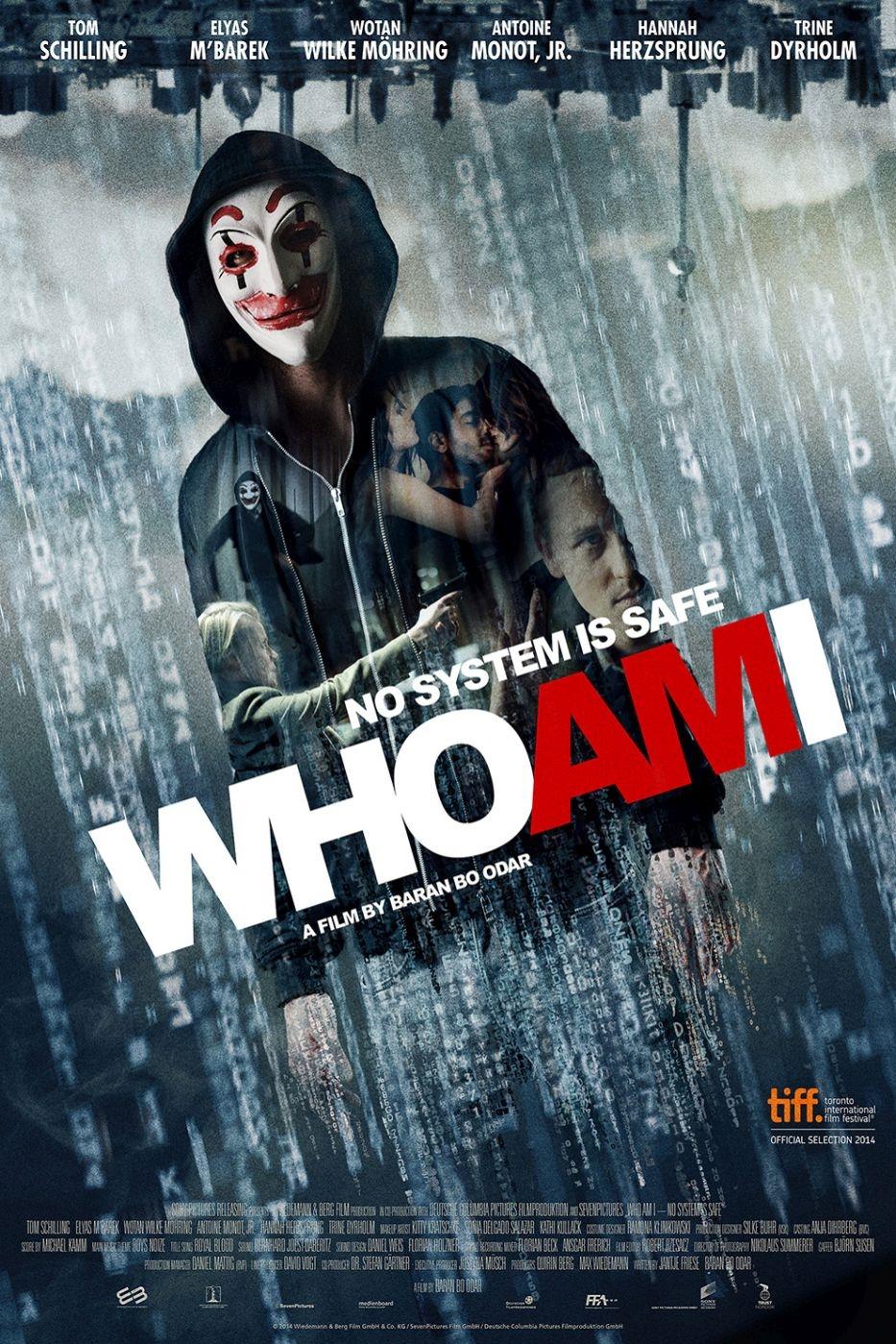
Who Am I? Movie Poster
English Name | Who Am I: No System Is Safe | ||||||||
|---|---|---|---|---|---|---|---|---|---|
German Name | Who Am I – Kein System ist sicher | ||||||||
Director(s) | Baran bo Odar | ||||||||
Release Date(s) | 25 September 2014 (Germany) | ||||||||
Screenplay(s) | Jantje Friese Baran bo Odar | ||||||||
Duration | 105 minutes | ||||||||
Language(s) | German | ||||||||
Music(s) | Michael Kamm | ||||||||
Cinematographer(s) | Nikolaus Summerer | ||||||||
Editing | Robert Rzesacz | ||||||||
Main Actors | Trine Dyrholm (Hanne Lindberg) Elyas M’Barek (Max) Tom Schilling (Benjamin Engel) | ||||||||
Who Am I – Kein System ist sicher is a 2014 German cyber tension film directed by Baran bo Odar. The production explores themes of identity, visibility, and affiliation like through the story of a hacker group. Film and technology offer a multilayered narrative on the individual’s relationship with society and self in the digital age.
The film unfolds from the perspective of Benjamin Engel (Tom Schilling), a socially isolated and introverted young man. Driven by his fascination with computer systems, Benjamin turns to illegal activities and joins CLAY, an underground hacker group, upon the invitation of Max (Elyas M’Barek). The group quickly gains notoriety in the cyber world through their bold actions. However, their rising fame makes them targets for both law enforcement agencies and the underground hacker community. The story is told through flashbacks triggered by Benjamin’s testimonies to the Cyber Crime Unit.

The film centers on the gap between invisibility in the real world and visibility in the digital realm. Benjamin’s marginalized identity in reality transforms into a respected position online. This contrast underscores that identity is not fixed but shaped by context and perception.
The film does not limit hacking to technical skills alone. It emphasizes that psychological elements such as deception and manipulation are just as decisive as digital vulnerabilities. The focus is on human weaknesses rather than system flaws.
The formation of the CLAY group serves as a compelling example of how the desire for social acceptance shapes behavior. The characters define themselves as part of a collective, turning the group into a space that compensates for individual shortcomings.
The film adopts a non-linear narrative structure. The story is constructed through flashbacks triggered by Benjamin’s official testimony.
The visual design is dominated by gray and blue tones. This color palette aims to reflect the cold and anonymous nature of the digital world. Code flows, data visualizations, and holographic effects transform the virtual realm into a cinematic language.

A highly intelligent but socially alienated character. His desire to be seen in the virtual world is the primary motivation behind his actions. His perception of reality gradually becomes blurred throughout the film.
A charismatic and extroverted figure. In contrast to Benjamin, he excels in social interactions. He represents the group’s outward-facing face and assumes a leadership role.
An experienced official with the European Cyber Crime Unit. She plays a central role in the investigative strand of the narrative. Her rational and detached approach embodies the ethical and legal dimensions of the film.
The film was shot in Germany under the direction of Baran bo Odar. The screenplay was written by Baran bo Odar and together Jantje Friese. Producers are Quirin Berg, Max Wiedemann and Justyna Muesch.
The film’s original score was composed by Michael Kamm. Cinematography is by Nikolaus Summerer and editing by Robert Rzesacz. The film premiered in Germany on 25 September 2014. With a total runtime of 105 minute, it was produced in German.
With its exploration of themes such as digital identity, belonging and visibility within the context of cybercrime, the film stands out in contemporary cinema for its technical and structural innovation. Its narrative structure, visual language and thematic depth position it as an original work both within its genre and more broadly. This approach has earned it favorable reception from audiences and critics alike.
Beyazperde. "Ben Kimim?." Beyazperde. Accessed April 20, 2025. https://www.beyazperde.com/filmler/film-184748/.
IMDb. "Who Am I – Kein System ist sicher (2014)." Accessed April 20, 2025. https://www.imdb.com/title/tt3042408/.
Rotten Tomatoes. "Who Am I: Kein System ist Sicher." Accessed April 20, 2025. https://www.rottentomatoes.com/m/who_am_i_kein_system_ist_sicher.
Sinemalar. "Who Am I." Sinemalar.com. Accessed April 20, 2025. https://www.sinemalar.com/film/84185/whoami.

Who Am I? Movie Poster
English Name | Who Am I: No System Is Safe | ||||||||
|---|---|---|---|---|---|---|---|---|---|
German Name | Who Am I – Kein System ist sicher | ||||||||
Director(s) | Baran bo Odar | ||||||||
Release Date(s) | 25 September 2014 (Germany) | ||||||||
Screenplay(s) | Jantje Friese Baran bo Odar | ||||||||
Duration | 105 minutes | ||||||||
Language(s) | German | ||||||||
Music(s) | Michael Kamm | ||||||||
Cinematographer(s) | Nikolaus Summerer | ||||||||
Editing | Robert Rzesacz | ||||||||
Main Actors | Trine Dyrholm (Hanne Lindberg) Elyas M’Barek (Max) Tom Schilling (Benjamin Engel) | ||||||||
Synopsis
Thematic Structure
Identity and Virtual Self
Information Security and Social Engineering
Group Dynamics and the Search for Belonging
Narrative Structure and Cinematography
Fictional Structure
Visual Elements
Character Analyses
Benjamin Engel (Tom Schilling)
Max (Elyas M’Barek)
Hanne Lindberg (Trine Dyrholm)
Production Information
Main Cast