


This article was automatically translated from the original Turkish version.
+2 More
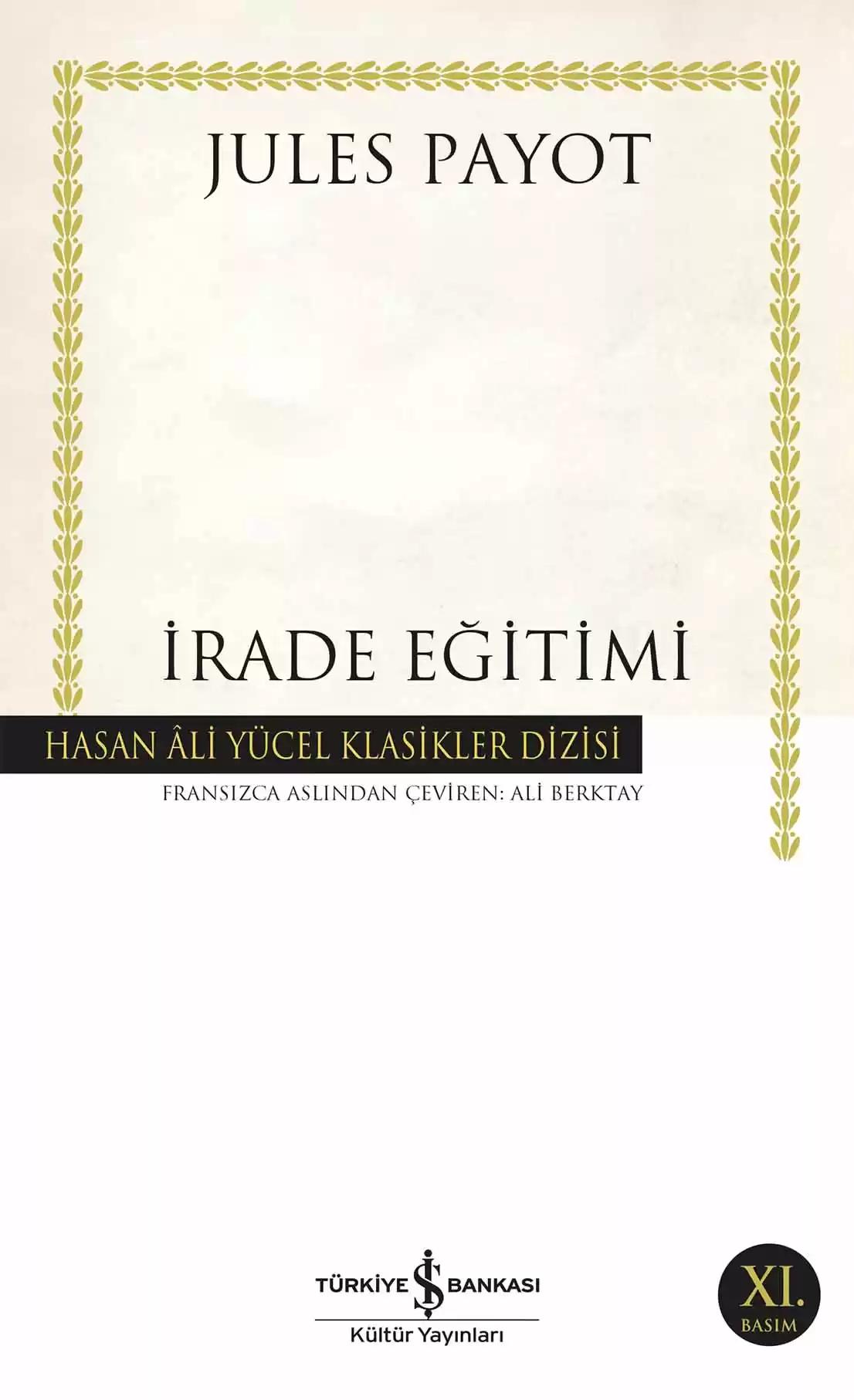
Willpower Training (Book)
Author(s) | Jules Payot | ||||||||
|---|---|---|---|---|---|---|---|---|---|
Publisher(s) | Türkiye İş Bankası Kültür Yayınları | ||||||||
Publication Year | 2021 | ||||||||
Language(s) | Turkish (translated from French) | ||||||||
Number of Pages | 260 | ||||||||
The Education of the Will is a work on personal development, moral philosophy, and pedagogy written by French educator and philosopher Jules Payot, focused on shaping the individual’s character. Originally titled L’Éducation de la Volonté, the book was first published in 1894 and has since become a classic.
The central argument of the book rests on the pivotal role of willpower in human life. According to Payot, an individual’s success in life depends not only on mental and moral discipline but also on the ability to train the will. Will is not a fixed innate talent; it is a force that can be developed through habits, purposeful living, self-control, and education.
One of the greatest obstacles to willpower training is laziness. Payot emphasizes that young people’s tendency to pursue short-term pleasures weakens the will. He argues that a person who surrenders to pleasure loses their freedom and becomes a slave to others or to their own desires.
“A man cannot be master of his will while he is a slave to pleasures. Addiction to pleasure chains the soul.”
The book’s most prominent thesis is that the will is not fixed at birth but can be strengthened through systematic effort. Payot contends that the will functions like a muscle—it grows stronger with use and weakens with neglect. This perspective aligns closely with contemporary behavioral science.
“The will is like a muscle; it develops through use and deteriorates through neglect.”
According to Payot, habits play a crucial role in the education of the will. An individual’s character is formed by the accumulation of repeated, small, yet consistent behaviors. Good habits form the foundation of a strong will.
“Small efforts, when continuously repeated, transform into great character strength.”
The book emphasizes not only personal achievement but also moral responsibility. Payot argues that education must go beyond the mere transmission of knowledge; it must be completed through character and willpower training.
“A person’s character depends on the quality of their will. Education must nourish not only the intellect but also the soul.”
Purposelessness is one of the fundamental factors that weaken the will. Payot asserts that an individual must have a clear life purpose, as this purpose focuses and strengthens the will.
“A ship without direction cannot reach any harbor. The will grows with a sense of direction.”
The Education of the Will is a seminal work that serves as a guide especially for young people, students, and educators. Written by French thinker Jules Payot, the book has been recognized as a classic since its publication and has been translated into many languages, becoming an important resource in education and personal development worldwide. Payot argues that individuals develop not only through intellect but also through moral values and willpower. Through this approach, the work draws attention to the importance of personal discipline and character education.
Payot, Jules. L’Éducation de la Volonté. Paris: Félix Alcan, 1894.
Payot, Jules. İrade Eğitimi. Çev. Ali Berktay. İş Bankası Kültür Yayınları, 2021.

Willpower Training (Book)
Author(s) | Jules Payot | ||||||||
|---|---|---|---|---|---|---|---|---|---|
Publisher(s) | Türkiye İş Bankası Kültür Yayınları | ||||||||
Publication Year | 2021 | ||||||||
Language(s) | Turkish (translated from French) | ||||||||
Number of Pages | 260 | ||||||||
No Discussion Added Yet
Start discussion for "Willpower Training (Book)" article
Subject Matter
Key Themes
Struggle Against Laziness and Pleasure Seeking
The Developability of Willpower
The Power of Habits
Mental and Moral Education
Purposeful Living
Impact and Significance