


This article was automatically translated from the original Turkish version.
+1 More
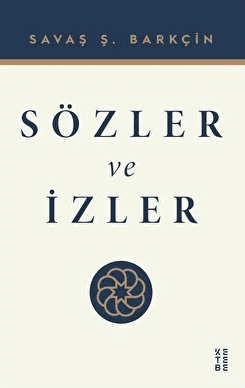
Author(s) | Savaş Ş. Barkçin | ||||||||
|---|---|---|---|---|---|---|---|---|---|
Publisher(s) | Ketebe Yayınevi | ||||||||
Publication Date | 10.03.2023 | ||||||||
Page | 416 | ||||||||
Type(s) | Essay | ||||||||
Words and Traces contains essays spanning a broad spectrum, from human ways of life to cultural codes, from the continuity of tradition to the search for meaning. The book brings together writings on civilization, art, politics, spirituality, and language, offering insights and analyses across various fields. Author invites readers to trace the echoes of the past in today’s world, engaging them in both individual and collective quests for awareness.
The book is composed of essays that, while distinct in focus, converge on a common intellectual foundation. Each essay is presented under its own title and maintains internal coherence. Although metaphorical expression appears at times, the language remains accessible and clear, avoiding academic density.
The book examines the tension and dialogue between traditional thought and modern modes of living. Barkçin argues that tradition is not merely a heritage belonging to the past but also a framework that interprets and guides the present. He emphasizes the danger of modernity severing individuals from their roots.
The author does not limit civilization to physical structures or political institutions. For him, civilization is a holistic world. In the book, particularly within the context of Turk-Islamic civilization, fundamental elements such as the epistemological system, aesthetic dimensions, and human-society relationships are thoughtfully explored.
The transmission and societal impact of values carried from the past to the present are emphasized. Cultural memory serves as a vital element preserving both individual identity and social continuity. The book addresses the mental and spiritual voids that emerge when this memory weakens.
The author treats the individual’s search for truth as a fundamental concern. He discusses how this search is shaped within the triangle of individual-society-state, through the lenses of self-awareness and social responsibility. In the book, truth is linked not only to knowledge but also to lived experience.
The concept of “Word” is central throughout the book. According to Barkçin, speech is not merely a tool of communication but also the carrier of thought, the generator of meaning, and the guide of action. In this context, the simplification, corruption, or loss of meaning in language is regarded as a sign of cultural disintegration.
War Ş. Barkçin, through a thought-oriented perspective rooted in Turk-Islamic civilization, addresses the intellectual fragmentation of the present day. Throughout the book, the interactions between traditional knowledge and contemporary culture are critically examined. The power of speech to leave traces, the language of continuity, and the human quest for meaning occupy a central position. The author frequently employs quotations and comparisons to encourage the reader’s intellectual engagement.
The book belongs to the genre of philosophical essays and aims to examine traditional intellectual heritage alongside contemporary social and cultural issues within a unified framework. Its content focuses on various topics such as Islamic aesthetics, city culture, music, and politics, examining them through their historical backgrounds and contemporary reflections. The essays in the book provide conceptual frameworks relevant to their respective fields and establish an interdisciplinary intellectual foundation at the intersection of multiple disciplines.
Savaş Ş. Barkçin, Sözler ve İzler (İstanbul: Ketebe Yayınevi, 2023).

Author(s) | Savaş Ş. Barkçin | ||||||||
|---|---|---|---|---|---|---|---|---|---|
Publisher(s) | Ketebe Yayınevi | ||||||||
Publication Date | 10.03.2023 | ||||||||
Page | 416 | ||||||||
Type(s) | Essay | ||||||||
No Discussion Added Yet
Start discussion for "Words and Traces (Book)" article
Structural Features
Themes
Relationship Between Tradition and Modernity
Conception of Civilization
Cultural Memory and Transmitted Values
Thought on Truth, the Individual, and Society
The Depth of Language and the Power of Speech
Content Summary
Evaluation in Literary and Intellectual Context