
+2 More

Category | Attack/Bomber Aircraft | ||||||||
|---|---|---|---|---|---|---|---|---|---|
Origin(s) | China (Xian Aircraft Industry Corporation) | ||||||||
Engine(s) | 2 x Xian WS-9 turbofan engines | ||||||||
Crew | 2 persons | ||||||||
Maximum Speed | Mach 1.7 | ||||||||
Length(s) | 22.3 m | ||||||||
Wingspan | 12.7 m | ||||||||
Maximum Take-Off Weight | 28.475 kg | ||||||||
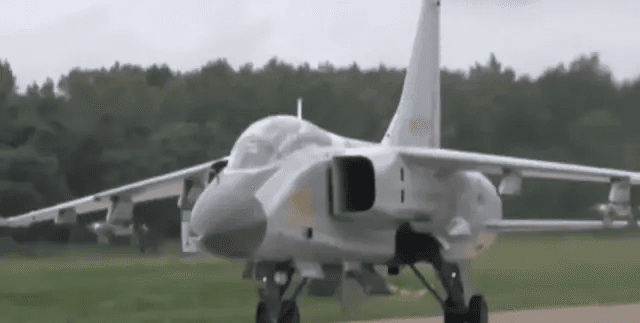
The Xian JH-7 is a twin-engine, two-seat strike/bomber aircraft developed by the Chinese Xian Aircraft Industry Corporation. Designed for the People's Liberation Army Air Force (PLAAF) and Naval Air Force (PLANAF), this aircraft stands out as one of China's first domestically developed fourth-generation combat aircraft. It is also unofficially known by the nickname "Flying Leopard."

Xian JH-7 (Weapon Detective)
The development process for the JH-7 began in the mid-1970s in response to China's need for a domestically designed platform to replace its aging attack aircraft. The design aimed for a structure suitable primarily for low-altitude strike and reconnaissance missions.
The aircraft adopted a conventional high-wing monoplane design. Its two-person cockpit, consisting of a pilot and a weapon systems officer, increases efficiency during long-duration missions by sharing the operational workload. The aircraft's fuselage is aerodynamically shaped to provide low drag.
Xian JH-7 (Weapon Detective)
As a platform in the strike aircraft class, the JH-7 has significant carrying capacity and high speed.
The primary mission of the JH-7 is to conduct long-range, all-weather strike missions, especially against naval targets. It can also be used effectively for attacks against ground targets.
The aircraft has a total of seven hardpoints under its fuselage and wings. Various munitions can be integrated into these points. Its main weapon is the 23 mm GSh-23L automatic cannon located under the cockpit. Other ordnance options include:
Since its development, the JH-7 has been modernized according to operational needs.
Armed Forces. "Xian JH-7." Accessed: October 19, 2025. https://armedforces.eu/air_forces/multirole/Xian_JH-7.
Encyclopedia.pub. "Xian JH-7." Accessed: October 19, 2025. https://encyclopedia.pub/entry/35809
Military Factory. "Xian JH-7 (Flying Leopard)." Accessed: October 19, 2025. https://www.militaryfactory.com/aircraft/detail.php?aircraft_id=1176
Military History Fandom. "Xian JH-7." Accessed: October 19, 2025. https://military-history.fandom.com/wiki/Xian_JH-7
Military Watch Magazine. "The Xian JH-7 Strike Fighter: A Look at China's First Fourth Generation Combat Aircraft." Accessed: October 19, 2025. https://militarywatchmagazine.com/article/the-xian-jh-7-strike-fighter-a-look-at-china-s-first-fourth-generation-combat-aircraft

Category | Attack/Bomber Aircraft | ||||||||
|---|---|---|---|---|---|---|---|---|---|
Origin(s) | China (Xian Aircraft Industry Corporation) | ||||||||
Engine(s) | 2 x Xian WS-9 turbofan engines | ||||||||
Crew | 2 persons | ||||||||
Maximum Speed | Mach 1.7 | ||||||||
Length(s) | 22.3 m | ||||||||
Wingspan | 12.7 m | ||||||||
Maximum Take-Off Weight | 28.475 kg | ||||||||
Design and Development
Structural Features
Technical Specifications
Operational Capabilities and Weapon Systems
Armament and Sensors
Variants and Modernizations
This article was created with the support of artificial intelligence.