This article was automatically translated from the original Turkish version.
+1 More
Location | Yeşilova Türkiye Burdur | ||||||||
|---|---|---|---|---|---|---|---|---|---|
Elevation(s) | 854 m | ||||||||
Surface Area | Variable depending on the season | ||||||||
Lake Type | Saline, shallow, tectonic lake | ||||||||
Prominent Species | Flamingo, red-crested pochard, garganey, sword-billed hummingbird | ||||||||
Threats | Climate change, agricultural water use, habitat loss | ||||||||
Yarışlı Gölü is a shallow, saline, and tectonic lake located within the boundaries of the Yeşilova district in Burdur Province, Türkiye. Situated at an elevation of approximately 854 metres above sea level, the lake lies about 40 km southwest of Lake Burdur and roughly 15 km east of Lake Salda. As a closed basin lake, it serves as an important stopover and feeding site for migratory birds and attracts attention due to its surrounding natural and cultural features.
Yarışlı Gölü is a lake formed by tectonic subsidence and, for most of the year, exists as a shallow, expansive body of water. The lake is not fed directly by any river; its primary sources of water are precipitation, surface runoff, and groundwater inflow. During the hot summer months, high rates of evaporation cause the lake’s surface area to shrink and its salinity to increase. The water exhibits saline and slightly alkaline properties, creating a unique ecological environment within the lake.

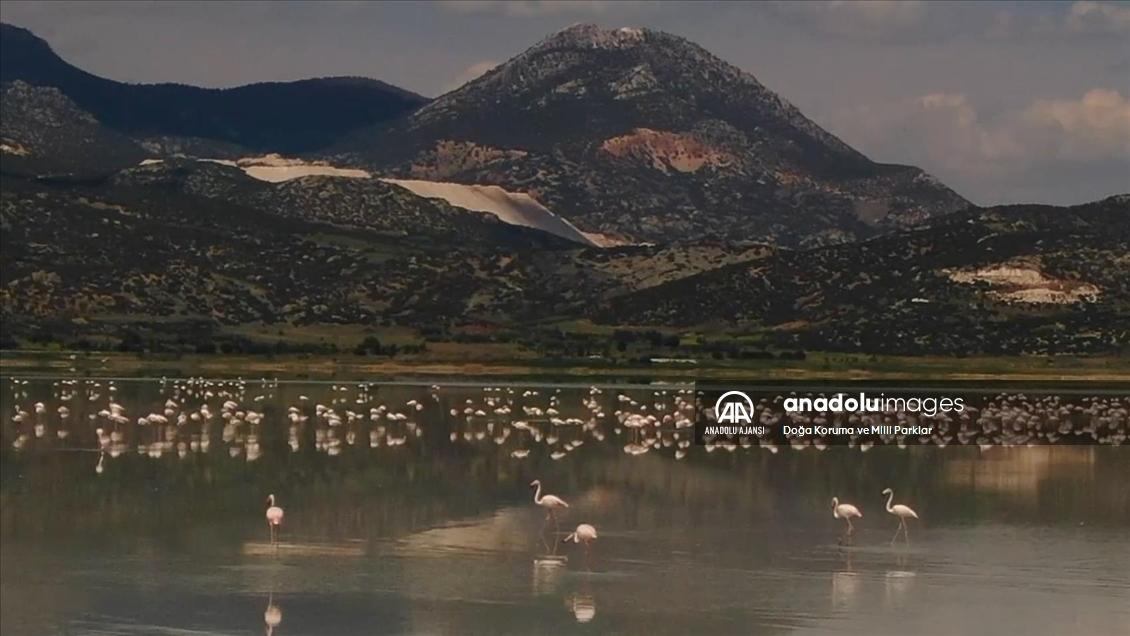
Due to its location along major migratory bird routes, Yarışlı Gölü hosts a wide variety of bird species, particularly during spring and autumn. Major bird species observed in the lake include flamingos (Phoenicopterus roseus), rusty duck (Tadorna ferruginea), white-headed duck (Oxyura leucocephala), and black-winged stilt (Recurvirostra avosetta). According to 2023 data, the observation of approximately 300 flamingos highlights the wetland’s significance for migratory birds.
The lake and its surroundings are designated as an Important Natural Area (INA) and function as critical breeding, feeding, and resting grounds for numerous bird species. In spring, when water levels rise, the formation of shallow wetland areas facilitates feeding and nesting activities for birds. In this regard, Yarışlı Gölü is regarded as a critical area for maintaining ecosystem integrity in the region.
Yarışlı Gölü faces threats from global climate change, irregular agricultural irrigation, environmental pollution, and habitat loss. Agricultural activities have led to a decline in surface and groundwater inputs feeding the lake, negatively affecting its water level and salinity. These changes are reducing the habitat available for resident and migratory species, thereby threatening biodiversity.
Although the lake does not hold Ramsar site or national park status, it is recognized by the Nature Association as one of the important natural areas and holds potential for nature-based tourism, particularly birdwatching.
Yarışlı Gölü derives its name from the nearby village of Yarışlı. Agriculture and animal husbandry are the primary economic activities in the surrounding area. The presence of conspicuous bird species such as flamingos attracts birdwatchers and nature photographers to the region, contributing to the local economy. Although there are no large settlements near the lake, the local community regards it as both a natural resource and a symbol of cultural value.
Anadolu Ajansı. “Burdur’daki Yarışlı Gölü’nü Flamingolar Hareketlendirdi.” Accessed June 22, 2025. https://www.aa.com.tr/tr/yasam/burdurdaki-yarisli-golunu-flamingolar-hareketlendirdi/2890306
T.C. Ministry of Culture and TourismBurdur İl Directorate of Culture and Tourism. "Yarışlı Gölü." *burdur.ktb.gov.tr*. Accessed June 22, 2025. https://burdur.ktb.gov.tr/TR-154883/yarisli-golu.html
Turkey Outdoor. "Burdur Yarışlı Gölü Önemli Doğa Alanı Tanıtımı." Accessed June 22, 2025. https://turkeyoutdoor.org/burdur-yarisli-golu-onemli-doga-alani-tanitimi/

Location | Yeşilova Türkiye Burdur | ||||||||
|---|---|---|---|---|---|---|---|---|---|
Elevation(s) | 854 m | ||||||||
Surface Area | Variable depending on the season | ||||||||
Lake Type | Saline, shallow, tectonic lake | ||||||||
Prominent Species | Flamingo, red-crested pochard, garganey, sword-billed hummingbird | ||||||||
Threats | Climate change, agricultural water use, habitat loss | ||||||||
Geological and Hydrological Characteristics
Biodiversity and Ecological Importance
Environmental Threats and Conservation Status
Cultural and Socioeconomic Context