


This article was automatically translated from the original Turkish version.
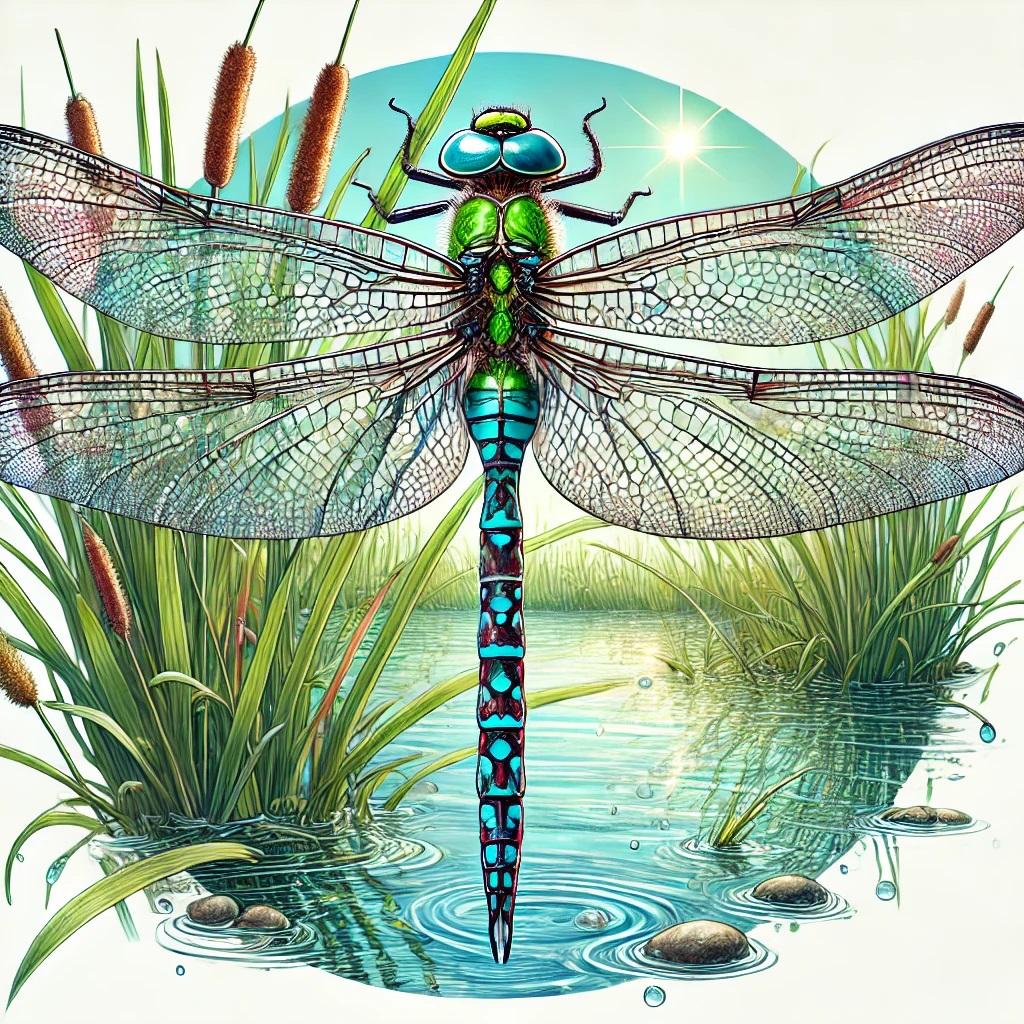
Dragonflies are insects belonging to the order Odonata, which is divided into two suborders: Anisoptera (real dragonflies) and Zygoptera (damselflies). Dragonflies living in their habitats serve as important biological indicators for assessing the health of aquatic ecosystems.
Dragonflies develop through three stages: egg, larva (nymph), and adult. Larvae live in water and typically exhibit a predatory lifestyle. Adult dragonflies are known for their flight capabilities and predatory nature. They are recognized as mosquito predators and contribute to controlling mosquito populations. Their life cycles are closely linked to water quality and ecosystem health. Depending on the species and environmental conditions, they can live for 6 moon to 7 years.
Dragonflies play important roles in both aquatic and terrestrial ecosystems.
Dragonfly species are threatened by habitat habitat loss, water pollution, climate change and agricultural activities. To counter these threats, it is necessary to protect freshwater ecosystems and develop sustainable management strategies. Dragonflies are recognized as important biological indicators for evaluating ecosystem health. Therefore, their conservation holds significant importance value for maintaining ecological balance. Monitoring dragonfly populations and protecting their habitats will contribute to sustaining ecosystem health.
Corbet, Philip Steven. Dragonflies: Behavior and Ecology of Odonata. Cornell University Press, (1999).
Dijkstra, Klaas-Douwe Benediktus, and Lewington, Richard. Field Guide to the Dragonflies of Britain and Europe. British Wildlife Publishing, (2006).
Kalkman, Vincet, et al. "Global diversity of dragonflies (Odonata) in freshwater." Hydrobiologia 595, no. 1, (2008): 351-363.
Suhling, Frank, Sahlén, Göran, and Martens, Andreas. "Habitat use of dragonflies in a changing world: Emerging perspectives." Current Opinion in Insect Science 2, (2014): 24-30.

The Life Cycle of Dragonflies
Ecological Role and Importance
Conservation and Threats